Artwork
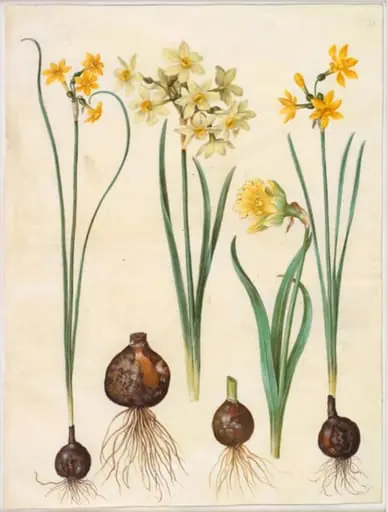
Narcissus pseudonarcissus (påskelilje); Narcissus tazetta (tazet)
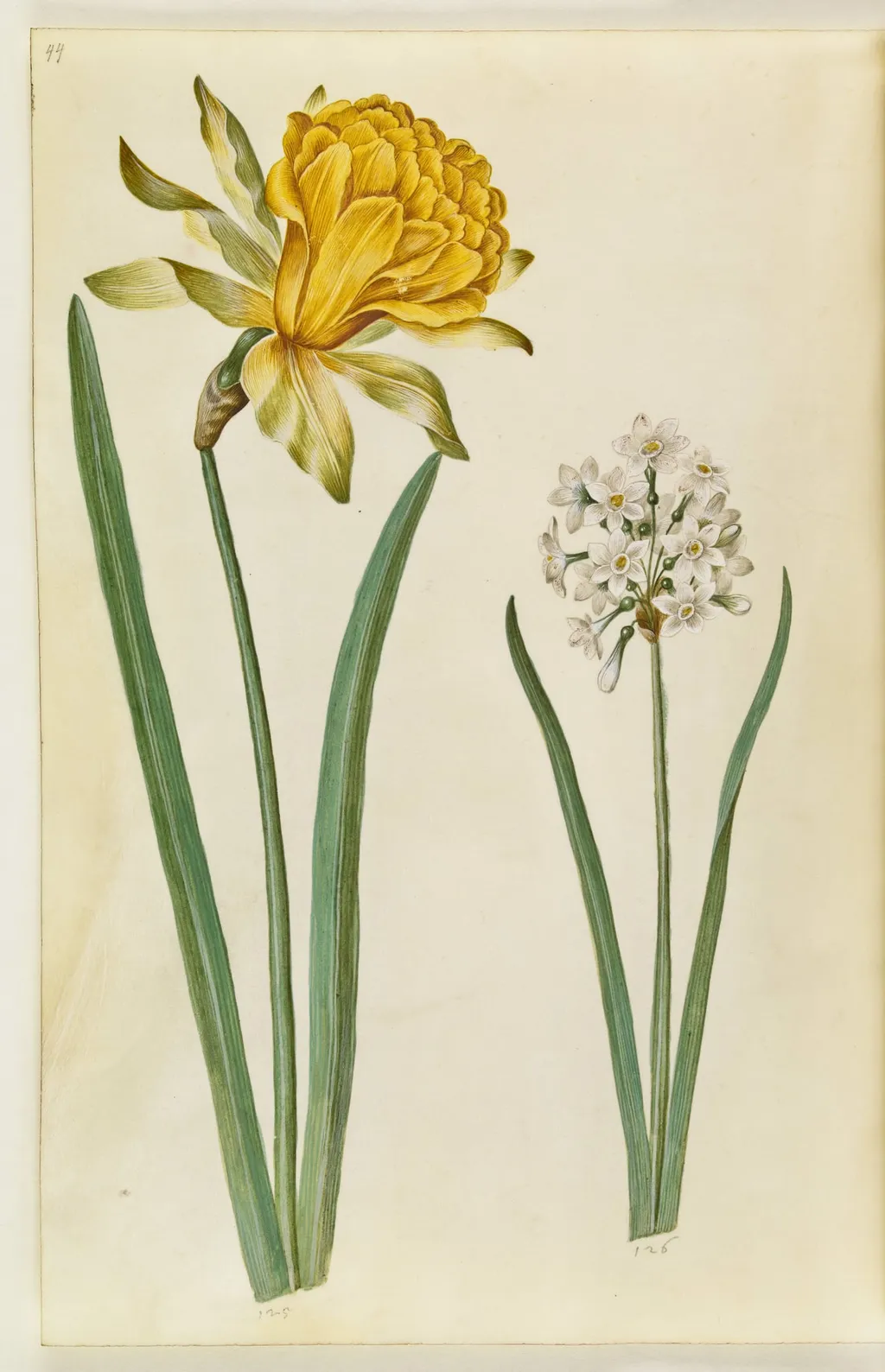
Narcissus pseudonarcissus (påskelilje); Narcissus tazetta (tazet) is an unspecified work on paper by Unknown. It dates from 1650 and is held in the collection of the Statens Museum for Kunst. This watercolor painting, dated around 1650, depicts two species of narcissus: Narcissus pseudonarcissus and Narcissus tazetta.
About this work
Overview
The piece is part of the collection at the Museum of Ethnography, where it serves as a record of plant forms observed in the 17th century.
This watercolor painting, dated around 1650, depicts two species of narcissus: Narcissus pseudonarcissus and Narcissus tazetta. Rendered with delicate precision, the work presents each flower in naturalistic detail, side by side. The artist employed transparent washes to capture subtle tonal variations, emphasizing botanical accuracy over decorative flourish. The piece is part of the collection at the Museum of Ethnography, where it serves as a record of plant forms observed in the 17th century.
Subject & Meaning
The painting juxtaposes two distinct narcissus varieties: a single, large yellow bloom with a prominent corona and a cluster of smaller white flowers with star-like petals. These species were likely chosen for their seasonal significance and regional presence in Europe. The pairing suggests an interest in comparative botany, possibly for scientific or horticultural documentation rather than symbolic or mythological reference.
Technique & Style
The artist used watercolor to achieve a soft, luminous effect, building color in thin, layered washes that preserve the paper’s brightness. Fine linework defines the slender stems and narrow leaves, while the petals are rendered with gentle gradations to suggest volume without heavy shading. The style reflects a tradition of naturalist illustration, prioritizing clarity and fidelity to observed forms over expressive interpretation.
History & Provenance
Created circa 1650, the painting entered the collection of the Museum of Ethnography at an unknown date. Its origin as a standalone work or part of a larger botanical compilation remains undocumented. No record of the artist’s identity exists beyond a catalog number, 35199_person, suggesting it may have been produced by an unnamed illustrator working within a scholarly or colonial botanical network of the period.
Context
In mid-17th century Europe, detailed plant illustrations were increasingly valued as scientific tools, especially as global exploration expanded knowledge of flora. This work aligns with the rise of herbaria and illustrated botanical texts, where accuracy was essential for identification and classification. The choice of narcissus species reflects their cultural and horticultural prominence in Northern and Mediterranean regions at the time.
Legacy
Though unsigned and unattributed, the painting contributes to a broader archive of early modern botanical records. Its preservation in a museum of ethnography underscores its value as a cultural artifact of scientific observation. It remains a quiet example of how natural history was documented through art before the advent of photography, offering insight into the visual practices of pre-modern botany.
Artist & collection

 Domestic Scene
 Giacomo and Cardinal Marco, investing Andrea, Abbot of San Zeno, with his Benefice
 The Nymph of Fontainebleau
 Portrait of a Woman
 Madonna and Child with Saints in the Enclosed Garden
 Venus and Minerva
 Family Group of Four on Sofa
 Wall painting from Room H of the Villa of P. Fannius Synistor at Boscoreale
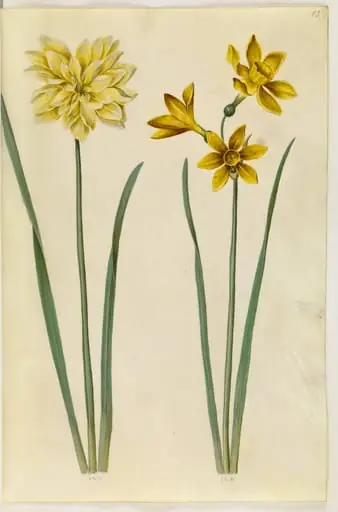 Narcissus pseudonarcissus (påskelilje); Narcissus tazetta aureus (guld-tazet)
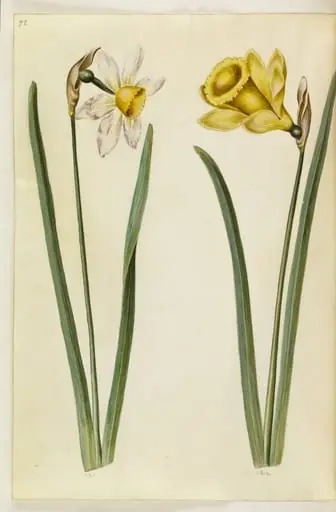 Narcissus ×incomparabilis (have-narcis); Narcissus pseudonarcissus (påskelilje)
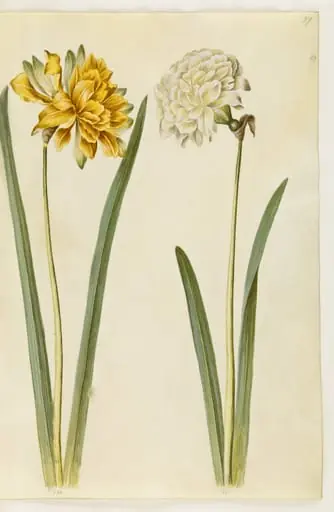 Narcissus pseudonarcissus (påskelilje)
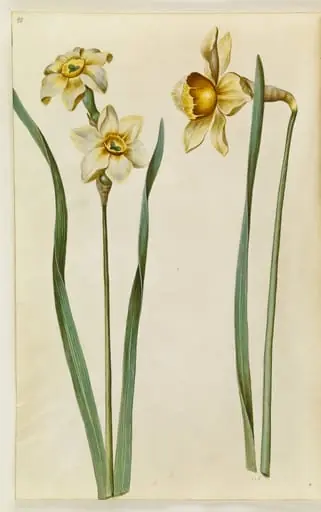 Narcissus ×medioluteus (toblomstret narcis); Narcissus ×incomparabilis (have-narcis)
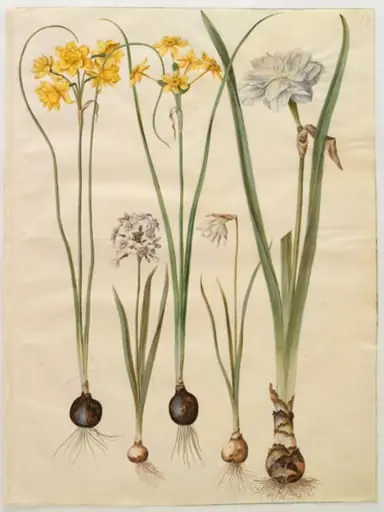 Narcissus jonquilla (siv-narcis); Narcissus tazetta (tazet); Narcissus pseudonarcissus moschatus (moskus-narcis); Narcissus poeticus (pinselilje)
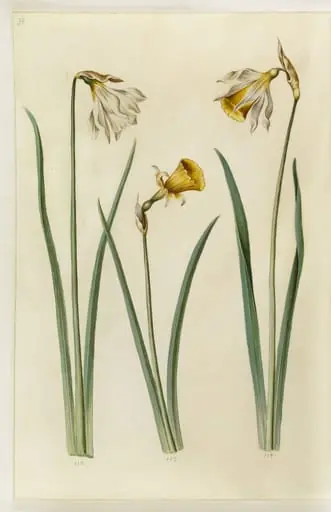 Narcissus pseudonarcissus moschatus (moskus-narcis); Narcissus bulbocodium (krinoline-narcis); Narcissus pseudonarcissus (påskelilje)
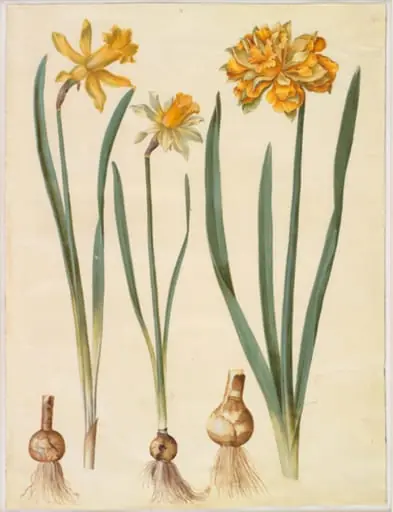 Narcissus pseudonarcissus major (stor påskelilje); Narcissus pseudonarcissus bicolor (tofarvet påskelilje); Narcissus pseudonarcissus
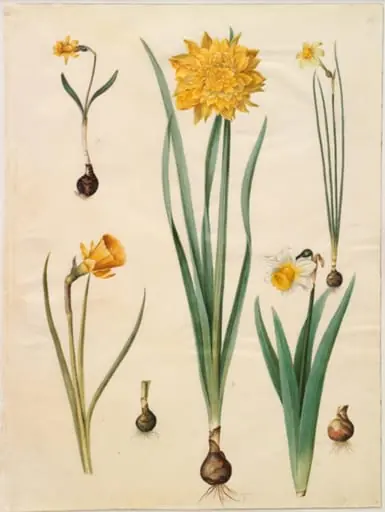 Narcissus pseudonarcissus minor; Narcissus pseudonarcissus (påskelilje); Narcissus ×tenuior; Narcissus bulbocodium (krinoline-narcis); Narcissus pseudonarcissus bicolor (tofarvet påskelilje)
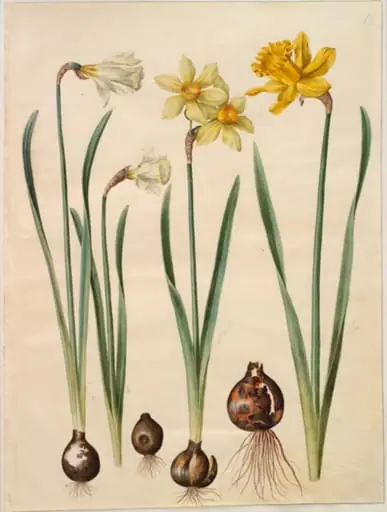 Narcissus pseudonarcissus moschatus (moskus-narcis); Narcissus ×medioluteus (toblomstret narcis); Narcissus pseudonarcissus major (stor påskelilje)
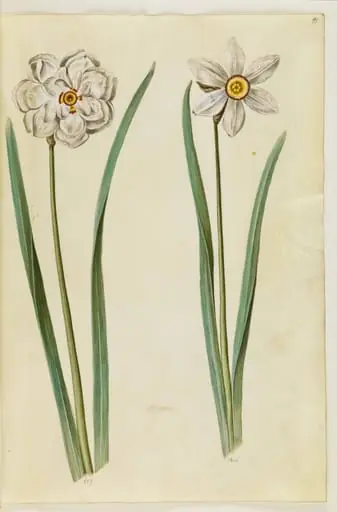 Narcissus poeticus (pinselilje)
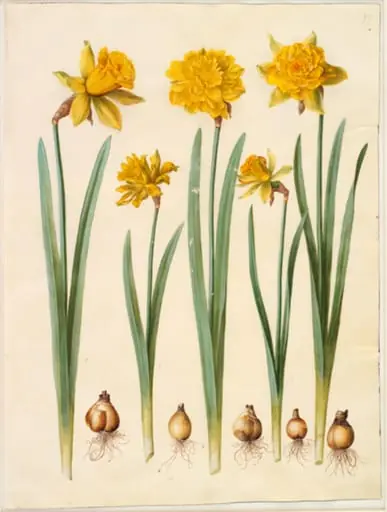 Narcissus pseudonarcissus
 Narcissus jonquilla (siv-narcis); Narcissus tazetta aureus (guld-tazet); Narcissus pseudonarcissus bicolor (tofarvet påskelilje)