Artwork
Papaver somniferum (opium-valmue)
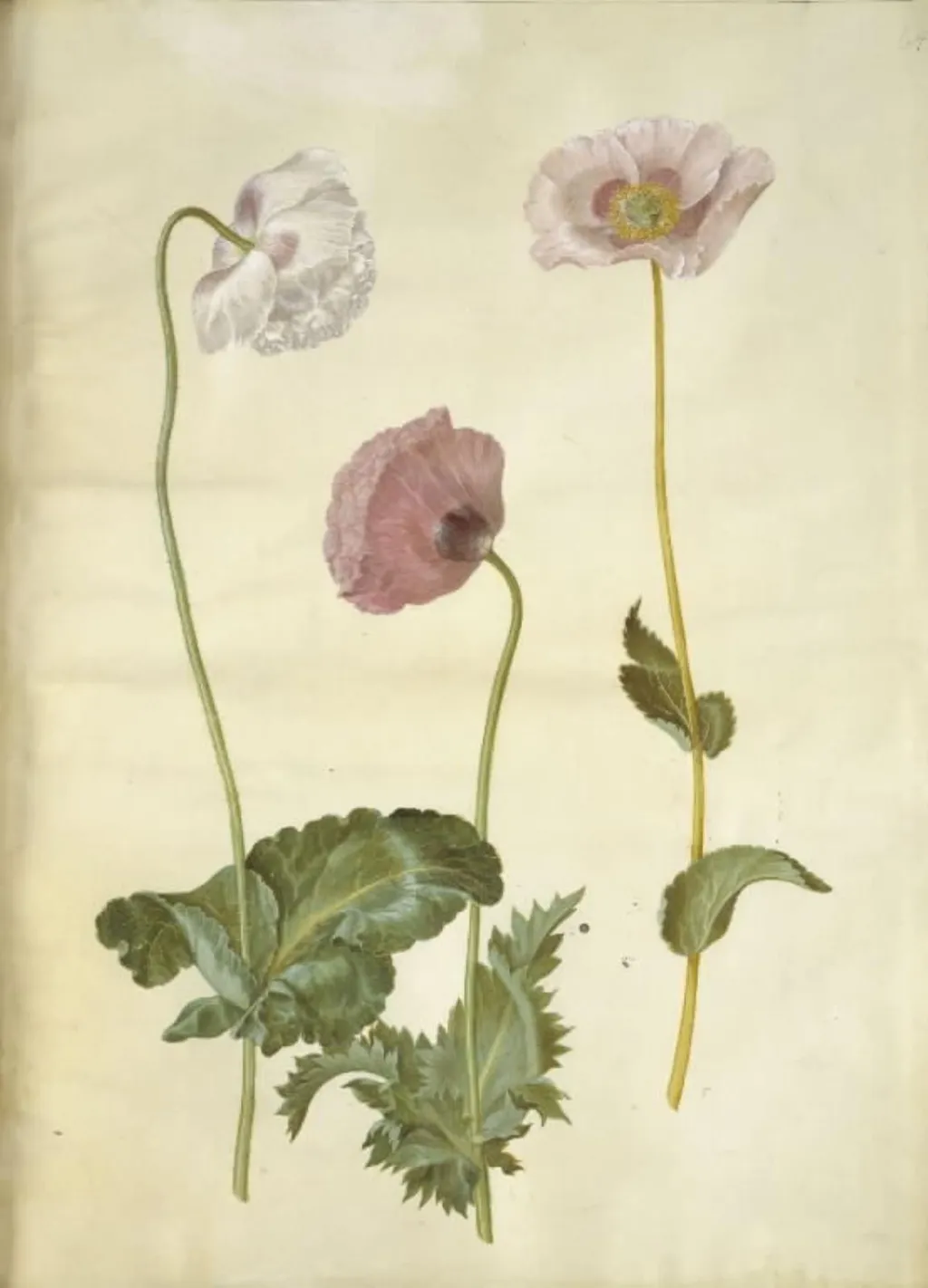
Papaver somniferum (opium-valmue) is an unspecified work on paper by Unknown. It dates from 1654 and is held in the collection of the Statens Museum for Kunst. Created around 1654, this watercolor depicts three specimens of Papaver somniferum, the opium poppy.
About this work
Overview
Rendered with quiet precision, the painting captures the plant at varying stages of bloom—closed bud, half-open, and full flower—against a neutral beige ground.
Created around 1654, this watercolor depicts three specimens of Papaver somniferum, the opium poppy. The work is held in the collection of the Museum of Ethnography. Rendered with quiet precision, the painting captures the plant at varying stages of bloom—closed bud, half-open, and full flower—against a neutral beige ground. The absence of contextual elements directs focus entirely to the botanical forms.
Subject & Meaning
The subject is the opium poppy, a plant historically cultivated for its narcotic resin. While the image does not depict harvesting or use, its detailed portrayal suggests an interest in the plant’s biological form. The inclusion of seed pods and unopened buds implies an emphasis on the plant’s life cycle, possibly reflecting scientific or medicinal curiosity rather than symbolic or decorative intent.
Technique & Style
The artist employed watercolor to build subtle gradations of color, layering thin washes to achieve soft transitions in the petals and leaves. The pale pink and white blooms are rendered with delicate brushwork, emphasizing texture over definition. Leaves and seed pods show crisp edges, contrasting with the fuzzy, porous quality of the open flowers. The plain background isolates the subject, enhancing observational clarity.
History & Provenance
The painting is attributed to an artist identified as 35199_person, though little is known about their background. It entered the Museum of Ethnography’s collection in the 19th century, likely as part of a broader gathering of botanical illustrations used for classification or educational purposes. Its origin may be tied to European scientific circles interested in medicinal flora during the early modern period.
Context
In the mid-17th century, European naturalists increasingly documented plants for their pharmacological properties. Papaver somniferum, central to opium production, was studied across botanical gardens and medical texts. This painting aligns with a tradition of precise, non-idealized plant studies, distinct from ornamental floral art, reflecting a growing empirical approach to natural history.
Legacy
The work remains a quiet example of early scientific illustration, valued for its observational accuracy rather than aesthetic flourish. It contributes to the historical record of how medicinal plants were visually recorded before photography. Its preservation in an ethnographic museum underscores its role in understanding the cultural and medical significance of plant use across time.
Artist & collection

 Domestic Scene
 Giacomo and Cardinal Marco, investing Andrea, Abbot of San Zeno, with his Benefice
 The Nymph of Fontainebleau
 Portrait of a Woman
 Madonna and Child with Saints in the Enclosed Garden
 Venus and Minerva
 Family Group of Four on Sofa
 Wall painting from Room H of the Villa of P. Fannius Synistor at Boscoreale
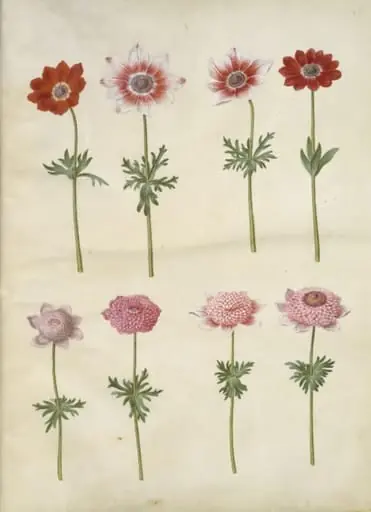 Anemone coronaria L. (fransk anemone); Anemone pavonina (påfugle-anemone)
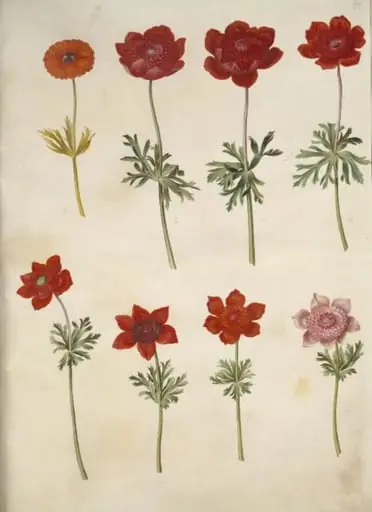 Anemone ×fulgens (skinnende anemone); Anemone coronaria (fransk anemone)
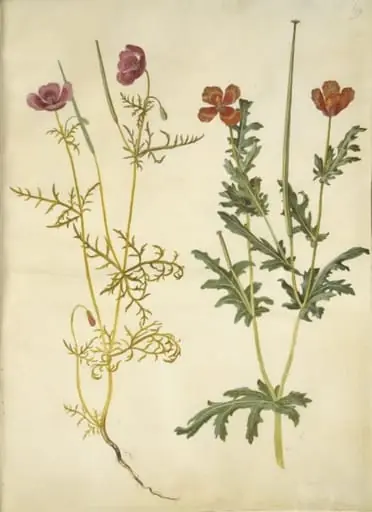 Roemeria hybrida (violet hornvalmue); Glaucium corniculatum (rød hornskulpe)
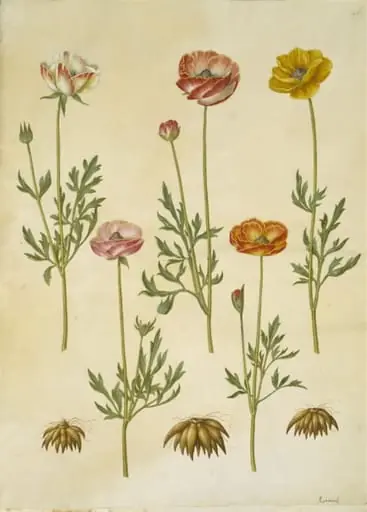 Ranunculus asiaticus (have-ranunkel)
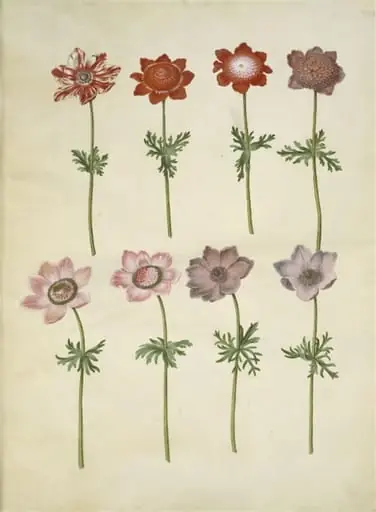 Anemone coronaria (fransk anemone)
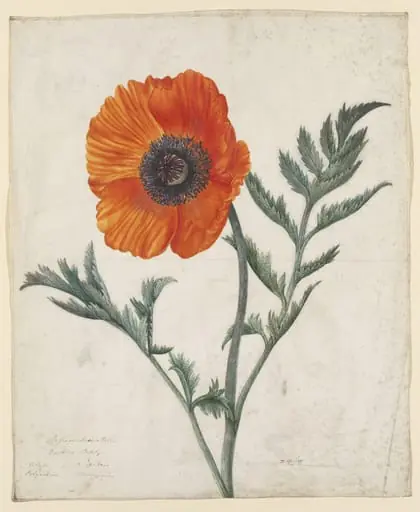 Untitled
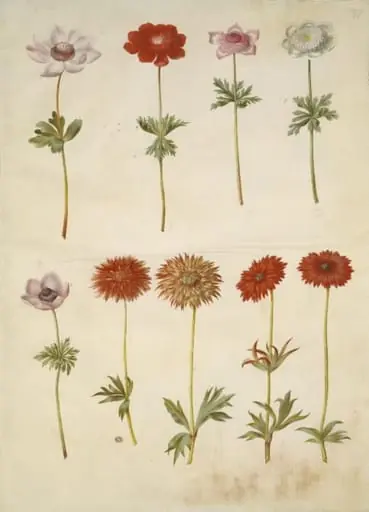 Anemone coronaria (fransk anemone); Anemone ×fulgens (skinnende anemone)
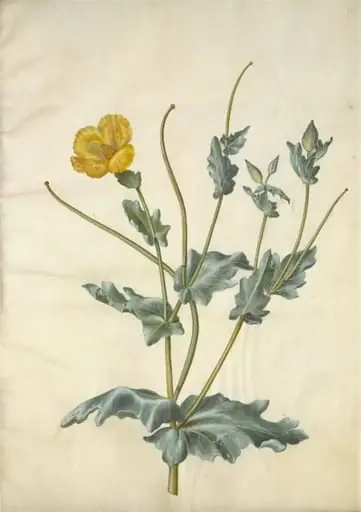 Glaucium flavum (strand-hornskulpe)
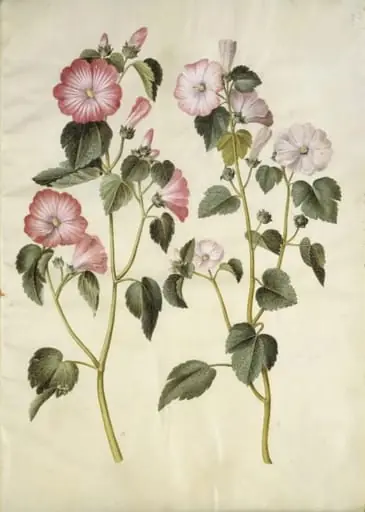 Lavatera trimestris (mamelukærme)
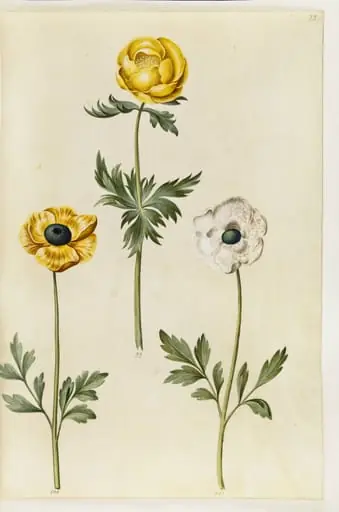 Trollius europaeus (europæisk engblomme); Ranunculus asiaticus (have-ranunkel)