Artwork
Tagetes patula (udspærret fløjlsblomst)
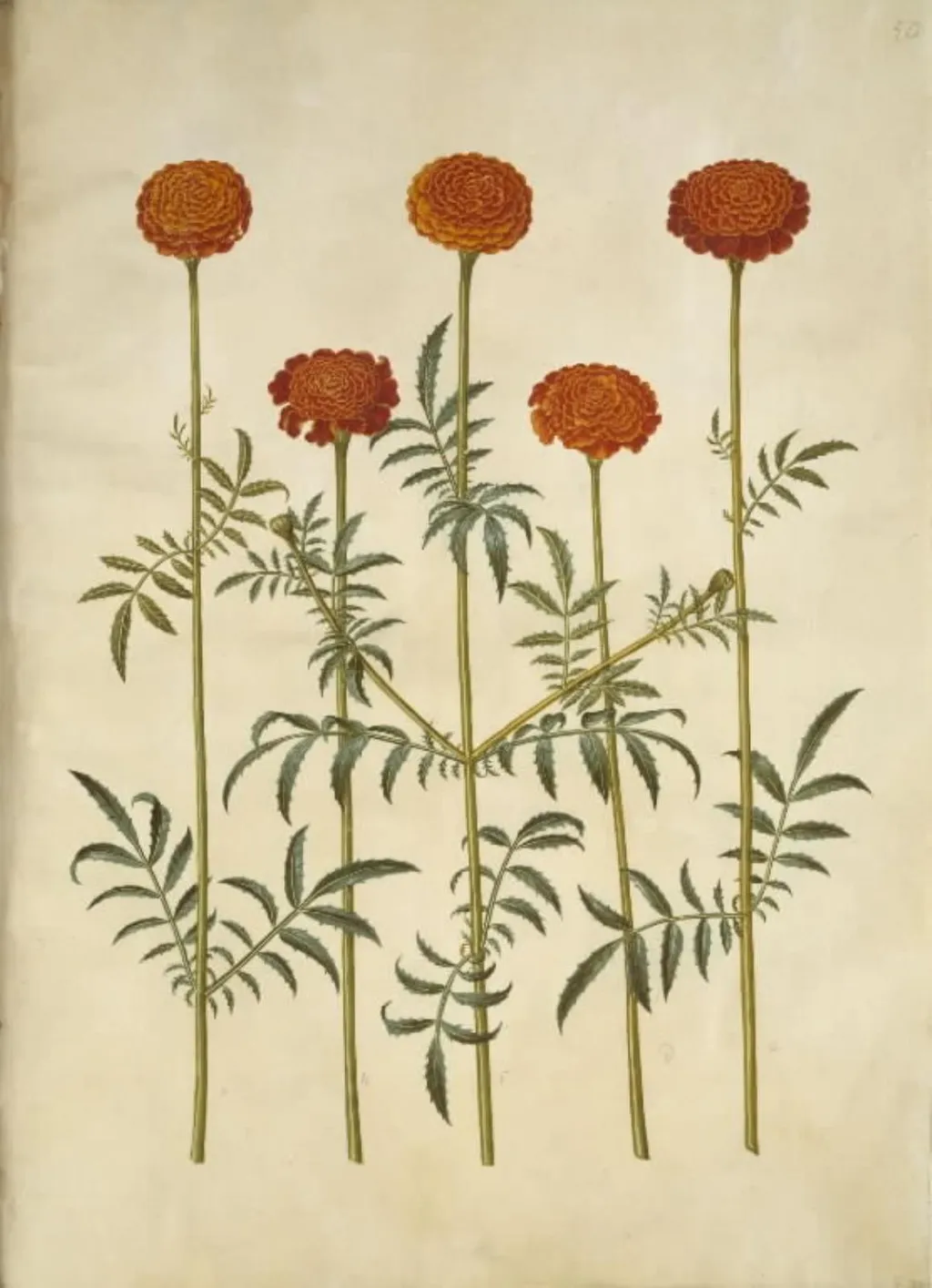
Tagetes patula (udspærret fløjlsblomst) is an unspecified work on paper by Unknown. It dates from 1654 and is held in the collection of the Statens Museum for Kunst. This watercolor depicts five stems of Tagetes patula, commonly known as French marigold, rendered around 1654.
About this work
Overview
This watercolor depicts five stems of Tagetes patula, commonly known as French marigold, rendered around 1654. The work is attributed to an artist identified as 35199_person and is part of the collection at the Museum of Ethnography. The composition isolates the plant against a neutral background, emphasizing botanical accuracy over decorative flourish.
Subject & Meaning
The painting presents a focused study of Tagetes patula, a flowering plant native to the Americas. Its vivid orange blooms and delicate green foliage are rendered without symbolic embellishment, suggesting a scientific or curatorial intent. The choice of subject may reflect European interest in New World flora during the 17th century, when botanical specimens were systematically documented.
Technique & Style
The artist employed watercolor to capture the soft, fuzzy texture of the flower heads and the translucency of the petals. Fine brushwork defines individual petals and the subtle variations in leaf orientation. The lack of background detail directs attention to the plant’s form, while the medium’s fluidity allows for gentle gradations of color, characteristic of early botanical illustration.
History & Provenance
Created circa 1654, the work entered the collection of the Museum of Ethnography at an unknown date. Its origin likely lies within a broader tradition of naturalist documentation, possibly linked to European collectors or academies studying exotic plants. The attribution to 35199_person suggests it may have been part of an unpublished or anonymous botanical archive.
Context
In mid-17th-century Europe, the systematic study of plants from newly encountered regions was gaining momentum. This watercolor aligns with contemporaneous efforts to classify and illustrate flora brought back from the Americas. Such works often served as reference material for gardens, apothecaries, and emerging scientific institutions, bridging art and early botany.
Legacy
Though not widely exhibited, the painting contributes to a historical record of how non-European plants were visually documented before modern taxonomy. Its preservation in an ethnographic museum underscores its role as both a scientific artifact and a cultural object, reflecting the intersection of exploration, observation, and artistic practice in the early modern period.
Artist & collection

 Domestic Scene
 Giacomo and Cardinal Marco, investing Andrea, Abbot of San Zeno, with his Benefice
 The Nymph of Fontainebleau
 Portrait of a Woman
 Madonna and Child with Saints in the Enclosed Garden
 Venus and Minerva
 Family Group of Four on Sofa
 Wall painting from Room H of the Villa of P. Fannius Synistor at Boscoreale
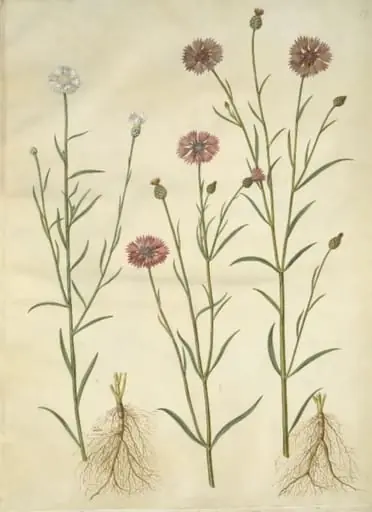 Centaurea cyanus (kornblomst)
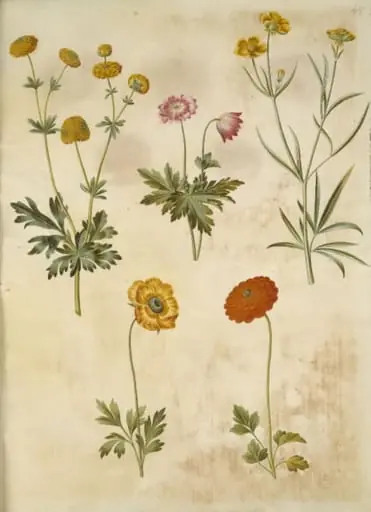 Ranunculus acris (guldknap-ranunkel); Anemone nemorosa (hvid anemone); Ranunculus illyricus (steppe-ranunkel); Ranunculus asiaticus (have-ranunkel)
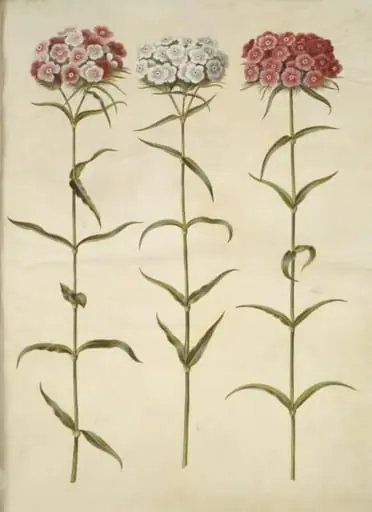 Dianthus barbatus (studenter-nellike)
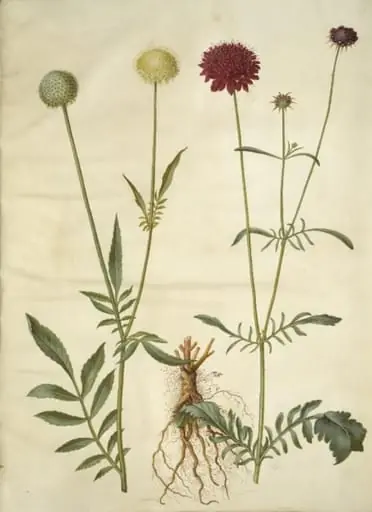 Cephalaria leucantha (hvid skælhoved); Scabiosa atropurpurea (enkeblomst)
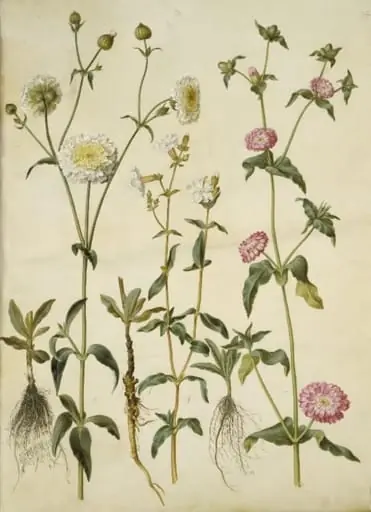 Silene latifolia (aften-pragtstjerne); Silene dioica (dag-pragtstjerne)
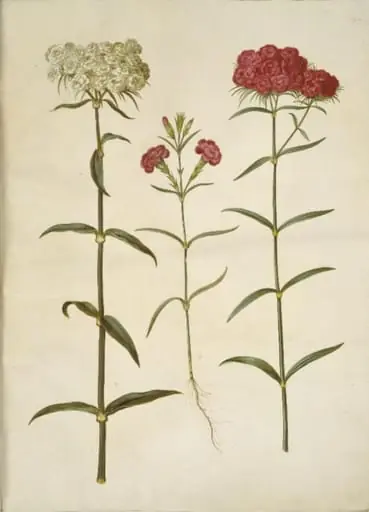 Dianthus barbatus (studenter-nellike); Dianthus (art af nellike)