Artwork
Cephalaria leucantha (hvid skælhoved); Scabiosa atropurpurea (enkeblomst)
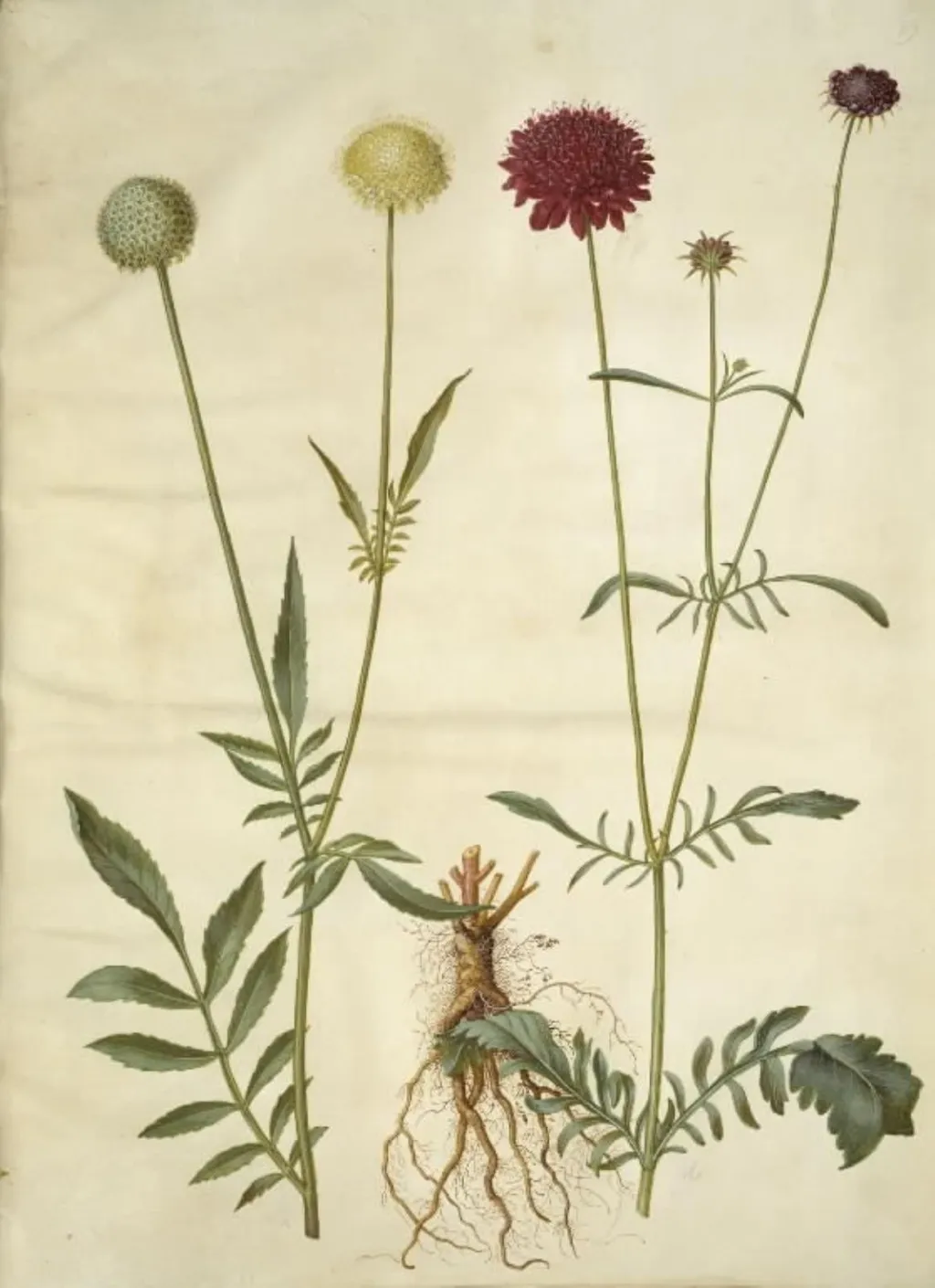
Cephalaria leucantha (hvid skælhoved); Scabiosa atropurpurea (enkeblomst) is an unspecified work on paper by Unknown. It dates from 1654 and is held in the collection of the Statens Museum for Kunst. This watercolor painting, dated around 1654, depicts five native European flowering plants with precise botanical accuracy.
About this work
Overview
This watercolor painting, dated around 1654, depicts five native European flowering plants with precise botanical accuracy. Created by an anonymous artist, the work is part of the Museum of Ethnography’s collection. Each plant is rendered with attention to structural detail, emphasizing stems, blooms, and root systems as distinct biological entities rather than decorative elements.
Subject & Meaning
The inclusion of root systems suggests an interest in their growth patterns and subterranean structure, possibly for medicinal or agricultural use.
The plants illustrated—Cephalaria leucantha and Scabiosa atropurpurea—are native species studied for their morphological variety. The inclusion of root systems suggests an interest in their growth patterns and subterranean structure, possibly for medicinal or agricultural use. The range of flower colors, from pale yellow to near-black purple, underscores a systematic approach to documenting natural variation.
Technique & Style
Executed in watercolor, the painting employs fine brushwork to capture the delicate textures of petals, the veining of leaves, and the fibrous nature of roots. The composition isolates each specimen against a neutral background, eliminating distractions and focusing attention on anatomical precision. The style reflects a scientific tradition of observation, prioritizing clarity over aesthetic flourish.
History & Provenance
The work originates from a period when European naturalists were increasingly documenting flora through visual records. Though the artist’s identity remains unknown, the painting likely belonged to a private collection of botanical studies before entering the Museum of Ethnography’s holdings. Its survival suggests it was valued for its educational or reference utility.
Context
Created during the mid-17th century, this piece aligns with a broader European movement to classify and illustrate plant life, preceding formal botanical taxonomy. Such images were often used by physicians, apothecaries, and scholars to identify species with practical applications. The absence of human figures or landscape elements reflects its function as a scientific record rather than an artistic statement.
Legacy
The painting endures as an example of pre-Linnaean botanical illustration, valued for its fidelity to natural form. It contributes to historical understanding of how plant knowledge was visually transmitted before photographic technology. Its preservation highlights the role of observational art in early scientific inquiry, particularly in regions where indigenous flora was being systematically cataloged.
Artist & collection

 Domestic Scene
 Giacomo and Cardinal Marco, investing Andrea, Abbot of San Zeno, with his Benefice
 The Nymph of Fontainebleau
 Portrait of a Woman
 Madonna and Child with Saints in the Enclosed Garden
 Venus and Minerva
 Family Group of Four on Sofa
 Wall painting from Room H of the Villa of P. Fannius Synistor at Boscoreale
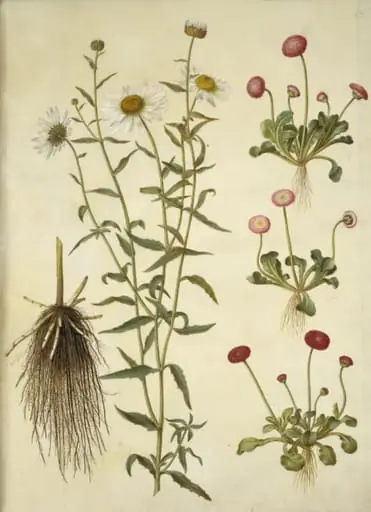 Leucanthemum vulgare (hvid okseøje); Bellis perennis (almindelig tusindfryd)
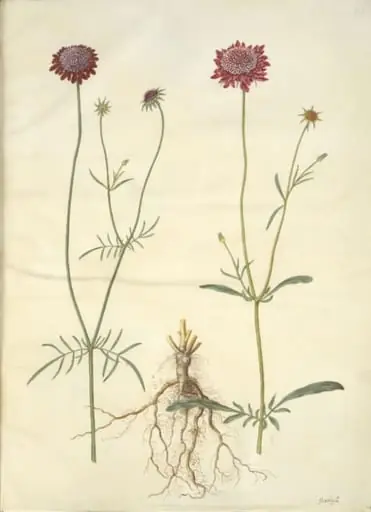 Scabiosa atropurpurea (enkeblomst)
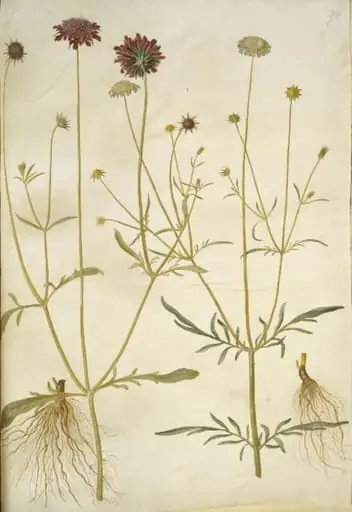 Scabiosa atropurpurea (enkeblomst); Scabiosa columbaria (due-skabiose)
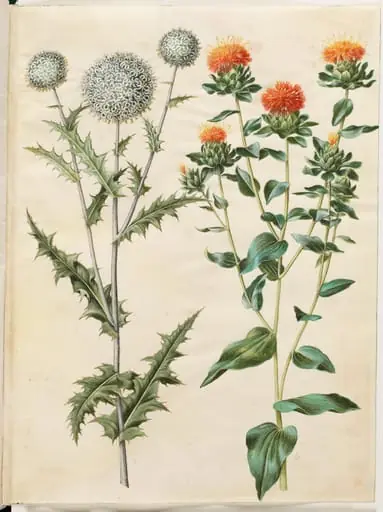 Echinops sphaerocephalus (almindelig tidselkugle); Carthamus tinctorius (gul saflortidsel)
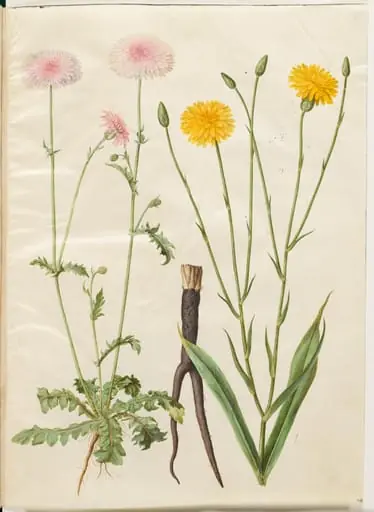 Crepis rubra (rød høgeskæg); Scorzonera hispanica (have-skorzoner)
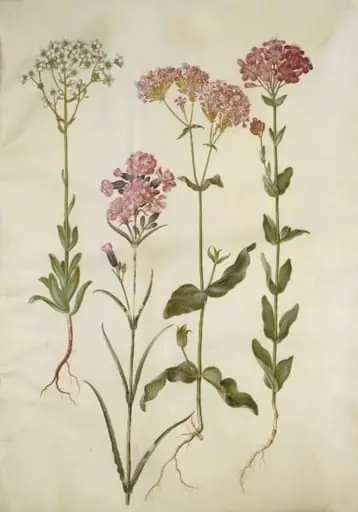 Saxifraga paniculata (klippe-stenbræk); Silene viscaria (almindelig tjærenellike); Silene armeria (knippe-limurt);
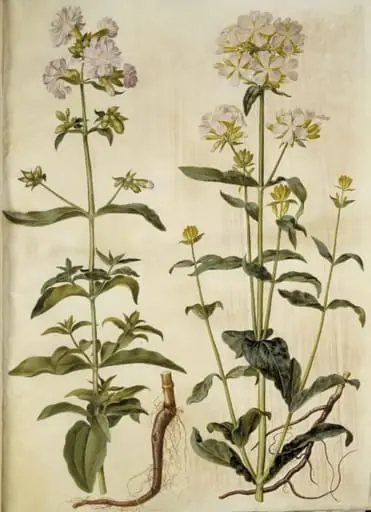 Saponaria officinalis (almindelig sæbeurt)
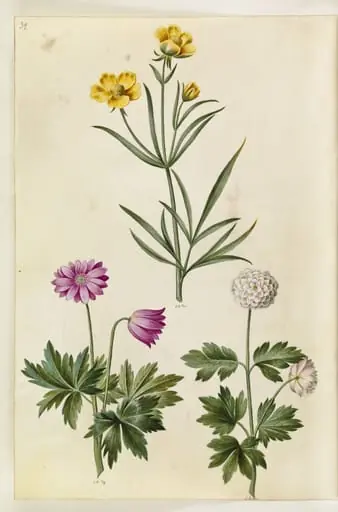 Ranunculus illyricus (steppe-ranunkel); Anemone nemorosa (hvid anemone)
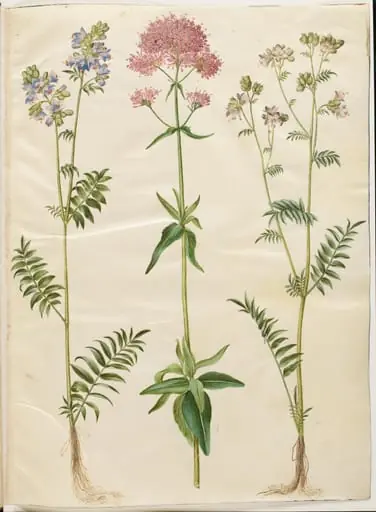 Polemonium caeruleum (almindelig jakobsstige); Centranthus ruber (rød sporebaldrian)
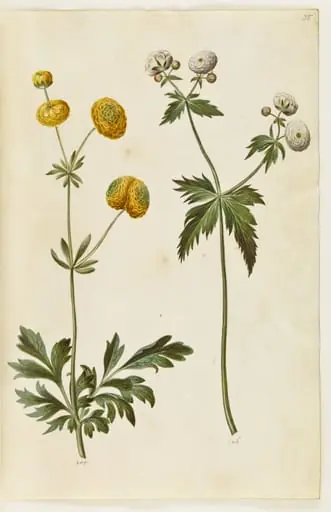 Ranunculus acris (guldknap-ranunkel); Ranunculus aconitifolius (sølvknap-ranunkel)
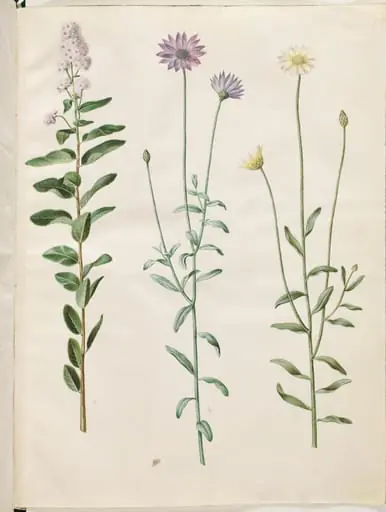 Spiraea salicifolia (pilebladet spiræa); Catananche caerulea (blå rasleblomst)