Artwork
Tulips
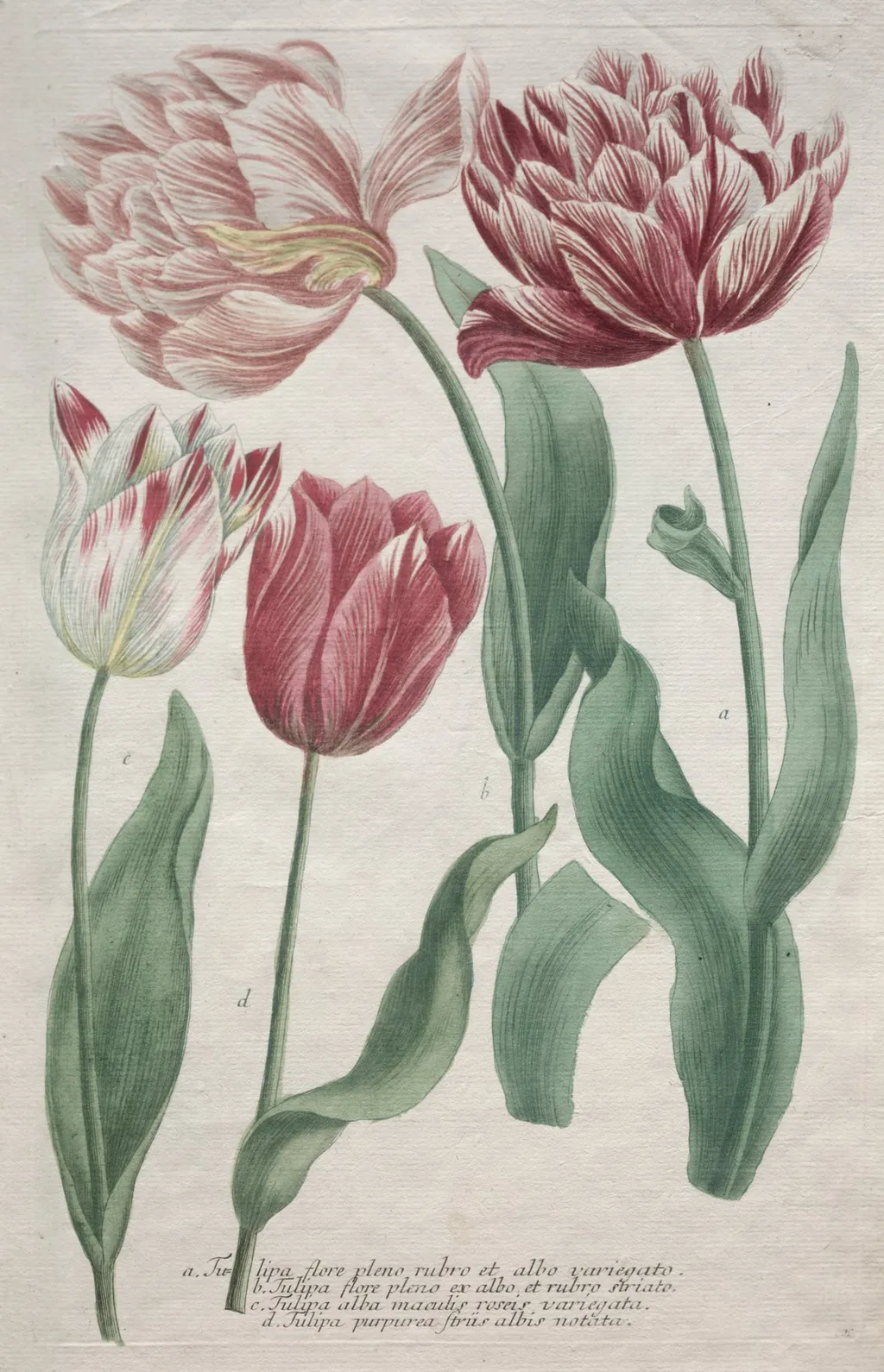
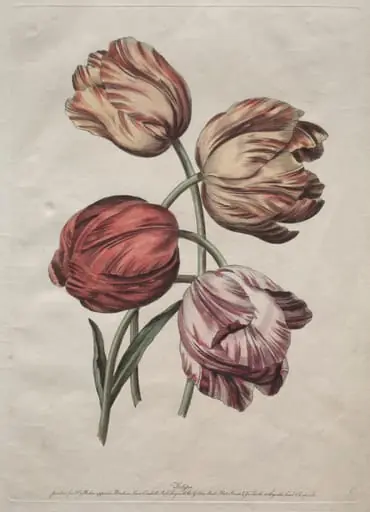
Tulips is a print by Bartholomäus Seuter. It dates from 1726 and is held in the collection of the Cleveland Museum of Art.
About this work
This painting shows a bouquet of tulips.
The flowers are arranged in a simple vase, and the background is plain. What's interesting is that tulips were highly valued in Europe during the 18th century, and paintings of them were often made to showcase the owner's wealth.
You can learn more about this style by looking into the work of artist: Bartholomaus Seutter (German, 1678–1754)
Overview
Tulips, a print by German artist Bartholomaus Seutter, dates to circa 1726 and is part of The Cleveland Museum of Art's collection. The work depicts a bouquet of tulips arranged in a simple vase against a plain background.
Subject & Meaning
The subject, a tulip bouquet, reflects the high value placed on tulips in 18th-century Europe, where such depictions often signified the owner's wealth.
Technique & Style
While specific technical details of 'Tulips' are not provided, Seutter's work generally exemplifies the precise, detailed approach characteristic of 18th-century German printmaking.
History & Provenance
Created around 1726 by Bartholomaus Seutter (1678–1754), the print's history prior to its acquisition by The Cleveland Museum of Art is not detailed here.
Context
'Tulips' can be contextualized within the broader tradition of European still-life art from the period, where flowers, especially tulips, were popular subjects due to their rarity and symbolic value.
Artist & collection


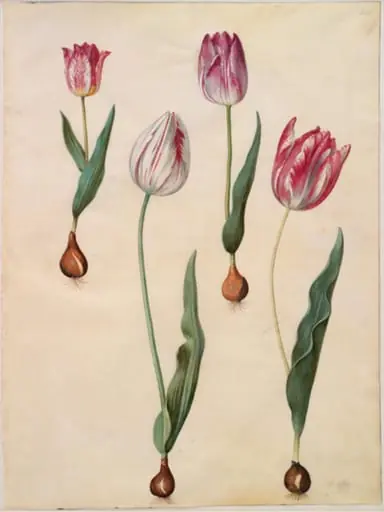 Tulipa gesneriana (have-tulipan)
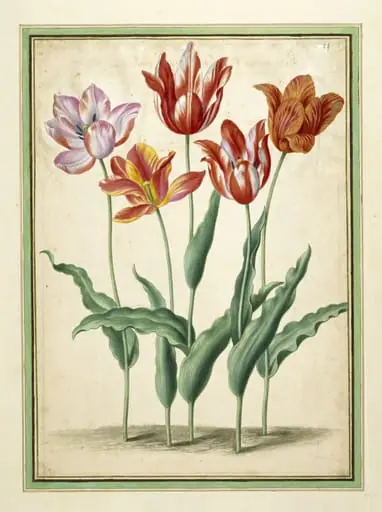 Tulips
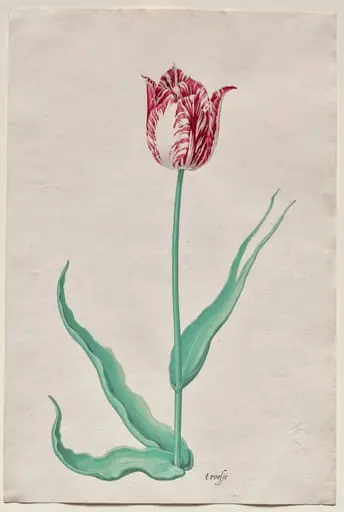 Study of a Tulip ('t roosje)
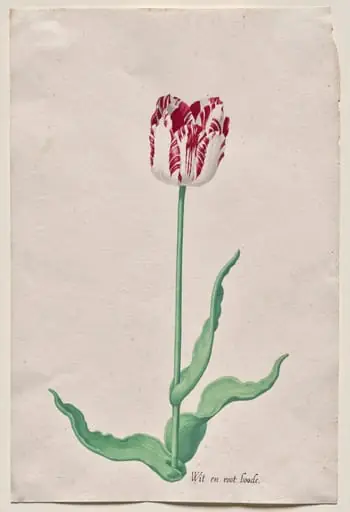 Study of a Tulip (Wit en root boode)
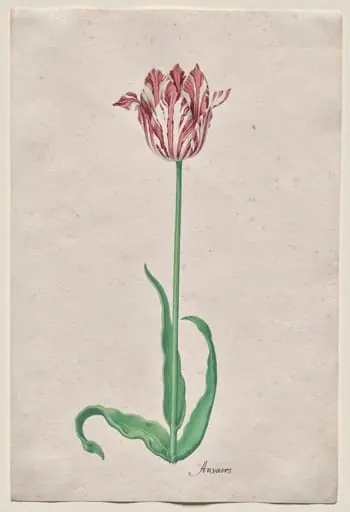 Study of a Tulip (Anvaers)
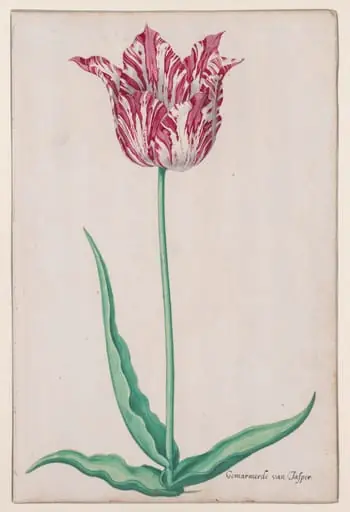 Study of a Tulip (Gemarmerde van Jasper)
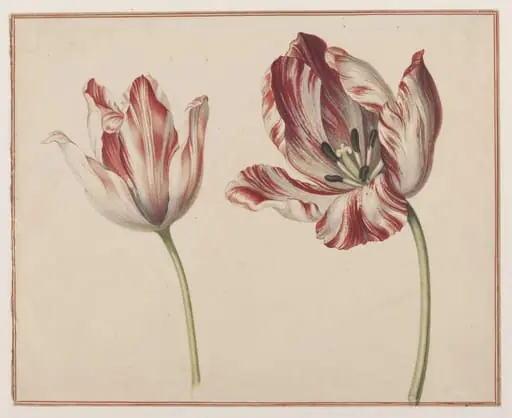 Two Tulips
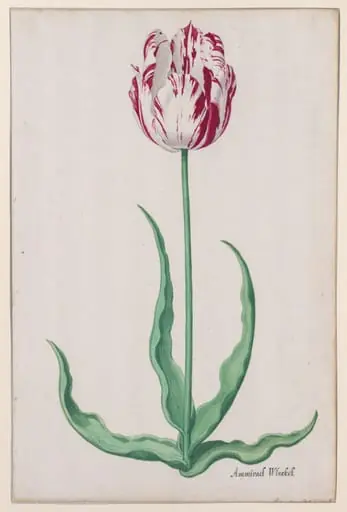 Study of a Tulip (Ammirael Winckel)
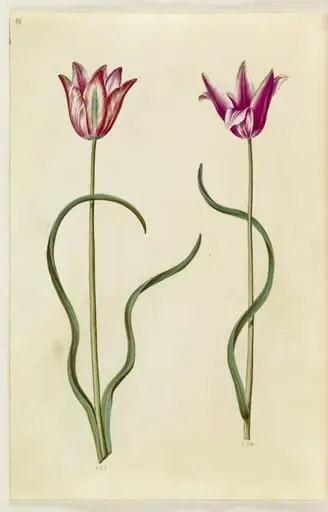 Tulipa clusiana (clusius-tulipan)
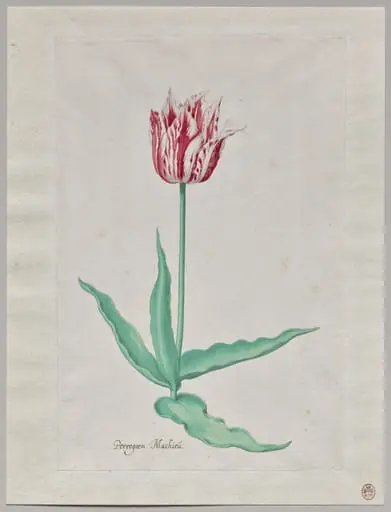 Study of a Tulip (Perregoen Machieu)
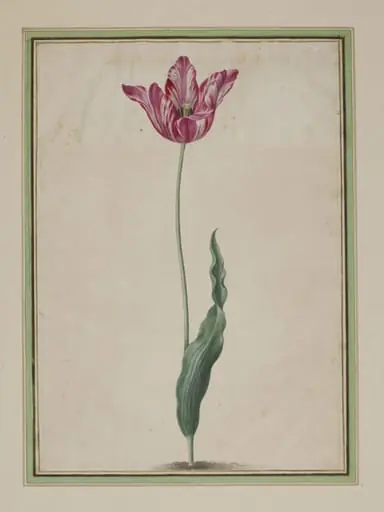 Simulacrum Scenographicum Celeberrimi Horti Itzsteinensis
 Eight Beautiful Groups of Natural Flowers in Outlines by de la Cour: Tulips