Artwork
Tulipa gesneriana (have-tulipan)
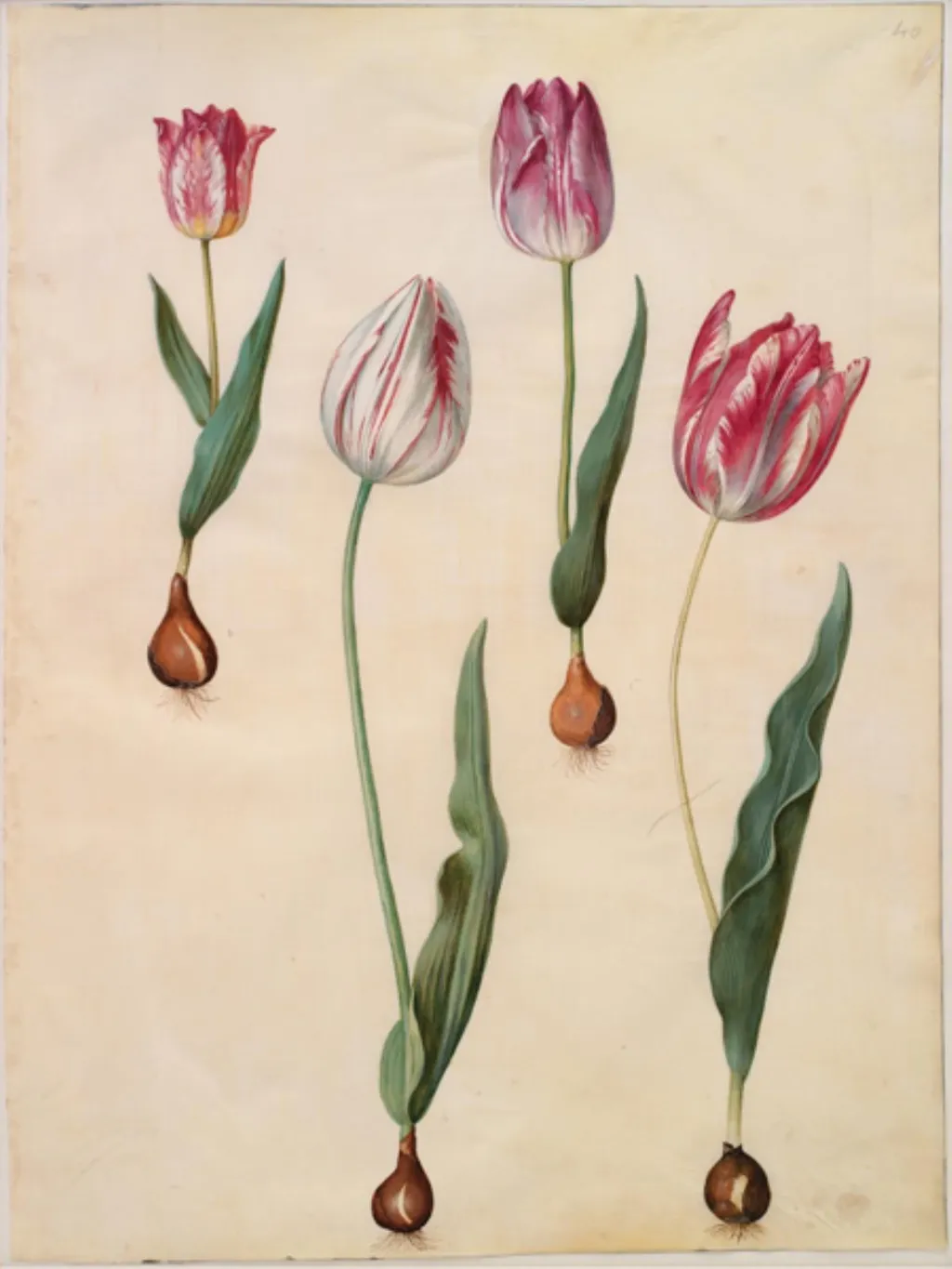
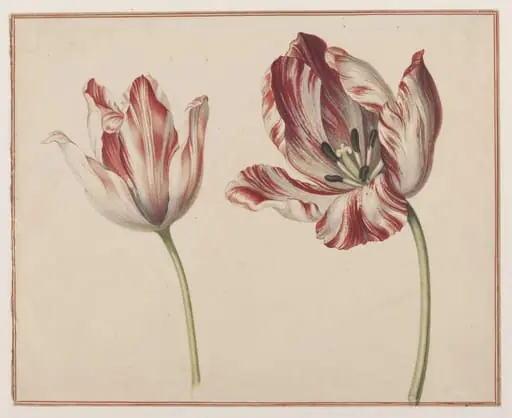
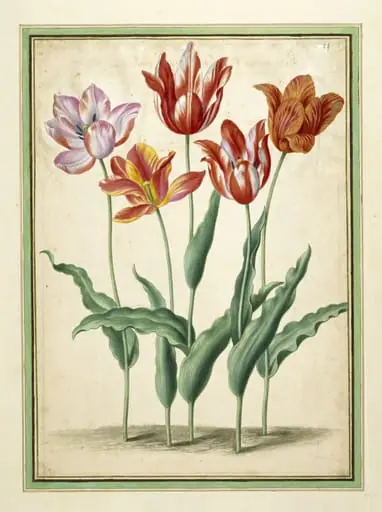
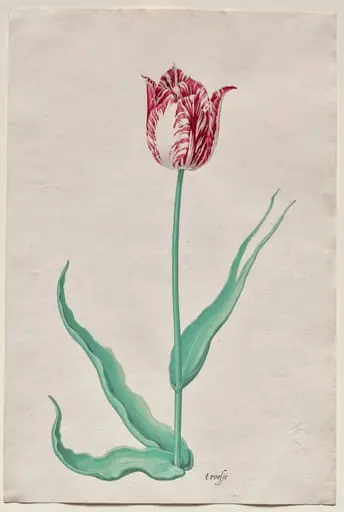
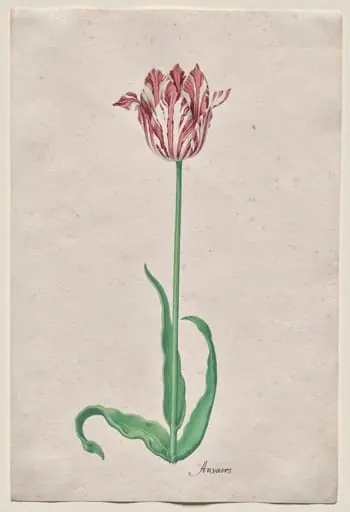
Tulipa gesneriana (have-tulipan) is an unspecified work on paper by Unknown. It dates from 1654 and is held in the collection of the Statens Museum for Kunst. Created around 1654, this watercolor depicts four tulips rendered with precise botanical attention.
About this work
Overview
Created around 1654, this watercolor depicts four tulips rendered with precise botanical attention. The work is attributed to an artist identified as 35199_person and is part of the collection at the Museum of Ethnography. The composition isolates the flowers against an unadorned background, emphasizing their natural forms without decorative elements or contextual framing.
Subject & Meaning
The four tulips—two pink with white stripes, one white with red streaks, and one solid deep red—represent varieties cultivated in early modern Europe. Their selection reflects the period’s fascination with rare horticultural specimens, particularly during the tulip mania era. The focus on individual blooms suggests a scientific or collector’s interest rather than symbolic or ornamental intent.
Technique & Style
Watercolor was employed to capture fine details in petals and leaves, with subtle gradations of pigment creating texture and depth. The artist avoided shading or atmospheric effects, instead relying on clean outlines and flat, vibrant hues. The plain background enhances the clarity of each form, allowing the viewer to study the flowers as specimens rather than as part of a landscape.
History & Provenance
The work entered the Museum of Ethnography’s collection as part of a broader archive of natural history illustrations. Its origin is tied to 17th-century Dutch botanical documentation practices, though its specific provenance prior to museum acquisition remains undocumented. The attribution to 35199_person is based on archival records, not stylistic comparison with other known works.
Context
This piece emerged during a time when tulips were highly prized in the Netherlands, both as luxury goods and subjects of scientific study. Botanical illustration flourished alongside horticultural commerce, with artists documenting new cultivars for collectors and scholars. Such images served as visual records before photography, bridging art and early botany.
Legacy
The work contributes to a historical record of plant diversity and aesthetic appreciation in early modern Europe. While not widely exhibited, it remains a quiet example of how natural observation was translated into precise visual form. Its preservation underscores the value placed on botanical accuracy in pre-modern scientific practice.
Artist & collection

 Domestic Scene
 Giacomo and Cardinal Marco, investing Andrea, Abbot of San Zeno, with his Benefice
 The Nymph of Fontainebleau
 Portrait of a Woman
 Madonna and Child with Saints in the Enclosed Garden
 Venus and Minerva
 Family Group of Four on Sofa
 Wall painting from Room H of the Villa of P. Fannius Synistor at Boscoreale