Artwork
Viola cornuta (horn-viol); Viola tricolor (almindelig stedmoderblomst)
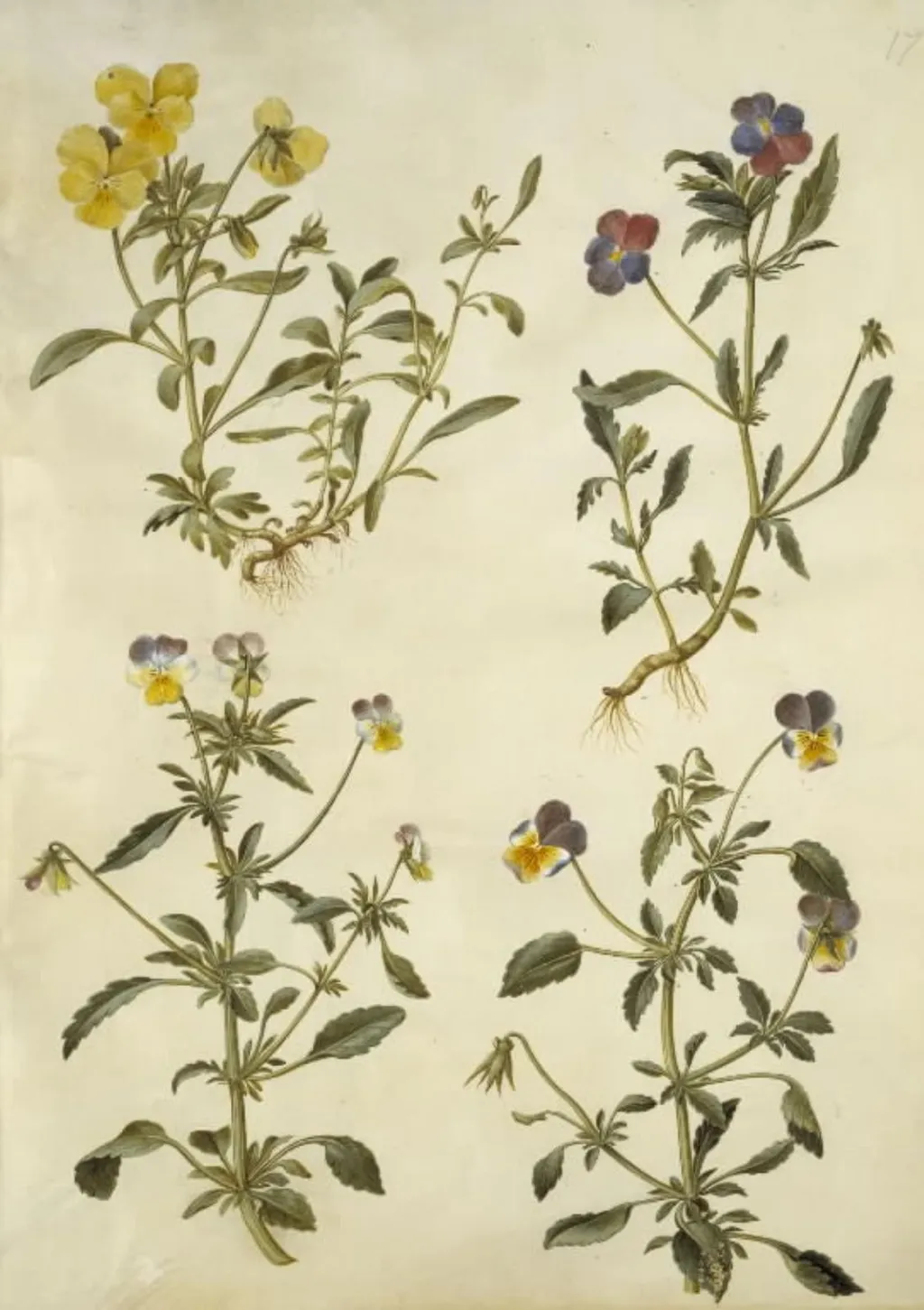
Viola cornuta (horn-viol); Viola tricolor (almindelig stedmoderblomst) is an unspecified work on paper by Unknown. It dates from 1654 and is held in the collection of the Statens Museum for Kunst. Created around 1654, this botanical illustration by the artist identified as 35199_person is part of the Museum of Ethnography’s collection.
About this work
Overview
Created around 1654, this botanical illustration by the artist identified as 35199_person is part of the Museum of Ethnography’s collection. Rendered as an image, the work presents a detailed study of four distinct plant specimens, each rendered with careful attention to form and coloration.
Subject & Meaning
The composition features two species of Viola: the horned violet (Viola cornuta) and the common field pansy (Viola tricolor).
The composition features two species of Viola: the horned violet (Viola cornuta) and the common field pansy (Viola tricolor). Each plant is shown in profile, displaying its characteristic flowers—bright yellow and purple hues, sometimes intermingled—with the foliage and slender stems rendered in naturalistic green tones. The inclusion of roots at the base underscores a scientific interest in the full morphology of the specimens.
Technique & Style
Executed in a precise, linear style typical of 17th‑century botanical illustration, the image employs fine line work to delineate petals, leaves, and root structures. The coloration is modest yet accurate, using muted washes to convey the subtle variations in petal pigmentation, such as the darker spotting on the purple blossoms.
History & Provenance
The work dates to the mid‑17th century, a period when European scholars increasingly documented plant species for medicinal and taxonomic purposes. It entered the Museum of Ethnography’s holdings at an unspecified date, where it now serves as a reference for the visual study of early modern flora documentation.
Context
During the 1650s, botanical illustration functioned as a bridge between art and science, supporting the work of naturalists who relied on accurate visual records. This piece reflects that interdisciplinary aim, providing a clear visual account of Viola species that would have been valuable for both academic and horticultural audiences of the time.
Artist & collection

 Domestic Scene
 Giacomo and Cardinal Marco, investing Andrea, Abbot of San Zeno, with his Benefice
 The Nymph of Fontainebleau
 Portrait of a Woman
 Madonna and Child with Saints in the Enclosed Garden
 Venus and Minerva
 Family Group of Four on Sofa
 Wall painting from Room H of the Villa of P. Fannius Synistor at Boscoreale
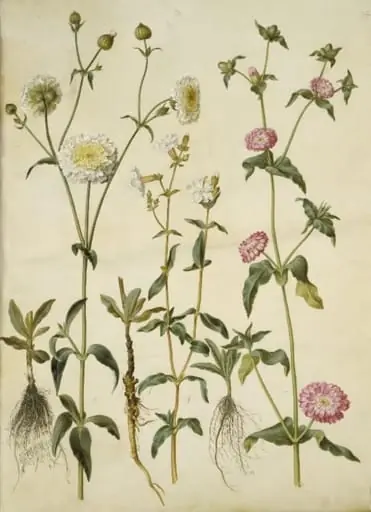 Silene latifolia (aften-pragtstjerne); Silene dioica (dag-pragtstjerne)
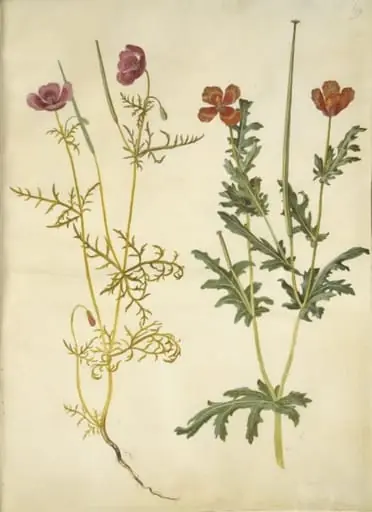 Roemeria hybrida (violet hornvalmue); Glaucium corniculatum (rød hornskulpe)
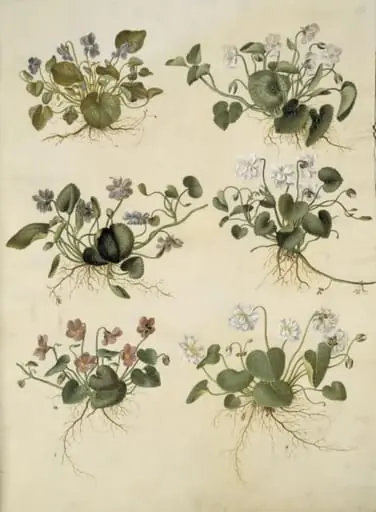 Viola odorata (marts-viol)
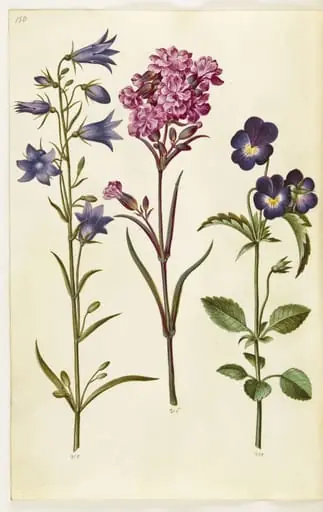 Campanula rotundifolia (liden klokke); Silene viscaria (almindelig tjærenellike); Viola tricolor (almindelig stedmoderblomst)
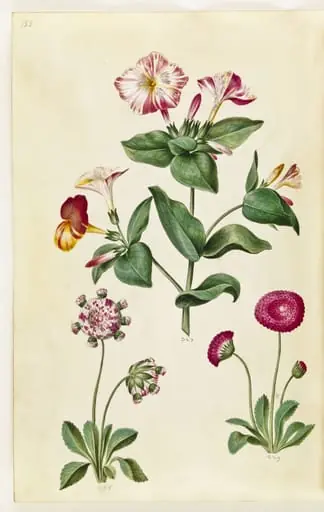 Mirabilis jalapa (vidunderblomst); Bellis perennis (almindelig tusindfryd)
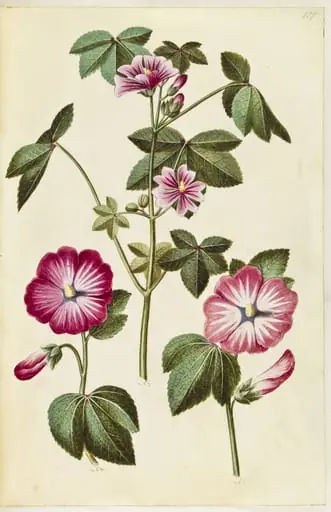 Malva sylvestris (almindelig katost); Lavatera trimestris (mamelukærme)
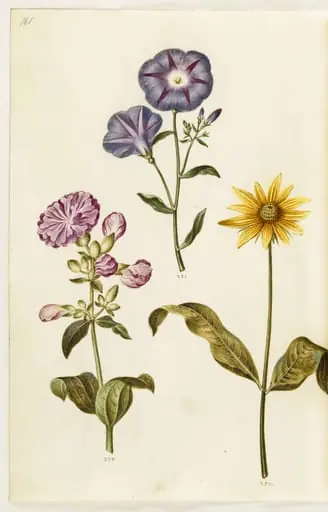 Saponaria officinalis (almindelig sæbeurt); Convolvulus tricolor (jomfruskørt); Helianthus (?) (solsikke-art)