Artwork
Viola odorata (marts-viol)
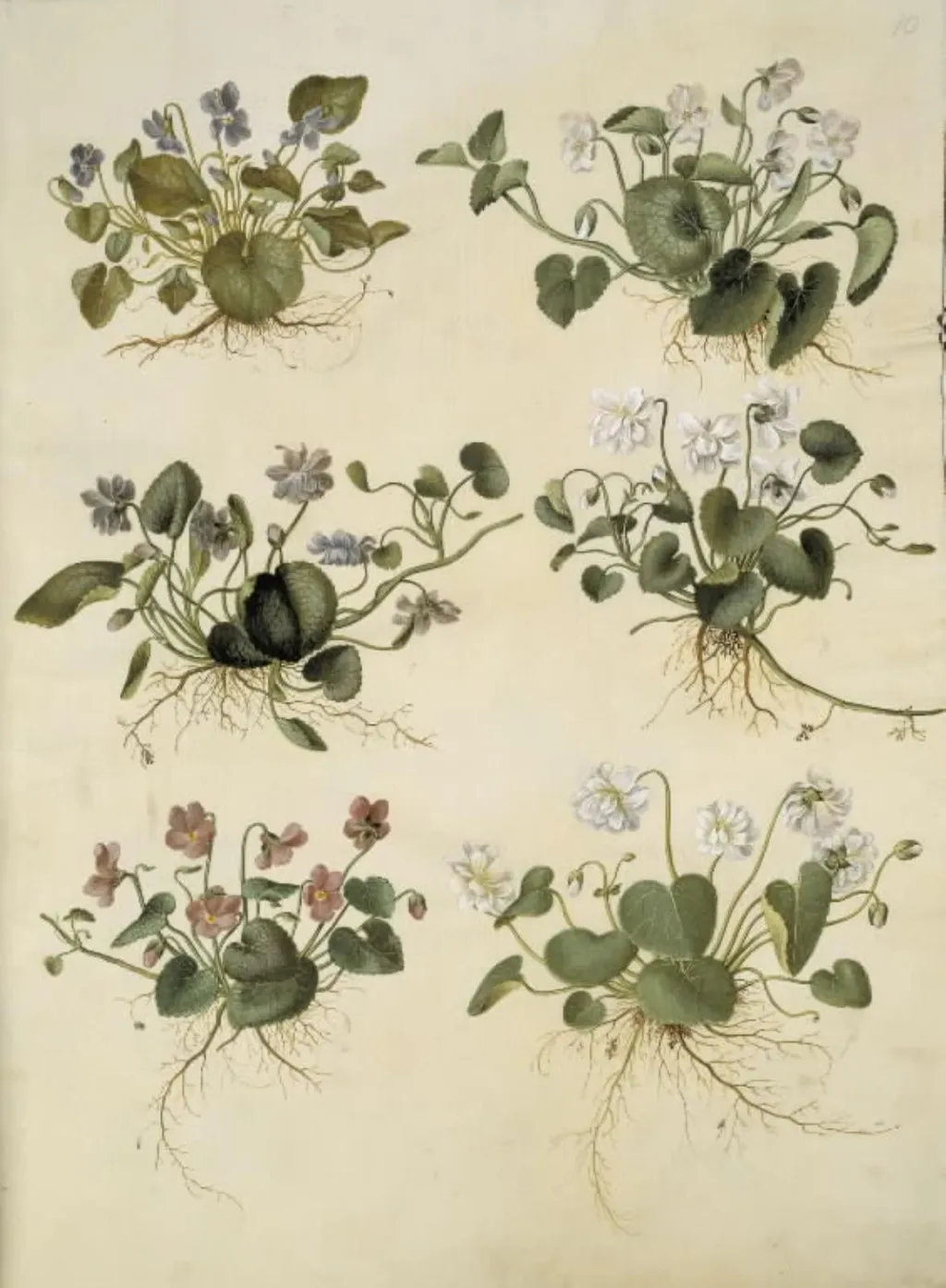
Viola odorata (marts-viol) is an unspecified work on paper by Unknown. It dates from 1654 and is held in the collection of the Statens Museum for Kunst. Created around 1654, this botanical illustration depicts five specimens of Viola odorata, commonly known as sweet violets.
About this work
Overview
The piece is part of the collection at the Museum of Ethnography, where it serves as a record of plant observation from the mid-seventeenth century.
Created around 1654, this botanical illustration depicts five specimens of Viola odorata, commonly known as sweet violets. Rendered in watercolor, the work emphasizes precise naturalism, with each plant shown intact, including its root system. The background is unadorned, directing full attention to the flora. The piece is part of the collection at the Museum of Ethnography, where it serves as a record of plant observation from the mid-seventeenth century.
Subject & Meaning
The subject is Viola odorata, a fragrant wildflower native to Europe. By depicting the plants with roots and intact foliage, the artist underscores their biological integrity rather than treating them as decorative elements. The inclusion of subtle color variations—soft blues, whites, and one pink bloom—suggests attention to natural variation. The work reflects a scientific interest in plant morphology, likely intended for study or documentation rather than aesthetic display.
Technique & Style
The artist employed fine watercolor brushwork to capture minute details: the delicate veins of leaves, the texture of roots, and the translucent quality of petals. The absence of shading or atmospheric effects highlights a commitment to clarity and accuracy. Each cluster is isolated against a neutral ground, a method common in early botanical illustration to facilitate identification. The technique reveals close, patient observation of live specimens, typical of naturalists of the period.
History & Provenance
The work is attributed to an artist identified as 35199_person, though little else is known about their background. It has been held since at least the early twentieth century by the Museum of Ethnography, likely acquired as part of a broader collection of scientific illustrations. Its preservation suggests it was valued for its educational or taxonomic utility rather than its artistic merit at the time of creation.
Context
In mid-seventeenth-century Europe, detailed plant illustrations were increasingly produced for scientific catalogs and private collections. This piece aligns with the rise of empirical botany, where accurate visual records replaced symbolic or stylized representations. Such works often supported medical, horticultural, or scholarly pursuits, reflecting a broader cultural shift toward observation-based knowledge.
Legacy
Though not widely exhibited, the illustration remains a quiet example of pre-modern botanical precision. It contributes to the historical record of how naturalists documented flora before photography. Its survival in a museum of ethnography hints at its role in cross-cultural studies of plant use, though its specific ethnographic connection remains undocumented.
Artist & collection

 Domestic Scene
 Giacomo and Cardinal Marco, investing Andrea, Abbot of San Zeno, with his Benefice
 The Nymph of Fontainebleau
 Portrait of a Woman
 Madonna and Child with Saints in the Enclosed Garden
 Venus and Minerva
 Family Group of Four on Sofa
 Wall painting from Room H of the Villa of P. Fannius Synistor at Boscoreale
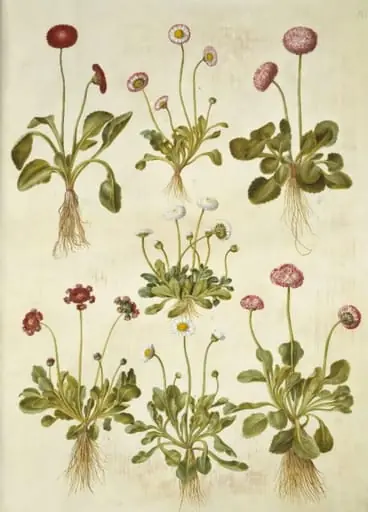 Bellis perennis (almindelig tusindfryd)
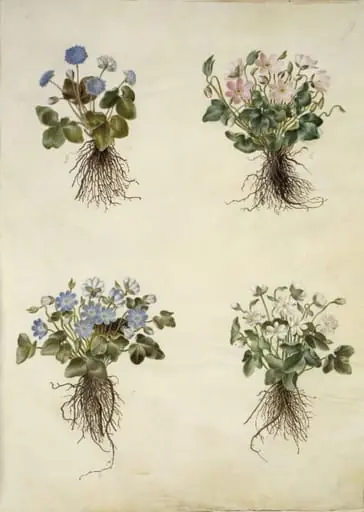 Anemone hepatica (blå anemone)
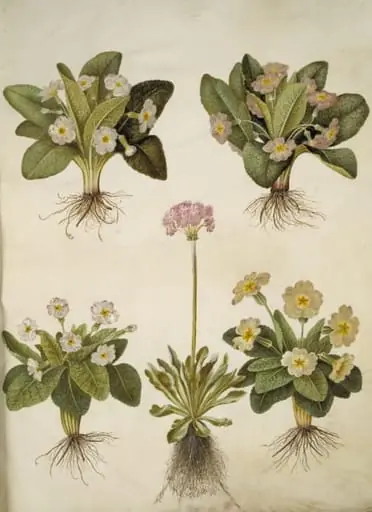 Primula vulgaris (hybrid af storblomstret kodriver); Primula farinosa (melet kodriver)
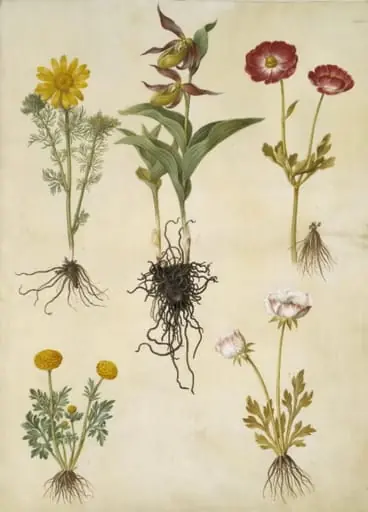 Adonis vernalis (vår-adonis); Cypripedium calceolus (stor fruesko); Ranunculus asiaticus (have-ranunkel); Ranunculus (art af ranunkel)
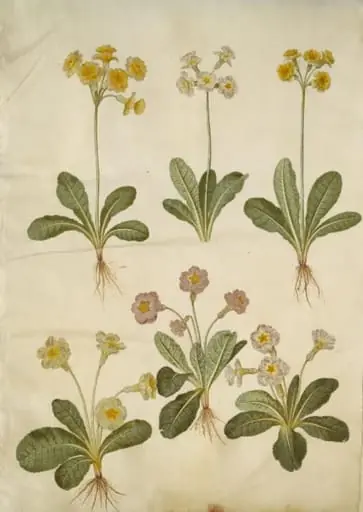 Primula veris (hybrid af hulkravet kodriver); Primula vulgaris (hybrid af storblomstret kodriver)
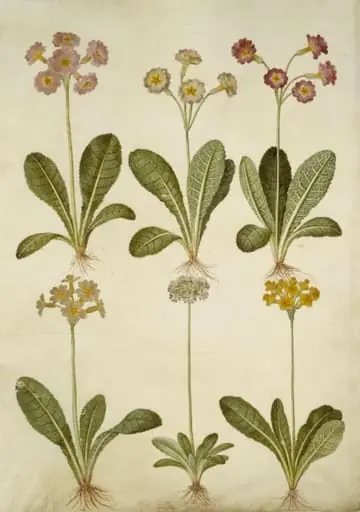 Primula veris (hybrid af hulkravet kodriver); Primula farinosa (melet kodriver)
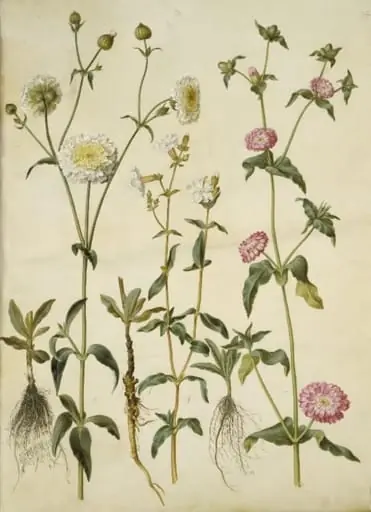 Silene latifolia (aften-pragtstjerne); Silene dioica (dag-pragtstjerne)
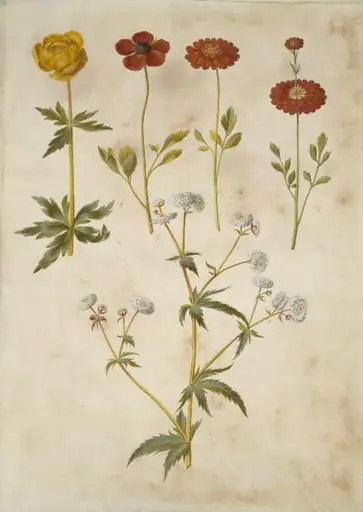 Trollius europaeus (europæisk engblomme); Ranunculus asiaticus (have-ranunkel); Ranunculus aconitifolius (sølvknap-ranunkel)
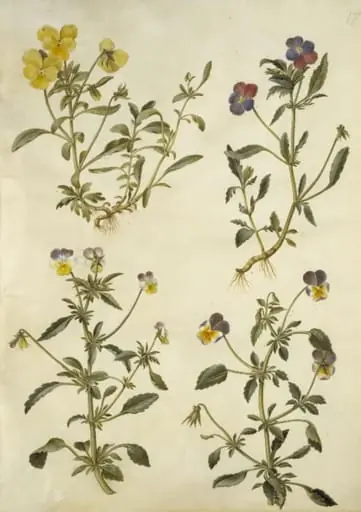 Viola cornuta (horn-viol); Viola tricolor (almindelig stedmoderblomst)