Artwork
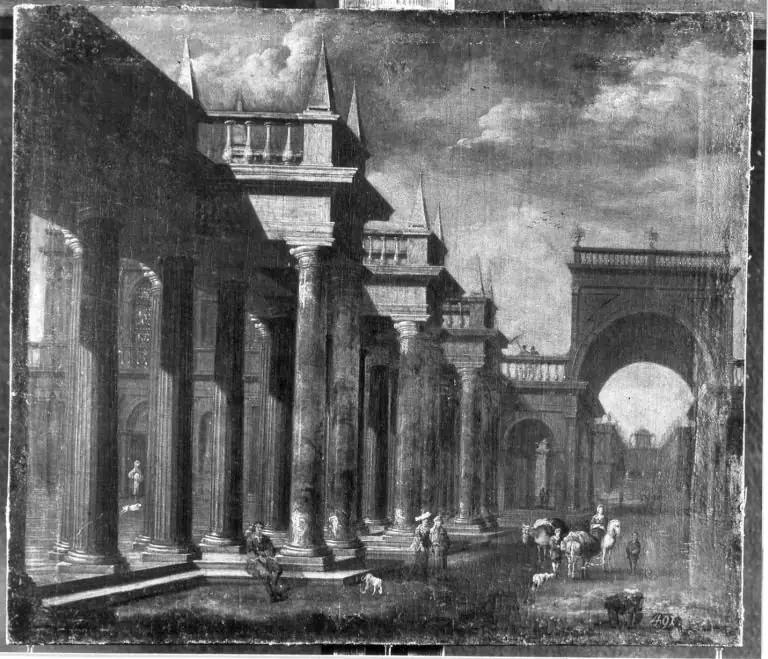
Grotto. Fantasy
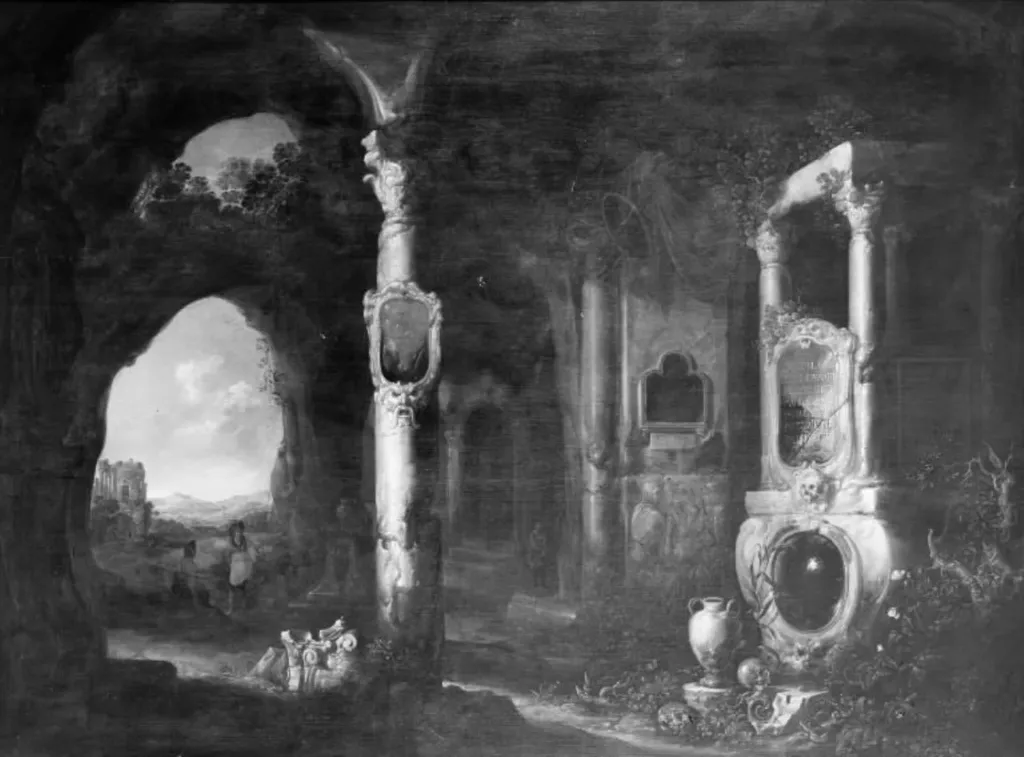
Grotto. Fantasy is a photography by Unknown. It dates from 1632 and is held in the collection of the Statens Museum for Kunst. Created around 1632, Grotto.
About this work
Overview
Created around 1632, Grotto. Fantasy is a monochrome image attributed to the artist 35455_person. It resides in the collection of the Museum of Ethnography. The composition presents a stylized interior space blending architectural elements with natural scenery, rendered in fine detail using only black and white tones. The work avoids color to emphasize texture, light, and spatial illusion.
Subject & Meaning
The scene depicts an imagined grotto, framed by two elaborately carved columns, each adorned with a mirror. A vase and assorted objects rest before the right column, while a tranquil landscape is visible through an arch to the left. The mirrors may suggest themes of reflection, perception, or the boundary between the real and the imagined, common in early 17th-century visual culture.
Technique & Style
The artist employed precise linear detail and subtle tonal gradations to simulate texture and depth without color. The columns are rendered with intricate ornamentation, and the mirrors catch light through carefully placed highlights. The background landscape is softly modeled, contrasting with the sharpness of the foreground objects, creating a layered sense of space within a flat plane.
History & Provenance
The work has been held by the Museum of Ethnography since at least the early 20th century, though its earlier ownership remains undocumented. Its attribution to 35455_person is based on stylistic analysis and archival references, though no contemporary records confirm its commission or original location. The piece likely entered the museum through a private collection or academic acquisition.
Context
Produced during the Baroque period, the image reflects contemporary European interests in illusionistic interiors and fantastical architecture.
Produced during the Baroque period, the image reflects contemporary European interests in illusionistic interiors and fantastical architecture. Similar motifs appear in prints and stage designs of the time, where grottoes symbolized wonder and the artificial manipulation of nature. The absence of color aligns with preparatory drawings or studies, though this work appears as a finished composition.
Legacy
Grotto. Fantasy remains a singular example of 35455_person’s known output, offering insight into the artist’s engagement with spatial fantasy and material detail. While not widely exhibited, it contributes to scholarly understanding of minor Baroque visual traditions that prioritized intricate design over narrative drama. Its preservation allows continued study of early 17th-century imaginative aesthetics.
Artist & collection

 Domestic Scene
 Giacomo and Cardinal Marco, investing Andrea, Abbot of San Zeno, with his Benefice
 The Nymph of Fontainebleau
 Portrait of a Woman
 Madonna and Child with Saints in the Enclosed Garden
 Venus and Minerva
 Family Group of Four on Sofa
 Wall painting from Room H of the Villa of P. Fannius Synistor at Boscoreale
 A Mountain Cave
 Seven Nymphs in a Grotto
 Seven Nymphs in a Grotto
 Ruins in a Landscape
 Ruins in a Landscape
 Nymphs in a Cave with Antique Ruins
 River Landscape
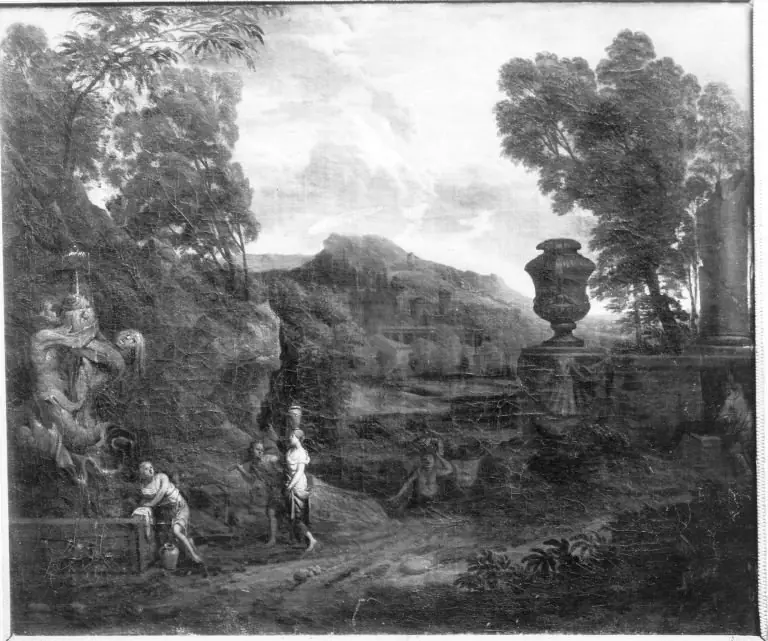 Italienisch-klassische Landschaft
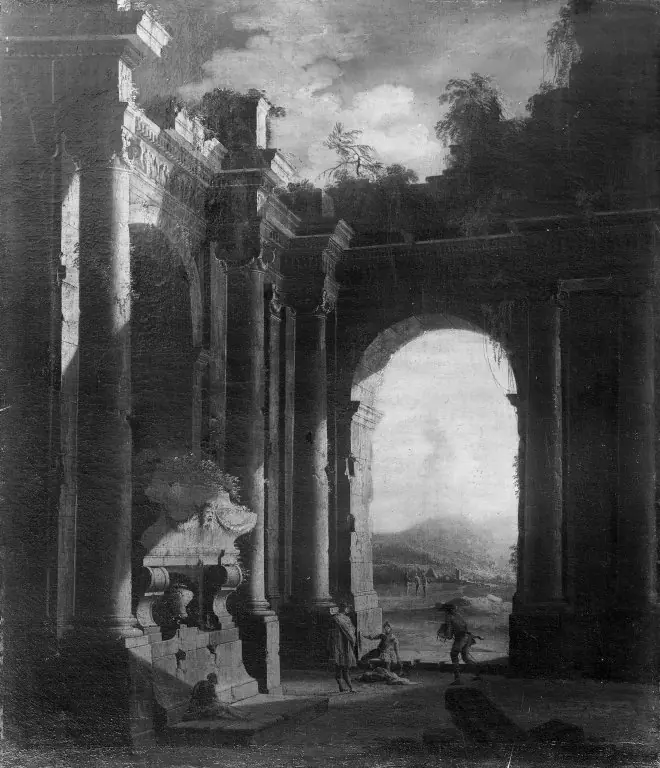 Capriccio of Ruins with Figures beneath an Archway
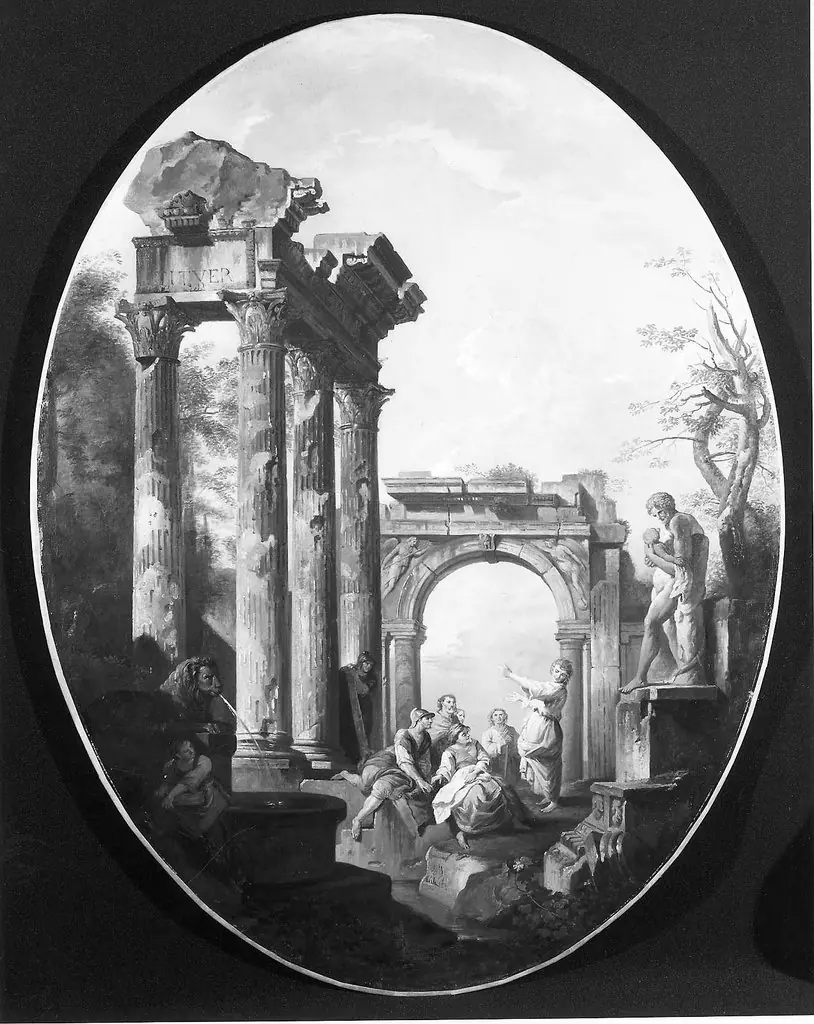 Capriccio of Roman Ruins with a Statue of Silenus and Dionysus
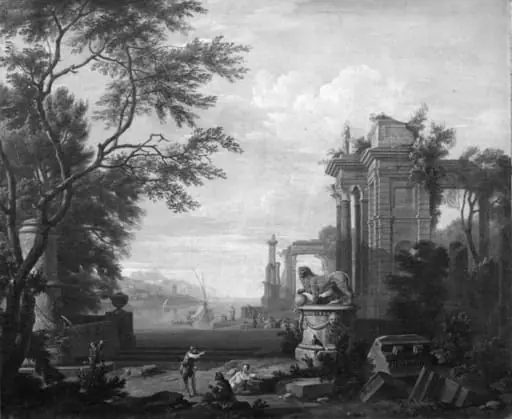 Southern Harbour
 Fantasy palace with a colonade