Artwork
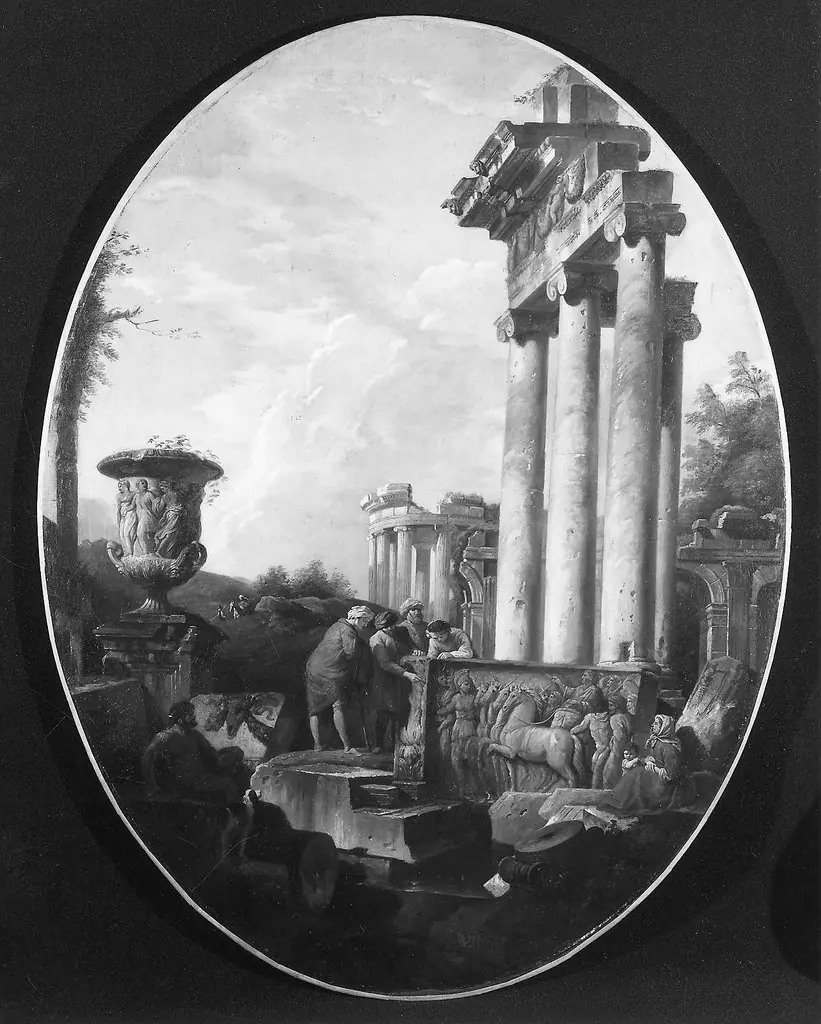
Capriccio of Roman Ruins with a Statue of Silenus and Dionysus
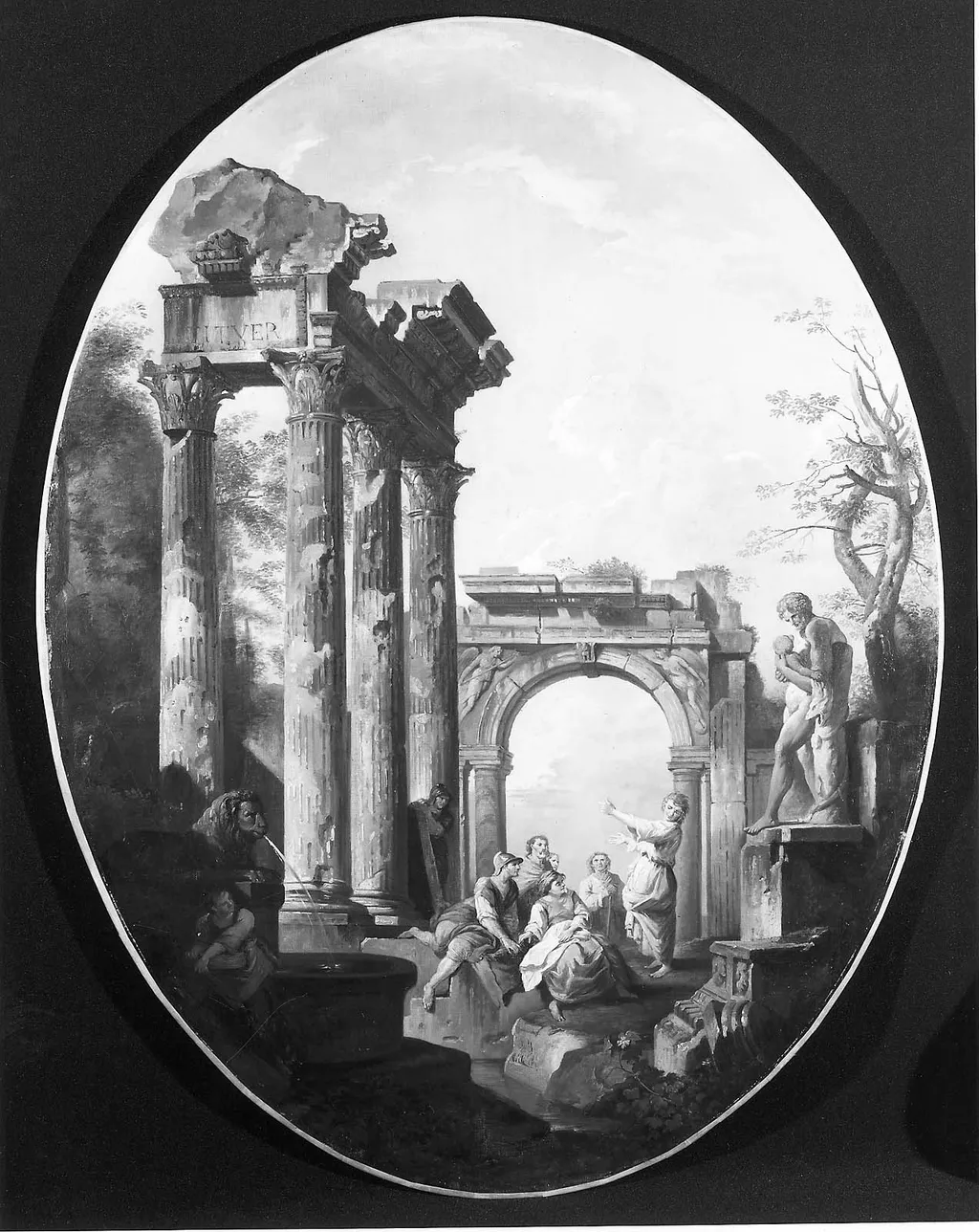
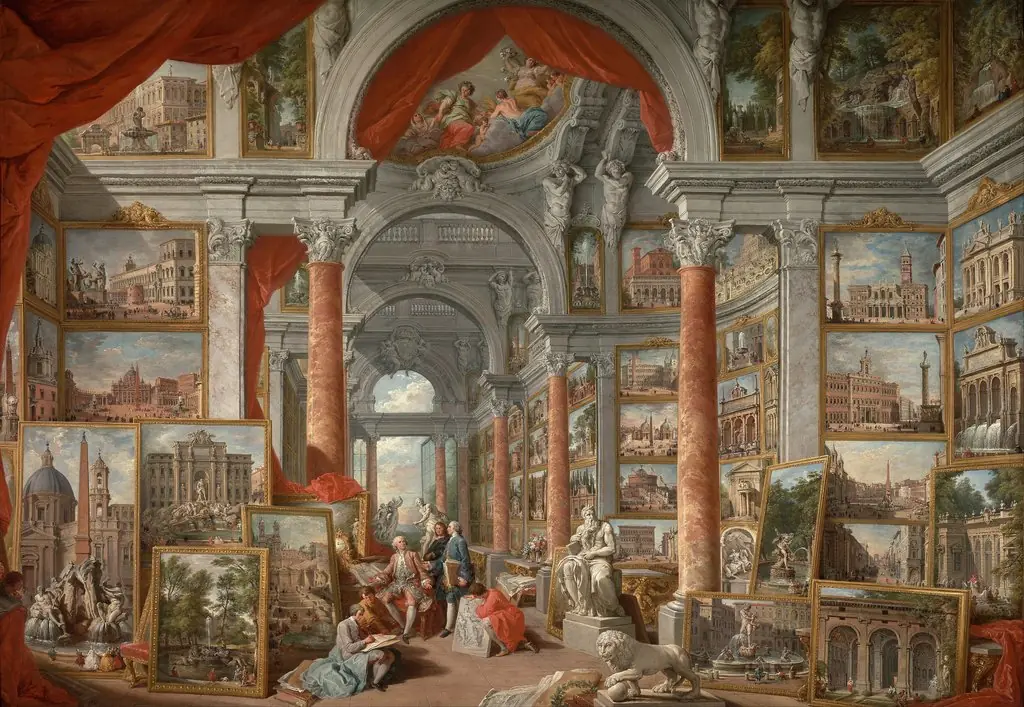
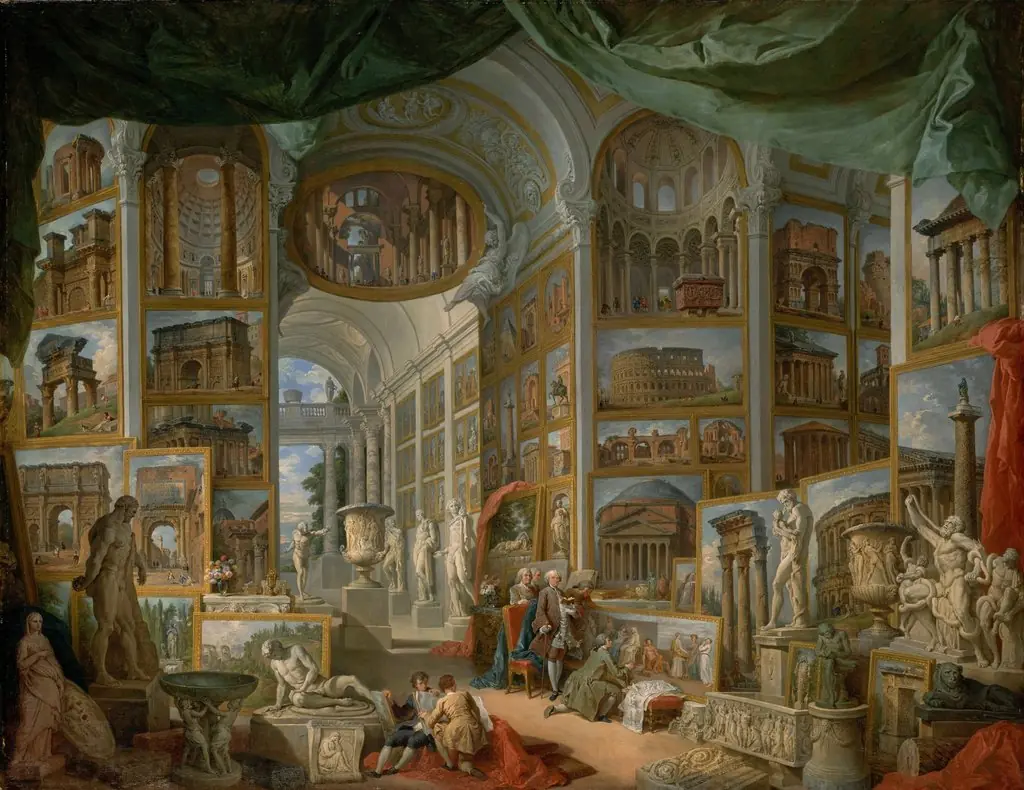
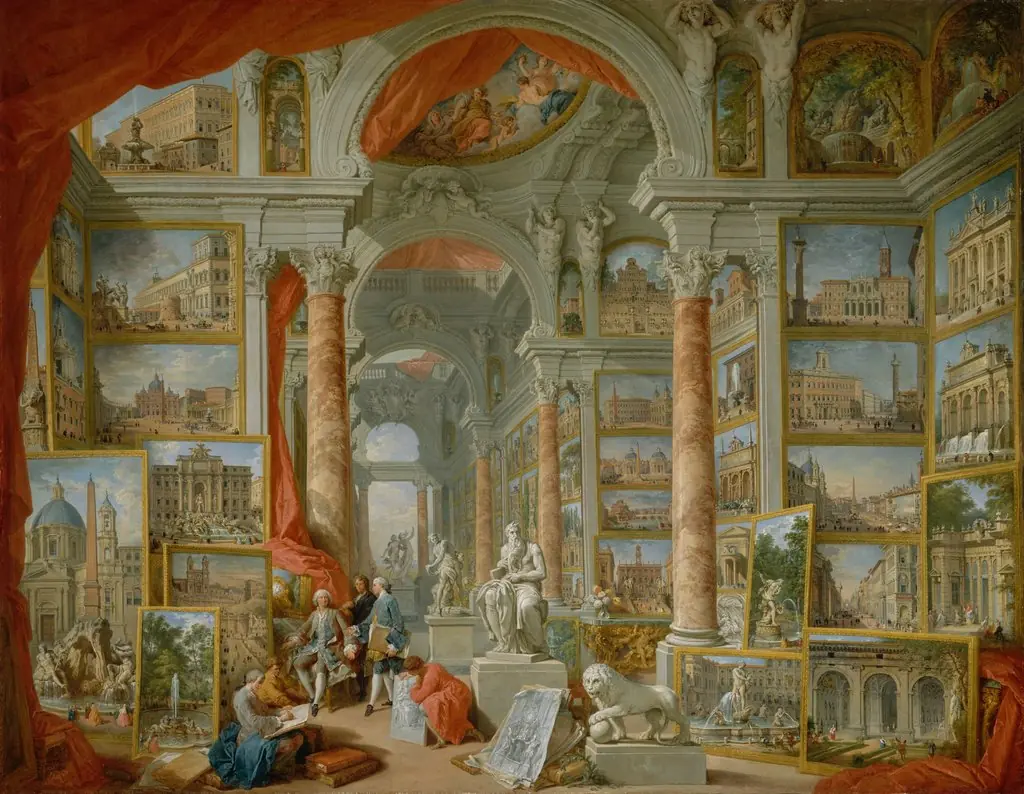
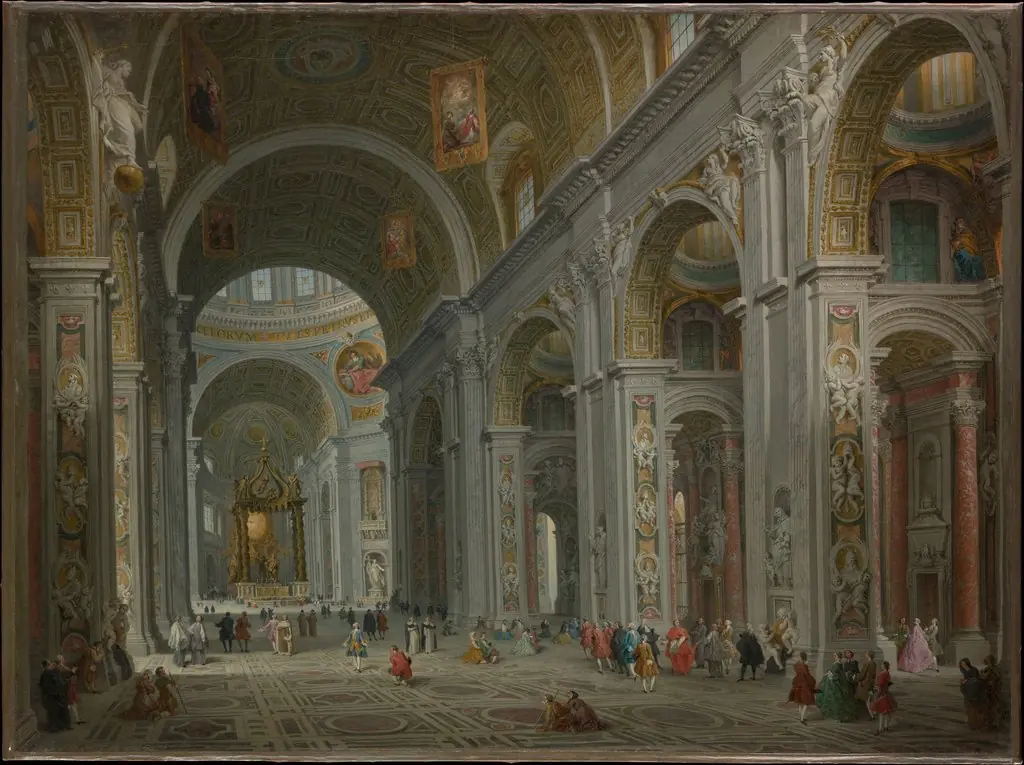
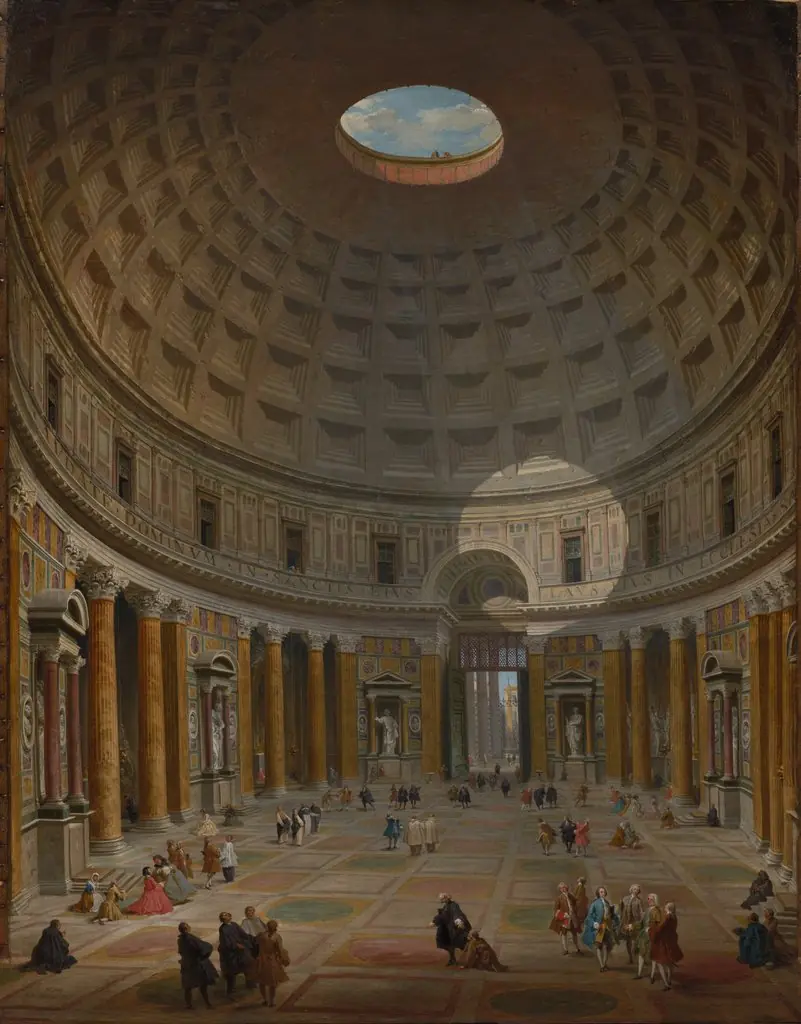
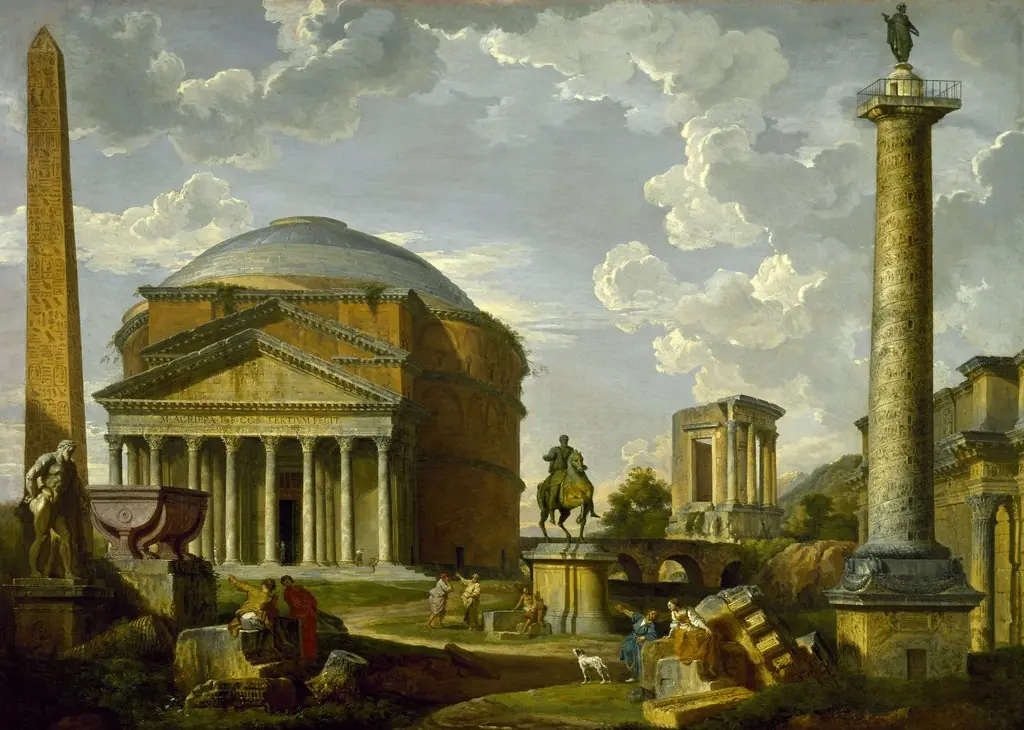
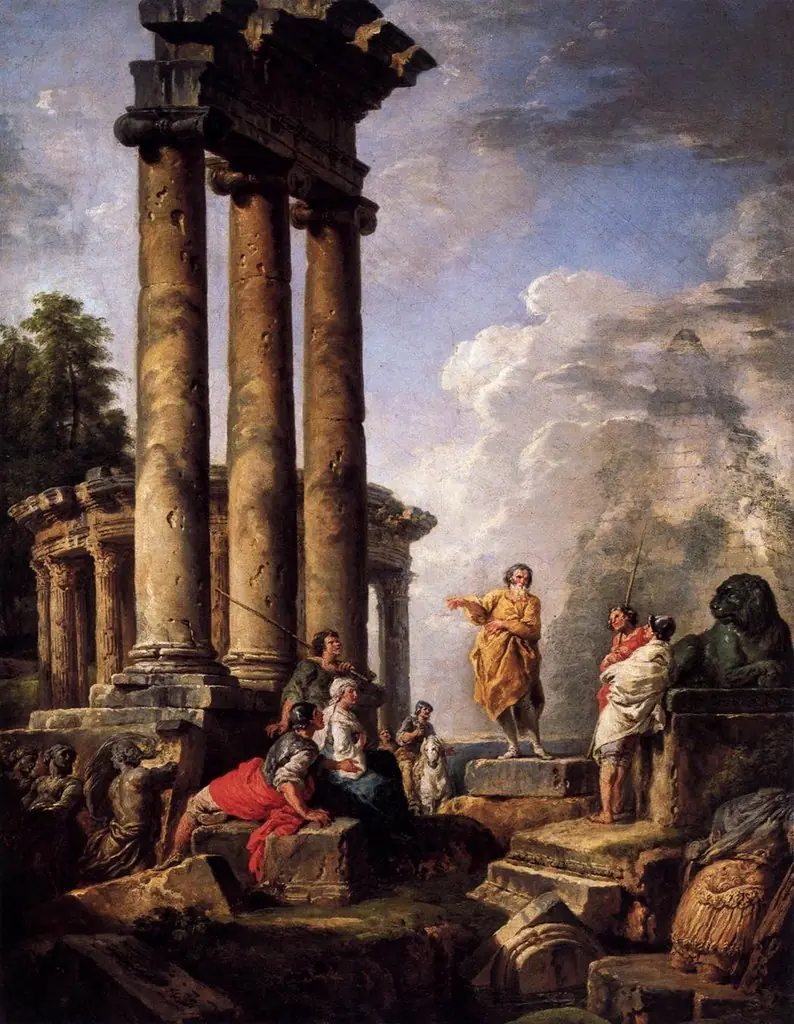
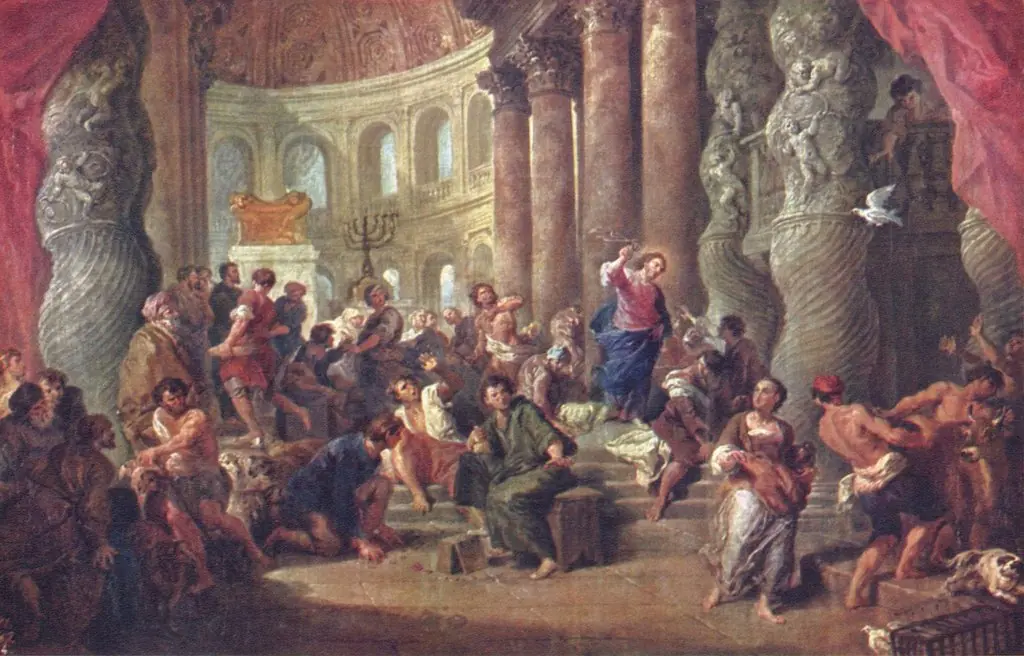
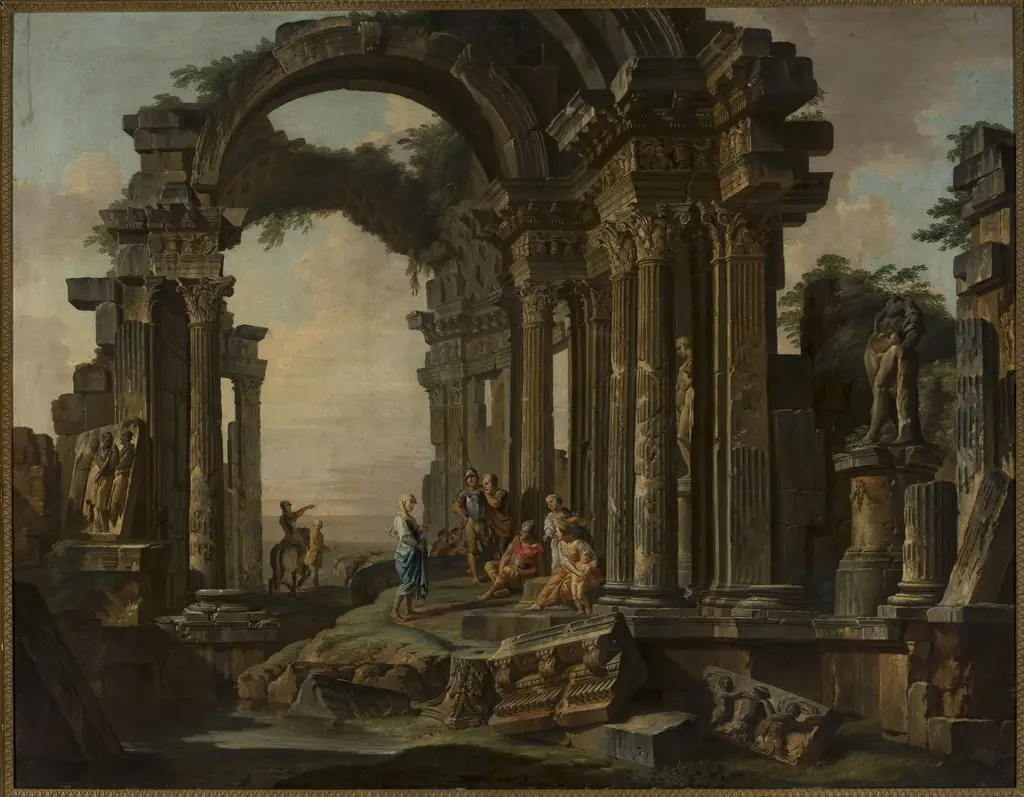
Capriccio of Roman Ruins with a Statue of Silenus and Dionysus is an oil painting by the Rococo painting artist Giovanni Paolo Panini. It dates from 1738 and is held in the collection of the Museum of Fine Arts Boston.
About this work
Overview
Capriccio of Roman Ruins with a Statue of Silenus and Dionysus is an oil painting created by Italian Baroque artist Giovanni Paolo Panini around 1738. Characteristic of his work as a vedutista, the piece combines real and imagined elements of Roman antiquities.
Subject & Meaning
The painting depicts a serene scene of ancient Roman ruins, centered on a stone archway with a statue of Silenus and Dionysus. The composition blends historical grandeur with mythological elements, evoking a sense of nostalgia and contemplation amidst the ruins.
Technique & Style
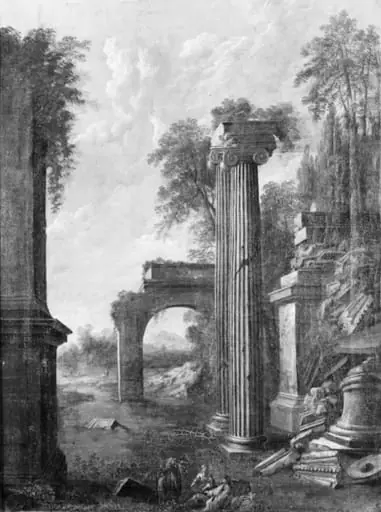
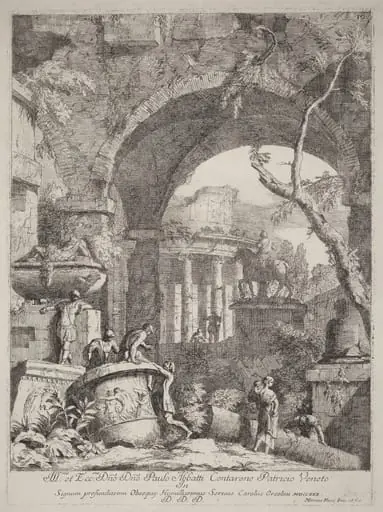
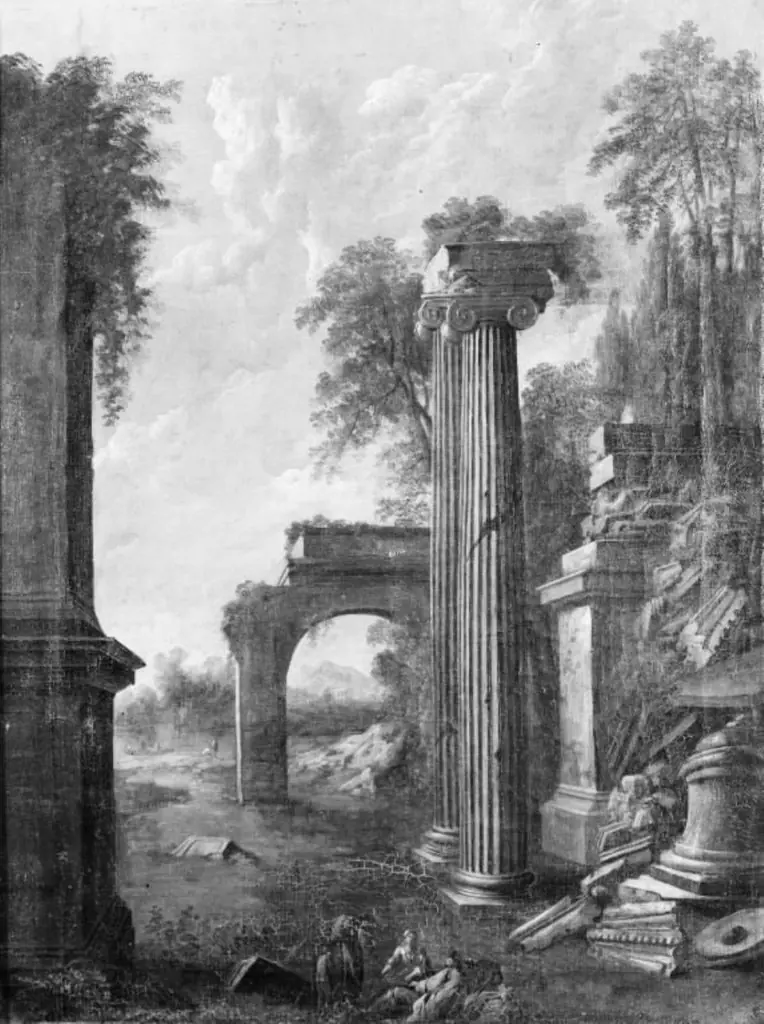
Executed in the Rococo period, the painting showcases Panini's distinctive approach to veduta. It features fanciful architectural arrangements, precise rendering of textures, and a muted color palette that contributes to the overall atmosphere of serenity.
History & Provenance
Created circa 1738, the painting is now part of the collection at the Museum of Fine Arts, Boston.
Context
As a work by a prominent vedutista, it reflects 18th-century European fascination with Roman antiquities and the aesthetic of combining reality with imaginative compositions.
Legacy
While specific impact details are not provided, as a Panini work, it contributes to the broader legacy of Baroque and Rococo depictions of Roman landscapes, influencing later artistic interpretations of classical subjects.
Artist & collection
Artist
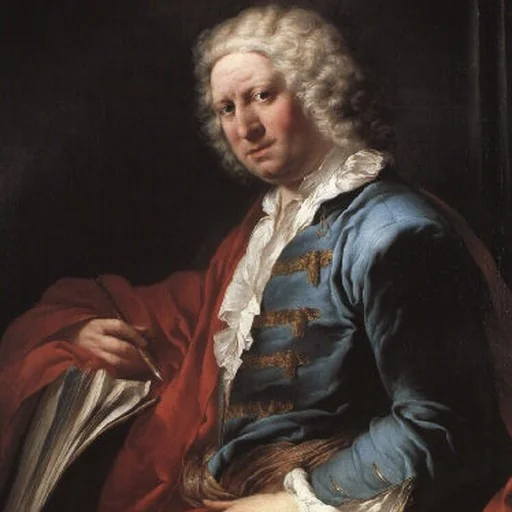
Giovanni Paolo, also known as Gian Paolo Panini or Pannini (17 June 1691 – 21 October 1765), was an Italian Baroque painter and architect who worked in Rome and is primarily known as one of the vedutisti ("view painters").