Artwork
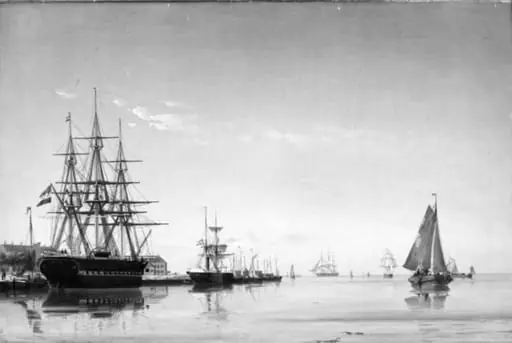
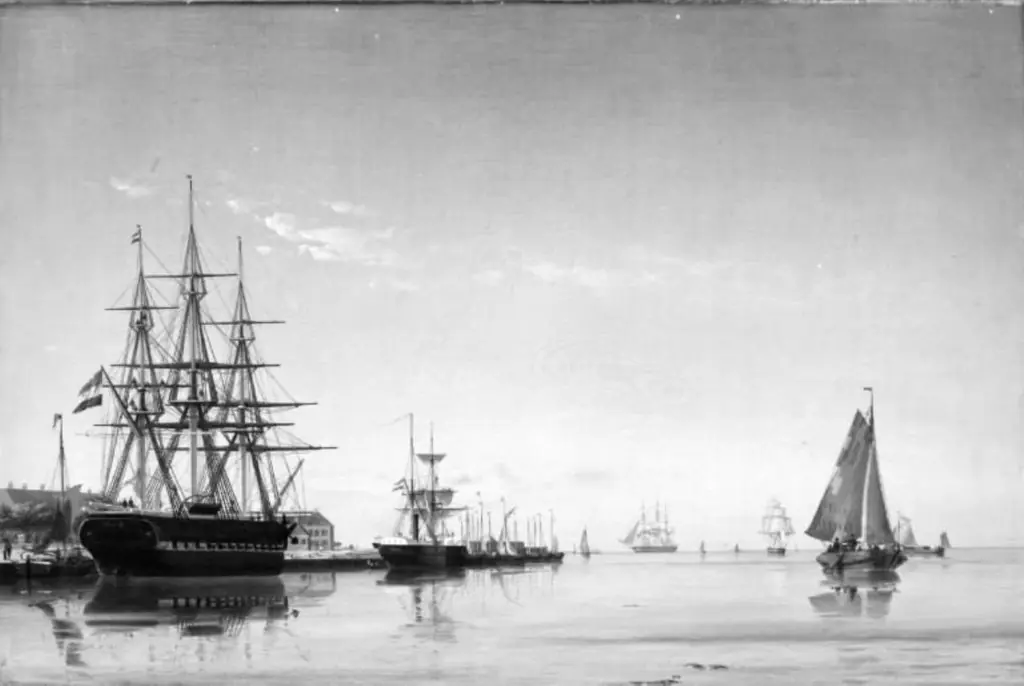
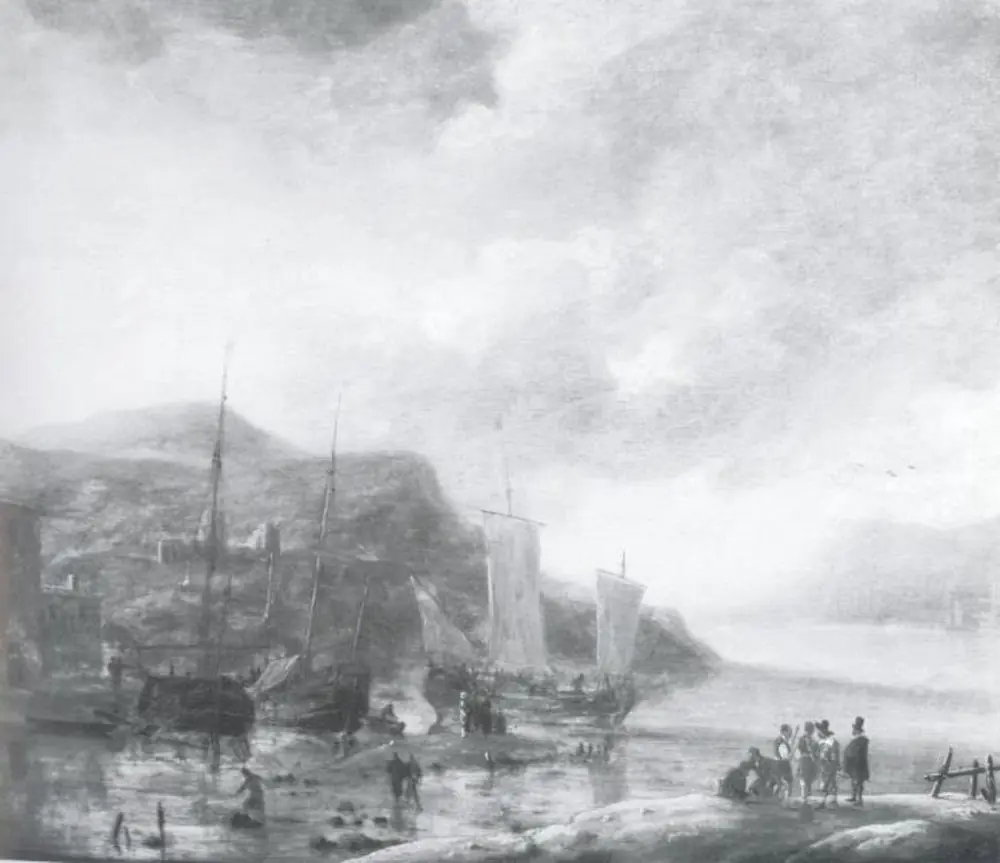
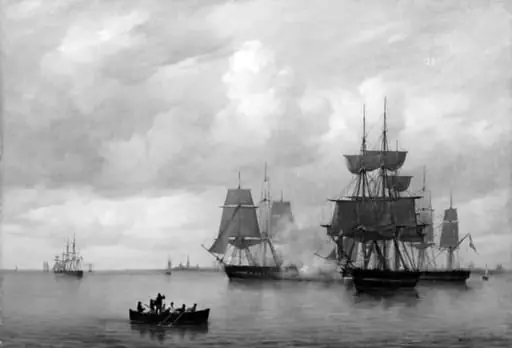
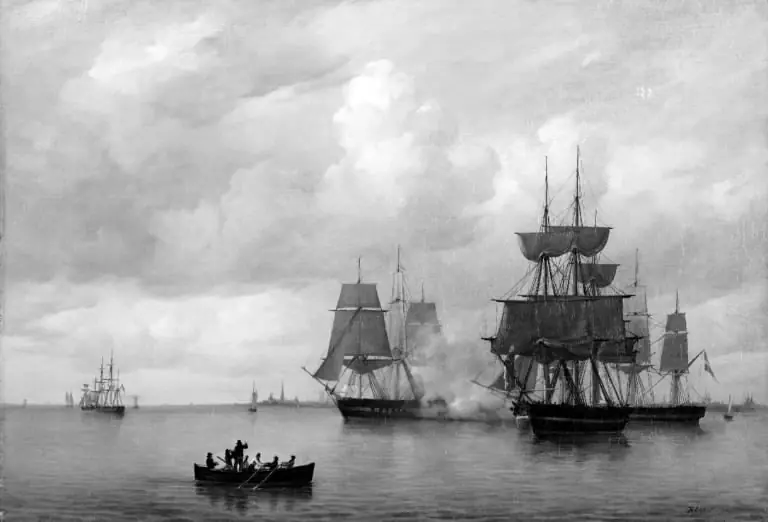
The Ship of the Line "Dronning Marie" (Queen Marie) and the Corvette "Najaden" Weigh Anchor in Faxa Bay, near Reykjavik, Iceland
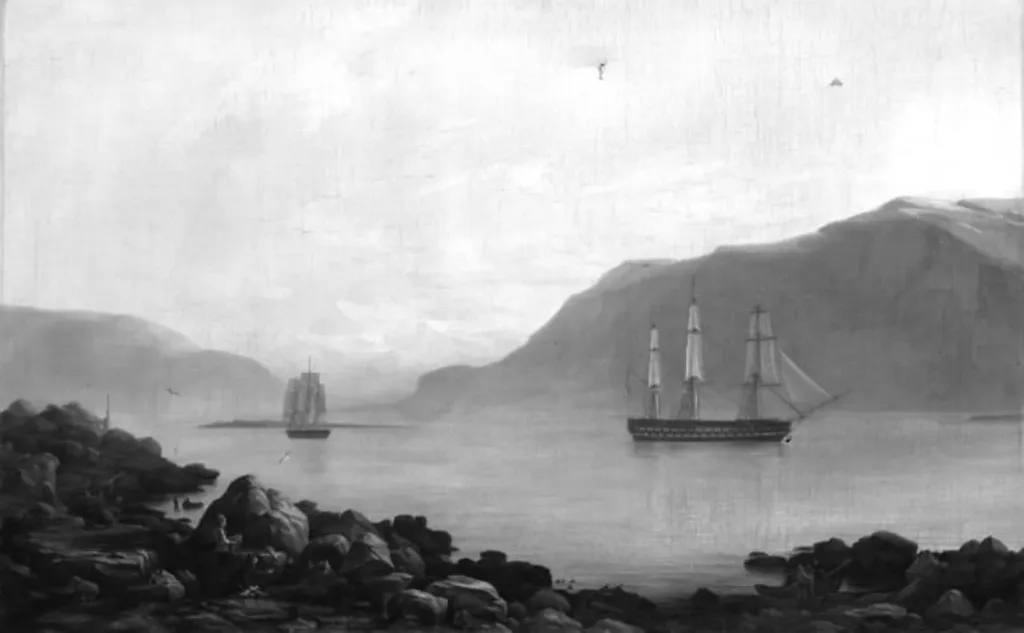
The Ship of the Line "Dronning Marie" (Queen Marie) and the Corvette "Najaden" Weigh Anchor in Faxa Bay, near Reykjavik, Iceland is a photography by the Romanticist artist Unknown. It dates from 1836 and is held in the collection of the Statens Museum for Kunst.
About this work
Overview
The work, dated 1836, depicts two historic sailing vessels—a three‑mast ship of the line named Dronning Marie and the two‑mast corvette Najaden—anchored in Faxa Bay near Reykjavik. Rendered as an image, the composition presents a tranquil sea framed by rugged cliffs and a distant, mist‑shrouded mountain range.
Subject & Meaning
The scene captures a moment of departure, with both ships’ sails furled and anchors being hoisted. By placing the vessels against a serene natural backdrop, the image emphasizes the relationship between maritime technology and the stark Icelandic landscape, suggesting themes of exploration and the calm before a voyage.
Technique & Style
The artist employs a muted palette of grays and whites to convey the soft illumination on water and rock. Delicate brushwork suggests the smooth surface of the sea, while the cliffs are rendered with subtle tonal variations that convey their solidity. The overall effect aligns with early‑19th‑century Romantic sensibilities, emphasizing atmosphere over precise detail.
History & Provenance
Created in 1836 by the artist identified as 35588_person, the image is part of the collection of the Museum of Ethnography. Its acquisition history is not recorded in the available data, but the work has remained within the museum’s holdings, serving as a visual record of Scandinavian naval vessels of the period.
Context
During the 1830s, maritime painting often highlighted national pride and the expanding reach of naval power. The depiction of Dronning Marie, a Danish ship of the line, alongside the smaller Najaden reflects Denmark‑Norway’s naval heritage and the strategic importance of Icelandic waters in the era’s trade and defense networks.
Artist & collection

 Domestic Scene
 Giacomo and Cardinal Marco, investing Andrea, Abbot of San Zeno, with his Benefice
 The Nymph of Fontainebleau
 Portrait of a Woman
 Madonna and Child with Saints in the Enclosed Garden
 Venus and Minerva
 Family Group of Four on Sofa
 Wall painting from Room H of the Villa of P. Fannius Synistor at Boscoreale