Artwork
Dameportræt fra Christian VII's tid
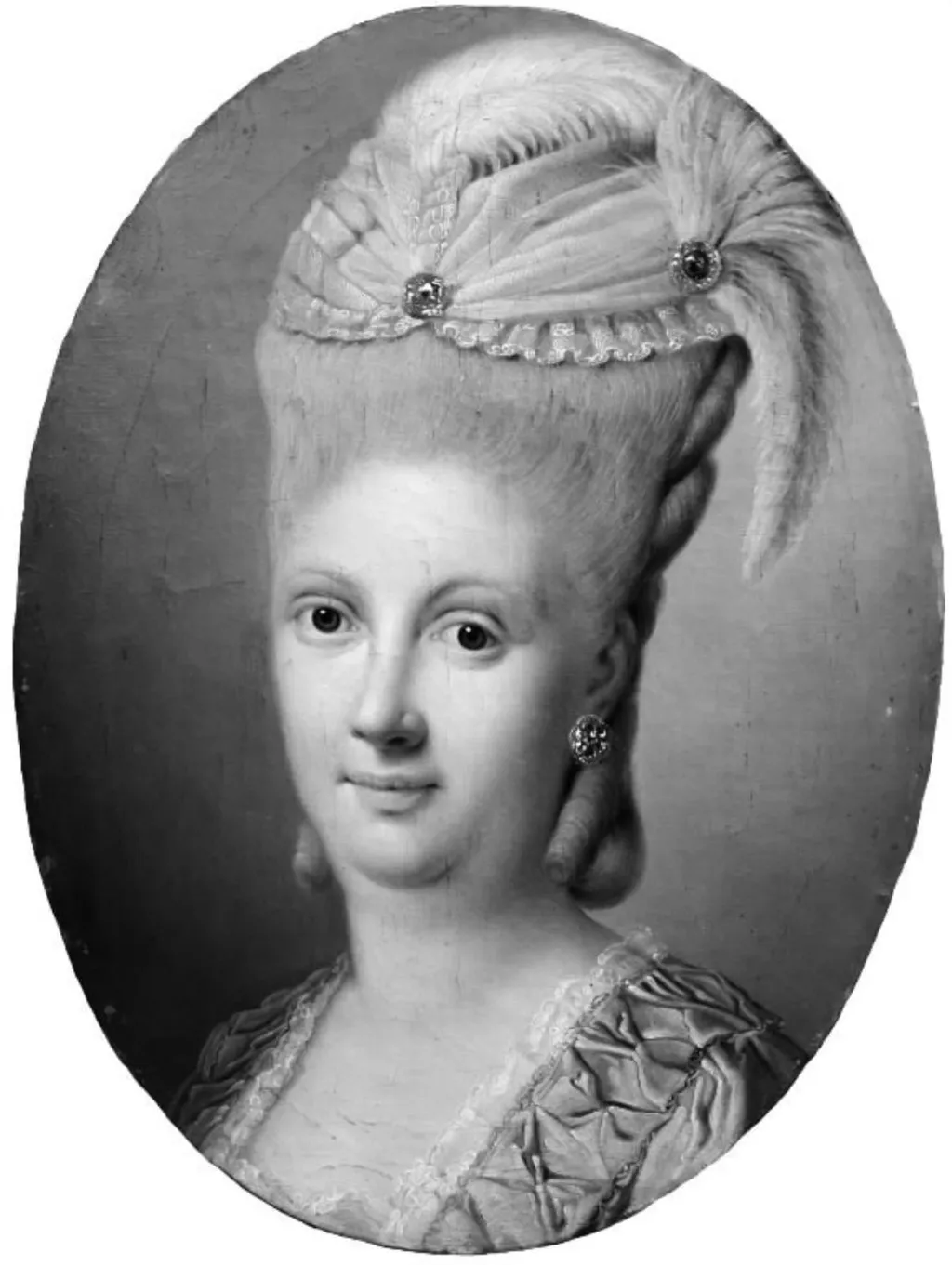
Dameportræt fra Christian VII's tid is a photography by Unknown. It dates from 1750 and is held in the collection of the Statens Museum for Kunst. This portrait, dated around 1750, depicts a woman from the era of Christian VII of Denmark.
About this work
Overview
The image is held in the collection of the Museum of Ethnography, though its exact origin and artist remain unidentified.
This portrait, dated around 1750, depicts a woman from the era of Christian VII of Denmark. Executed in monochrome, it reflects the conventions of 18th-century European portraiture. The image is held in the collection of the Museum of Ethnography, though its exact origin and artist remain unidentified. Its restrained palette and careful modeling suggest a focus on social presentation rather than individual expression.
Subject & Meaning
The sitter is presented with the refined accoutrements of aristocratic fashion: an elaborate powdered wig, lace collar, and single earring. These elements signal status and adherence to contemporary norms of decorum. The absence of identifying inscriptions or symbols leaves her identity obscure, but her attire aligns with elite female portraiture of the period, emphasizing elegance over personal narrative.
Technique & Style
The artist employs subtle gradations of tone to model the face and fabric, demonstrating an awareness of chiaroscuro. Soft shadows define the contours of the wig and collar, lending volume without overt drama. The use of black-and-white medium suggests either a preparatory study or a print reproduction, prioritizing form and texture over color, typical of disciplined portraiture in mid-18th-century Northern Europe.
History & Provenance
The portrait entered the Museum of Ethnography’s holdings without clear documentation of its commission or prior ownership. Its presence in an ethnographic context, rather than a fine arts collection, may reflect early 20th-century curatorial practices that grouped cultural artifacts by visual type rather than origin. Its creation date is estimated based on costume and stylistic parallels.
Context
In mid-1700s Europe, portraiture served as a visual language of social rank. Women of the upper classes were often depicted with elaborate wigs and lace, symbols of leisure and wealth. This image aligns with similar works from Denmark, Sweden, and Germany, where such styles persisted even as artistic centers like Paris and London moved toward more naturalistic approaches.
Legacy
Though unsigned and unattributed, the portrait remains a representative example of how status was visually encoded in non-royal circles during Christian VII’s reign. Its preservation in an ethnographic museum highlights evolving attitudes toward the documentation of everyday elite culture, offering insight into the material life of 18th-century Nordic society beyond official royal imagery.
Artist & collection

 Domestic Scene
 Giacomo and Cardinal Marco, investing Andrea, Abbot of San Zeno, with his Benefice
 The Nymph of Fontainebleau
 Portrait of a Woman
 Madonna and Child with Saints in the Enclosed Garden
 Venus and Minerva
 Family Group of Four on Sofa
 Wall painting from Room H of the Villa of P. Fannius Synistor at Boscoreale
 Kreivitär Poaton (?)
 Pfalzgräfin Hedwig Elisabeth Amalie, Gemahlin des Prinzen Jacob Ludwig
 Grevinde Margarethe Moltke, f. Løvenskiold
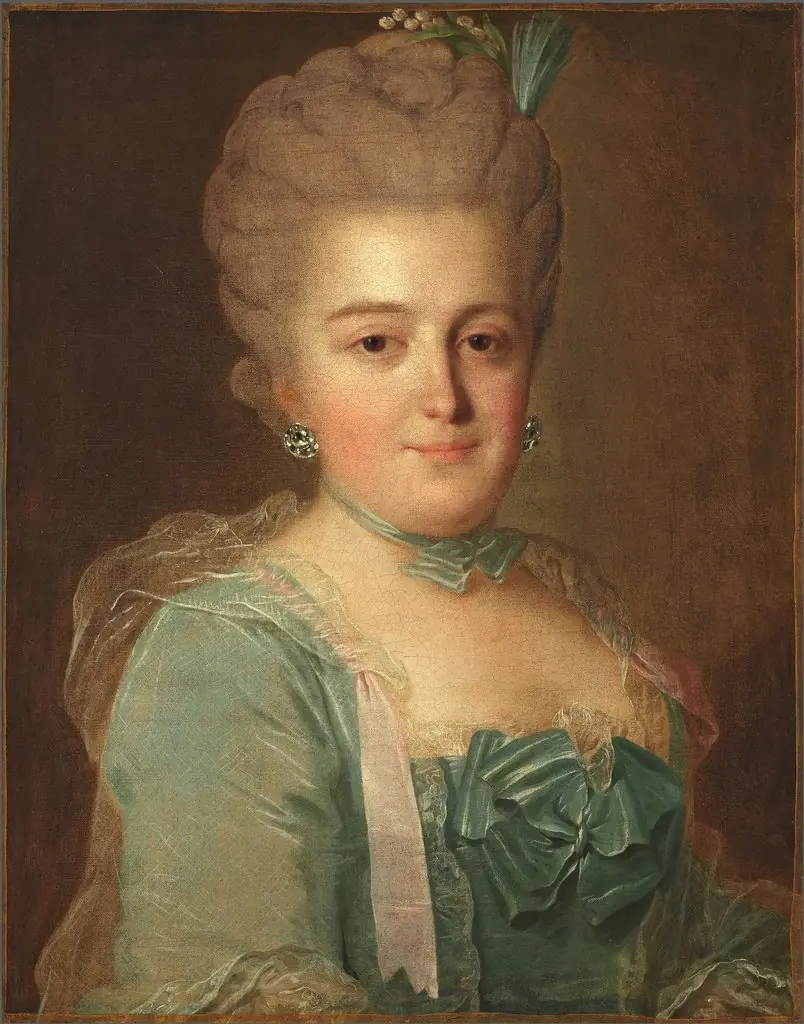 Portrait of Anna S. Tulinova
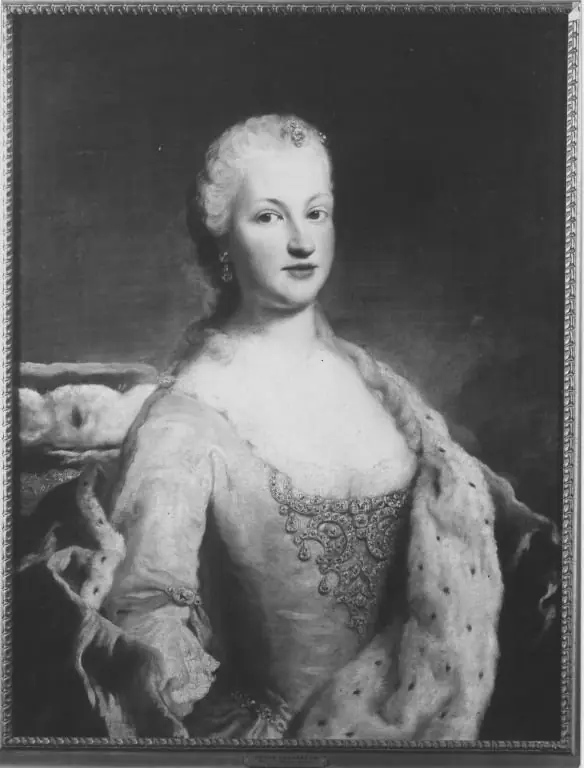 Bildnis der Maria Franziska Dorothea von Pfalz-Sulzbach, Herzogin von Zweibrücken-Birkenfeld (1724-1794)
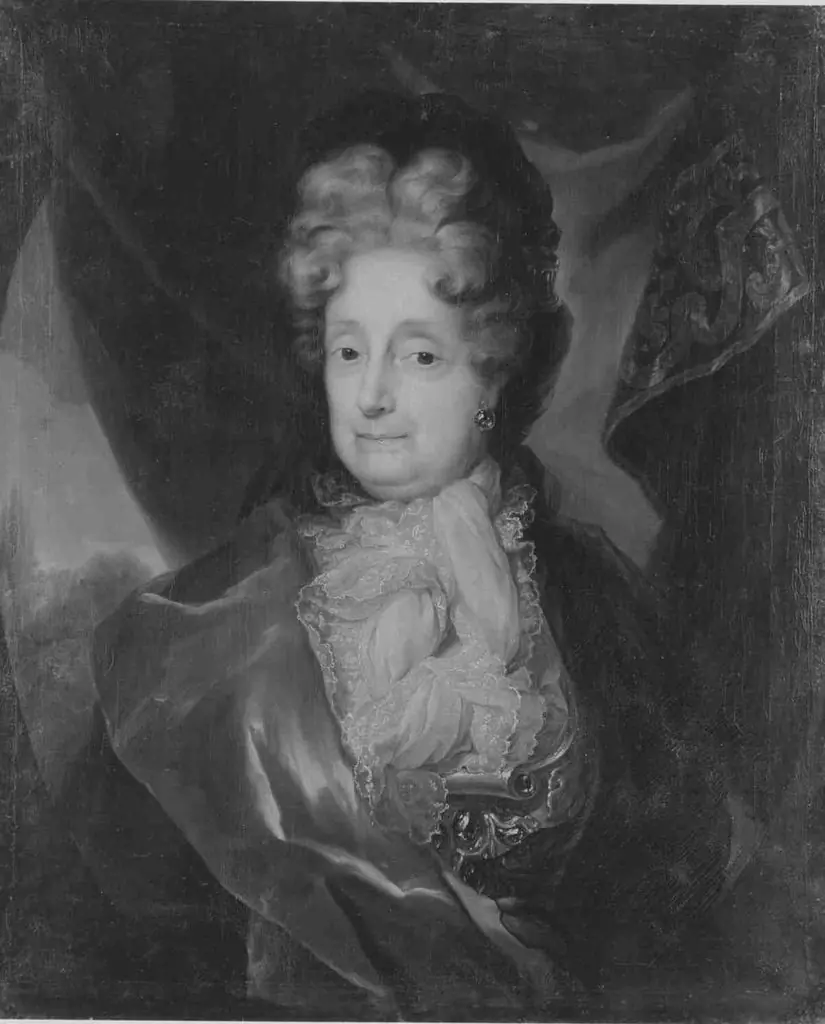 Portrait of Sophia of the Palatinate, dowager electress of Hanover
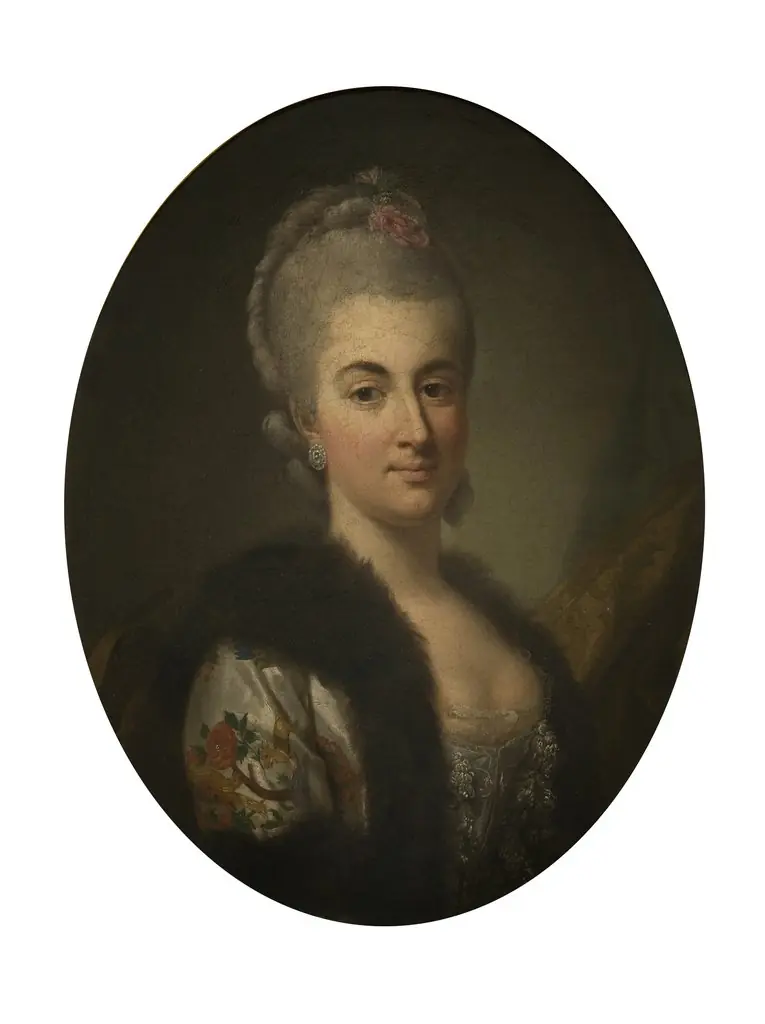 Portrait of Konstancja Poniatowska née Czartoryska
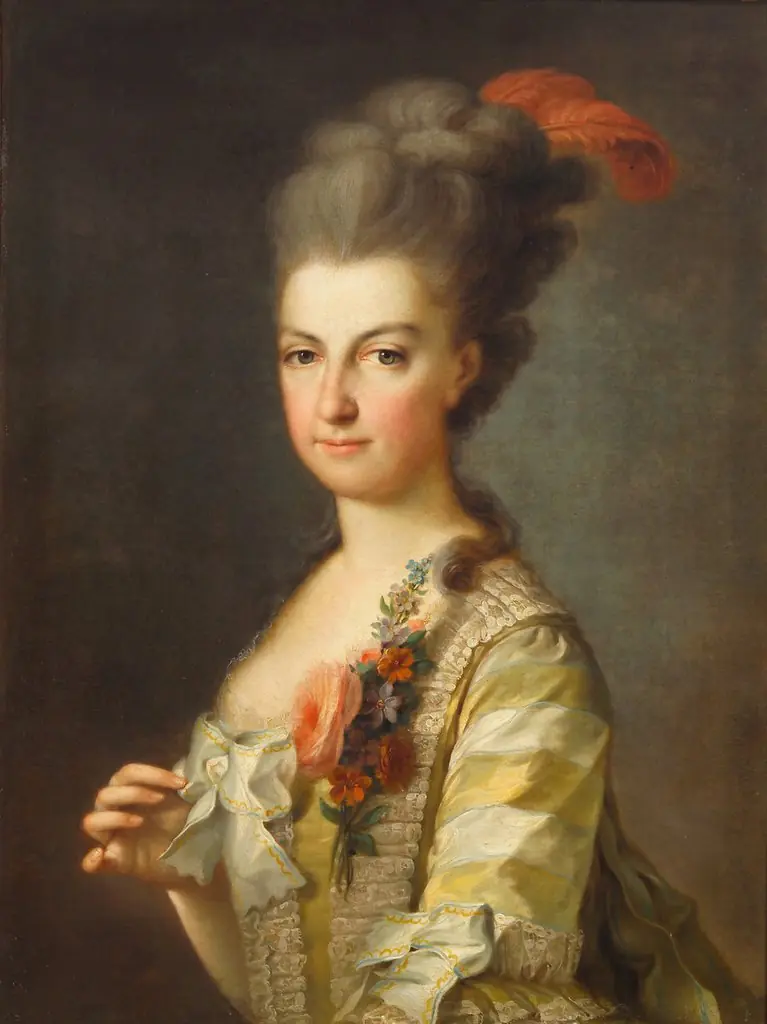 Erzherzogin Maria Christine (1742-1798), Herzogin von Sachsen - Teschen, in gestreiftem Seidenkleid, Halbfigur
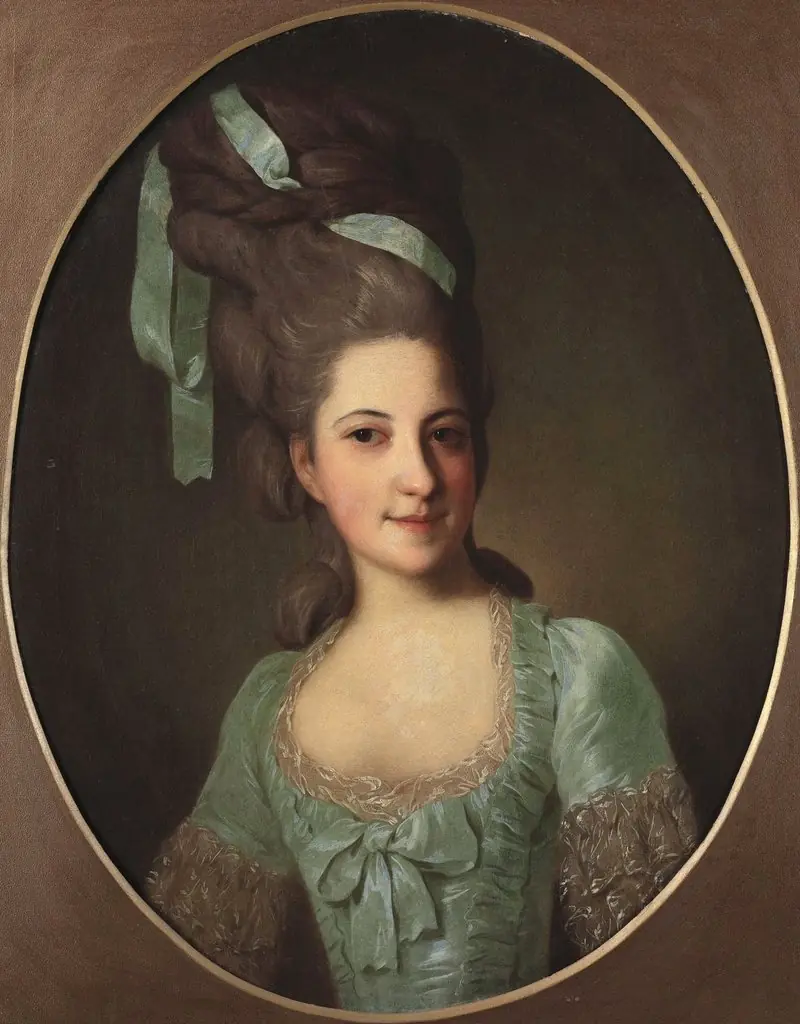 Portrait of Countess Darya I. Uvarova