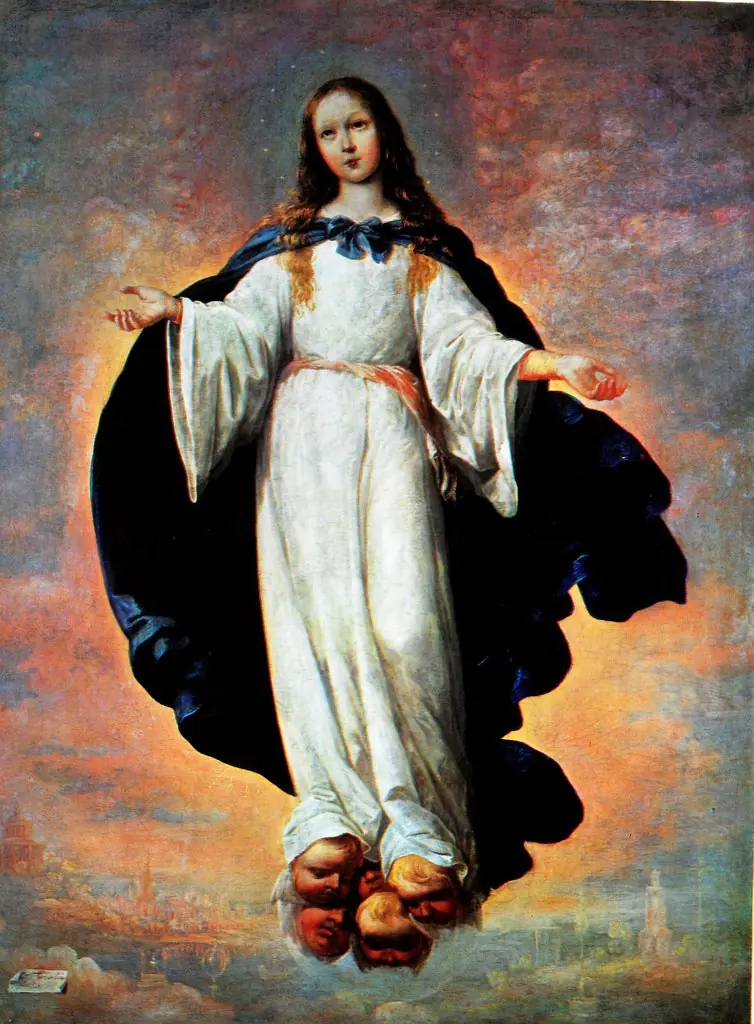
Artwork
Madonna i en glorie af engle
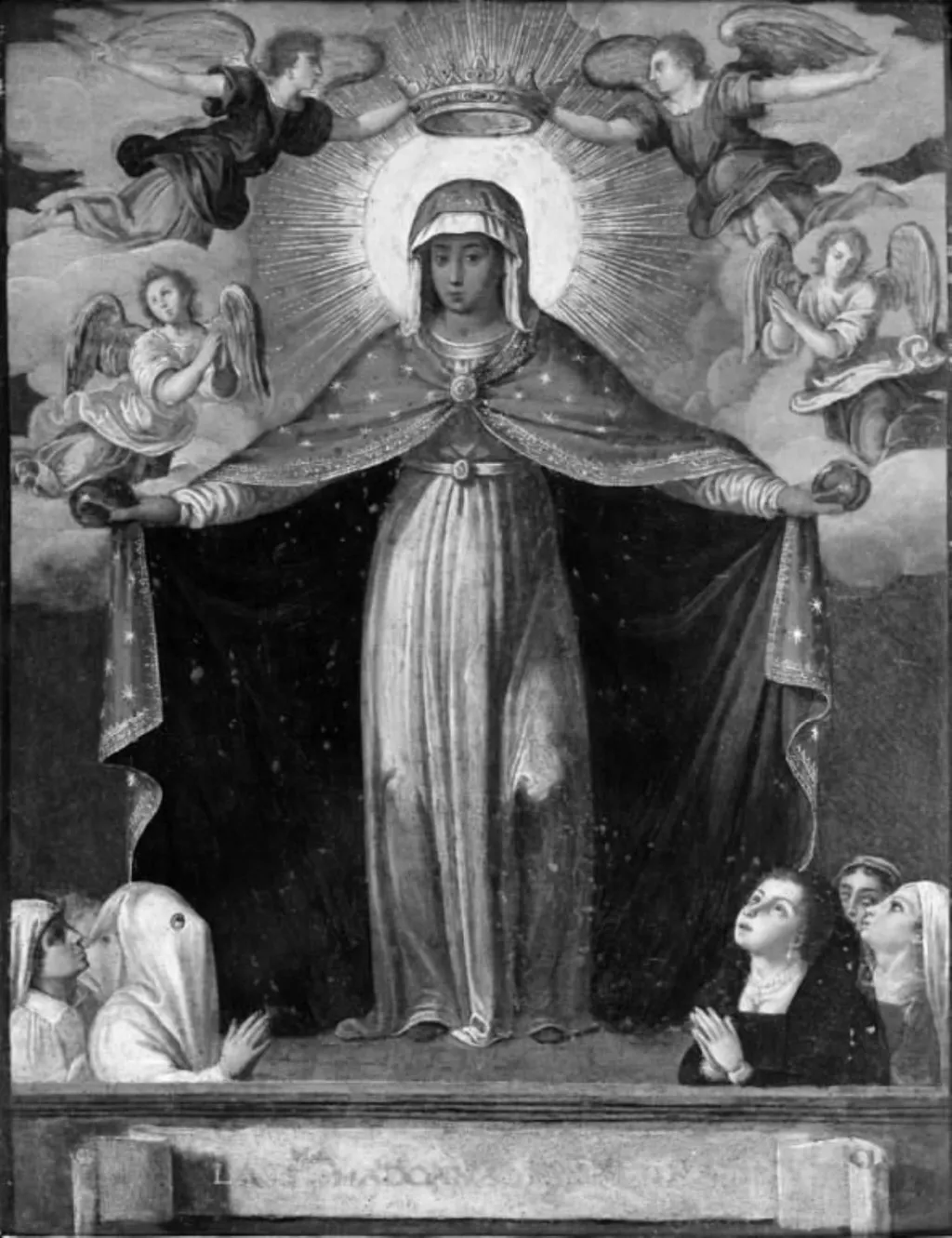
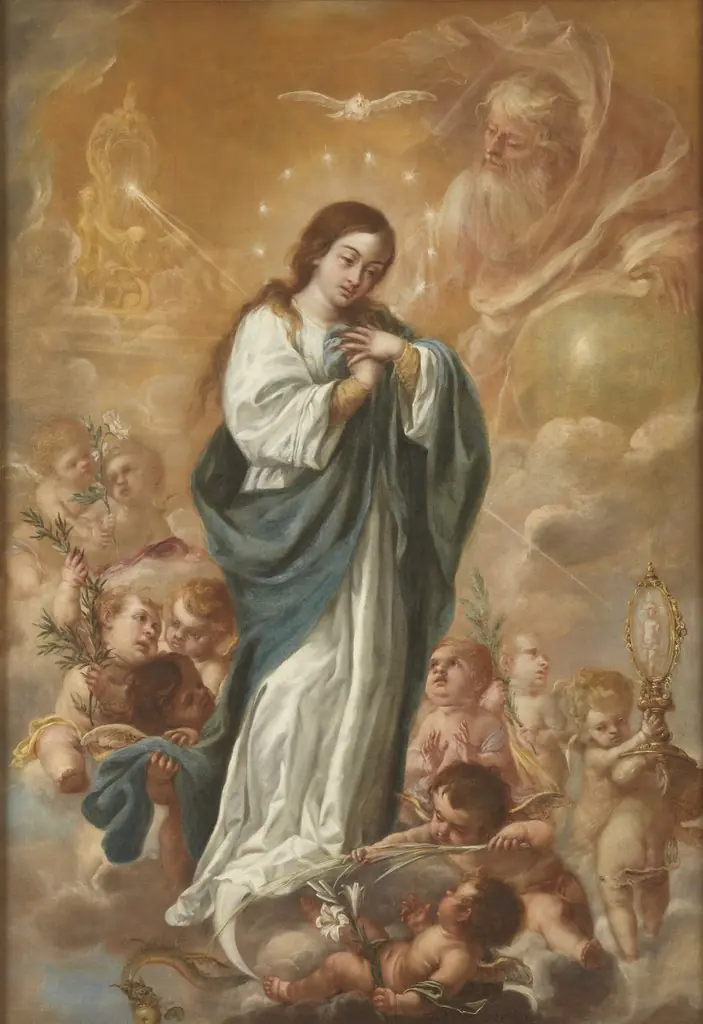
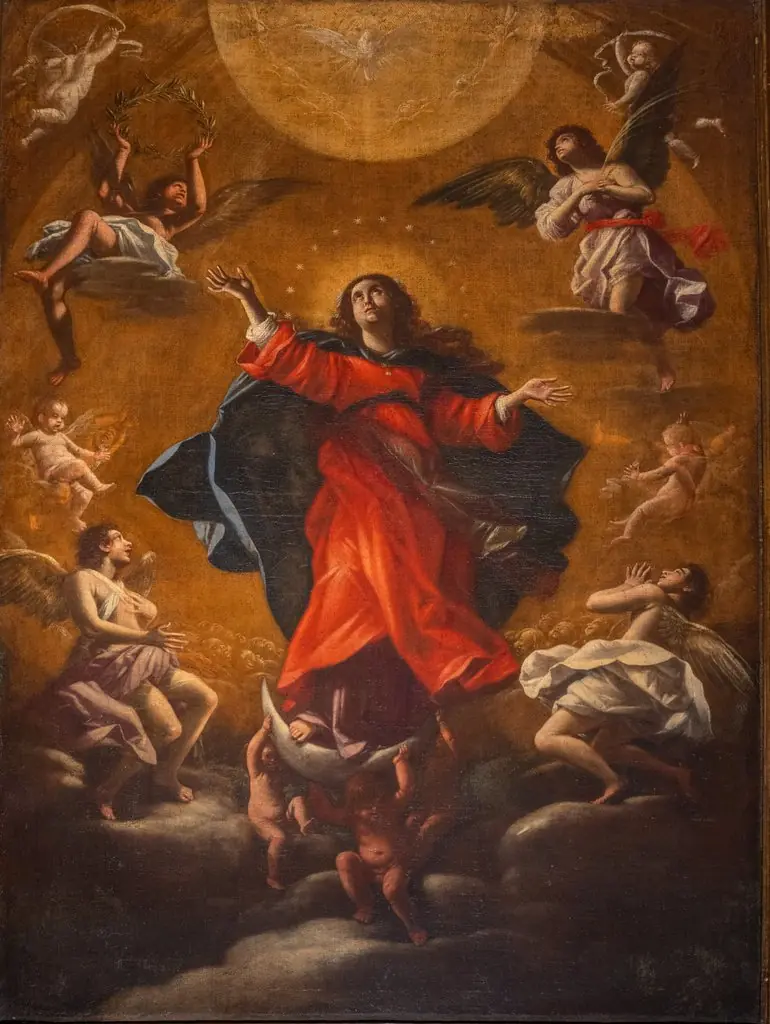
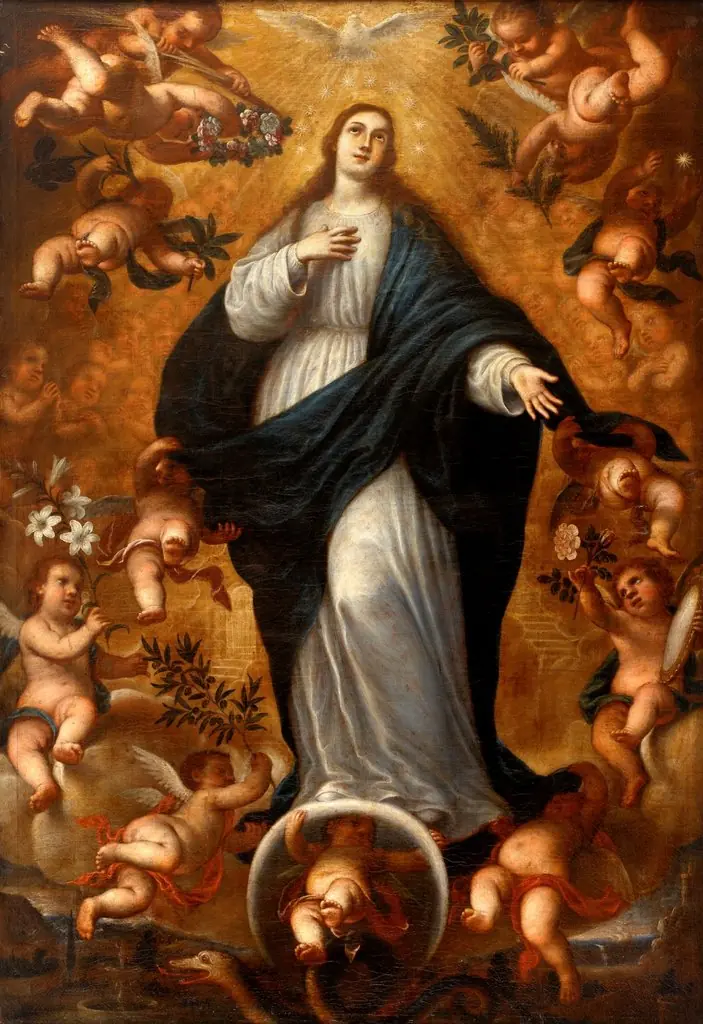
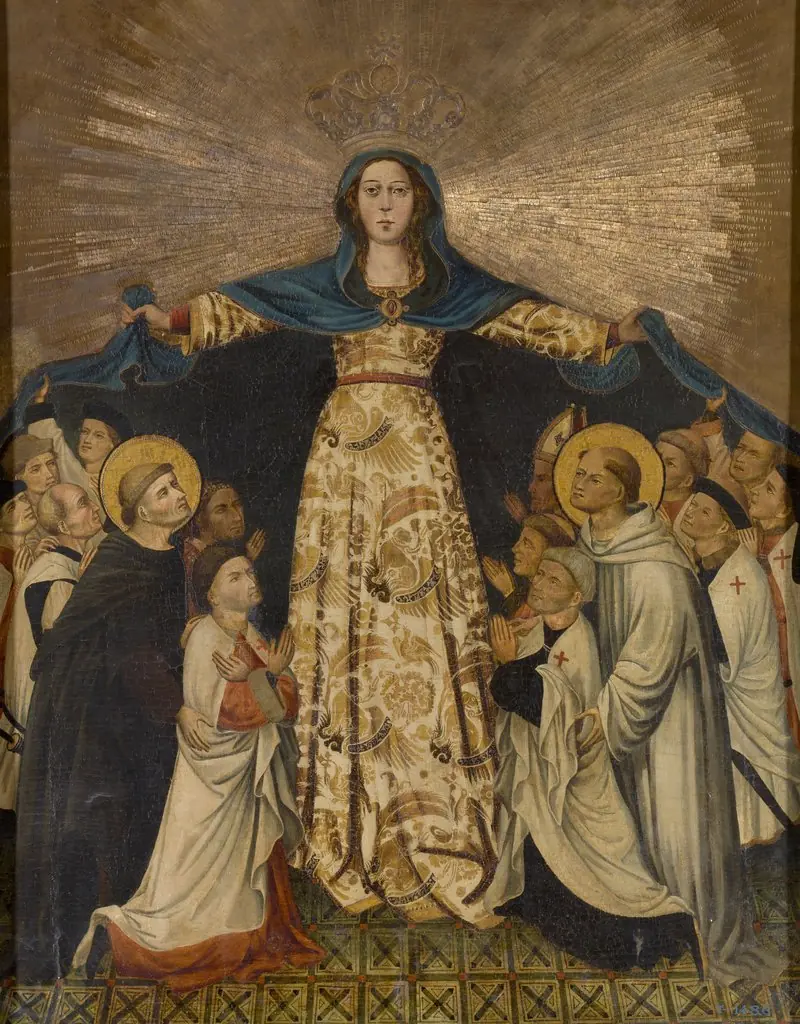
Madonna i en glorie af engle is a photography by the Romanticist artist Unknown. It dates from 1848 and is held in the collection of the Statens Museum for Kunst. Painted in 1848, this religious image depicts the Virgin Mary surrounded by angels in a celestial glow.
About this work
The photo was taken in 1848, which was a time when artists often added dramatic light and emotion to their work.
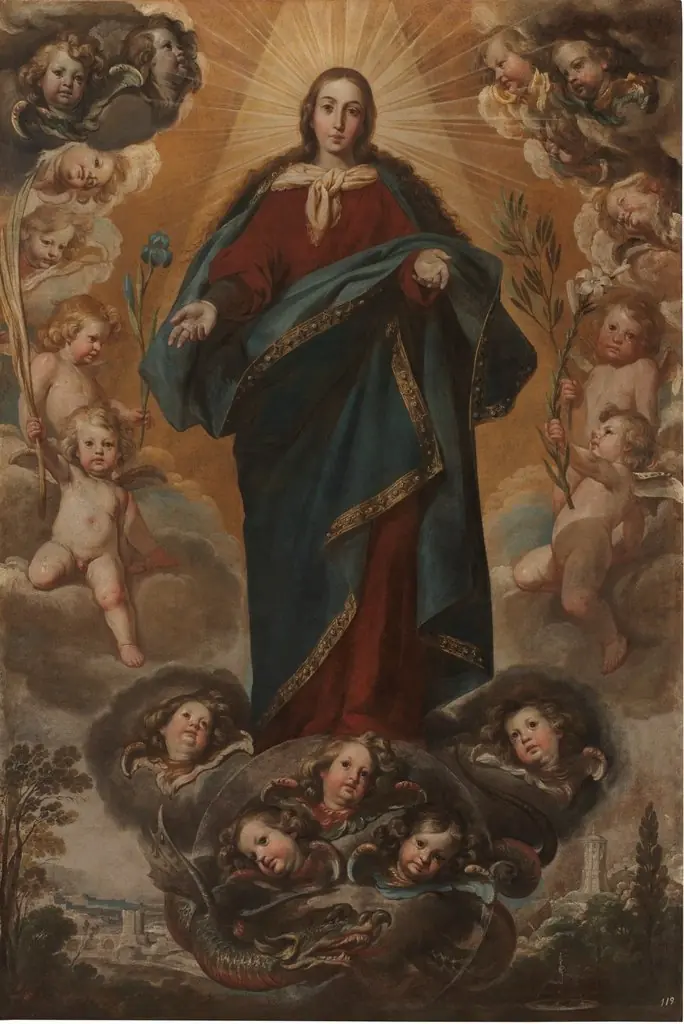
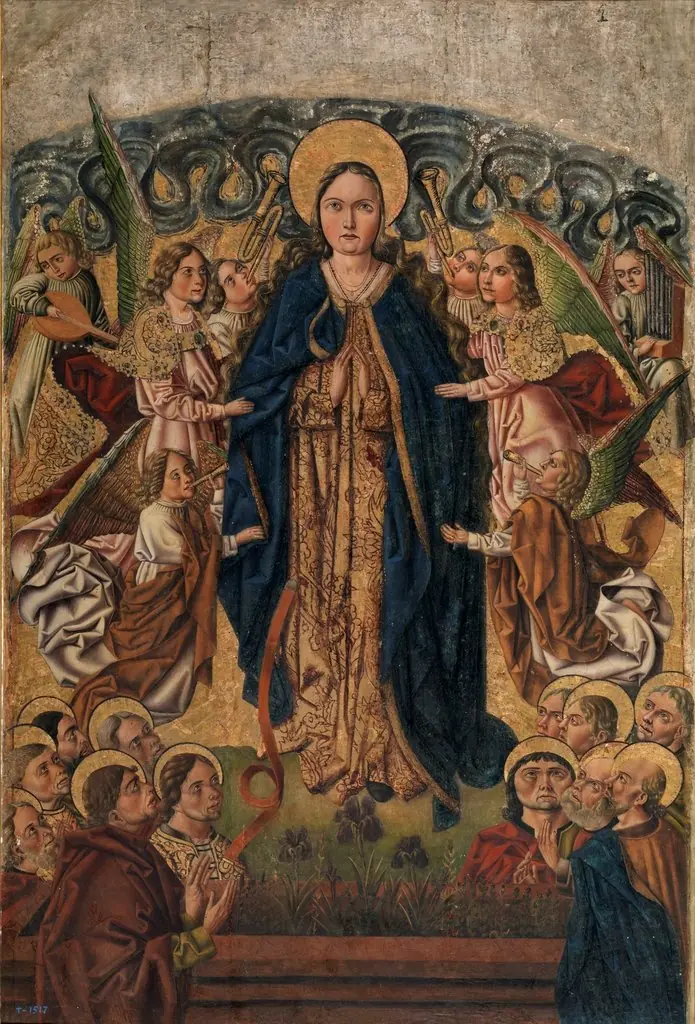
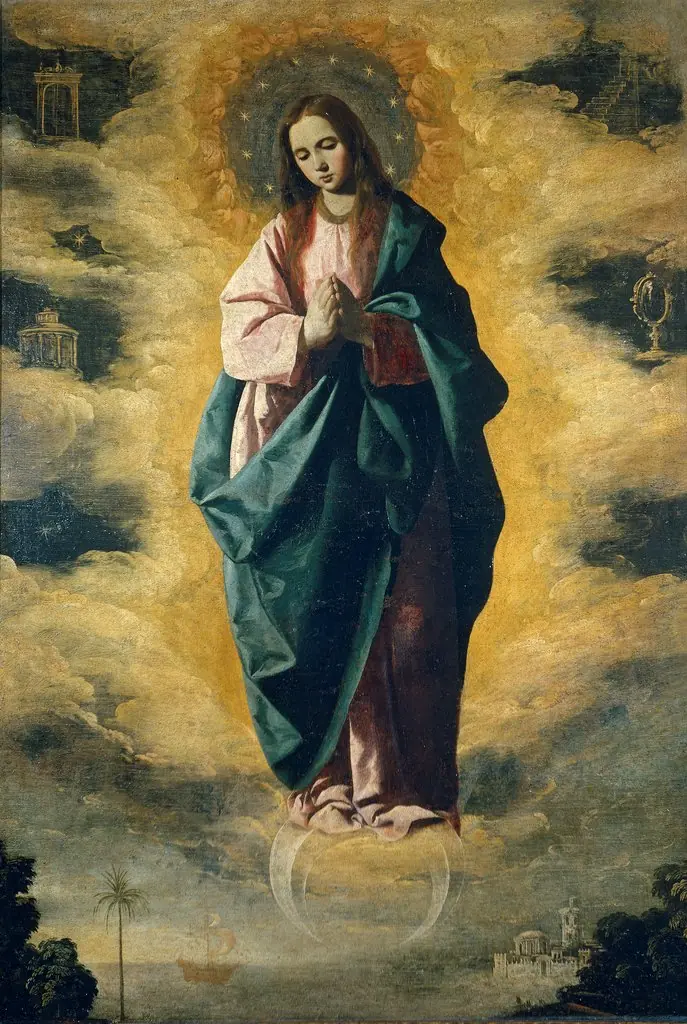
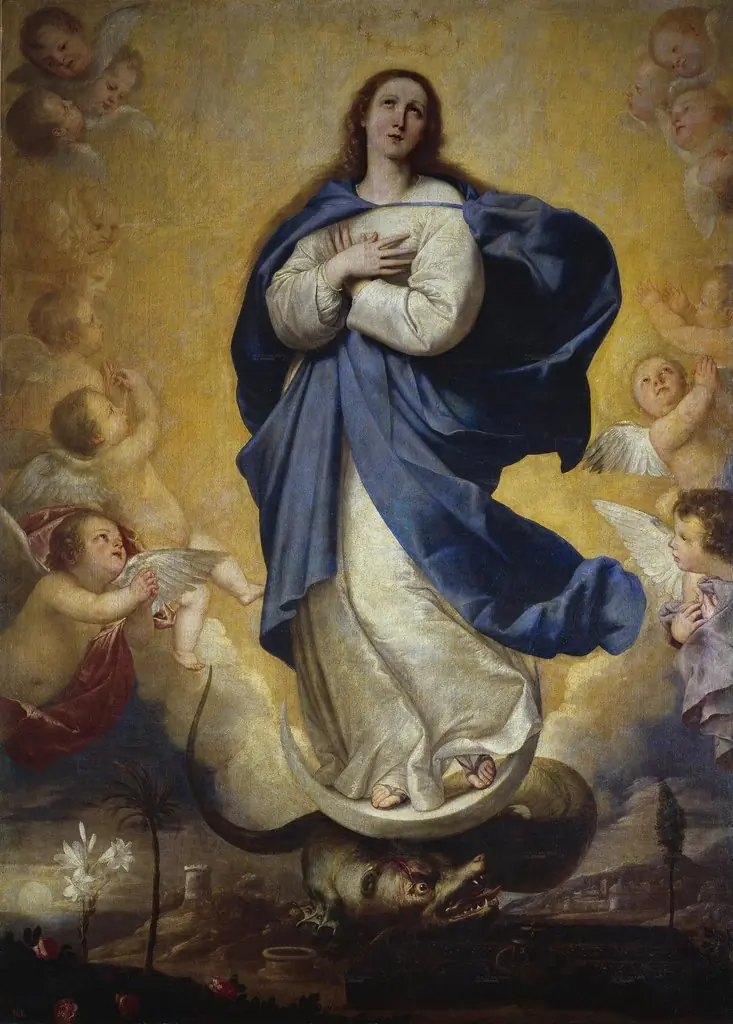
This photo shows a woman dressed in old-fashioned robes, standing still with her hands folded. Around her head is a bright glow, like light shining out. Four winged figures hover nearby, some holding musical instruments or books. Below her, two people kneel, looking up with serious faces.
The woman’s face is calm but serious, and the light behind her makes her look important. The photo was taken in 1848, which was a time when artists often added dramatic light and emotion to their work.
Look up chiaroscuro next to see how this strong light-and-dark contrast works.
Overview
Painted in 1848, this religious image depicts the Virgin Mary surrounded by angels in a celestial glow. It was created by an artist associated with the Danish Golden Age, though the specific name remains unrecorded in available sources. The work is currently held in the collection of the Museum of Ethnography, where it is preserved as an example of 19th-century devotional art in Northern Europe.
Subject & Meaning
The Virgin Mary is shown in a moment of quiet solemnity, her hands folded as if in prayer, elevated above two kneeling figures who gaze upward in reverence. Surrounding her, angels with wings and symbolic objects—books and instruments—suggest divine harmony and revelation. The composition emphasizes her spiritual authority, positioning her as an intermediary between the earthly and the heavenly realms.
Technique & Style
The painting employs a strong contrast between light and shadow to isolate the Virgin and her halo, drawing focus to her serene expression. The angels are rendered with delicate detail, their wings and garments suggesting movement within a static scene. The use of chiaroscuro enhances the sacred atmosphere, aligning the work with contemporary European religious painting traditions that favored emotional intensity and dramatic illumination.
History & Provenance
Created in 1848, the painting entered the Museum of Ethnography’s collection shortly after its completion. Its origins lie in a Danish devotional context, likely commissioned for private or ecclesiastical use. While its early ownership is undocumented, its preservation in an ethnographic institution suggests it was later valued as a cultural artifact reflecting religious practices of the period.
Context
In mid-19th-century Denmark, religious imagery remained central to artistic production despite growing secularism. Artists often blended Romantic sensibilities with traditional iconography, emphasizing emotion and divine presence. This painting reflects that trend, using heightened lighting and symbolic figures to evoke spiritual awe, consistent with broader European trends in sacred art during the era.
Legacy
Though not widely exhibited outside its institutional home, the painting contributes to understanding how religious themes persisted in Nordic art during a period of modernization. Its preservation in an ethnographic museum underscores its role as a cultural record rather than a purely aesthetic object, offering insight into domestic and communal piety in 19th-century Scandinavia.
Artist & collection

 Domestic Scene
 Giacomo and Cardinal Marco, investing Andrea, Abbot of San Zeno, with his Benefice
 The Nymph of Fontainebleau
 Portrait of a Woman
 Madonna and Child with Saints in the Enclosed Garden
 Venus and Minerva
 Family Group of Four on Sofa
 Wall painting from Room H of the Villa of P. Fannius Synistor at Boscoreale