Artwork
The Immaculate Conception
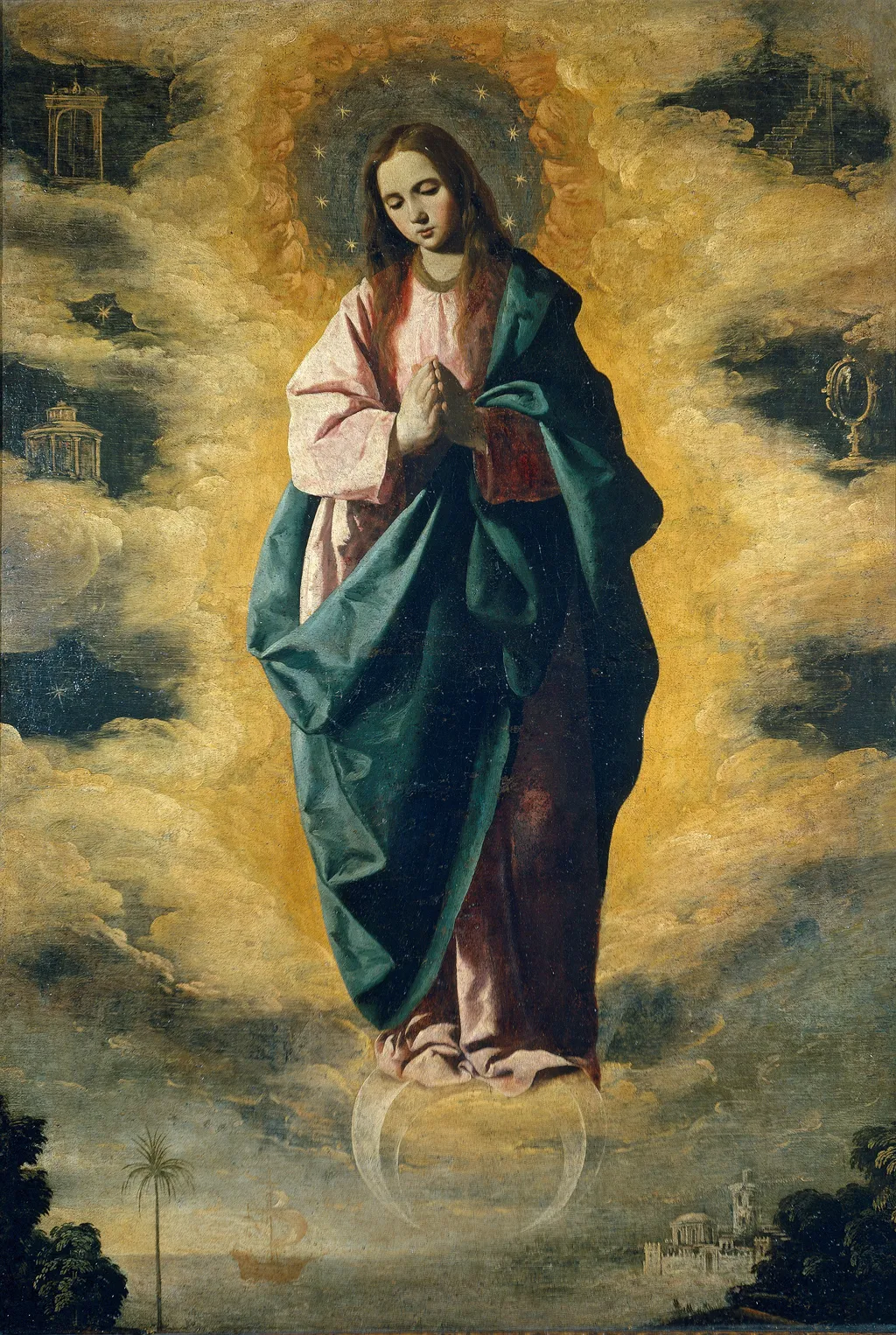
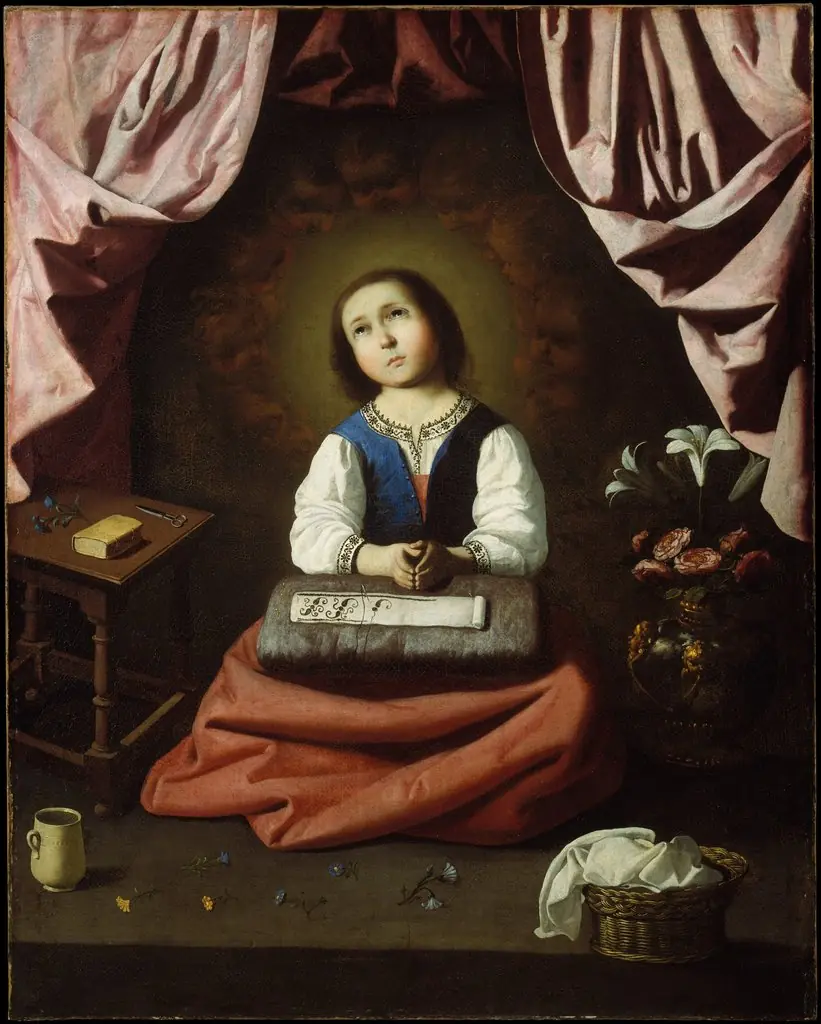
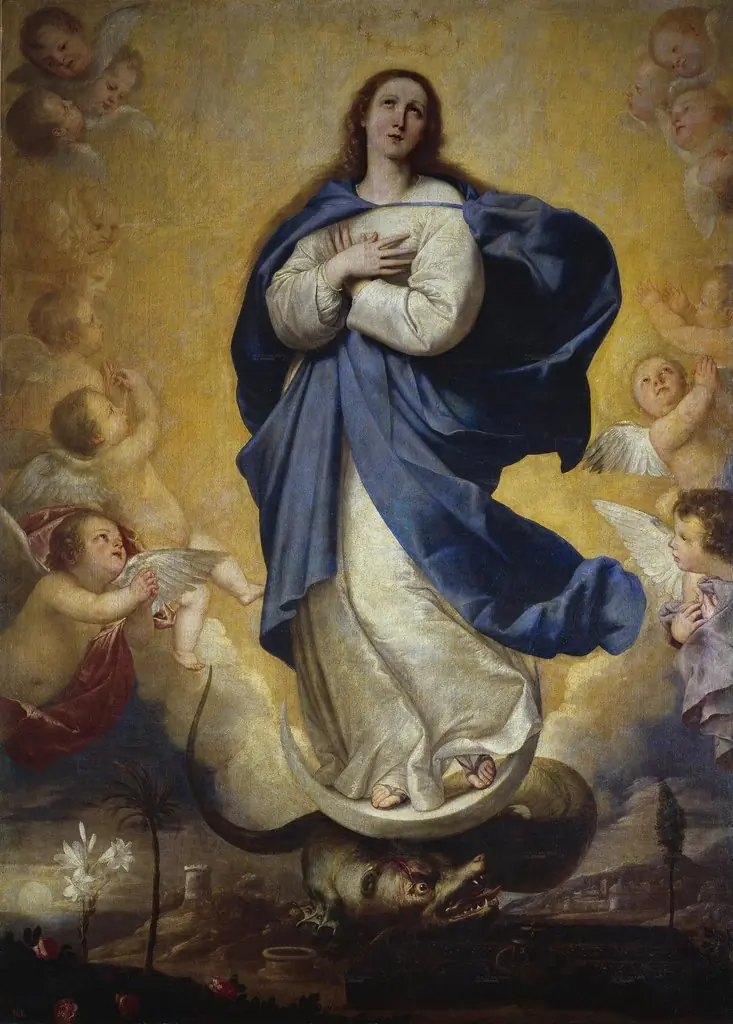
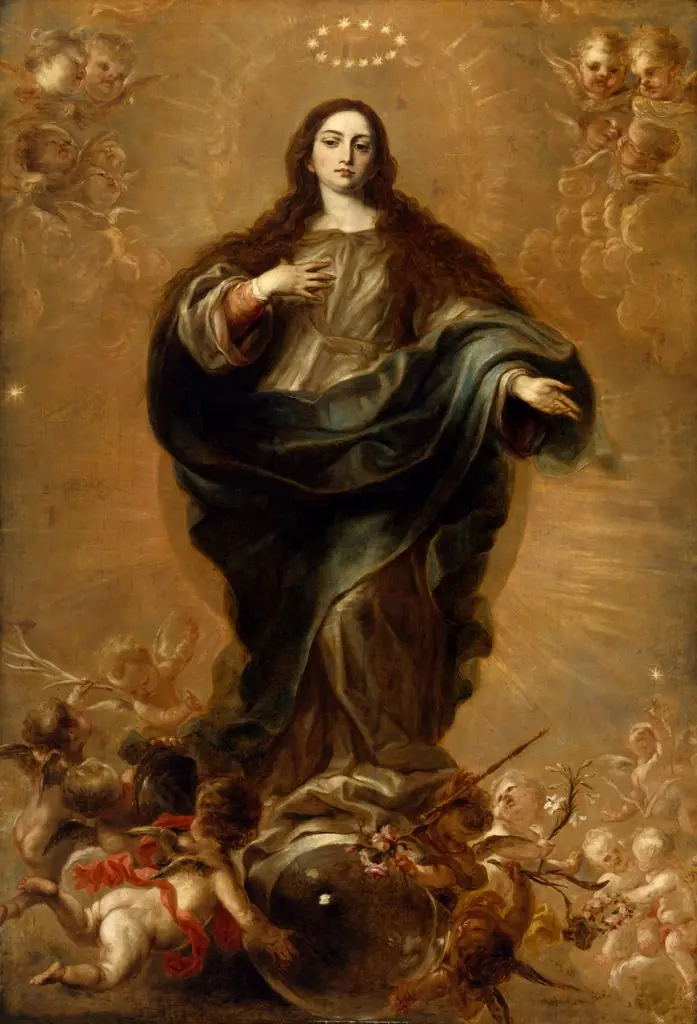
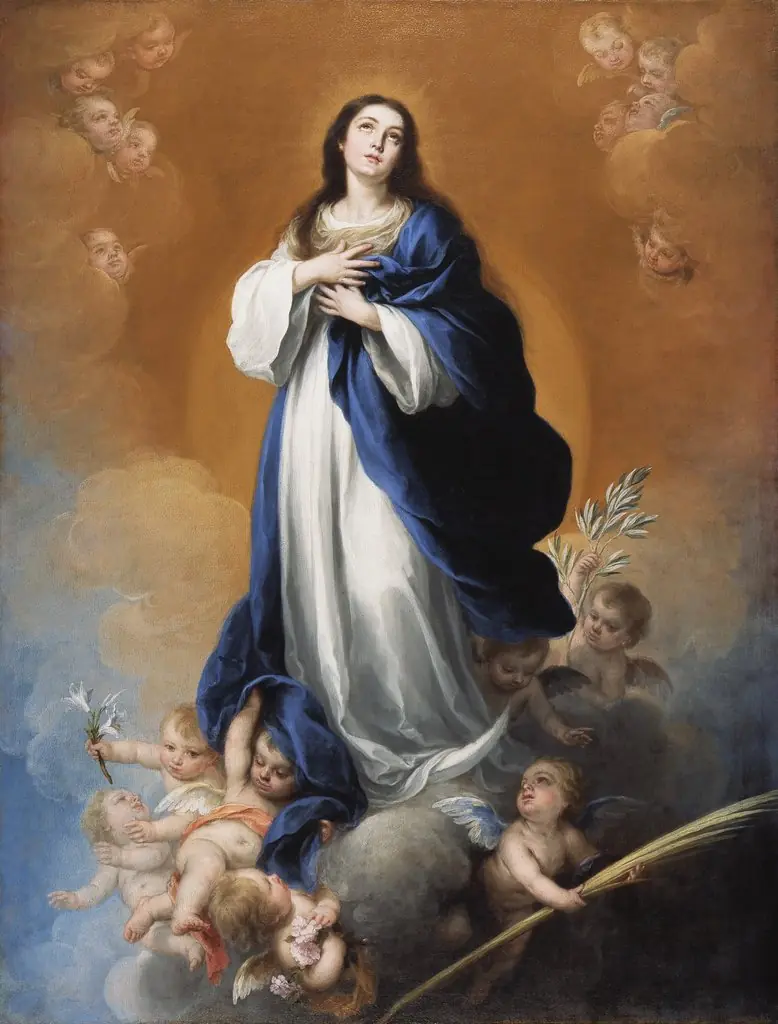
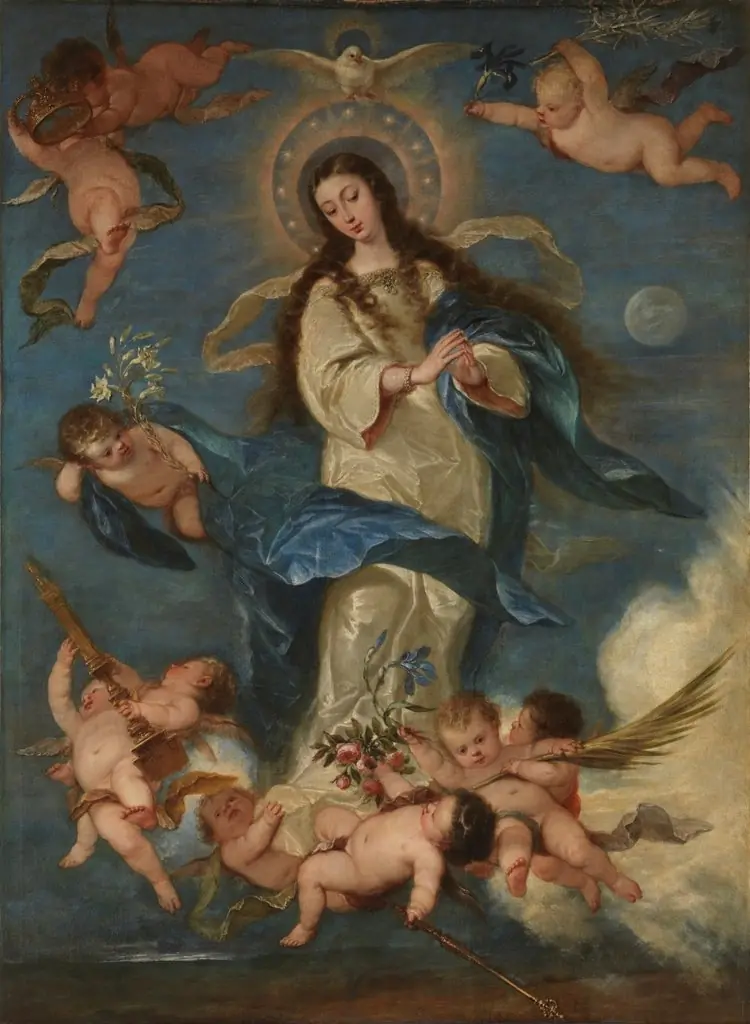
The Immaculate Conception is an oil painting by the Baroque artist Francisco de Zurbarán. It dates from 1628 and is held in the collection of the Museo del Prado.
About this work
Overview
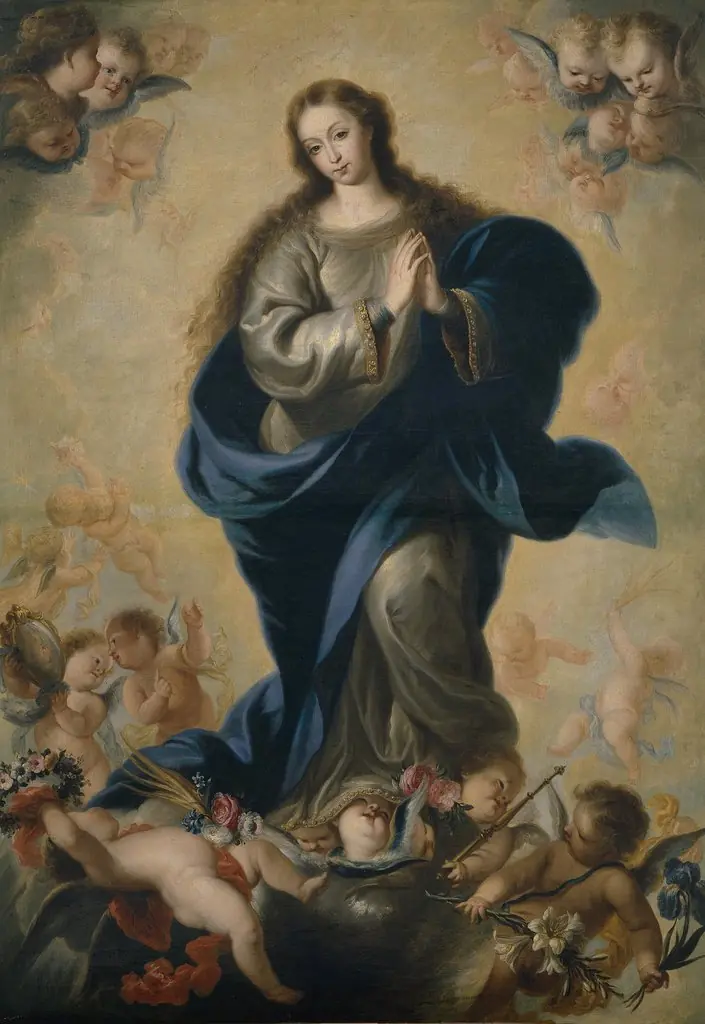
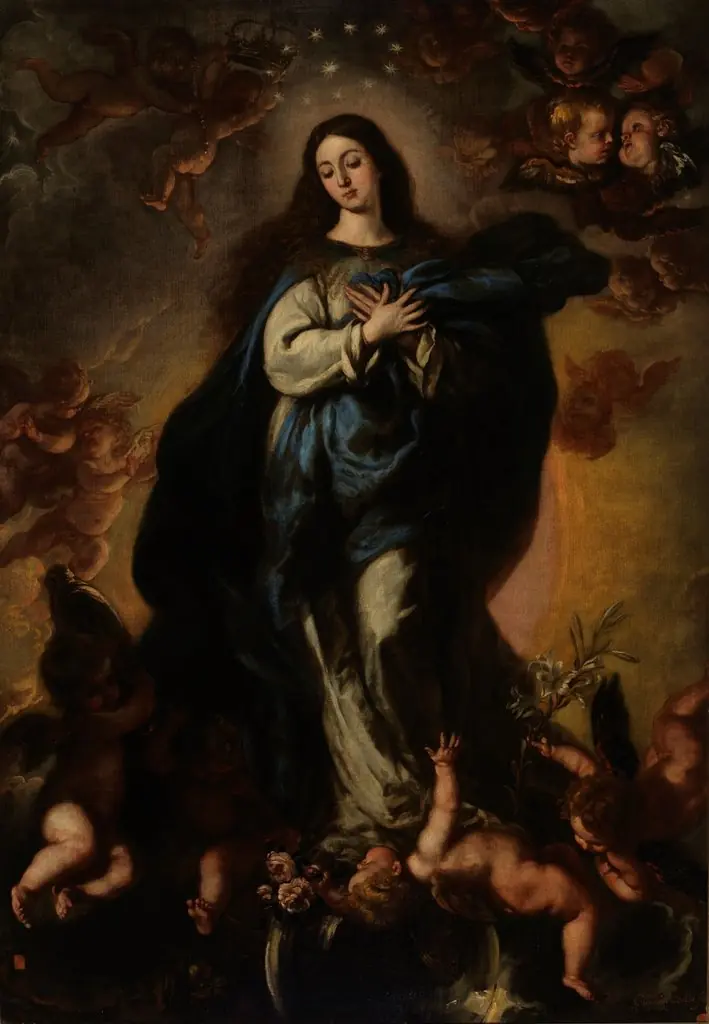
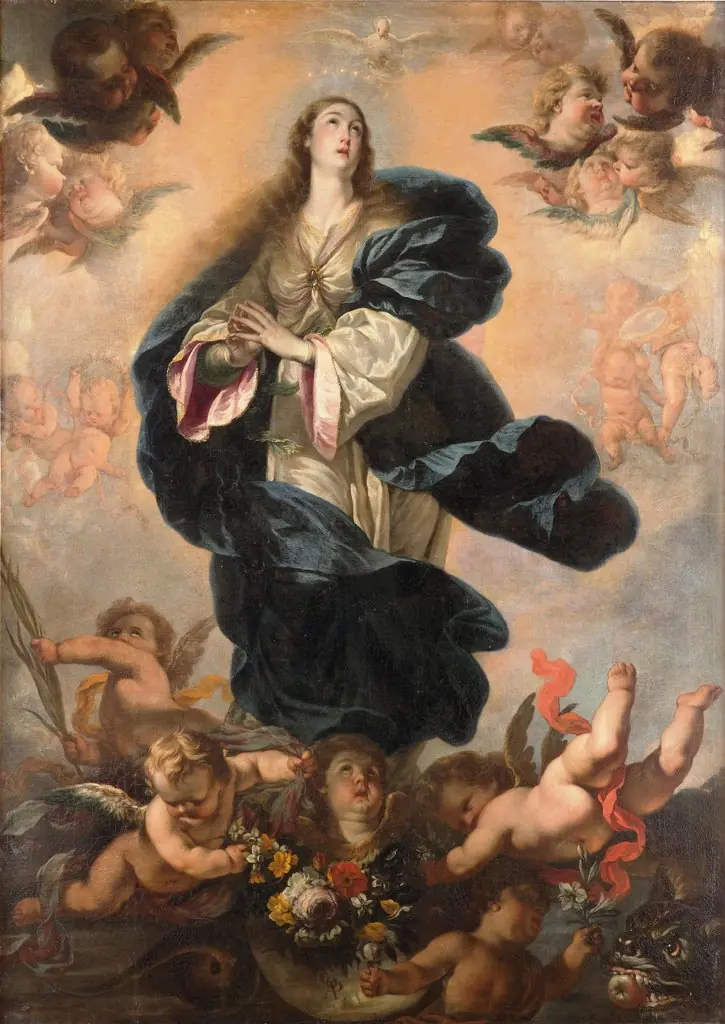
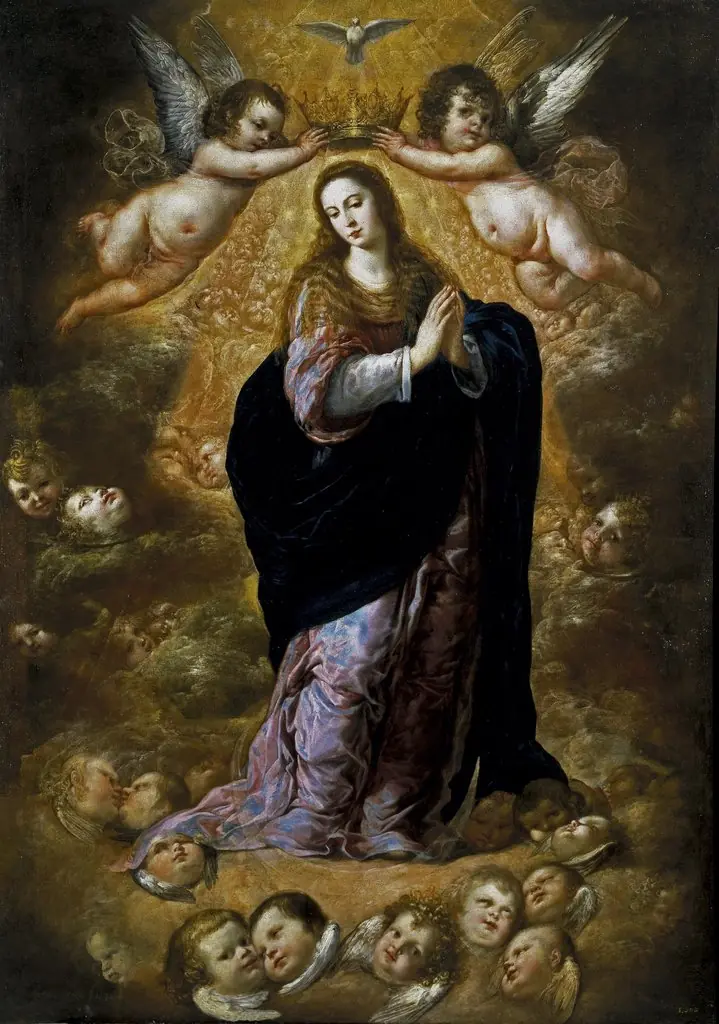
Francisco de Zurbarán’s oil painting titled The Immaculate Conception was completed in 1628 and is part of the collection at Madrid’s Museo del Prado. The work presents a singular vision of the Virgin Mary, rendered in a luminous, ethereal setting that emphasizes her sanctity.
Subject & Meaning
The composition portrays Mary as the Immaculate Conception, floating above a celestial sky. She is shown in a blue mantle trimmed with a red sash, a pink veil draped over her shoulders, and her hands clasped in prayer, symbolizing purity and devotion. The glowing orb beneath her feet reinforces the notion of divine elevation.
Technique & Style
Zurbarán employs strong chiaroscuro, contrasting deep shadows with a soft, golden light that models the figure’s face and garments, giving them a three‑dimensional presence. The background is rendered in muted tones, with indistinct architectural forms and a palm tree, allowing the central figure to dominate the visual field.
History & Provenance
Since its creation in the early seventeenth century, the painting has remained in Spain, eventually entering the holdings of the Museo del Prado, where it is displayed among the museum’s Baroque religious works.
Context
The work reflects the Counter‑Reformation emphasis on Marian devotion prevalent in Spain during Zurbarán’s career. Its iconography aligns with contemporary theological interpretations of the Immaculate Conception, a doctrine that would later be defined dogmatically by the Catholic Church.
Own this work as a print
Artist & collection
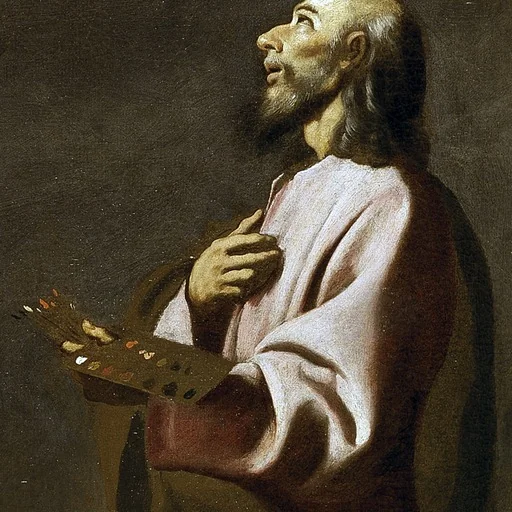
Artist
Francisco de Zurbarán was a Spanish Baroque painter. He is known primarily for his religious paintings depicting monks, nuns, and martyrs, and for his still-lifes. Zurbarán gained the nickname "Spanish Caravaggio",…