Artwork
Nature morte
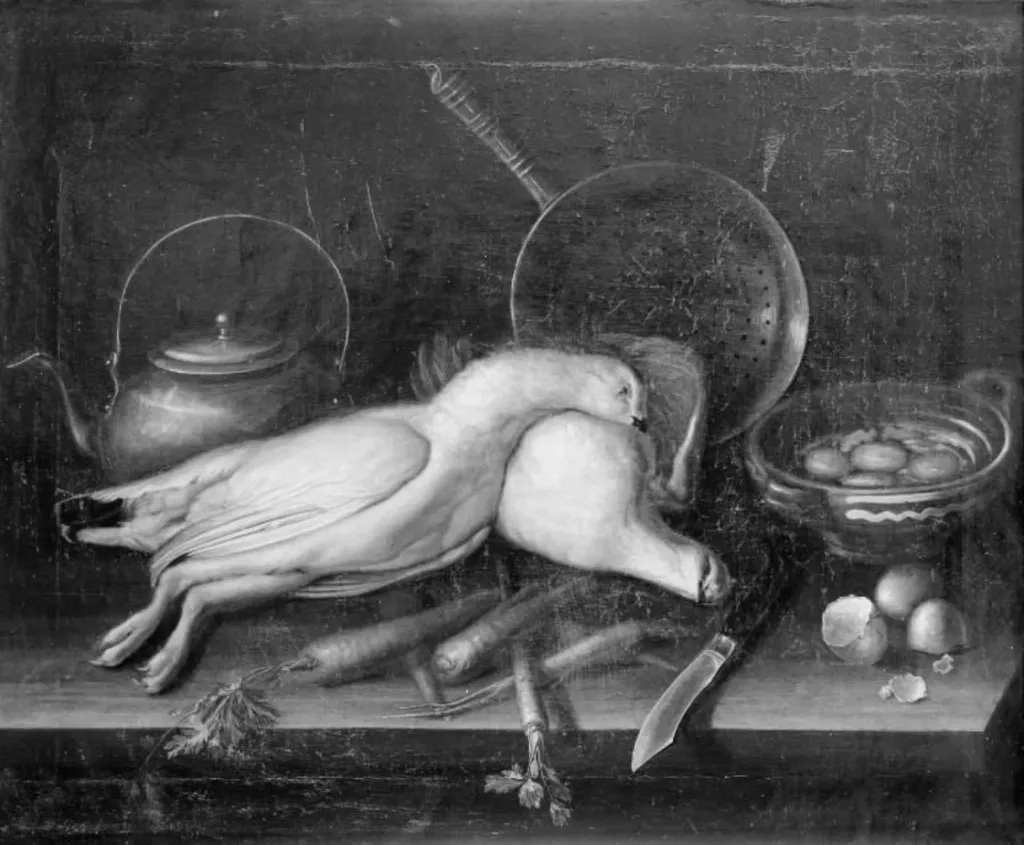
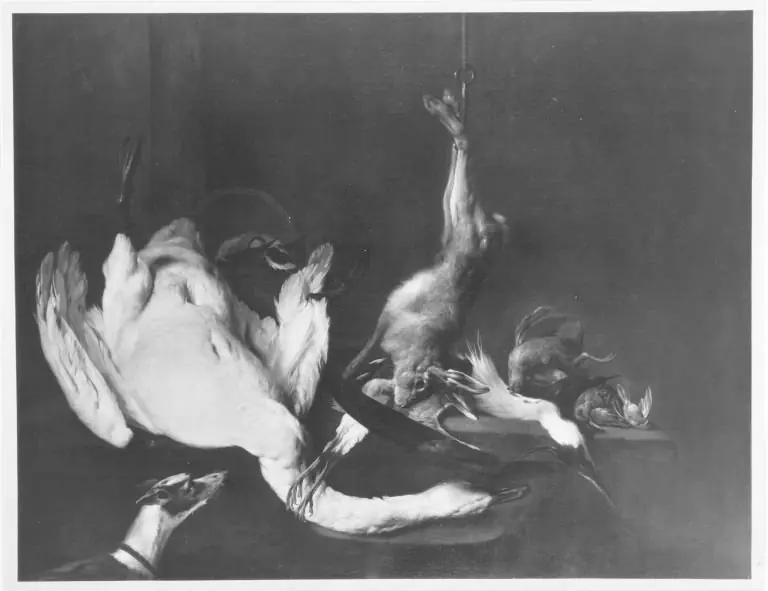
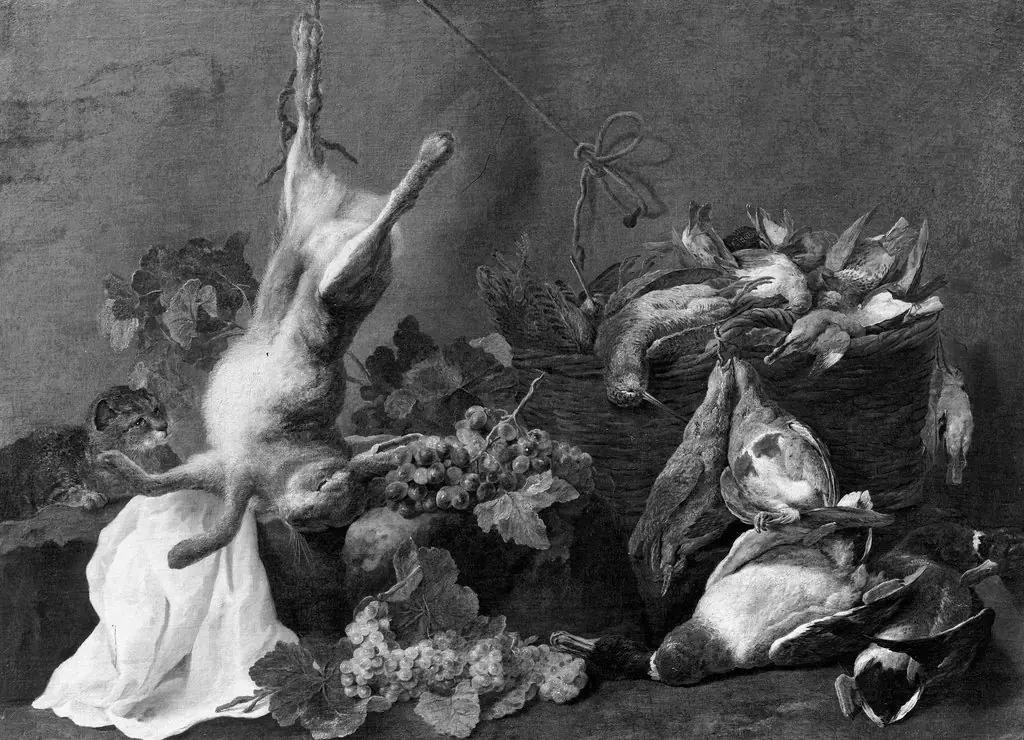
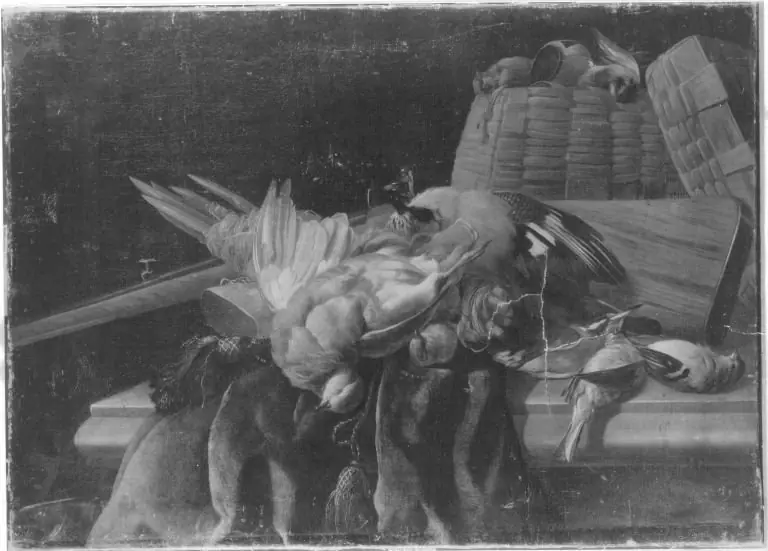
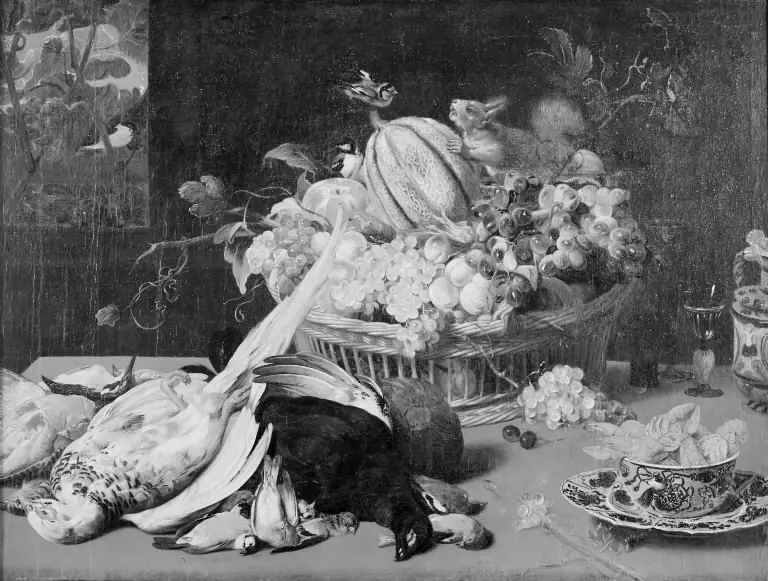
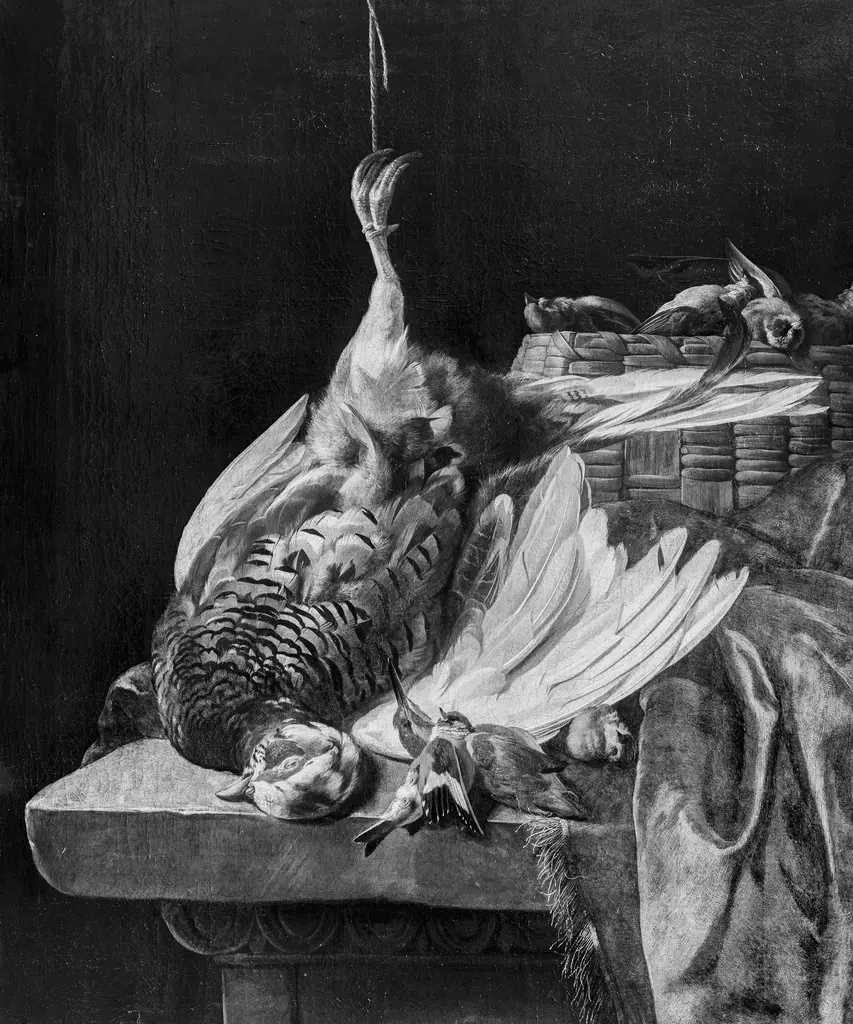
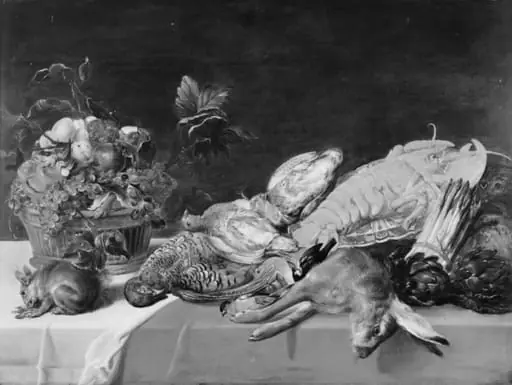
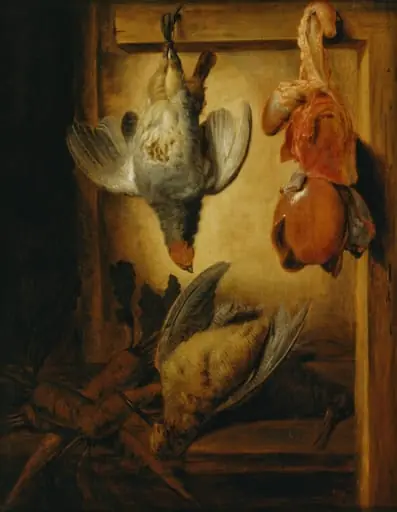
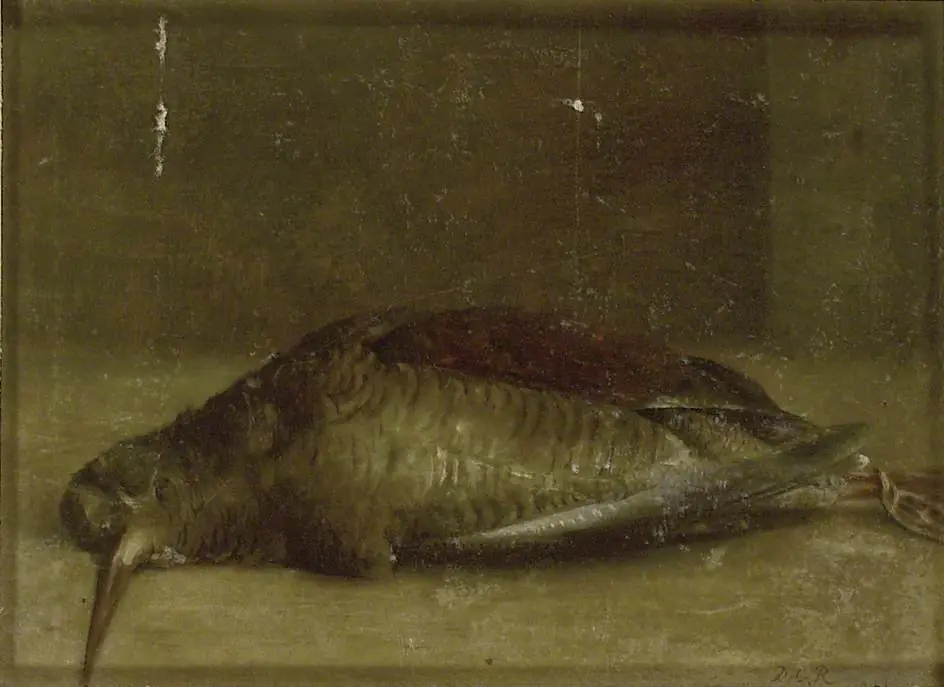
Nature morte is a photography by Unknown. It dates from 1750 and is held in the collection of the Statens Museum for Kunst.
About this work
Overview
Created around 1750, this still life painting depicts a solitary dead bird as its central focus, surrounded by domestic objects arranged on a shallow surface.
Created around 1750, this still life painting depicts a solitary dead bird as its central focus, surrounded by domestic objects arranged on a shallow surface. The composition is set against a dark, unmodulated background, enhancing the quiet solemnity of the scene. The work is held in the collection of the Museum of Ethnography, where it is presented as an example of 18th-century observational painting with symbolic undertones.
Subject & Meaning
The dead bird, curled with its head beneath its wing and limbs extended, suggests stillness and finality. Paired with everyday items—a teapot, colander, carrots, and a bowl of eggs—the arrangement evokes themes of transience and domestic routine. These objects, neither lavish nor ornate, imply a humble setting, reinforcing a contemplative mood centered on the impermanence of life and the quiet dignity of ordinary things.
Technique & Style
The artist employs chiaroscuro to model form with subtle gradations of light and shadow, giving volume to the bird’s feathers and the rounded surfaces of the vessels. Brushwork is restrained, favoring clarity over flourish. The dark background isolates the objects, directing attention to their textures and spatial relationships. The composition avoids dramatic movement, instead cultivating stillness through careful balance and muted tones.
History & Provenance
The painting’s early history is undocumented, but it entered the Museum of Ethnography’s collection in the late 19th century. Its attribution to a specific artist remains uncertain, though stylistic elements align with regional still-life traditions of mid-18th-century Europe. It was likely acquired as part of a broader effort to preserve domestic visual culture rather than as a work by a named master.
Context
In mid-18th-century Europe, still-life painting often carried moral or philosophical weight beyond mere representation. While grander works depicted abundance, this painting’s simplicity reflects a quieter strain of the genre, influenced by monastic and bourgeois sensibilities. The inclusion of humble kitchen items suggests an interest in the everyday, resonating with broader cultural shifts toward introspection and the value of modest life.
Legacy
Though not widely exhibited or reproduced, the painting contributes to scholarly understanding of understated still-life practices outside the mainstream. Its preservation in an ethnographic context highlights how objects of domestic life were later interpreted as cultural artifacts. The work continues to invite quiet observation, offering a restrained counterpoint to more ornate traditions of the period.
Artist & collection

 Domestic Scene
 Giacomo and Cardinal Marco, investing Andrea, Abbot of San Zeno, with his Benefice
 The Nymph of Fontainebleau
 Portrait of a Woman
 Madonna and Child with Saints in the Enclosed Garden
 Venus and Minerva
 Family Group of Four on Sofa
 Wall painting from Room H of the Villa of P. Fannius Synistor at Boscoreale