Artwork
En hvid hund ligger på en blå pude på en stol, en sort med hvide pletter sidder nedenfor
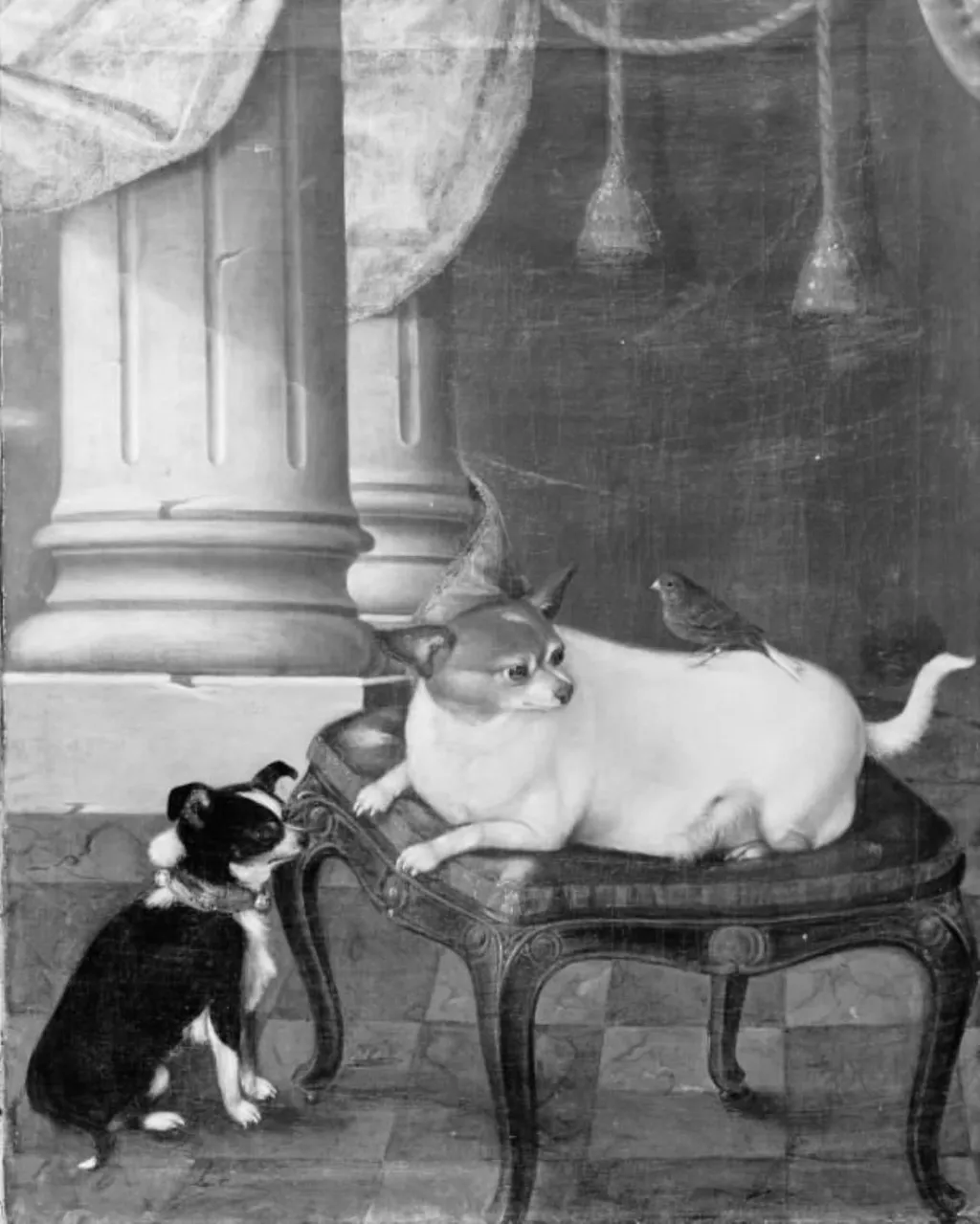
En hvid hund ligger på en blå pude på en stol, en sort med hvide pletter sidder nedenfor is a photography by Unknown. It dates from 1750 and is held in the collection of the Statens Museum for Kunst. This image, dated around 1750, depicts two dogs in a domestic interior.
About this work
Overview
This image, dated around 1750, depicts two dogs in a domestic interior. A white dog with brown markings rests on a blue cushion atop a stool, while a smaller black-and-white dog sits on the floor below. A bird perches on the upper dog’s back. The setting includes a stone pillar and draped curtain, suggesting a carefully composed indoor space rather than an open landscape.
Subject & Meaning
The painting presents a quiet moment between animals, avoiding anthropomorphism. The white dog’s gaze downward and the bird’s stillness imply a pause in activity, not interaction. The arrangement may reflect contemporary interest in observational naturalism, capturing animals in unposed, tranquil states without symbolic narrative or allegorical intent.
Technique & Style
The artist employs subtle tonal contrasts to define fur texture and spatial depth. The blue cushion anchors the composition, while the stone pillar and curtain frame the scene with restrained detail. Brushwork is precise but not overly refined, favoring naturalism over idealization. Light falls evenly, avoiding dramatic shadows, reinforcing the calm, uneventful mood.
History & Provenance
The work is held in the collection of the Museum of Ethnography, though its origin as a standalone painting rather than an illustration or decorative panel remains unclear. It was likely created in northern Europe, possibly Denmark or the Netherlands, during a period when domestic animal studies gained modest popularity among amateur and professional artists alike.
Context
In mid-18th-century Europe, depictions of pets in domestic settings were uncommon in fine art, especially without human figures. This work aligns with a quiet trend of observational animal studies, influenced by natural philosophy and the growing interest in everyday life. It stands apart from grand portraiture, focusing instead on quiet, unremarkable moments.
Legacy
The painting contributes to a small but persistent genre of animal-focused domestic scenes from the period. Though not widely reproduced or studied, it reflects a shift toward intimate, non-narrative observation in art. Its preservation in an ethnographic museum suggests its value as a cultural artifact of daily life rather than a celebrated artistic achievement.
Artist & collection

 Domestic Scene
 Giacomo and Cardinal Marco, investing Andrea, Abbot of San Zeno, with his Benefice
 The Nymph of Fontainebleau
 Portrait of a Woman
 Madonna and Child with Saints in the Enclosed Garden
 Venus and Minerva
 Family Group of Four on Sofa
 Wall painting from Room H of the Villa of P. Fannius Synistor at Boscoreale
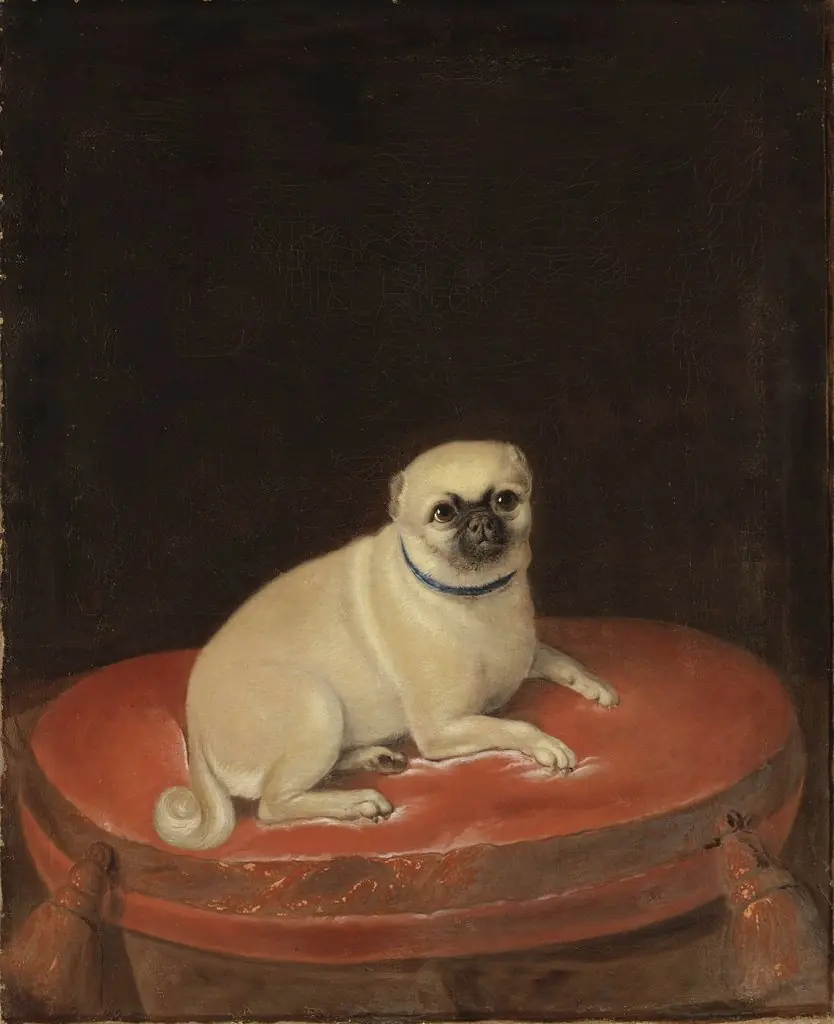 Mops
Mops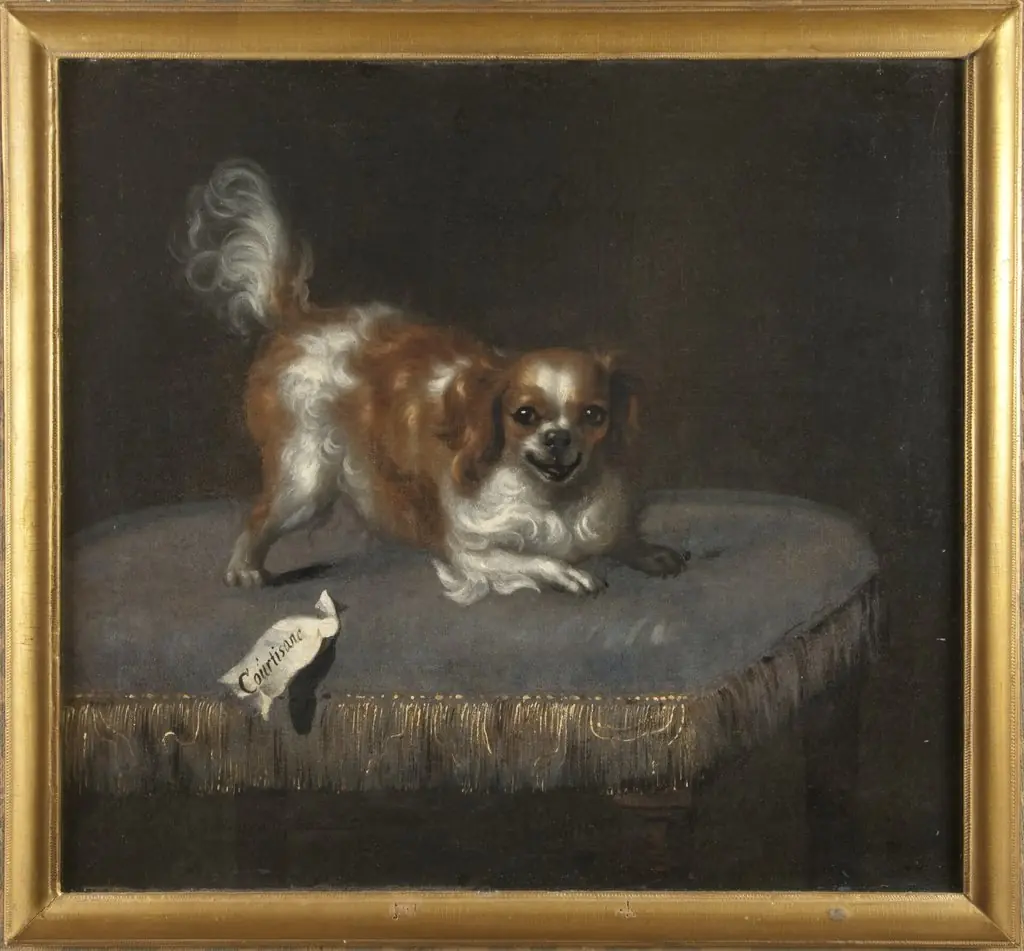 Hunden Courtisane
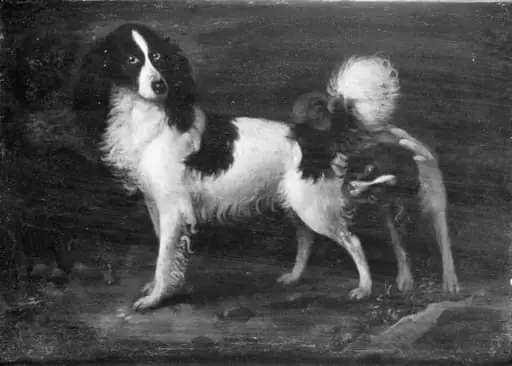 Two Dogs
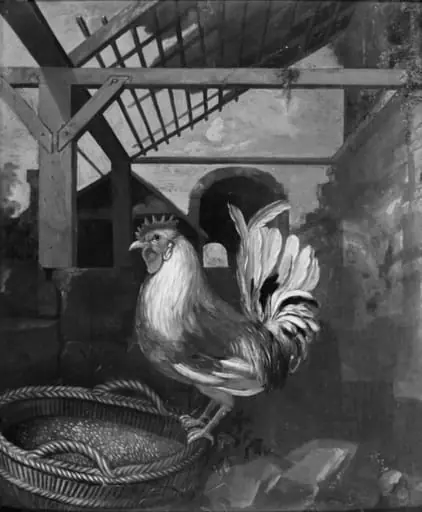 En hane sidder på en kurv fyldt med korn i stald, bag ved blå himmel
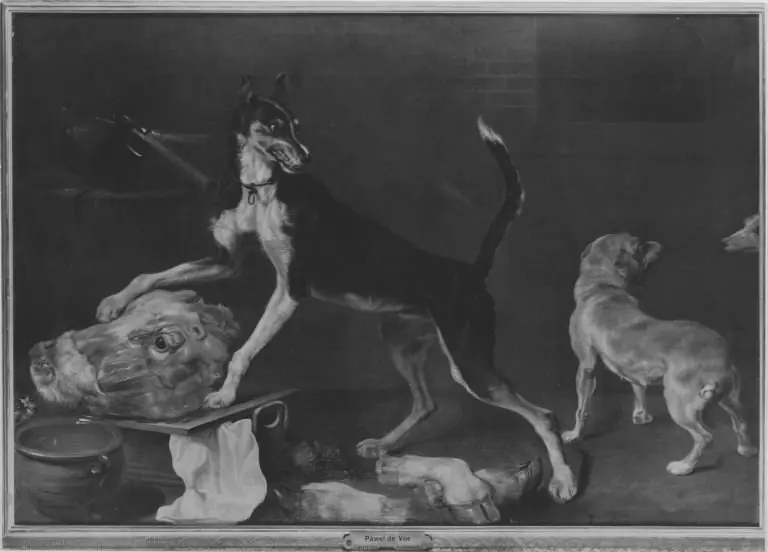 Streitende Hunde
 Et par hunde som opgraver et muldvarpeskud
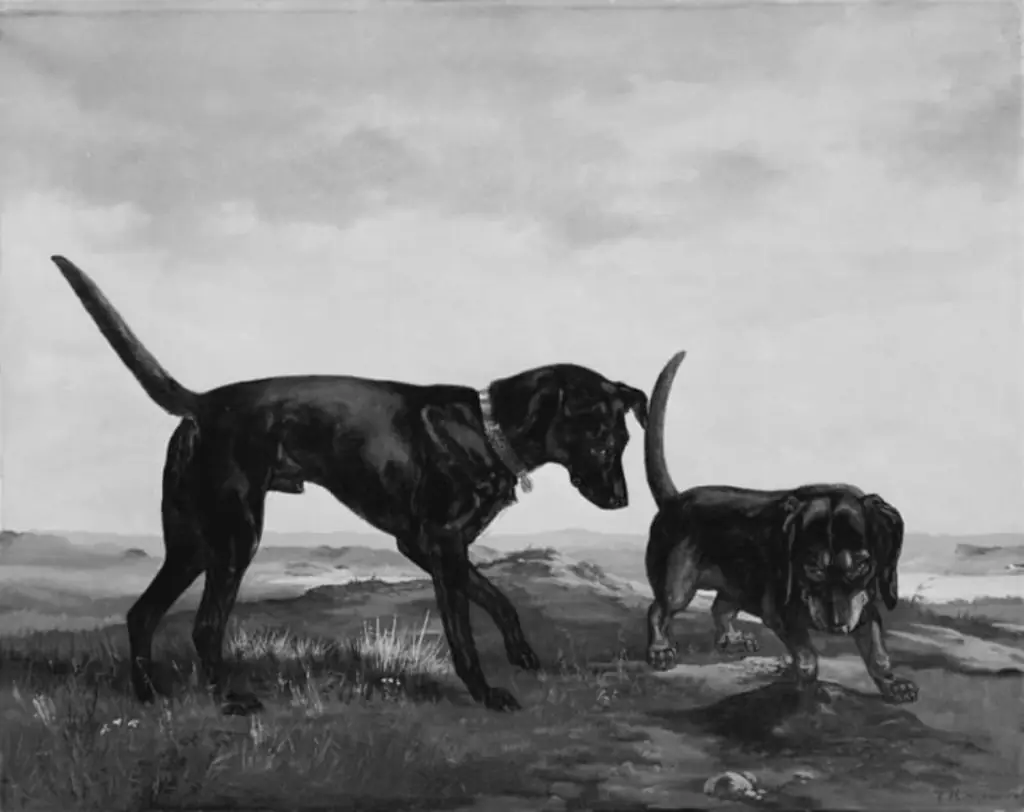 Et par hunde som opgraver et muldvarpeskud
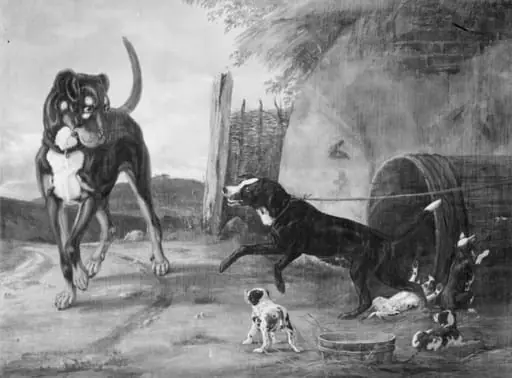 Hundescene
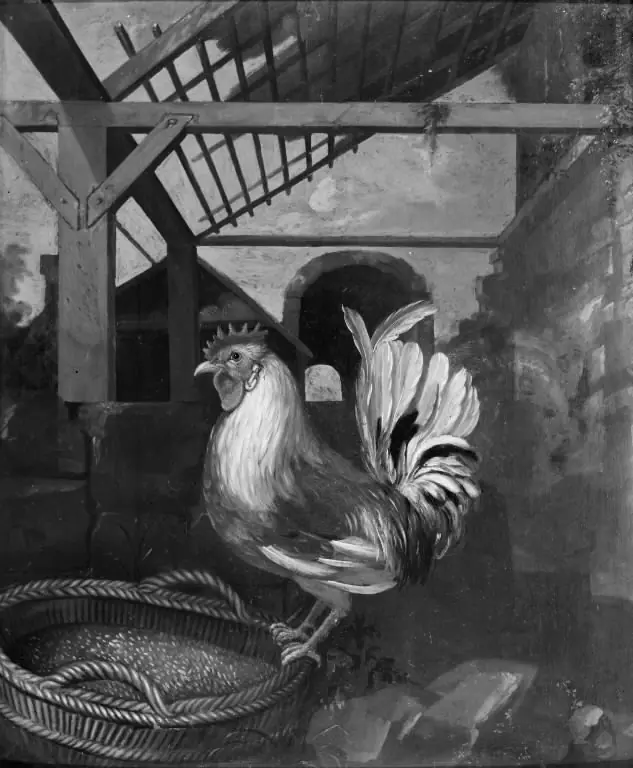 En hane sidder på en kurv fyldt med korn i stald, bag ved blå himmel
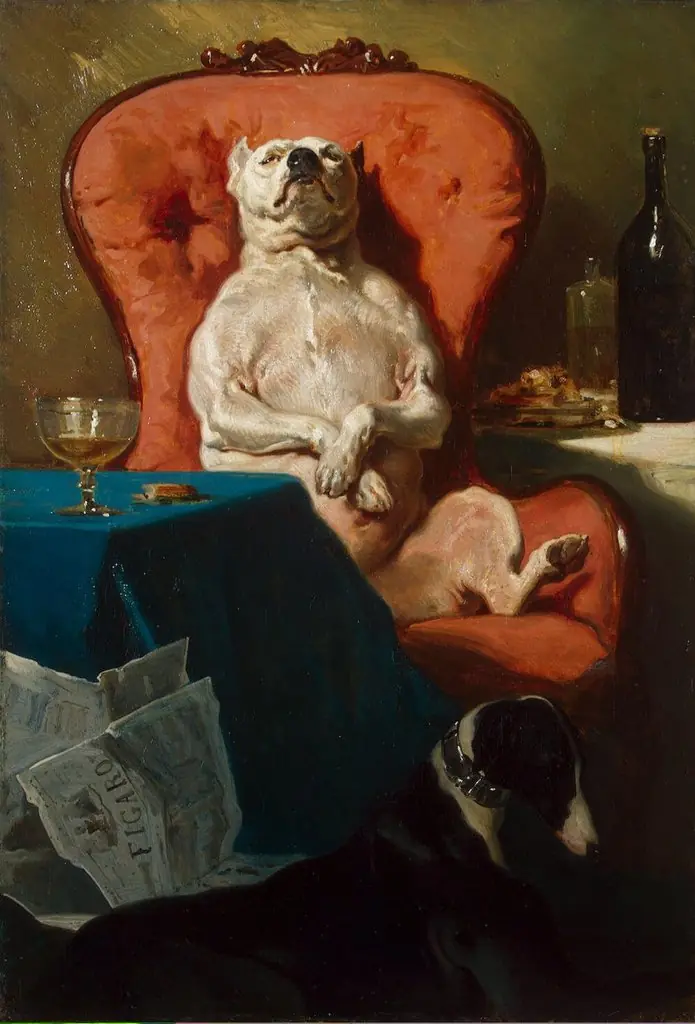 Pug Dog in an Armchair
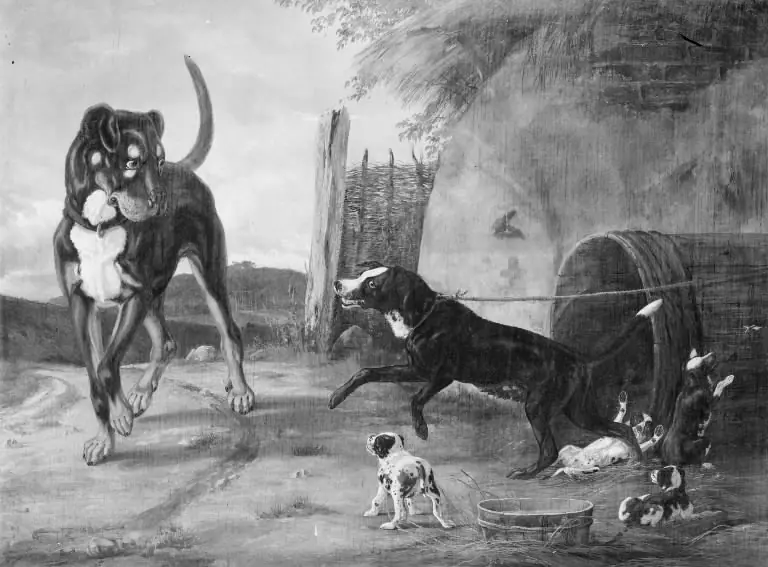 Hundescene
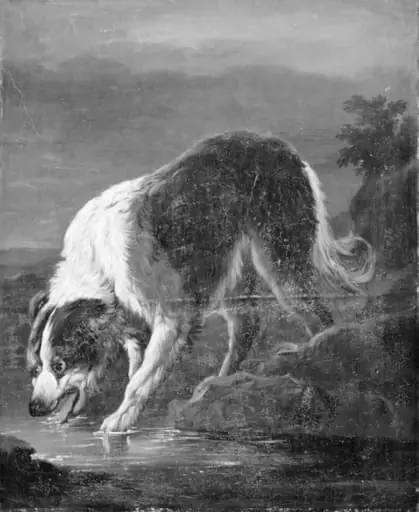 En langhåret hvid og brunplettet hund står og drikker ved et vand