Artwork
Mops
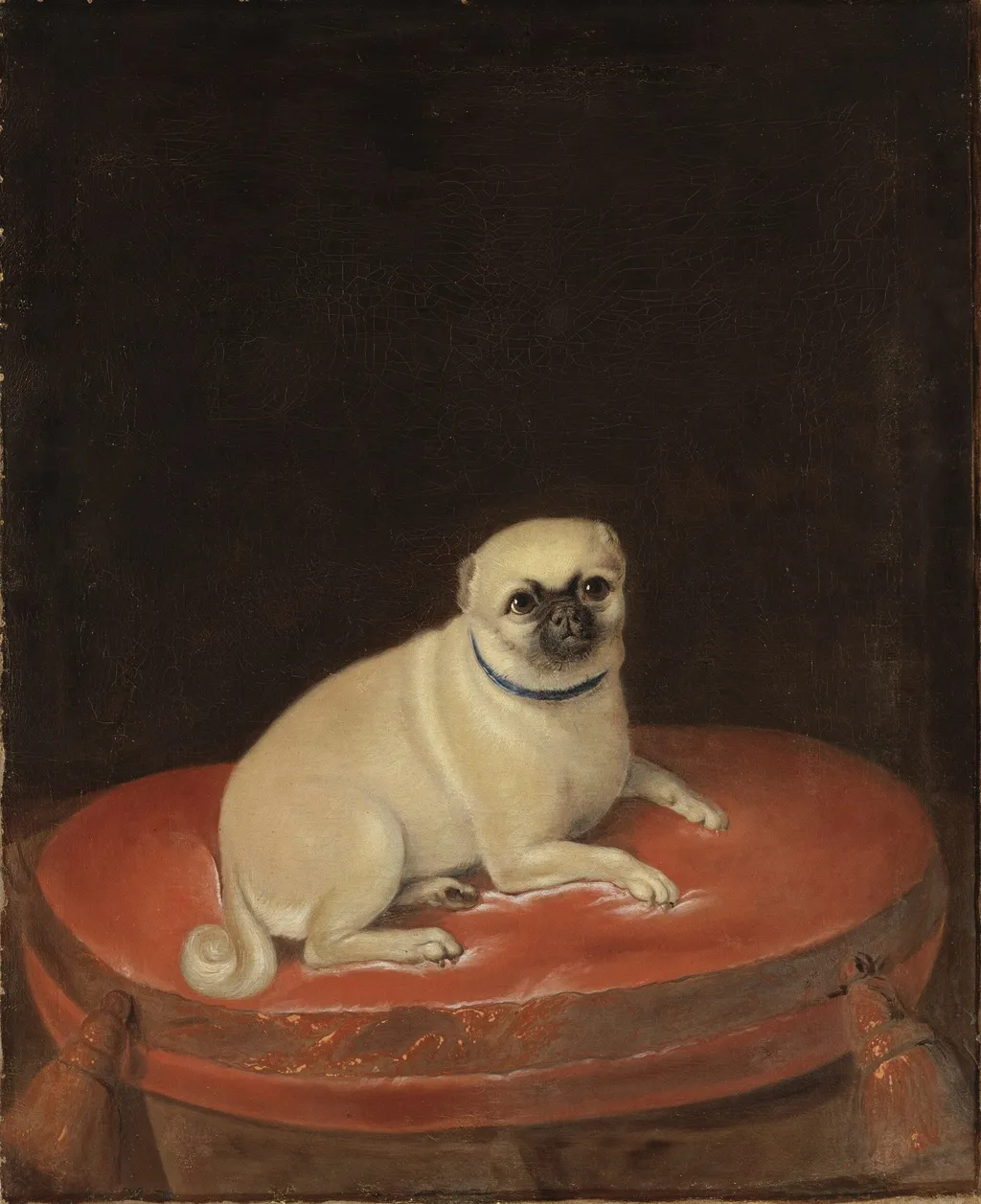
Mops is an oil painting by Unknown. It is held in the collection of the Nationalmuseum. This oil painting portrays a pug dog seated on a red cushion, rendered with careful attention to texture and form.
About this work
Overview
This oil painting portrays a pug dog seated on a red cushion, rendered with careful attention to texture and form. The dog faces the viewer directly, its posture relaxed yet alert. Dark surroundings emphasize the animal’s light coat, while subtle lighting models its features with quiet precision. The work is a focused portrait, capturing the dog’s presence without narrative context.
Subject & Meaning
The subject is a domestic pug, depicted not as a symbol or allegory but as an individual creature. Its calm gaze and tucked posture suggest companionship rather than function. The blue collar implies ownership, grounding the image in everyday life. The absence of human figures shifts focus entirely to the animal’s quiet dignity, inviting contemplation of pet ownership in the period.
Technique & Style
The artist employs chiaroscuro to model the dog’s fur and the cushion’s folds, creating soft transitions between light and shadow.
The artist employs chiaroscuro to model the dog’s fur and the cushion’s folds, creating soft transitions between light and shadow. Brushwork is precise yet unobtrusive, highlighting the texture of the pug’s wrinkled skin and the plushness of the fabric. The dark background isolates the subject, enhancing three-dimensionality without distraction. Color is restrained, with the red cushion and blue collar providing subtle contrast.
History & Provenance
The painting is attributed to Rembrandt van Rijn’s circle, though not definitively by his hand. It aligns with 17th-century Dutch traditions of depicting pets as extensions of domestic life. Its provenance traces to private collections in the Netherlands, with no record of public exhibition until the 20th century. The work’s small scale and intimate subject suggest it was commissioned for personal rather than public display.
Context
In 17th-century Holland, pets—especially dogs—were increasingly portrayed in art as symbols of domestic harmony. Pugs, favored by aristocrats and merchants alike, appeared in portraits as markers of status and affection. This painting reflects a broader trend: the elevation of ordinary household subjects to the realm of fine art, grounded in observational realism rather than idealization.
Legacy
Though not among Rembrandt’s most famous works, this painting contributes to the understanding of how animals were integrated into domestic portraiture of the era. It exemplifies the period’s quiet appreciation for individual character, whether human or animal. Later artists and collectors valued such works for their sincerity and technical restraint, preserving them as records of everyday life.
Artist & collection

 Domestic Scene
 Giacomo and Cardinal Marco, investing Andrea, Abbot of San Zeno, with his Benefice
 The Nymph of Fontainebleau
 Portrait of a Woman
 Madonna and Child with Saints in the Enclosed Garden
 Venus and Minerva
 Family Group of Four on Sofa
 Wall painting from Room H of the Villa of P. Fannius Synistor at Boscoreale
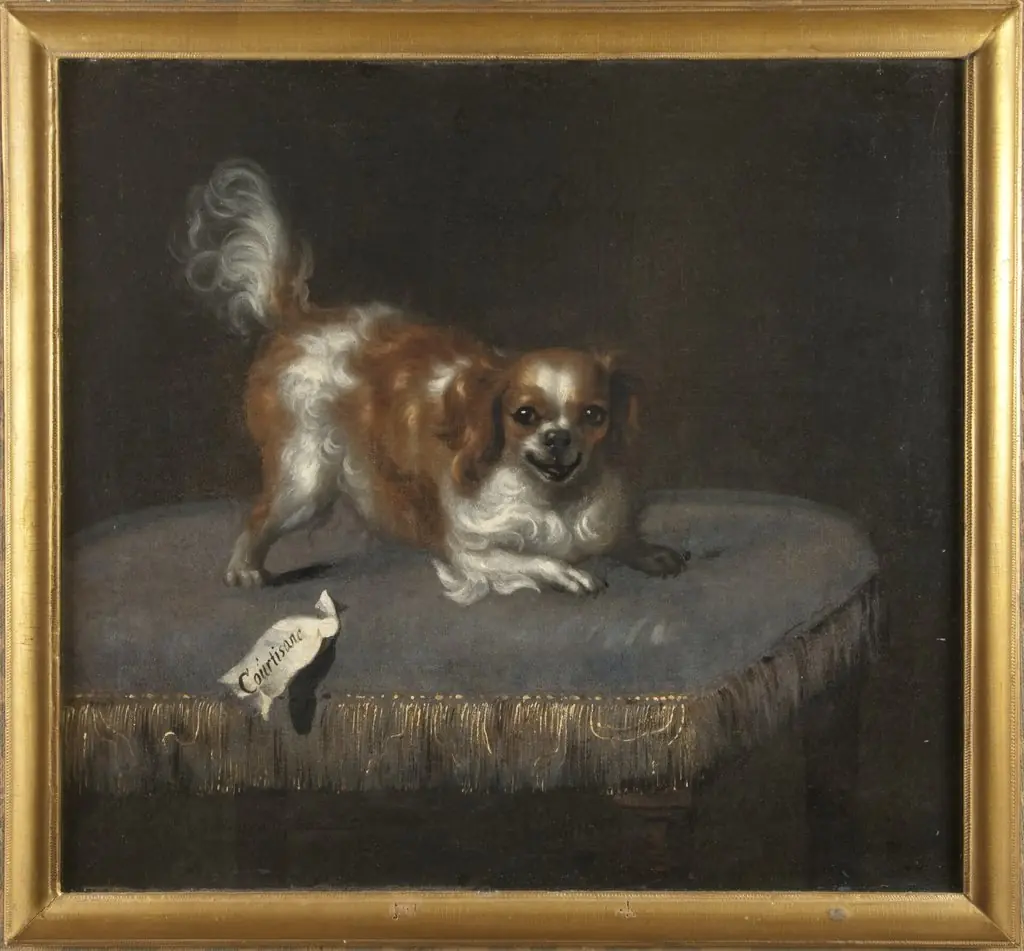 Hunden Courtisane
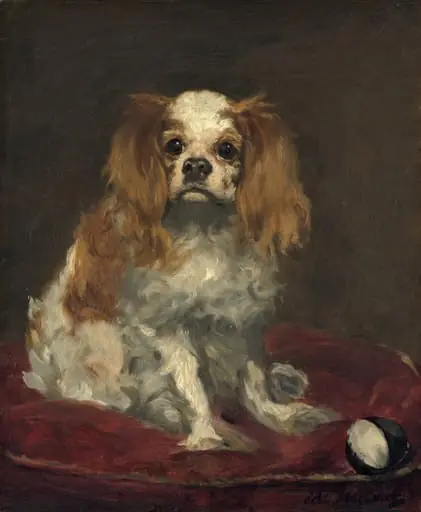 A King Charles Spaniel
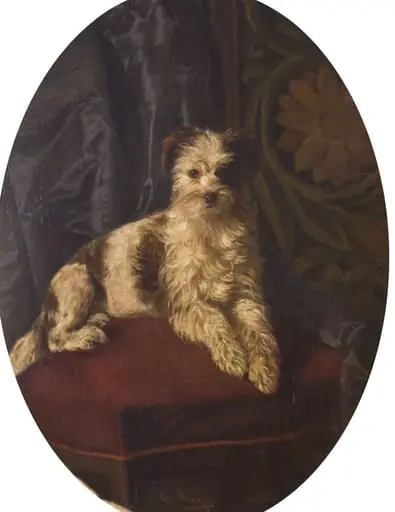 Un câine
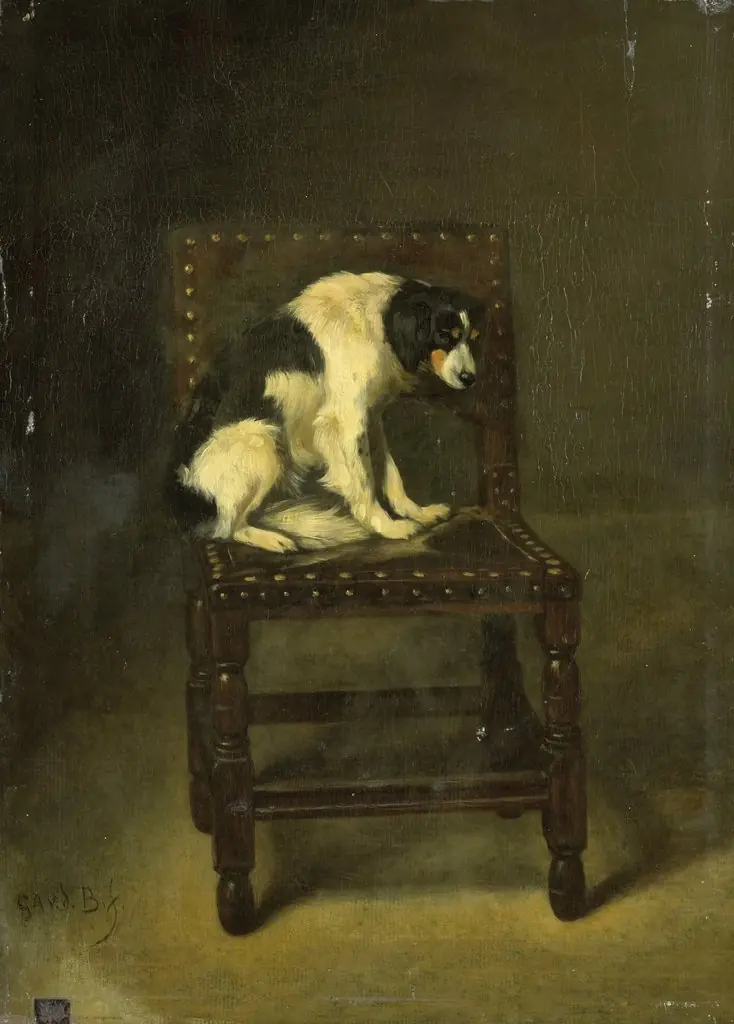 A Dog on a Chair
 A Dog on a Chair
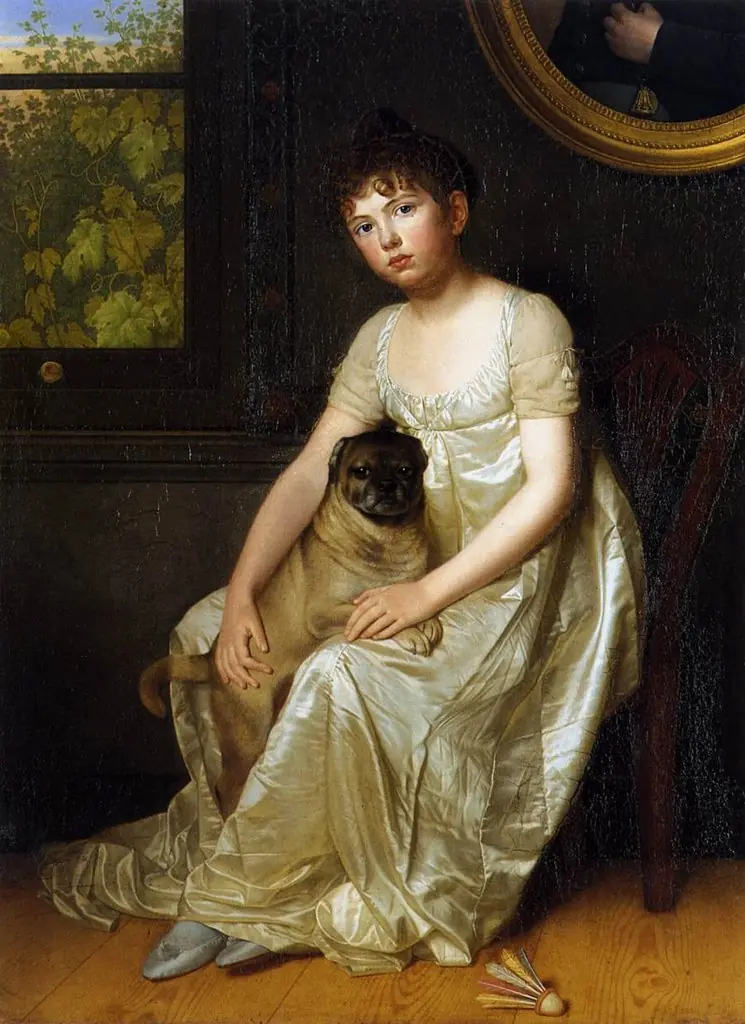 Portrait of Sylvie de la Rue
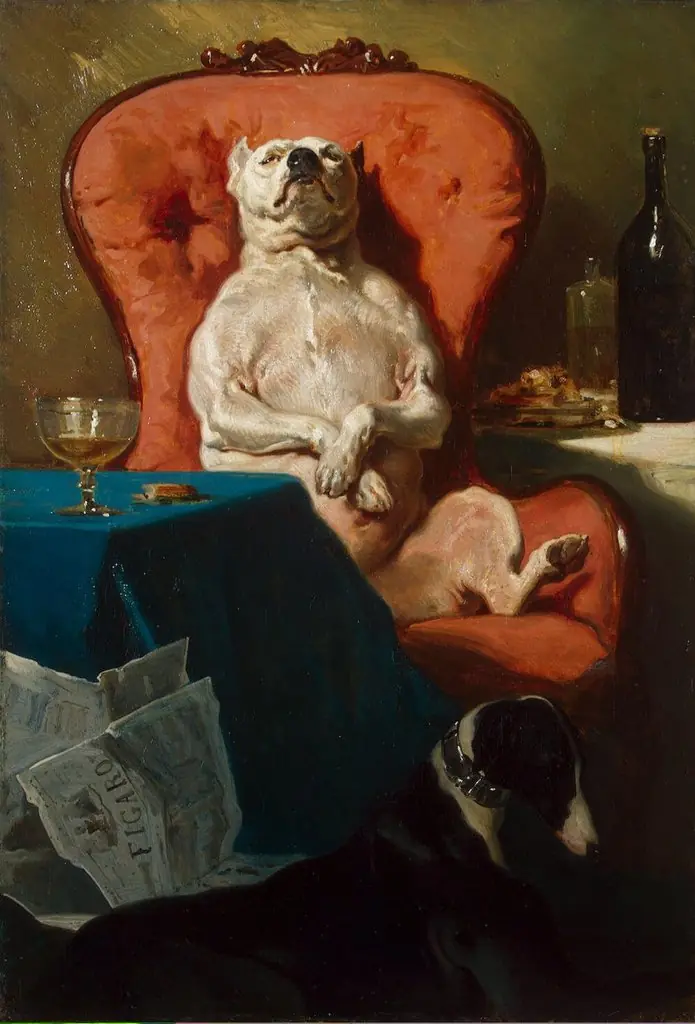 Pug Dog in an Armchair
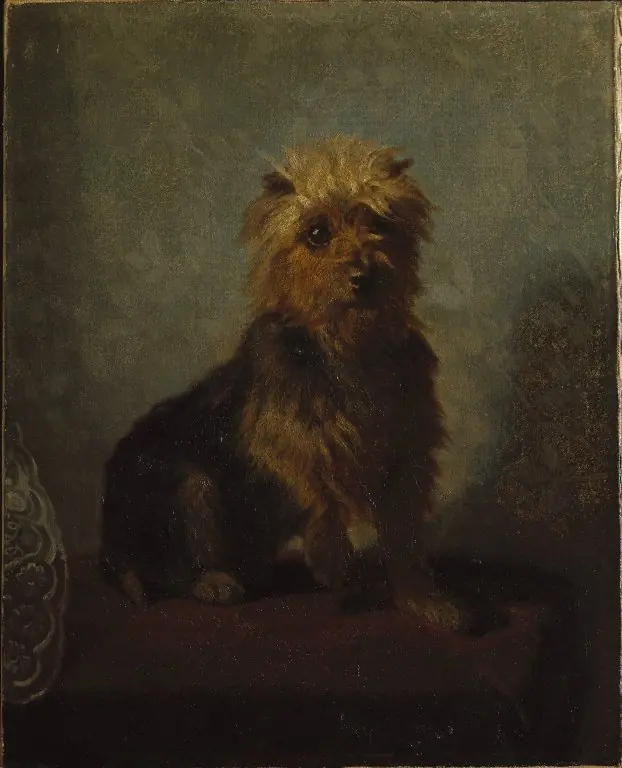 Chadwick's Dog
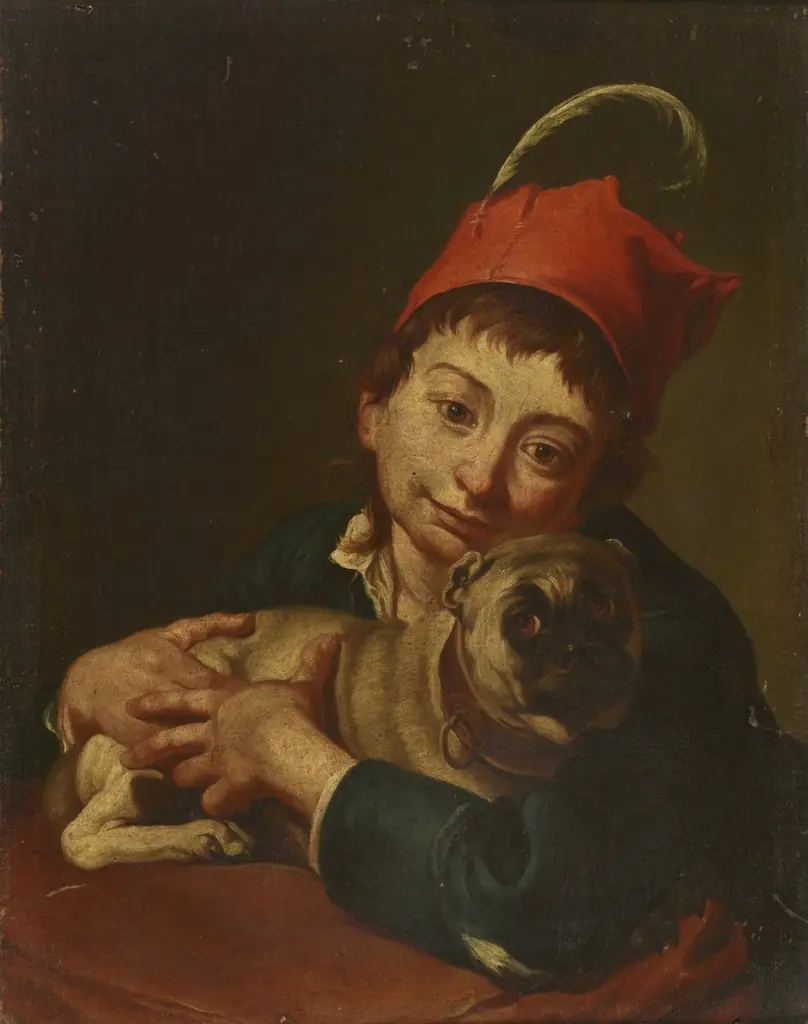 Portrait of a Little Boy with a Dog
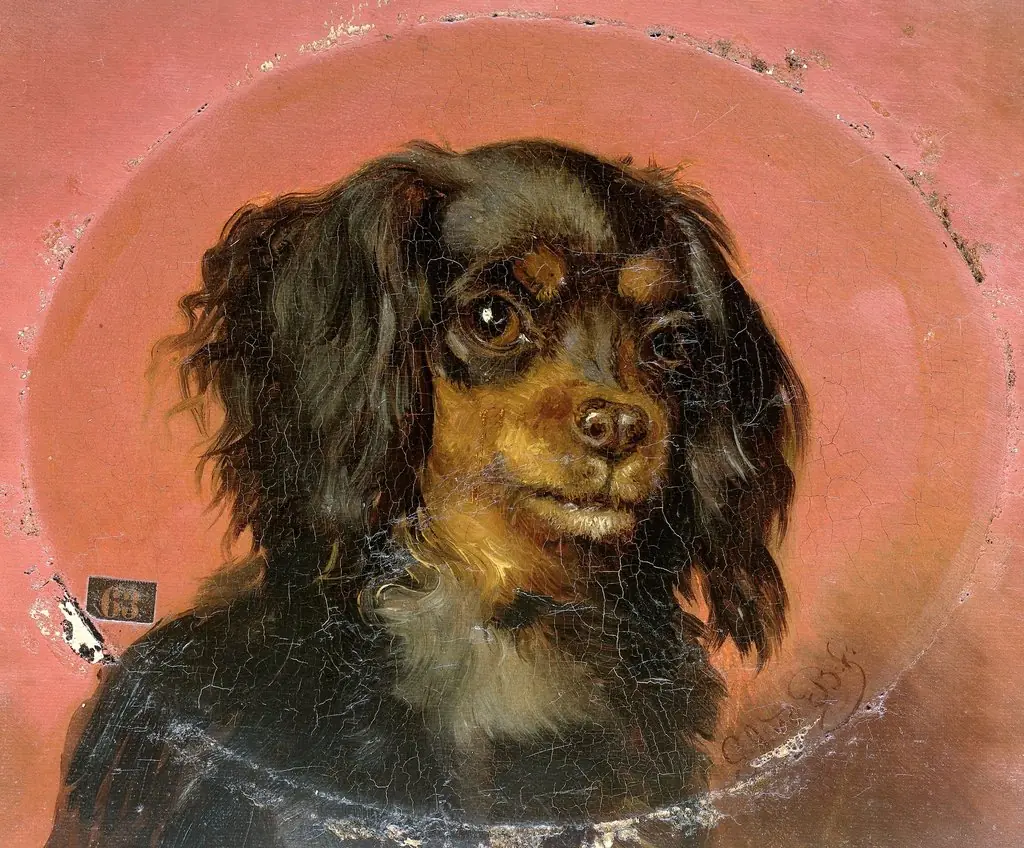 Portrait of a Puppy
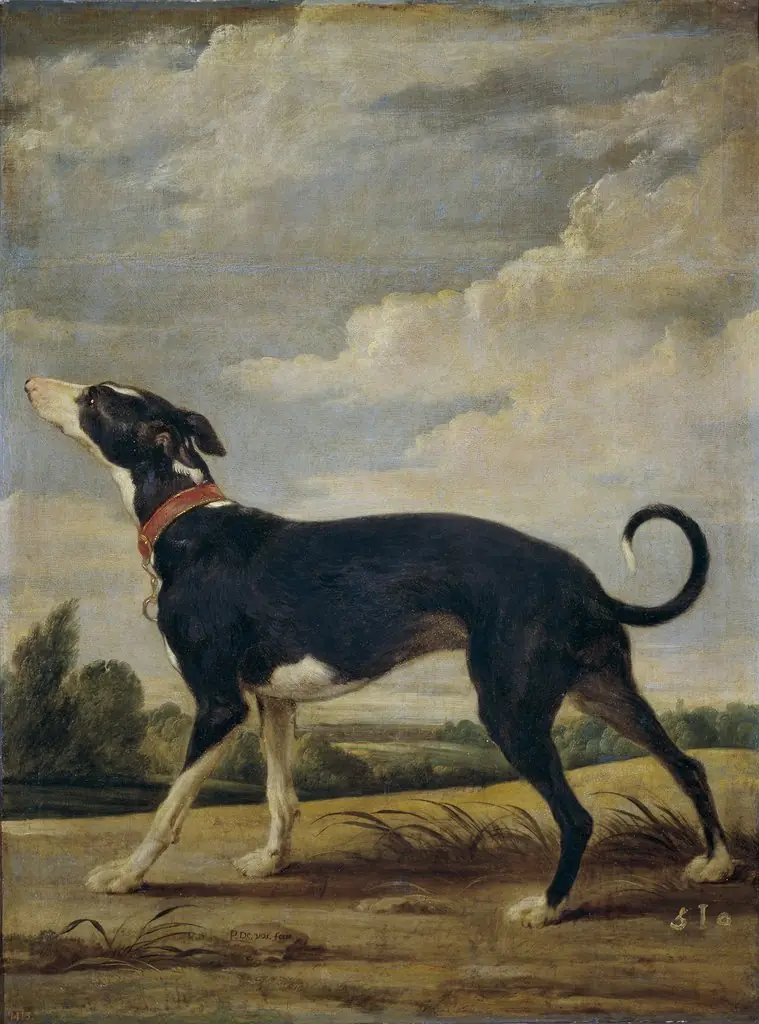 A greyhound on the prowl
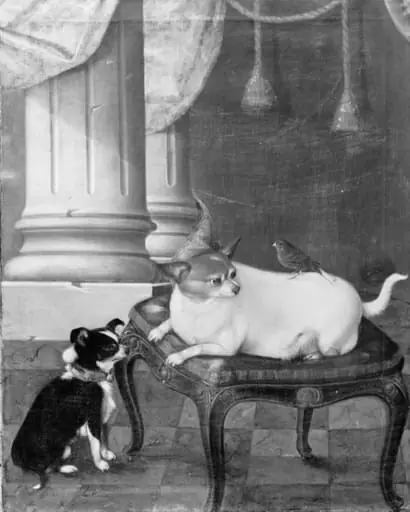 En hvid hund ligger på en blå pude på en stol, en sort med hvide pletter sidder nedenfor