Artwork
Interior of the Jesuit Church in Antwerp
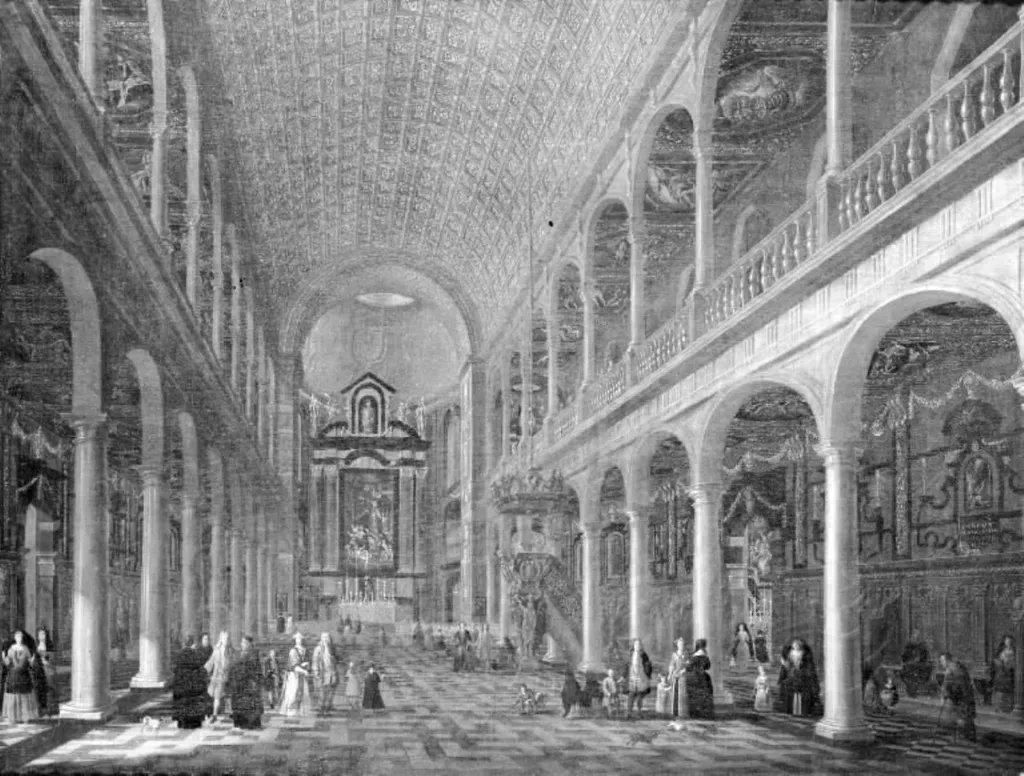
Interior of the Jesuit Church in Antwerp is a photography by the Baroque artist Unknown. It dates from 1712 and is held in the collection of the Statens Museum for Kunst.
About this work
Overview
Taken by an unknown artist, it presents the architectural grandeur of the space with careful attention to spatial depth and atmospheric tone.
This black-and-white photograph, dated 1712, captures the interior of the Jesuit Church in Antwerp. Taken by an unknown artist, it presents the architectural grandeur of the space with careful attention to spatial depth and atmospheric tone. The image is held in the collection of the Museum of Ethnography, where it serves as a record of religious architecture and public life in early 18th-century Flanders.
Subject & Meaning
The scene depicts worshippers and visitors moving through the church’s nave, their presence suggesting daily ritual and communal activity. The architecture dominates the frame, implying the church as both spiritual sanctuary and social hub. The inclusion of ordinary figures amid ornate surroundings reflects the integration of faith into everyday life during the post-Reformation period in the Southern Netherlands.
Technique & Style
The photograph employs chiaroscuro to emphasize volume and spatial recession. Strong contrasts between light falling on stone columns and deep shadows along the side aisles enhance the perception of height and scale. The monochrome palette focuses attention on texture and form, with carved stonework and painted surfaces rendered in gradations of gray, lending the image a sculptural quality.
History & Provenance
The photograph was made in 1712, likely as part of a documentary effort to record significant religious buildings. It entered the Museum of Ethnography’s collection at an unknown date, possibly through academic or colonial-era acquisitions. Its preservation suggests early recognition of its value as a historical document, though the photographer’s identity remains unrecorded.
Context
In early 18th-century Antwerp, the Jesuit Church stood as a symbol of Counter-Reformation influence, its design intended to inspire awe and devotion. The presence of laypeople in the image reflects the church’s role beyond liturgy — as a civic space. The photograph captures a moment when religious architecture still dominated urban life, before secularization reshaped European public spaces.
Legacy
This image endures as a visual archive of ecclesiastical architecture and social behavior in the Low Countries. It informs studies on Baroque interior design, the use of light in sacred spaces, and the documentation of religious life through early photography. Though not widely exhibited, it remains a quiet reference for scholars examining the material culture of early modern Catholicism.
Artist & collection

 Domestic Scene
 Giacomo and Cardinal Marco, investing Andrea, Abbot of San Zeno, with his Benefice
 The Nymph of Fontainebleau
 Portrait of a Woman
 Madonna and Child with Saints in the Enclosed Garden
 Venus and Minerva
 Family Group of Four on Sofa
 Wall painting from Room H of the Villa of P. Fannius Synistor at Boscoreale
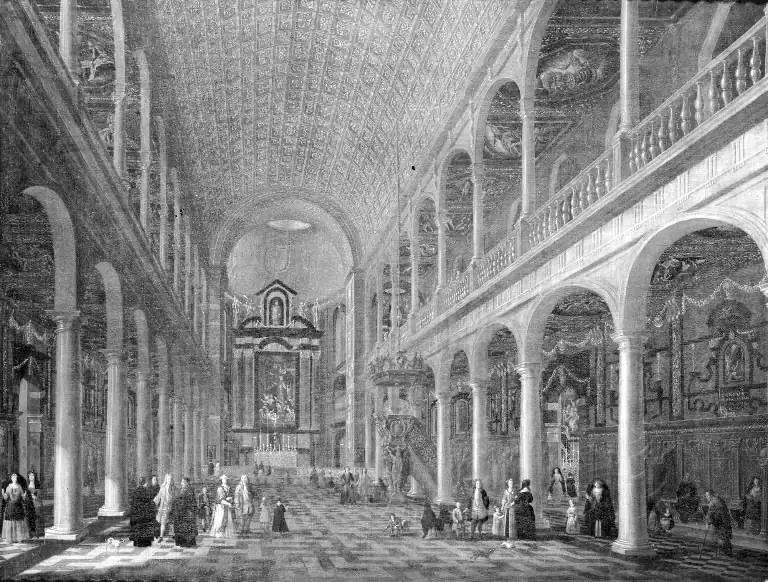 Interior of the Jesuit Church in Antwerp
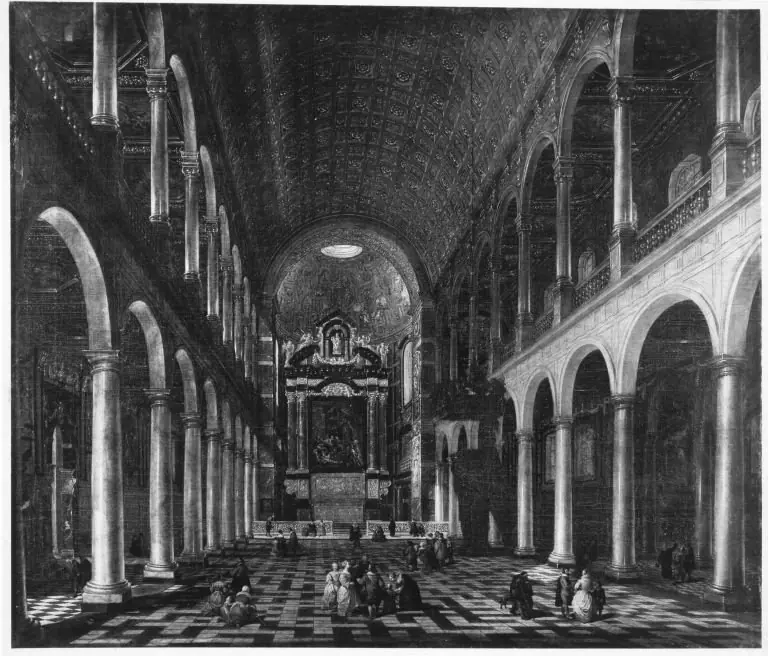 Interior view of the Jesuit Church in Antwerp
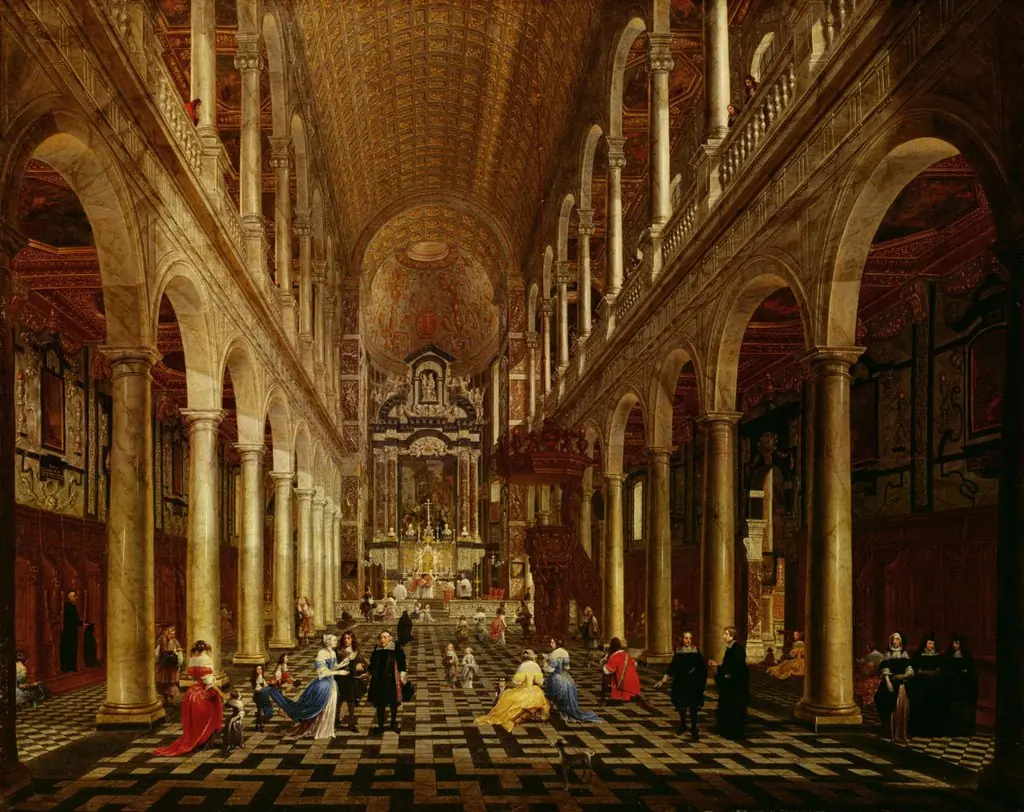 Interior of the Jesuit church in Antwerp
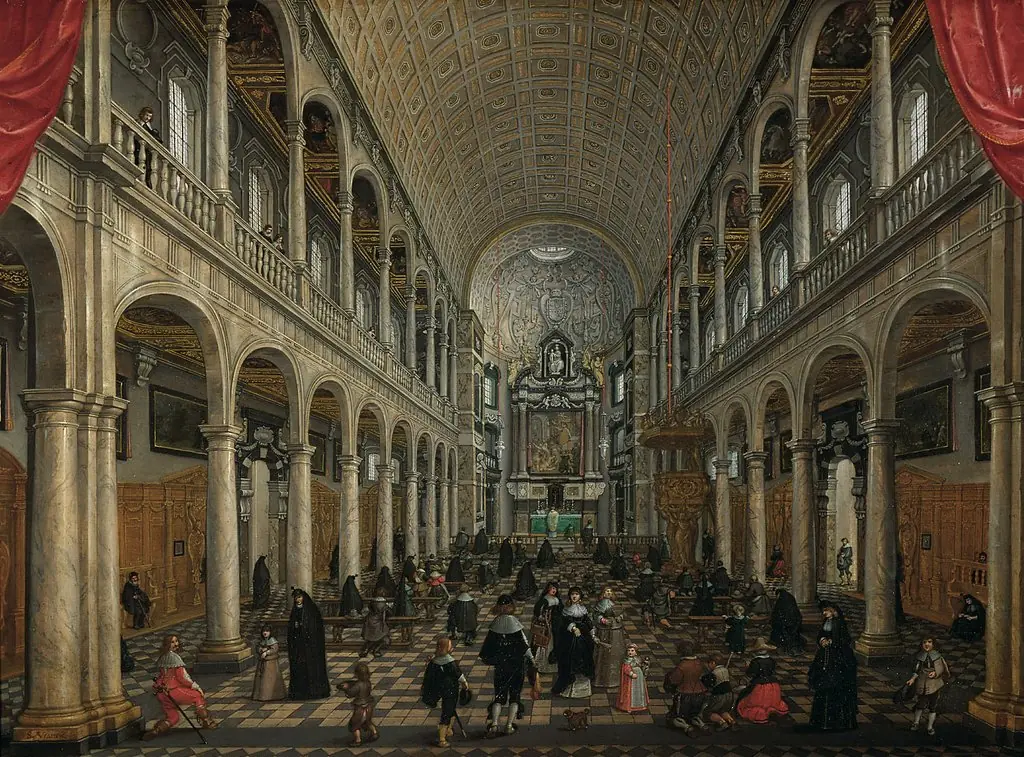 Inner view of the Jesuit church of Antwerp
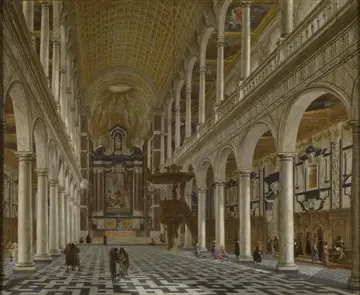 Interior of the Jesuit church (now St. Carolus Borromeus) in Antwerp
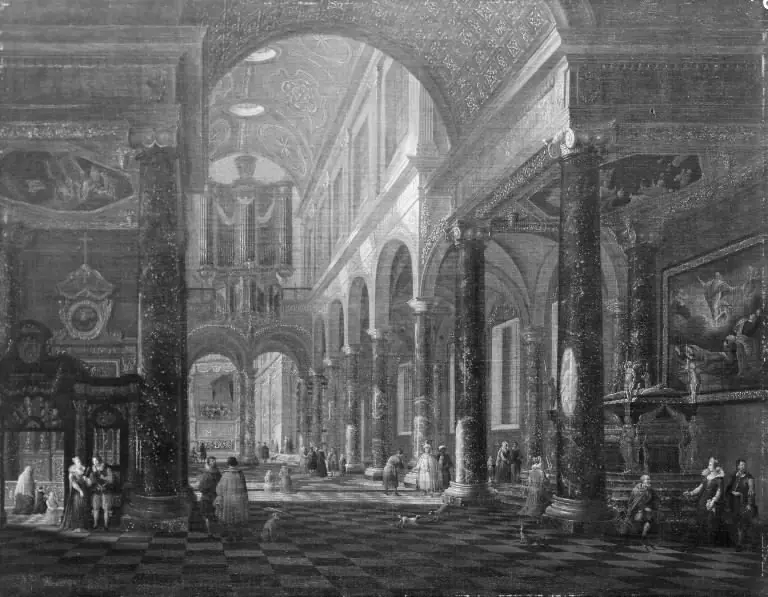 Interior of a Catholic Church
 Interior of a Catholic Church
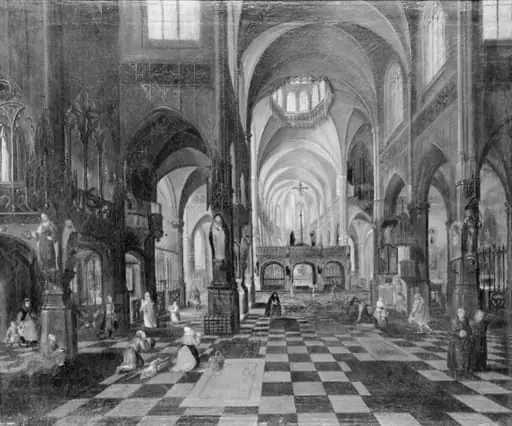 Interior of a Catholic Church
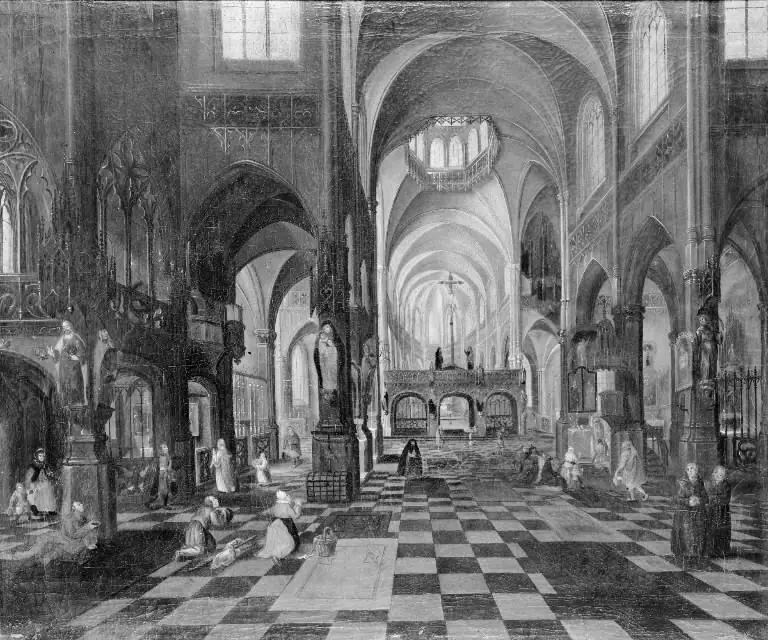 Interior of a Catholic Church
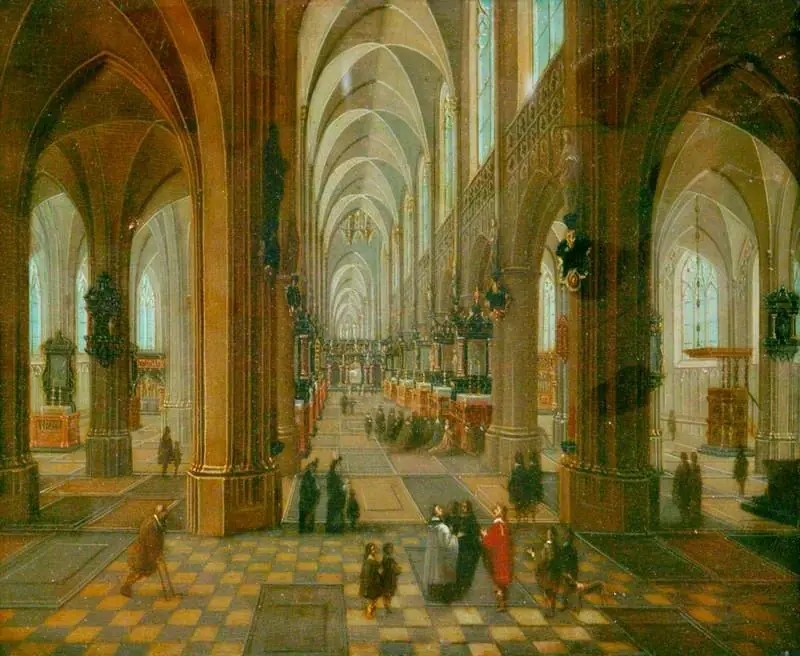 Interior of Antwerp Cathedral
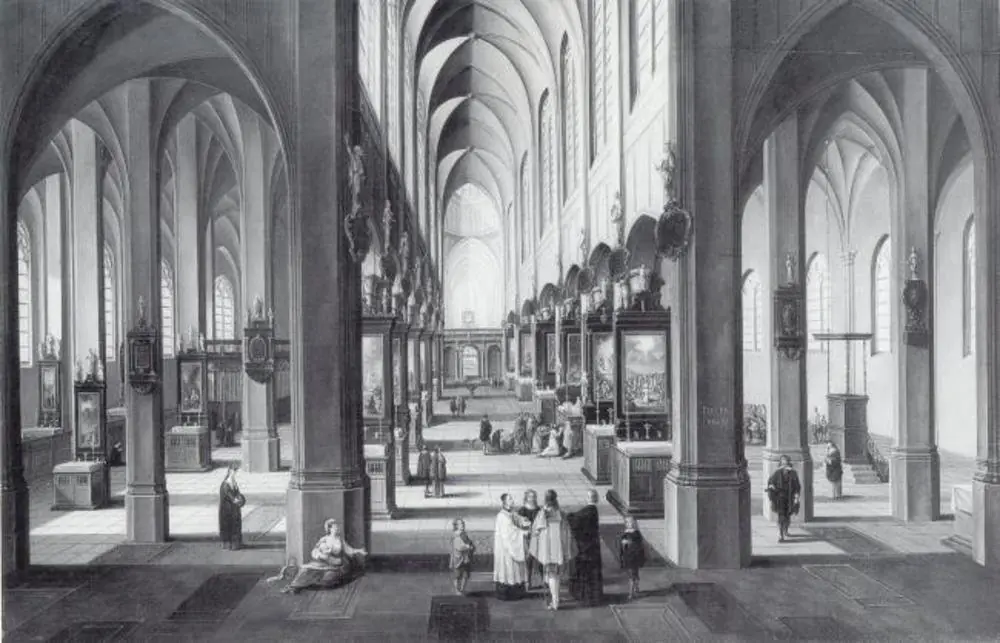 Interior of Antwerp Cathedral