Artwork
Cattle by a Ford
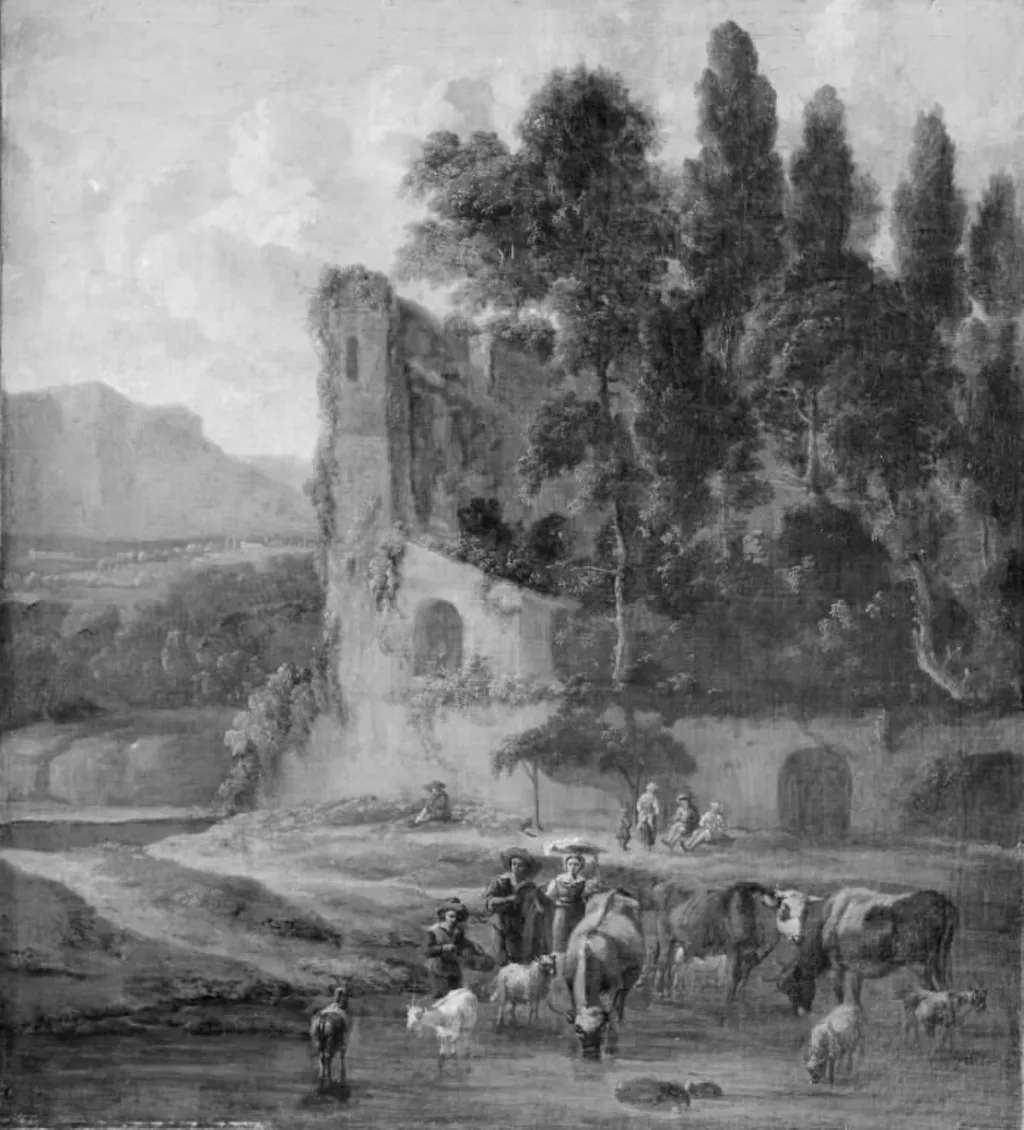
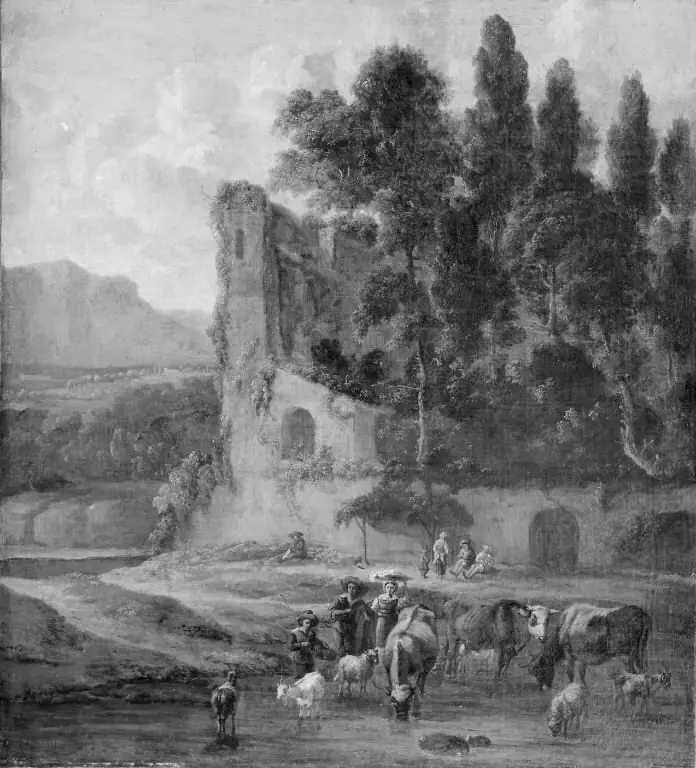
Cattle by a Ford is a photography by Unknown. It dates from 1650 and is held in the collection of the Statens Museum for Kunst. Created around 1650, this image depicts a tranquil rural scene of cattle crossing a shallow river.
About this work
Overview
Created around 1650, this image depicts a tranquil rural scene of cattle crossing a shallow river. The work is attributed to an artist associated with the Dutch tradition of landscape and genre painting. It is currently held in the collection of the Museum of Ethnography, where it is valued for its quiet observation of daily life rather than grand narrative.
Subject & Meaning
The scene captures a common agricultural practice: herding livestock across a ford. Figures on the riverbank and in the water suggest a community engaged in routine labor. The weathered stone bridge implies longstanding use and the passage of time, reinforcing themes of continuity and the quiet rhythms of rural existence without overt symbolism.
Technique & Style
The artist employs subtle contrasts of light and shadow to model forms and suggest depth, a technique aligned with chiaroscuro. Soft, diffused lighting enhances the naturalism of the landscape. Brushwork is restrained, favoring atmospheric cohesion over detail, allowing the composition to feel unposed and grounded in observed reality.
History & Provenance
The work’s early history is undocumented, but its style and subject align with mid-17th-century Dutch and Flemish rural scenes. It entered the Museum of Ethnography’s collection in the early 20th century, likely through acquisition or donation, where it was preserved as an example of pre-industrial rural life.
Context
In the 1650s, the Low Countries saw a flourishing of genre painting focused on ordinary life. This image reflects a broader cultural interest in depicting the countryside not as idealized pastoral, but as lived space—where labor, nature, and time intersect without drama or moralizing.
Legacy
Though not widely exhibited, the work contributes to scholarly understanding of how everyday rural activity was recorded in early modern visual culture. Its quiet realism offers insight into regional practices and the visual language used to represent the non-elite world during a period of artistic innovation.
Artist & collection

 Domestic Scene
 Giacomo and Cardinal Marco, investing Andrea, Abbot of San Zeno, with his Benefice
 The Nymph of Fontainebleau
 Portrait of a Woman
 Madonna and Child with Saints in the Enclosed Garden
 Venus and Minerva
 Family Group of Four on Sofa
 Wall painting from Room H of the Villa of P. Fannius Synistor at Boscoreale
 Italian Landscape
 Mountain Scenery with a Castle
 Landschaft
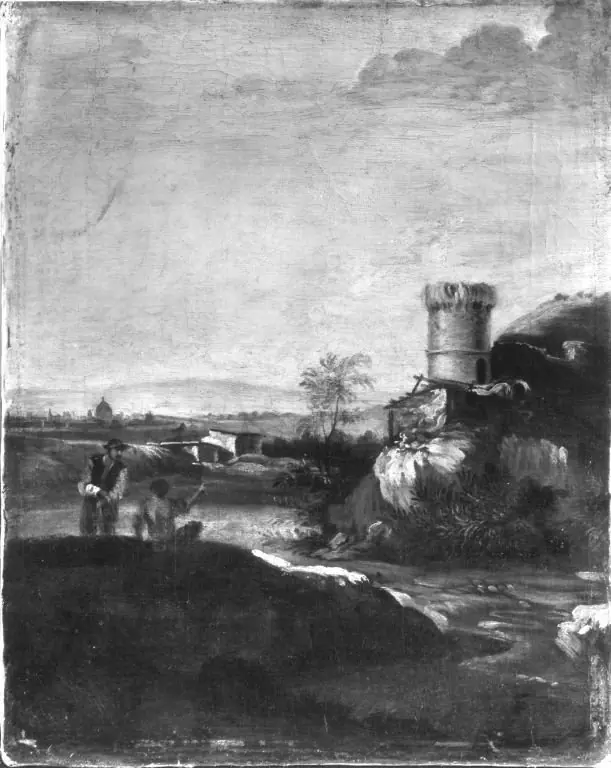 Landschaft italienischen Charakters (Umkreis)
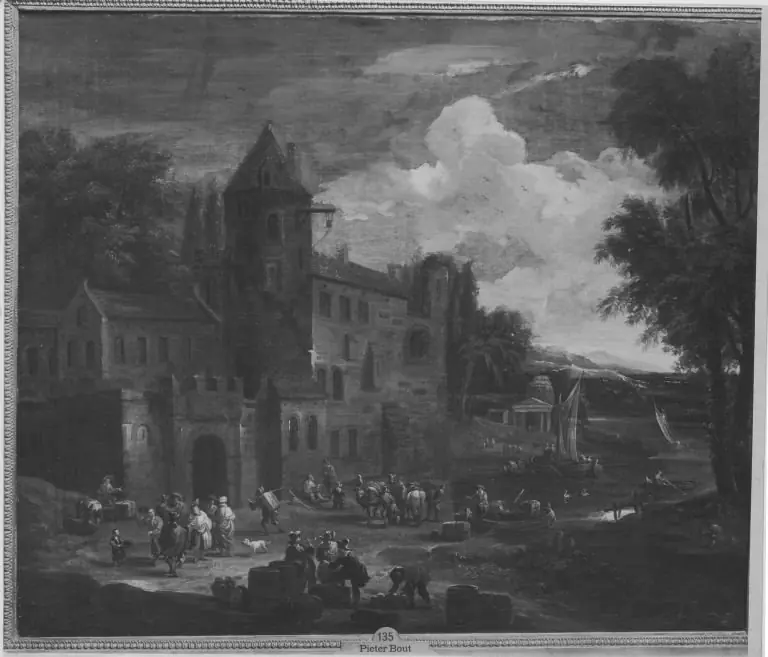 Landschaft italienischen Charakters
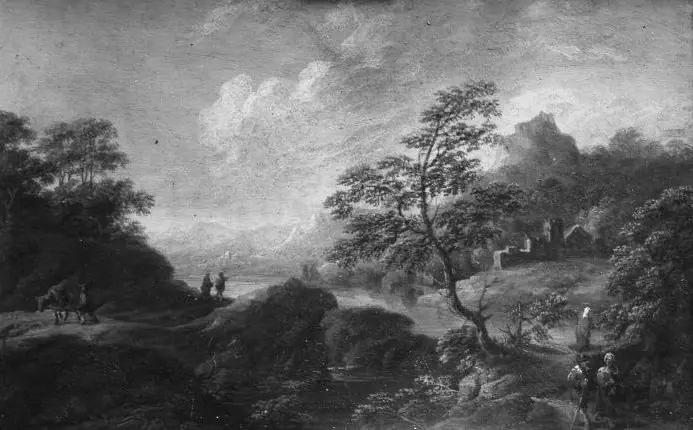 Landscape: Backside: copper engraving portrait of a man
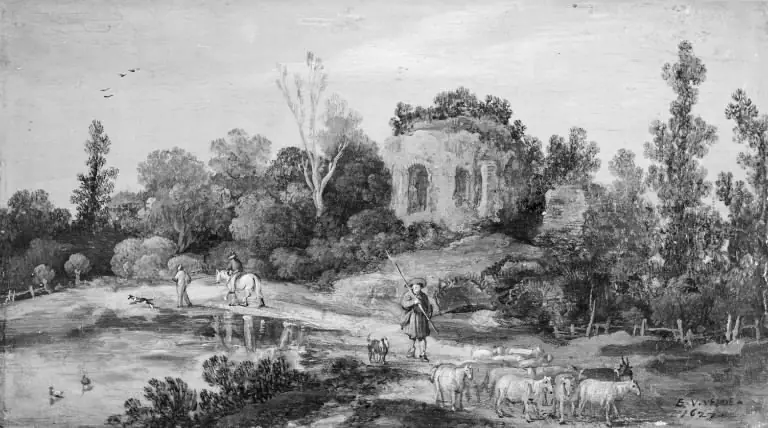 Landscape with a Ruin
 Landscape
 Italienische Landschaft mit Vieh und Hirten, antiker Ruine und Klosterkirche
 Ideallandschaft
 Mountainous Landscape with a Monastery
 Cattle by a Ford