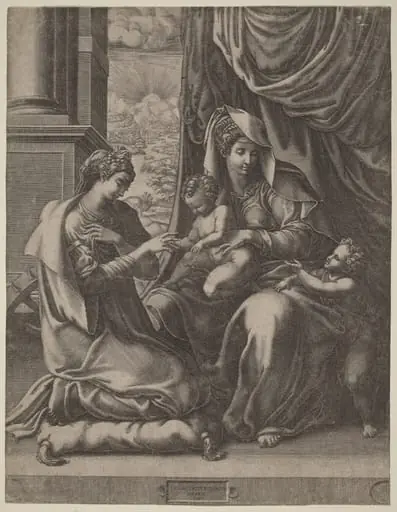
Artwork
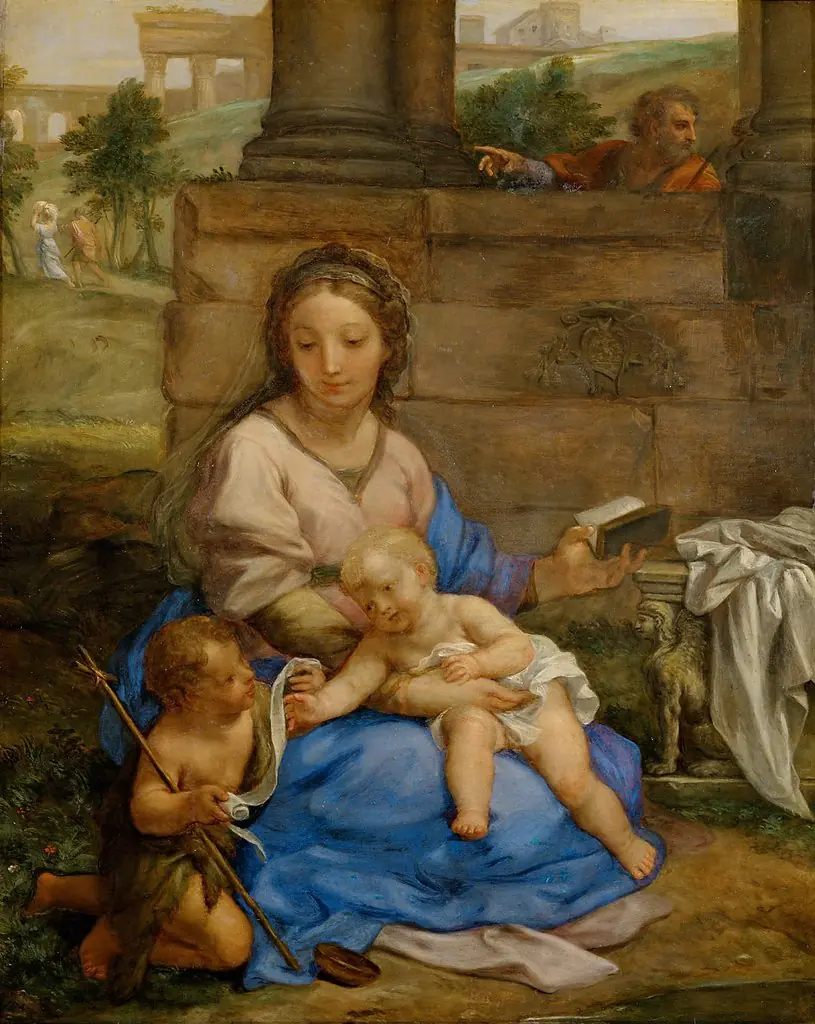
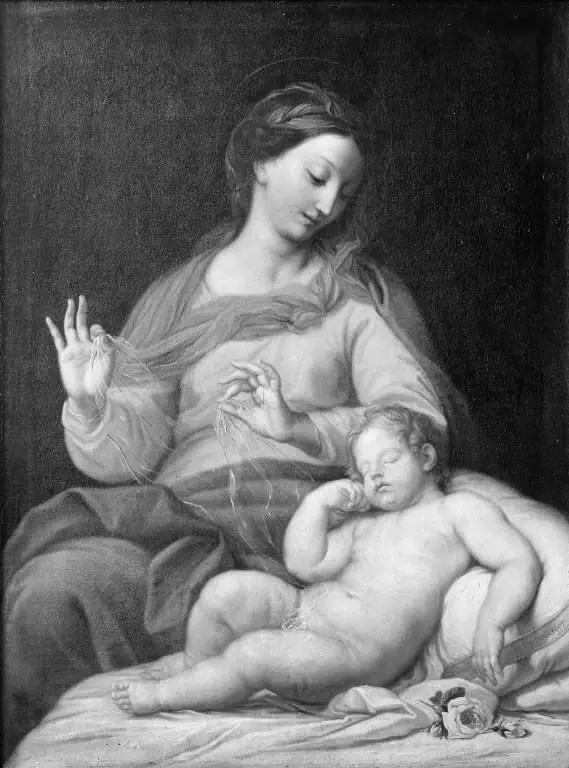
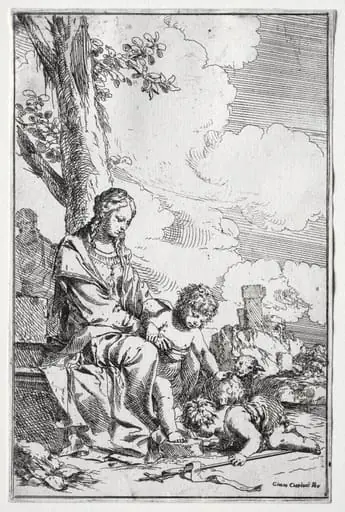
Virgin and Child with the Infant St. John
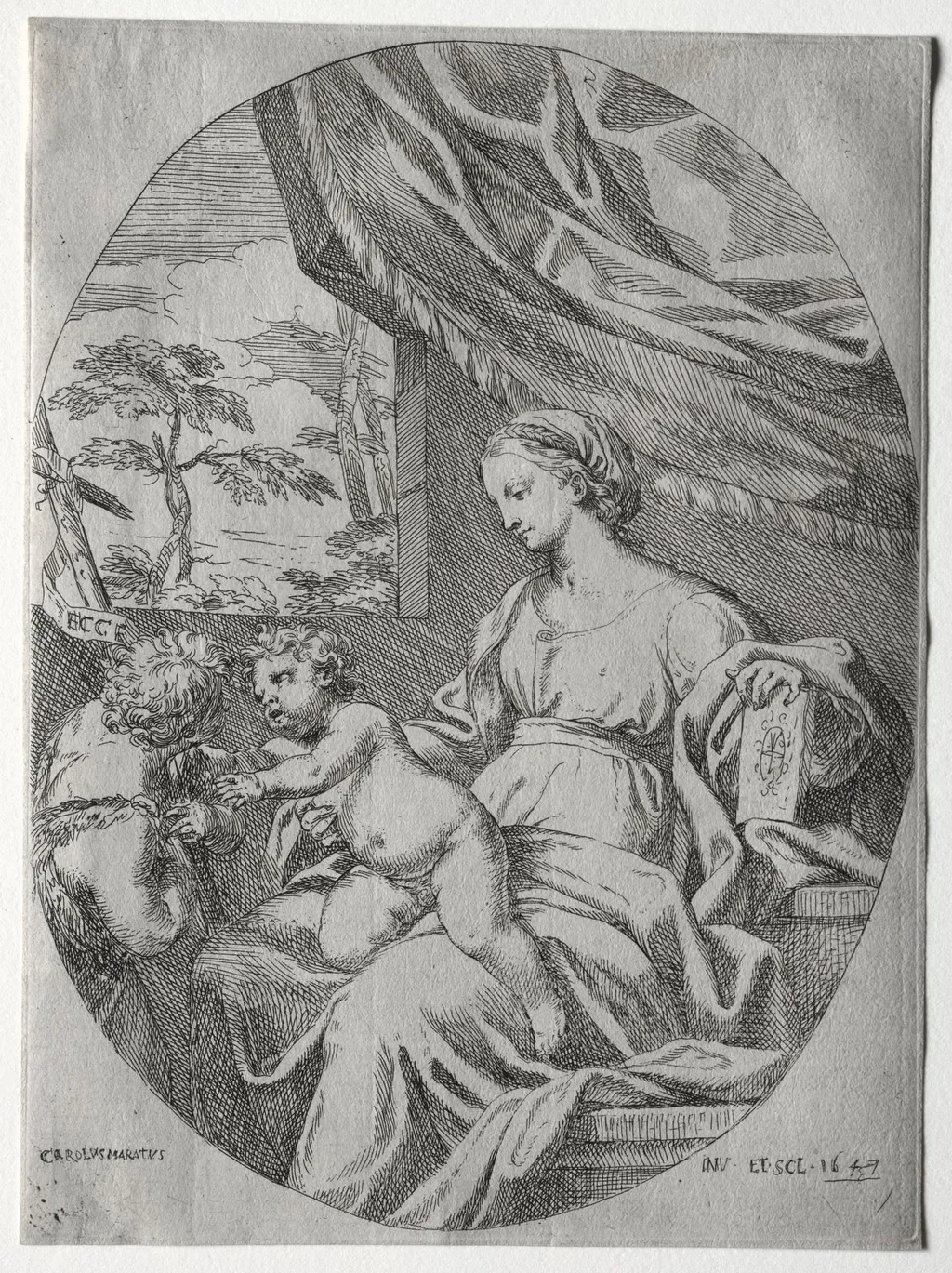
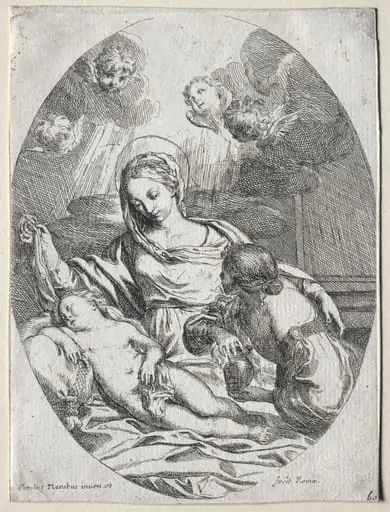
Virgin and Child with the Infant St. John is a print by the Baroque artist Carlo Maratta. It dates from 1647 and is held in the collection of the Cleveland Museum of Art.
About this work
Overview
Carlo Maratti painted this devotional image in 1647 during his early career in Rome, establishing his reputation for classical restraint within the Baroque era.
Carlo Maratti painted this devotional image in 1647 during his early career in Rome, establishing his reputation for classical restraint within the Baroque era. The work reflects his training under leading Roman artists and his alignment with the academic tradition that favored harmony and clarity over dramatic intensity. It remains part of the Cleveland Museum of Art’s collection, where it exemplifies his approach to sacred subjects.
Subject & Meaning
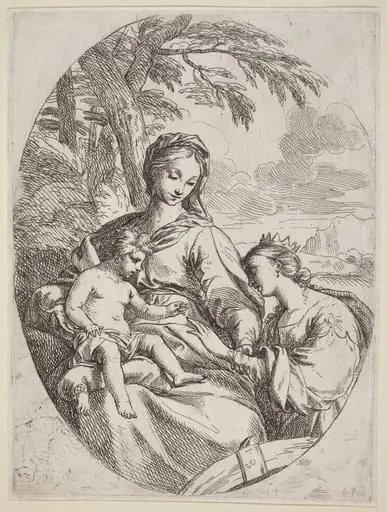
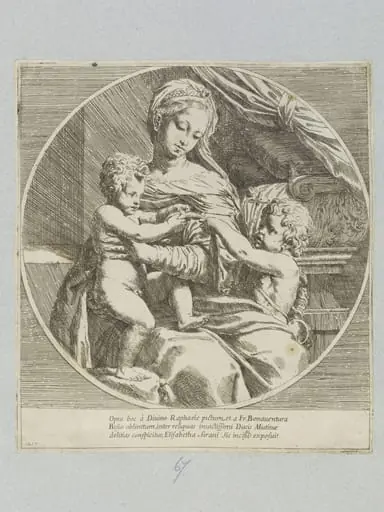
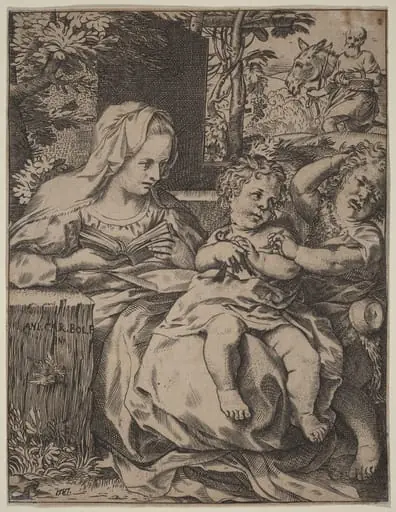
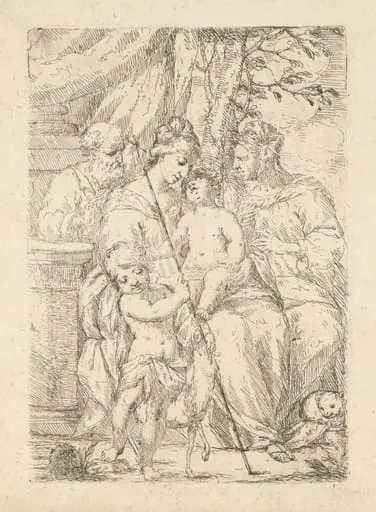
The composition centers on the Virgin Mary seated with the Christ Child beside her, while the infant John the Baptist reaches toward him. This interaction symbolizes John’s future role as the forerunner of Christ, a common theological motif in Counter-Reformation art. The quiet exchange between the figures emphasizes spiritual connection rather than narrative action, inviting contemplation over spectacle.
Technique & Style
Maratti employed subtle chiaroscuro to model the figures with soft volume, avoiding harsh contrasts. His brushwork is refined, with delicate lines defining drapery and facial features. The palette is muted, dominated by earth tones and pale hues, enhancing the scene’s intimacy. The background, minimally suggested with trees and sky, directs focus to the three figures without distraction.
History & Provenance
Created during Maratti’s formative years, the painting likely originated as a private devotional piece for a Roman patron. It entered the Cleveland Museum of Art’s collection in the 20th century, having passed through private hands in Europe. Its documented history is limited, but its style aligns with works commissioned by ecclesiastical clients during the mid-17th century.
Context
In mid-17th-century Rome, religious imagery was shaped by the Council of Trent’s emphasis on clarity and emotional accessibility. Maratti’s work responded to this by blending classical composition with gentle piety, distinguishing his style from the more theatrical tendencies of contemporaries like Caravaggio. His approach appealed to Church authorities seeking orderly, dignified devotion.
Legacy
Maratti’s influence extended through his teaching and his role as a leading figure in the Accademia di San Luca. While later generations favored more dynamic Baroque styles, his emphasis on balance and restraint preserved a classical lineage in Roman art. This painting remains a quiet example of his enduring contribution to the academic tradition in religious painting.
Artist & collection
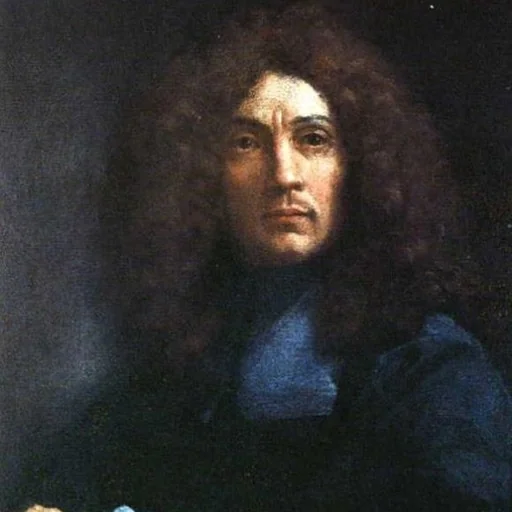
Artist
Carlo Maratta or Maratti (18 May 1625 – 15 December 1713) was an Italian Baroque painter and draughtsman, active principally in Rome where he was the leading painter in the second half of the 17th century.