Artwork
St. Benedict - The Annunciation - A Kneeling Nun
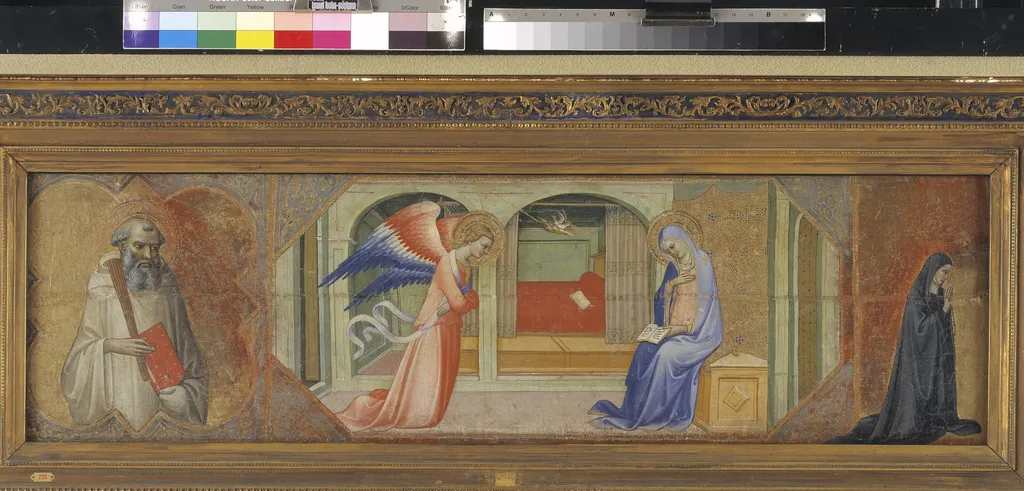
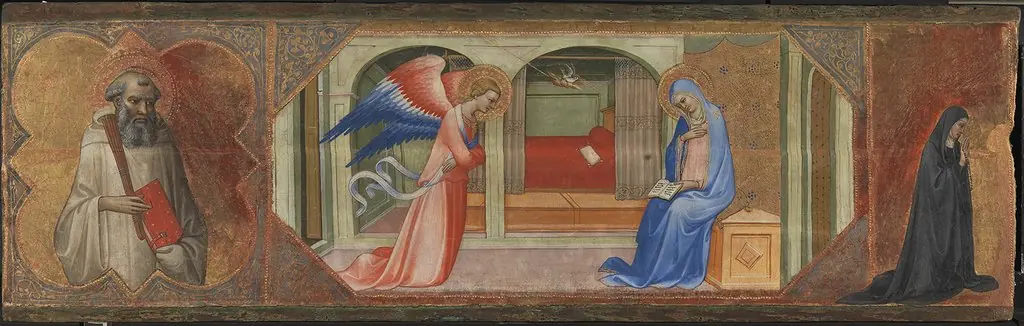
St. Benedict - The Annunciation - A Kneeling Nun is a photography by Unknown. It dates from 1450 and is held in the collection of the Statens Museum for Kunst. Painted around 1450, this small devotional image depicts a moment of divine revelation within a confined, intimate space.
About this work
Overview
The composition emphasizes stillness and reverence, typical of late medieval religious panels intended for private contemplation.
Painted around 1450, this small devotional image depicts a moment of divine revelation within a confined, intimate space. It features four figures arranged symmetrically beneath arched doorways, framed in gold. The composition emphasizes stillness and reverence, typical of late medieval religious panels intended for private contemplation. The use of rich color and delicate detail suggests an origin in a monastic or conventual workshop.
Subject & Meaning
The scene merges two devotional themes: the Annunciation and the veneration of St. Benedict. The kneeling woman, likely the Virgin Mary, receives the angel’s message, while the older man in white, possibly St. Benedict, observes as a spiritual witness. The nun standing nearby represents the viewer’s role in prayerful attendance. The white cloth held by the angel may symbolize purity or the veil of divine mystery, reinforcing the sacred nature of the moment.
Technique & Style
The painting employs a restrained palette with muted tones, except for the vivid red and blue of the angel’s wings, which draw attention without overwhelming the scene. Soft modeling of the Virgin’s blue robe suggests a gentle light, hinting at early chiaroscuro effects. Gold leaf outlines the frame and highlights fabric edges, enhancing the sacred atmosphere. The figures are rendered with quiet precision, avoiding dramatic movement in favor of contemplative stillness.
History & Provenance
The work has been held since at least the late 19th century by the Museum of Ethnography, though its original context remains unclear. It likely originated in a southern European convent, where such images served as aids to private prayer. Its small scale and devotional subject suggest it was owned by a religious woman, possibly a nun, who used it for daily meditation. No documentation of its earlier ownership survives.
Context
Created during a period when lay and monastic devotion increasingly emphasized personal encounters with sacred figures, this painting reflects the rise of intimate religious imagery. The fusion of the Annunciation with St. Benedict points to a Benedictine spiritual tradition, where Marian devotion and monastic rule were intertwined. Similar panels were common in nunneries, where visual aids supported liturgical and meditative practices.
Legacy
Though not widely known outside museum circles, the painting exemplifies the quiet, personal piety of 15th-century religious art. Its preservation in an ethnographic collection underscores its value as a cultural artifact of female monastic life. It continues to offer insight into how spiritual narratives were visually adapted for private devotion, beyond the grand altarpieces of public churches.
Artist & collection

 Domestic Scene
 Giacomo and Cardinal Marco, investing Andrea, Abbot of San Zeno, with his Benefice
 The Nymph of Fontainebleau
 Portrait of a Woman
 Madonna and Child with Saints in the Enclosed Garden
 Venus and Minerva
 Family Group of Four on Sofa
 Wall painting from Room H of the Villa of P. Fannius Synistor at Boscoreale
 Annunciation
 The Annunciation
 The Annunciation
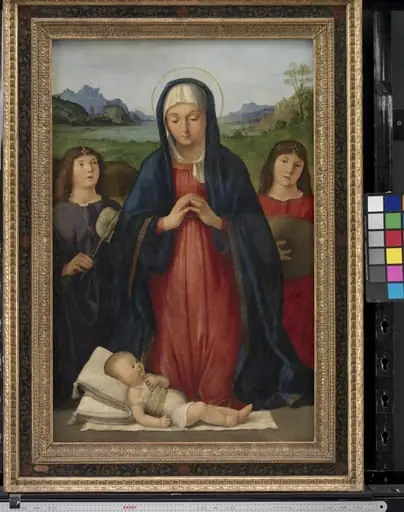 The Christ Child Worshipped by Mary
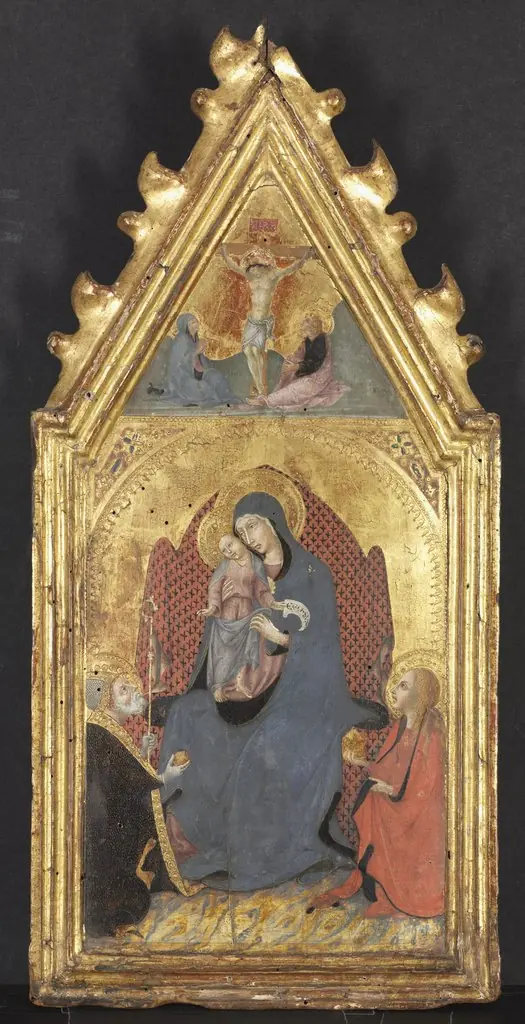 Virgin and Child Adored by Saints Mary Magdalene and Nicolas of Bari; Christ Crucified with the Virgin and Saint John the Evangelist
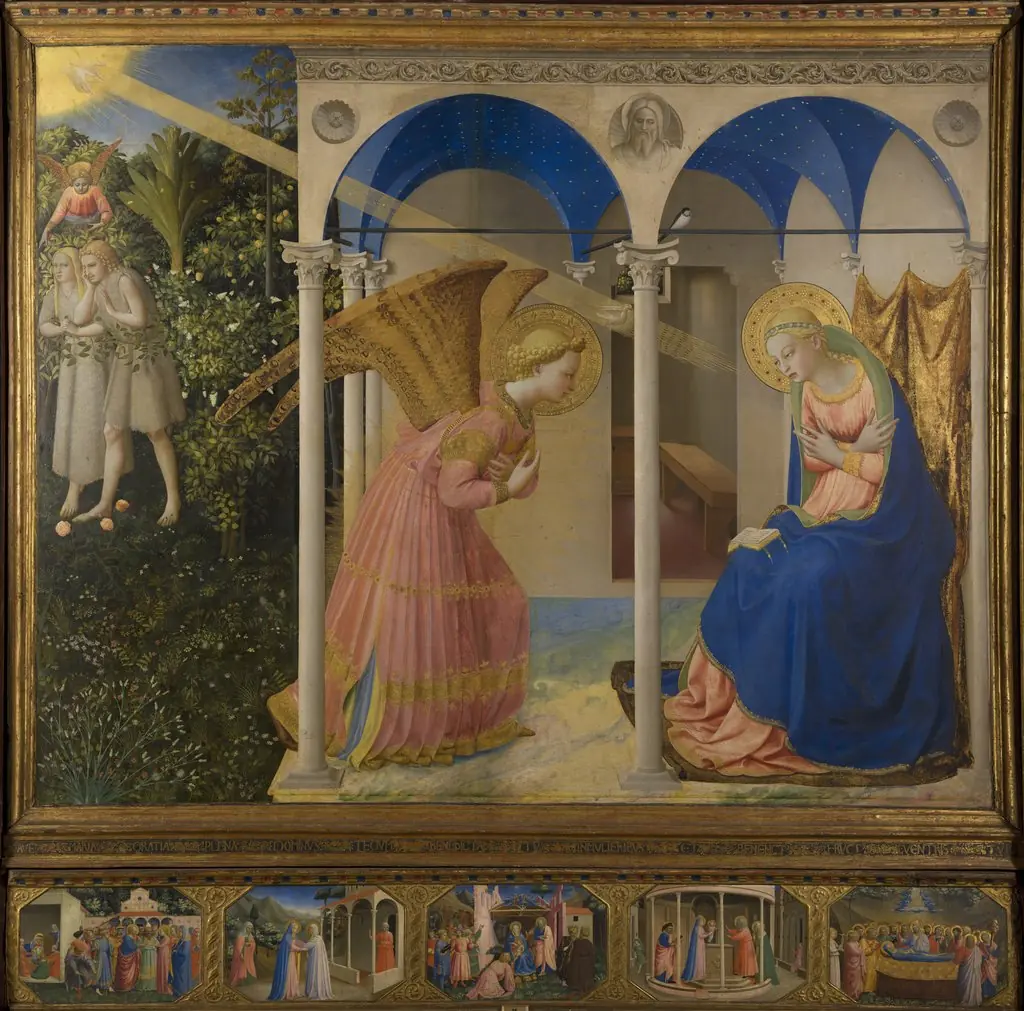 Annunciation
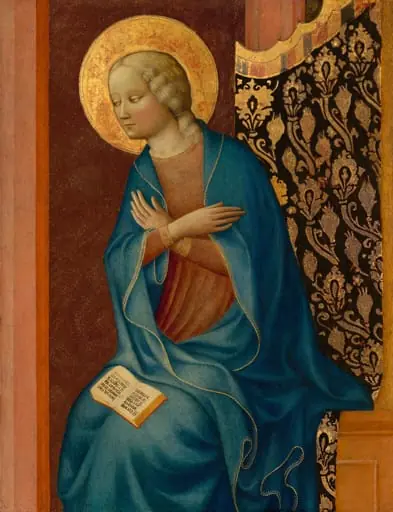 The Virgin Annunciate
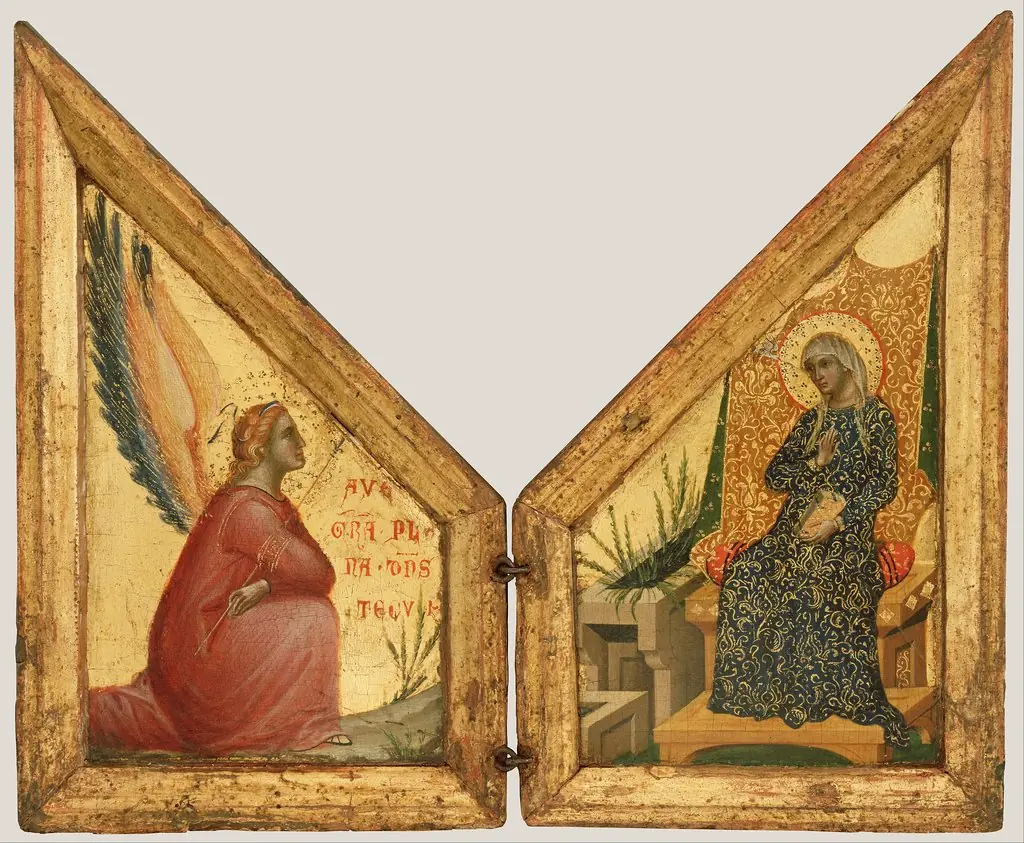 The Annunciation
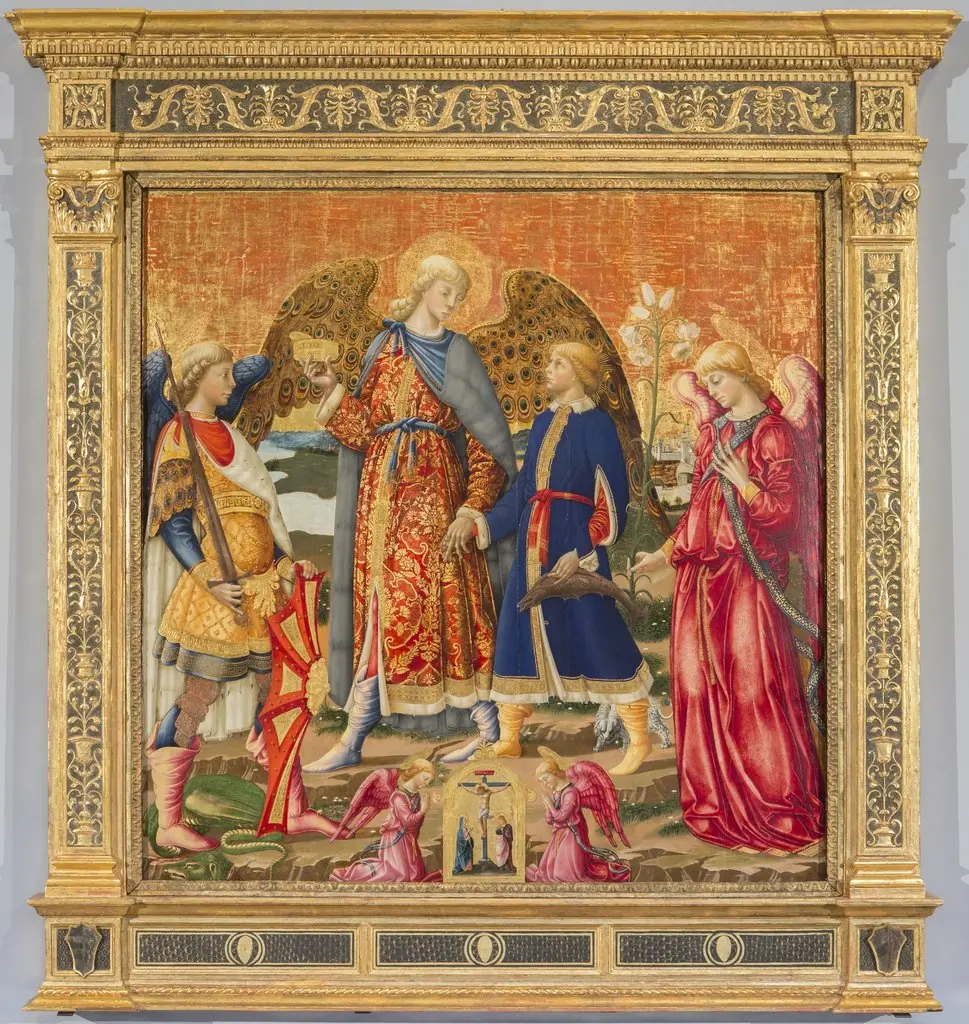 Tobias and Three Archangels
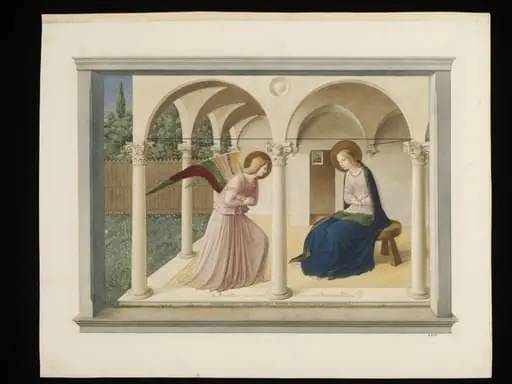 Copy after the Annunciation, Fra Angelico in the Museo di San Marco (Florence)
 Copy after The Expulsion of St Stephen and The Martyrdom of St Stephen, Fra Angelico in the Niccoline Chapel (Vatican, Rome)
 St. Benedict - The Annunciation - A Kneeling Nun