Artwork
The Annunciation
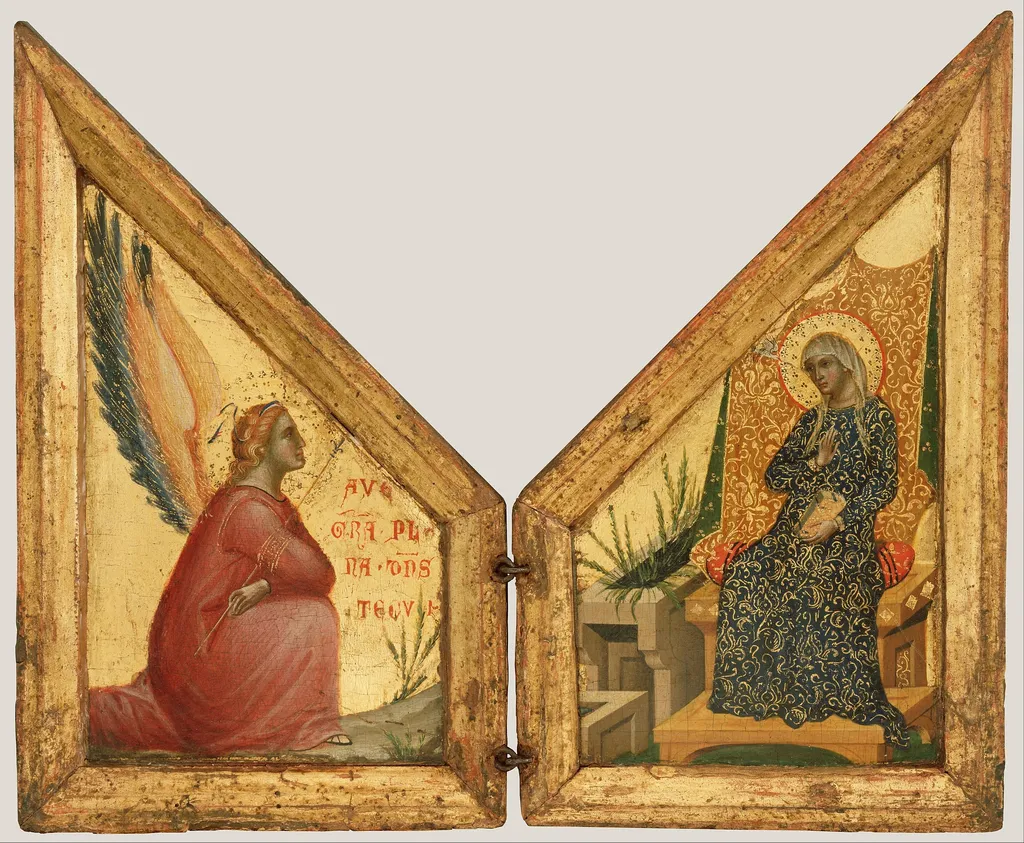
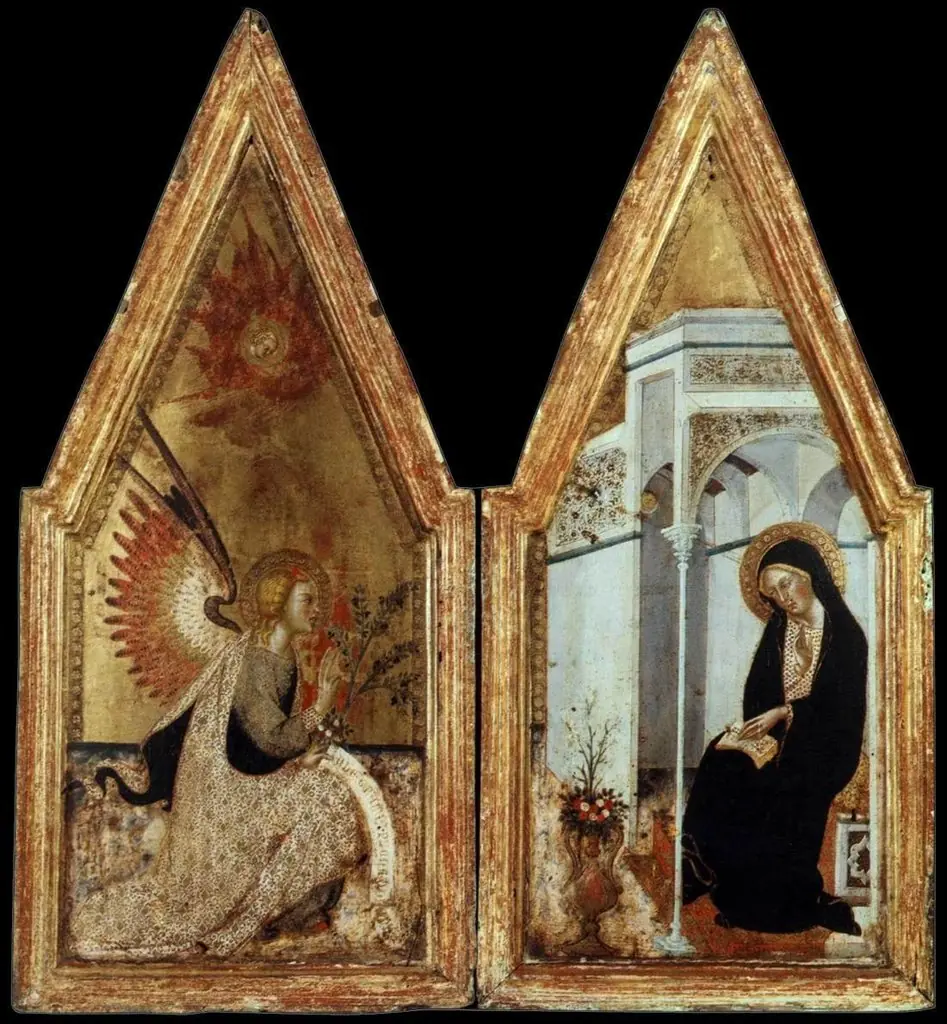
The Annunciation is a tempera painting by the Byzantine icon painting artist Paolo Veneziano. It dates from 1349 and is held in the collection of the J. Paul Getty Museum.
About this work
Overview
Painted in 1349 by Paolo Veneziano, this tempera-on-panel diptych presents the Annunciation as two separate but connected scenes.
Painted in 1349 by Paolo Veneziano, this tempera-on-panel diptych presents the Annunciation as two separate but connected scenes. Each panel contains a single figure—angel and Virgin—facing each other across a shared spatial divide. The work exemplifies the Venetian Gothic style, characterized by flat planes, vivid pigments, and decorative detail, typical of religious panel painting in mid-14th-century Italy.
Subject & Meaning
The scene illustrates the moment the Archangel Gabriel announces to Mary that she will bear the Son of God. Gabriel, holding a scepter, gestures toward Mary, who sits in quiet contemplation. Their postures and gaze establish a silent dialogue, emphasizing divine revelation and human acceptance. The composition avoids narrative clutter, focusing instead on the spiritual significance of the encounter through stillness and symbolic presence.
Technique & Style
Tempera paint, applied in thin layers, allows for precise linework and luminous color. Gold leaf outlines halos and patterns on Mary’s robe, while the angel’s crimson garment and the background’s yellow fields create strong chromatic contrasts. The figures are rendered with rigid, elongated forms and minimal modeling, reflecting Byzantine influences. Architectural elements like the curtain and bench suggest depth without perspective, adhering to medieval conventions.
History & Provenance
The diptych entered the collection of the J. Paul Getty Museum in the 20th century, though its earlier ownership remains undocumented. Likely created for private devotion, it may have been part of a larger altarpiece or devotional set. Its survival in near-original condition is uncommon, as many such panels were altered or destroyed during later iconoclastic periods or renovations.
Context
In mid-14th-century Venice, religious imagery served both liturgical and personal devotional purposes. Artists like Veneziano blended Byzantine traditions with emerging Gothic elements, responding to the city’s trade-linked cultural exchanges. The Annunciation was a popular subject, often commissioned by wealthy patrons to affirm faith and social status, rendered in a style that balanced spiritual solemnity with ornamental richness.
Legacy
This work reflects the transitional phase in Italian painting before the full emergence of Renaissance naturalism. Veneziano’s approach influenced later Venetian artists who retained symbolic clarity while gradually incorporating spatial depth. Though not widely known outside specialist circles, the diptych remains a representative example of how devotional art communicated theological ideas through formal restraint and visual symbolism.
Artist & collection

Artist
Paolo Veneziano, also Veneziano Paolo or Paolo da Venezia was a 14th-century painter from Venice, the "founder of the Venetian School" of painting, probably active between about 1321 and 1362.

 The Annunciation
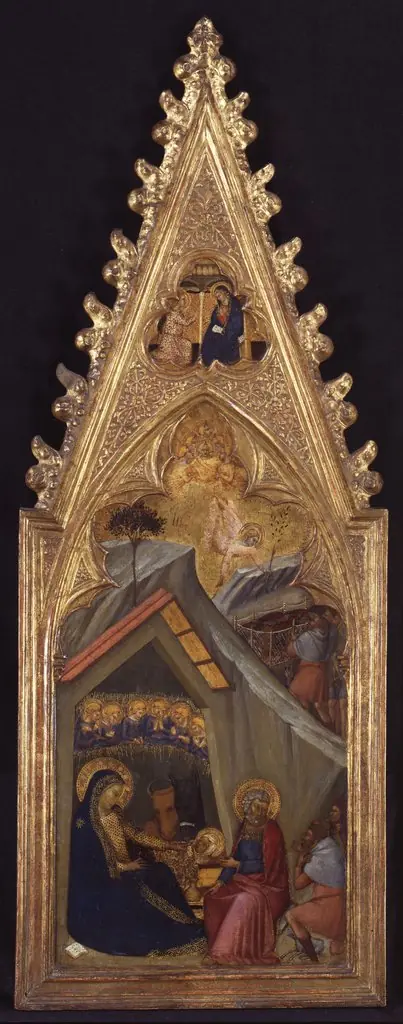 Nativity of Christ
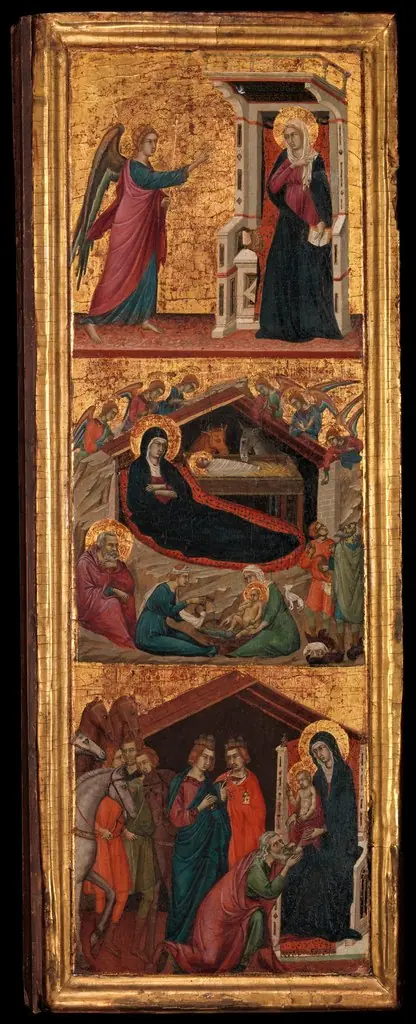 Saints and Scenes from the Life of the Virgin
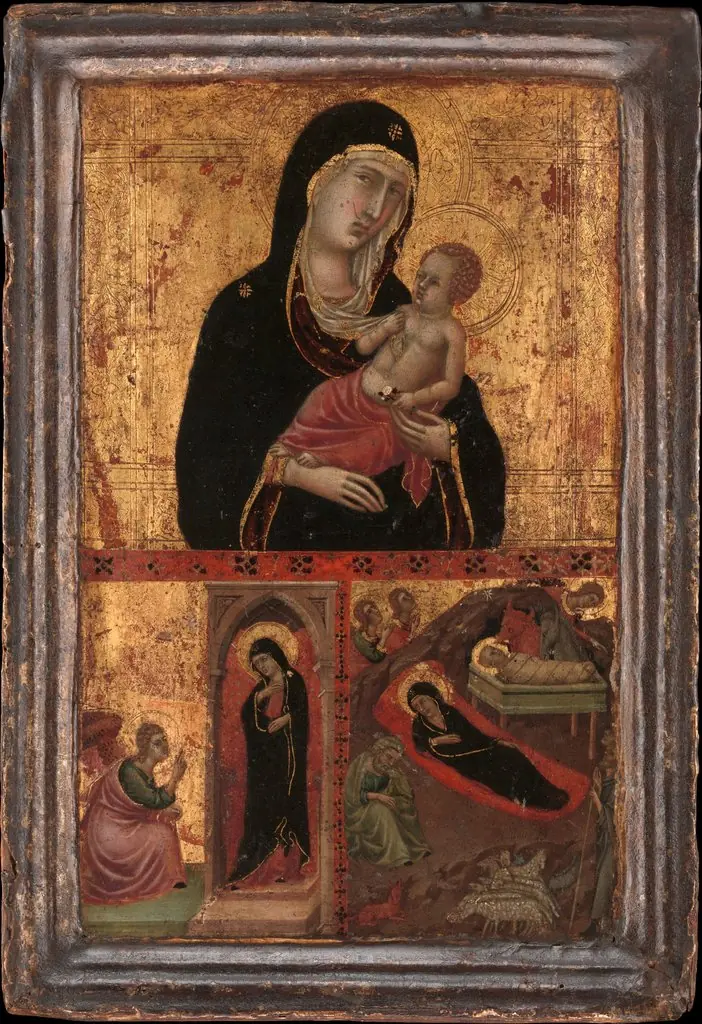 Madonna and Child with the Annunciation and the Nativity
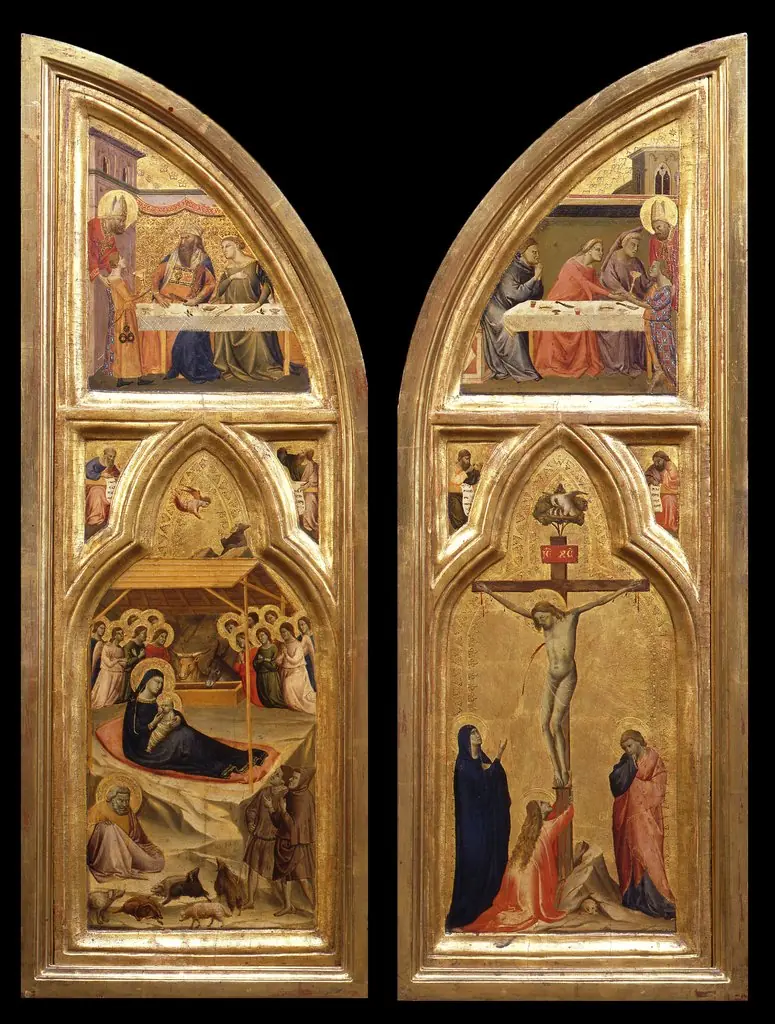 Interior view of wings of the triptych
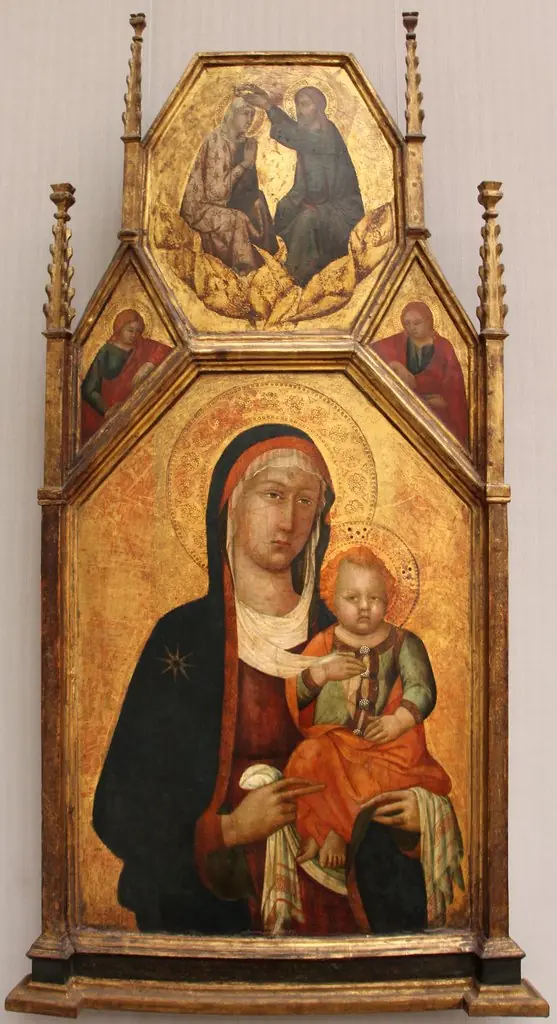 Maria mit dem Kind
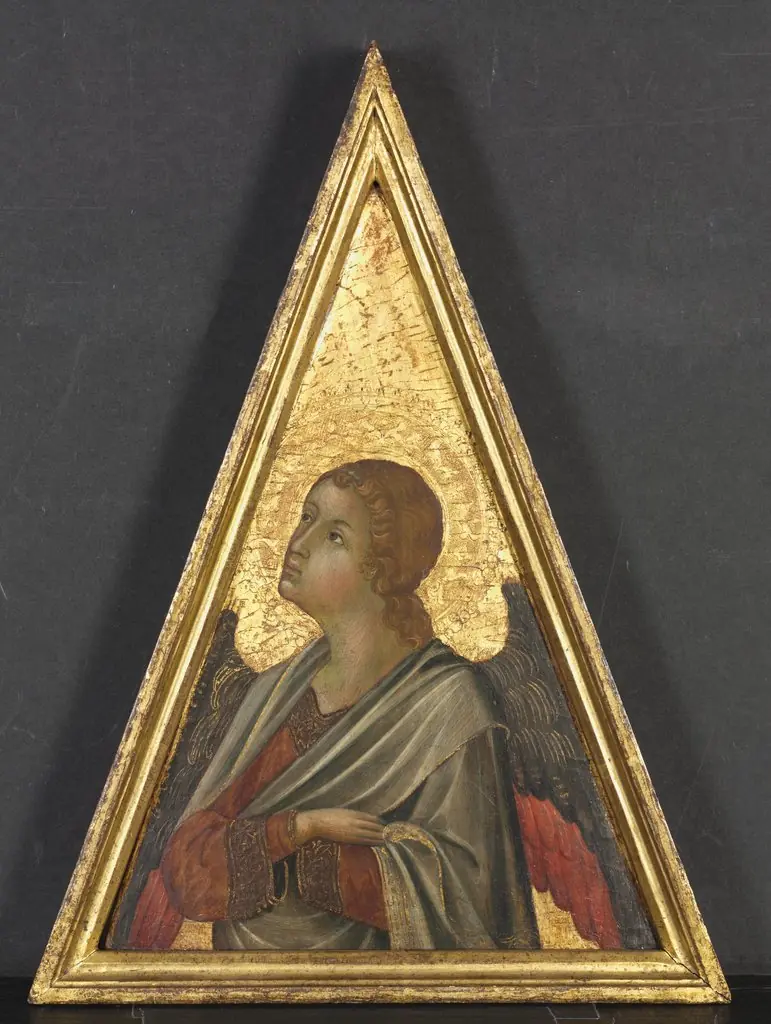 Pinnacle with Angel
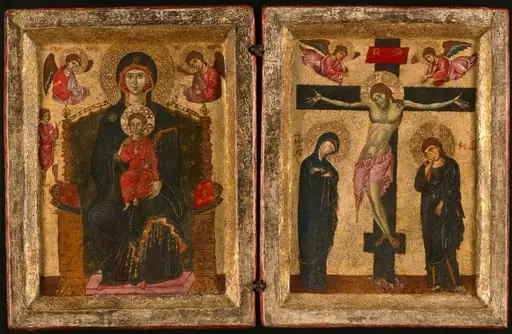 Diptych of the Virgin and Child Enthroned and the Crucifixion
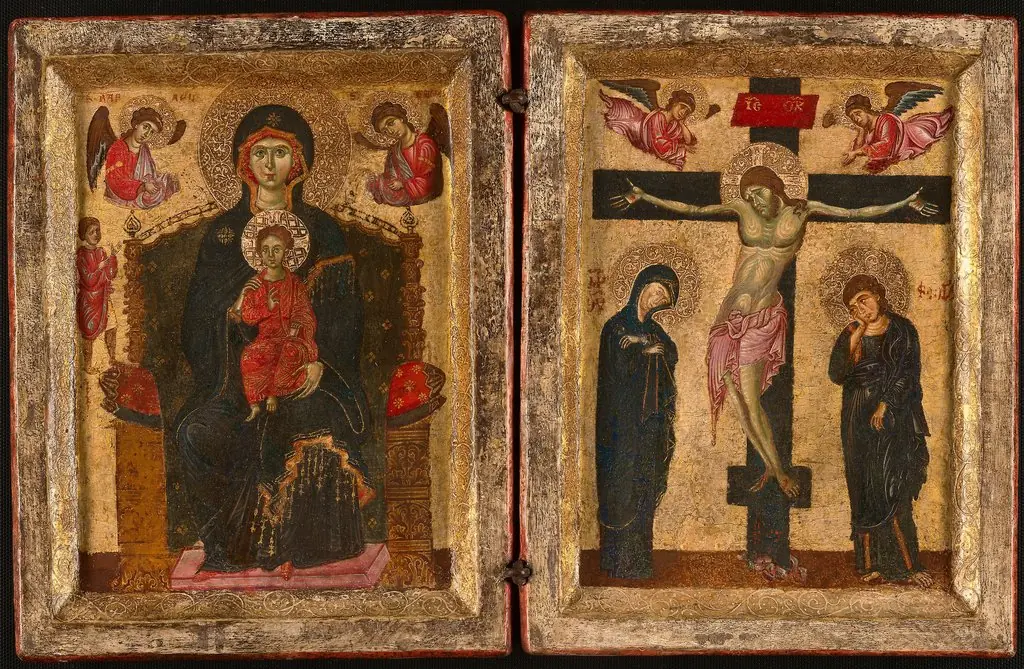 Diptych with the Virgin and Child Enthroned and the Crucifixion
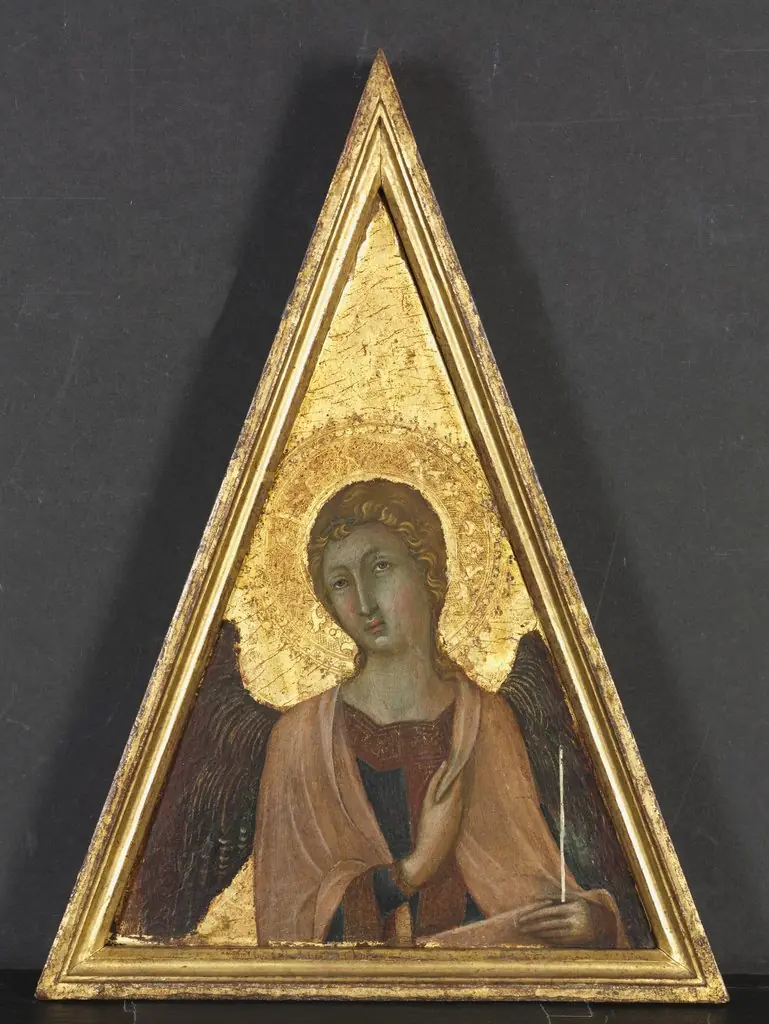 Pinnacle with Angel
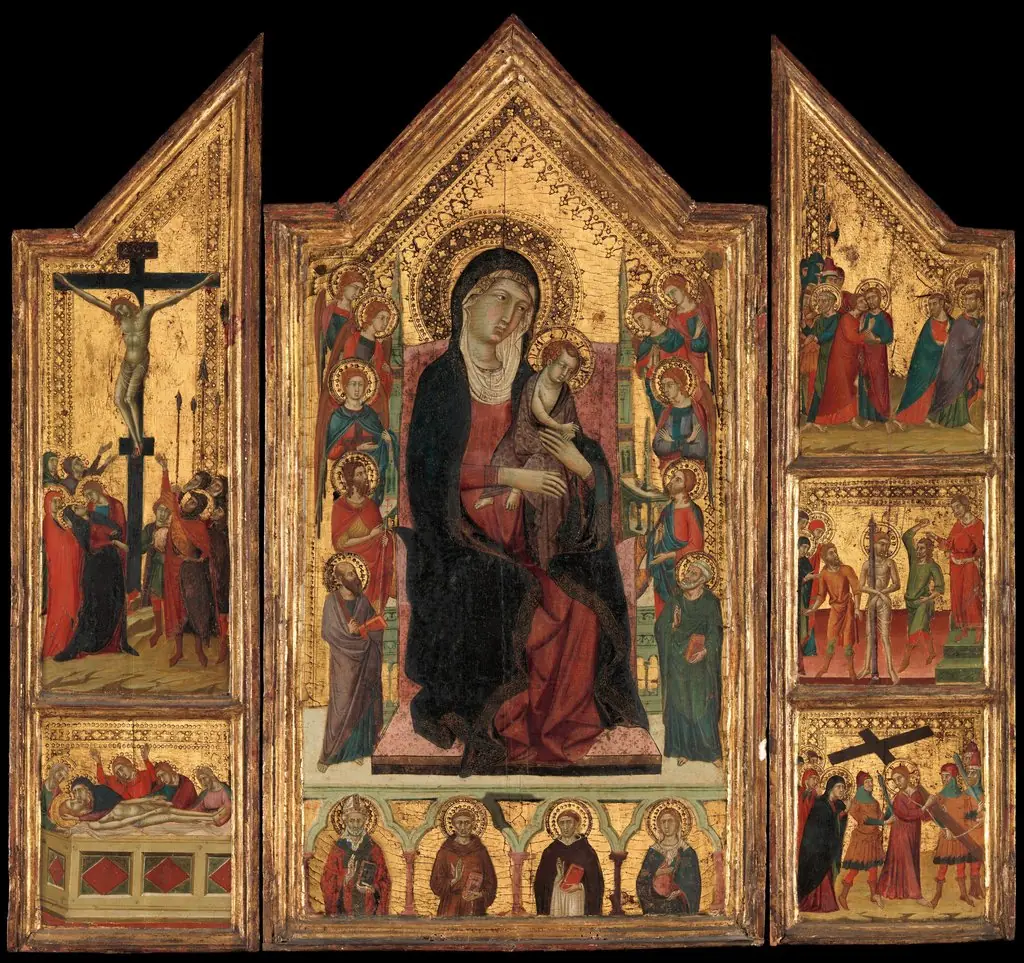 Madonna and Child Enthroned
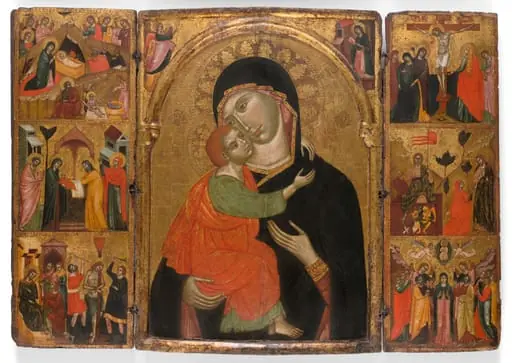 Triptych of the Virgin and Child with Scenes from the Life of Christ