Artwork
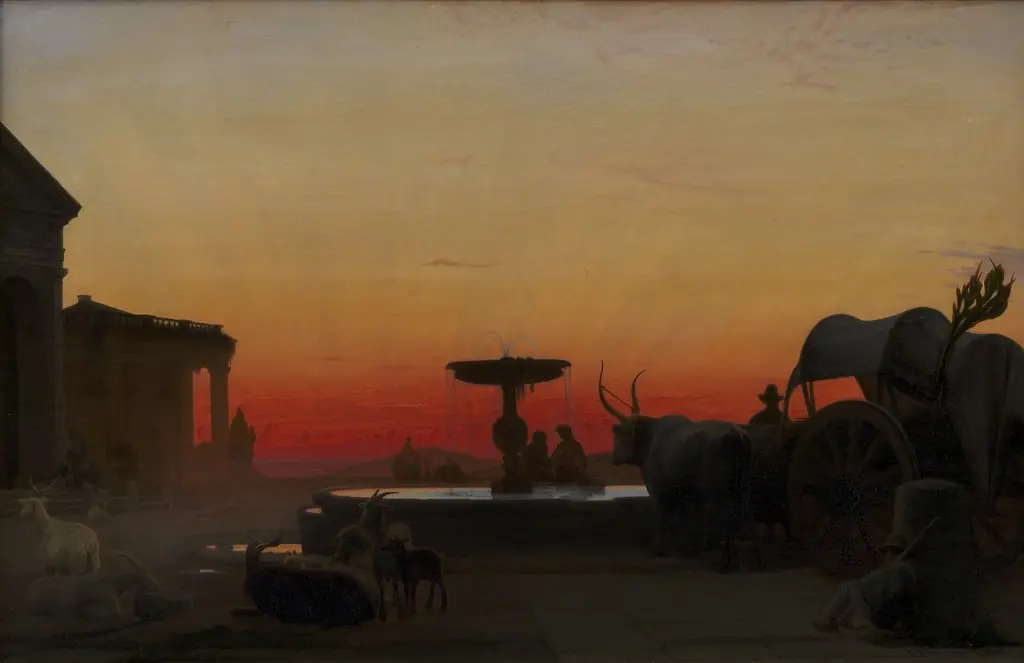
A Square in Ariccia, Italy. After Sunset
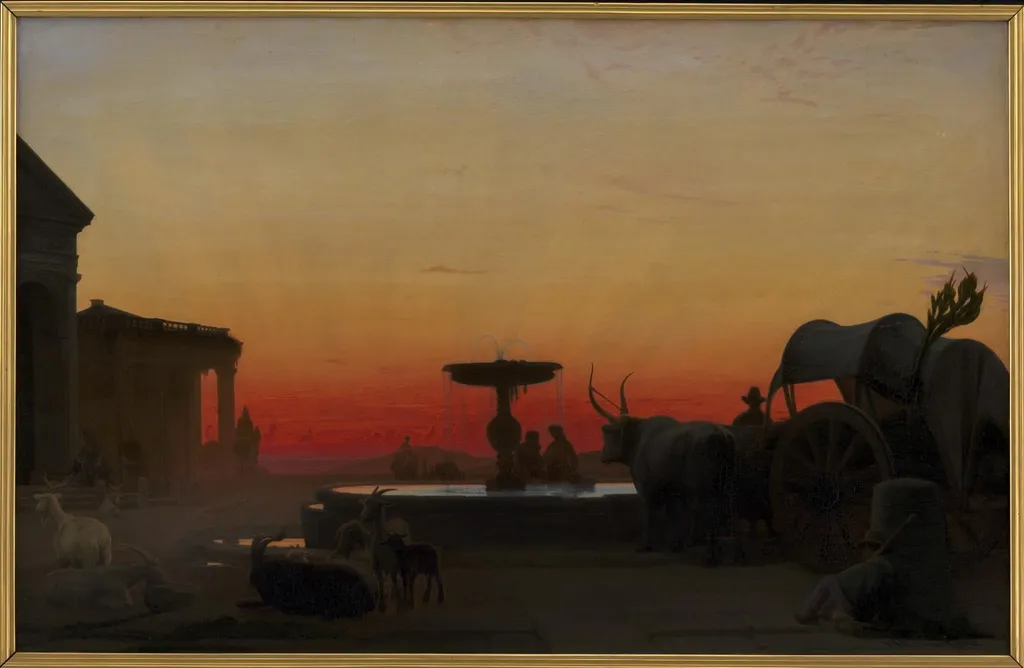
A Square in Ariccia, Italy. After Sunset is a photography by the Impressionist artist Unknown. It dates from 1862 and is held in the collection of the Statens Museum for Kunst. Created in 1862, this image captures a quiet moment in Ariccia, Italy, shortly after sunset.
About this work
Overview
Created in 1862, this image captures a quiet moment in Ariccia, Italy, shortly after sunset. The scene is rendered with careful attention to natural light and stillness, depicting a rural square where human and animal life coexist peacefully. Though labeled as an image, its composition suggests a photographic or painted record grounded in direct observation rather than idealization.
Subject & Meaning
The square features a central fountain surrounded by resting oxen, sheep, and goats, while a handful of figures sit nearby. The absence of bustling activity conveys a sense of daily rhythm rather than spectacle. The scene reflects the quiet endurance of rural life in post-unification Italy, where tradition persisted amid broader societal change.
Technique & Style
The image employs chiaroscuro to define form through the contrast of warm, fading daylight and deepening shadows. Buildings with flat roofs and unadorned walls frame the composition, emphasizing geometric simplicity. The long, sharp shadows enhance spatial depth, grounding the scene in tangible time and place without theatrical embellishment.
History & Provenance
The work is held in the collection of the Museum of Ethnography, suggesting its initial value lay in documenting vernacular life. Its creation in 1862 places it within a period of growing interest in regional Italian customs, possibly linked to ethnographic surveys or early documentary practices seeking to record everyday culture.
Context
In 1862, Italy was newly unified, and many artists and observers turned to rural communities as symbols of authentic national identity. Ariccia, near Rome, was a known site for such study. This image aligns with a broader trend of recording provincial life, not as picturesque nostalgia, but as evidence of enduring social patterns.
Legacy
The image contributes to a visual archive of 19th-century Italian rural life, valued for its unembellished observation. Its use of light and composition anticipates later documentary photography’s emphasis on realism. It remains a quiet reference point in studies of how visual media engaged with cultural identity during Italy’s formative years as a nation.
Artist & collection

 Domestic Scene
 Giacomo and Cardinal Marco, investing Andrea, Abbot of San Zeno, with his Benefice
 The Nymph of Fontainebleau
 Portrait of a Woman
 Madonna and Child with Saints in the Enclosed Garden
 Venus and Minerva
 Family Group of Four on Sofa
 Wall painting from Room H of the Villa of P. Fannius Synistor at Boscoreale
 Landscape at sunset
 Landschaft mit Sonnenuntergang
 The Lydian Plain near Sardis, Asia Minor (Turkey)
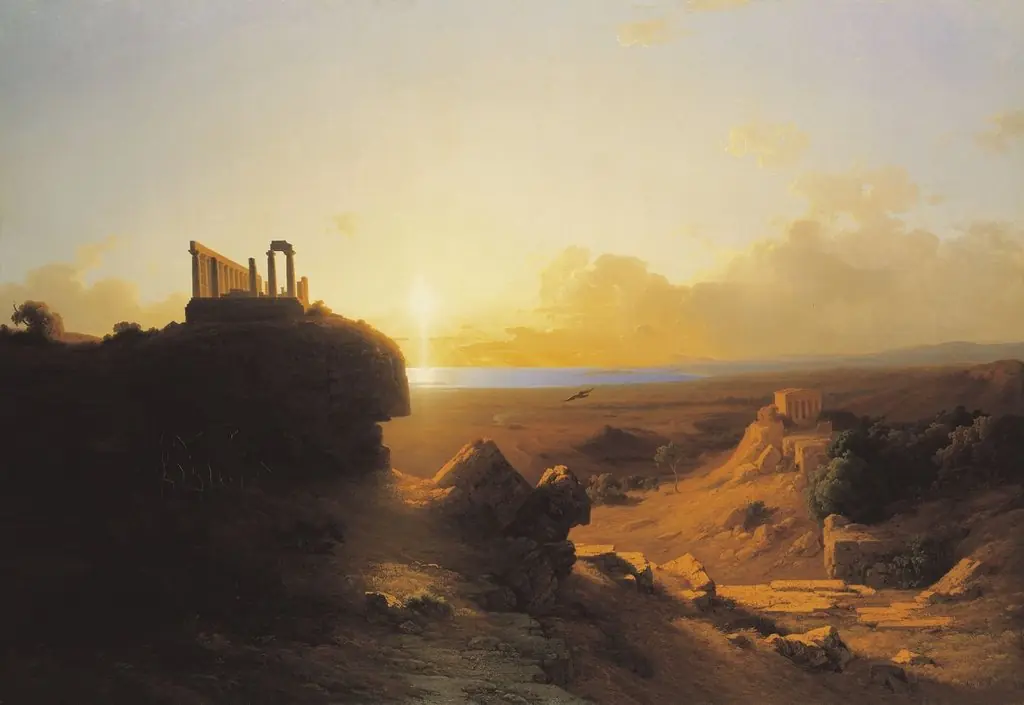 Italian Landscape
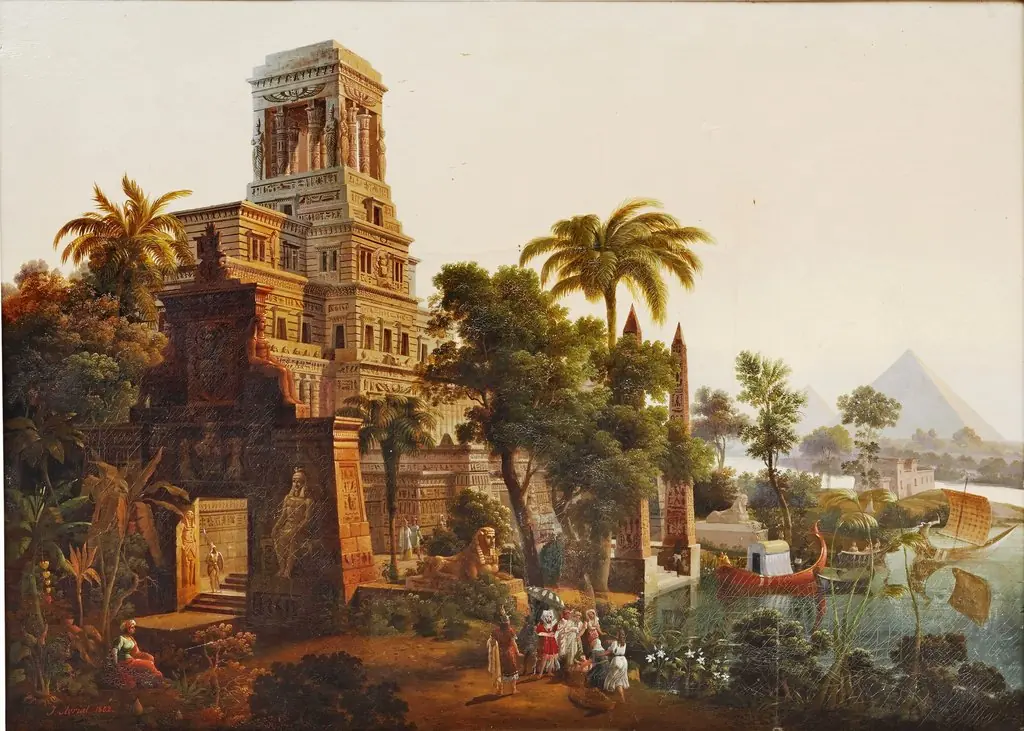 The Pharoah's daughter taking Moses out of the Nile
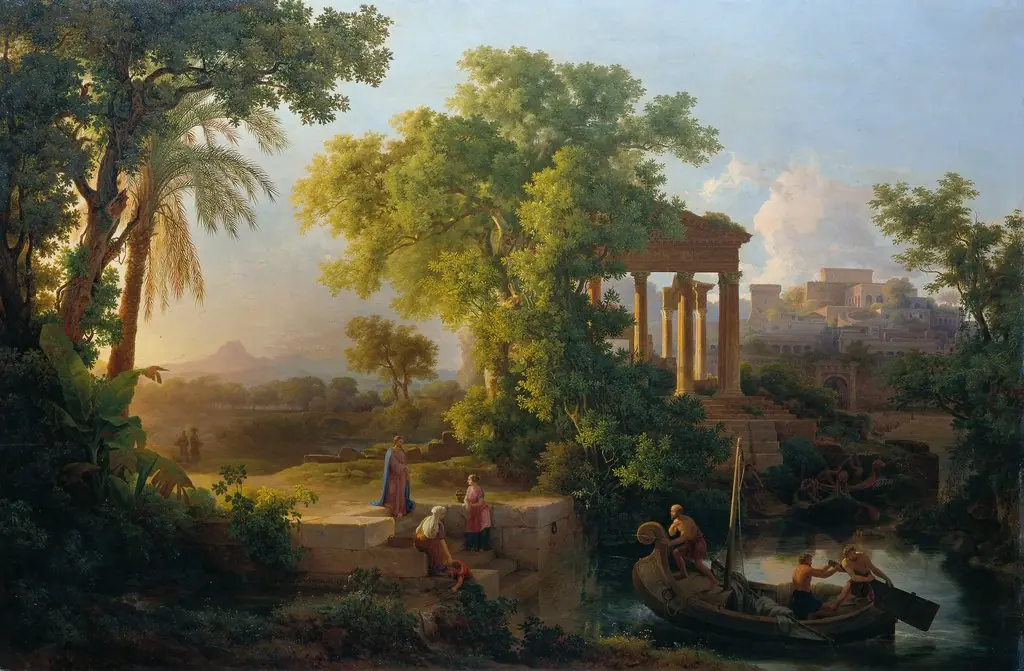 Landscape with the Vocation of St Peter
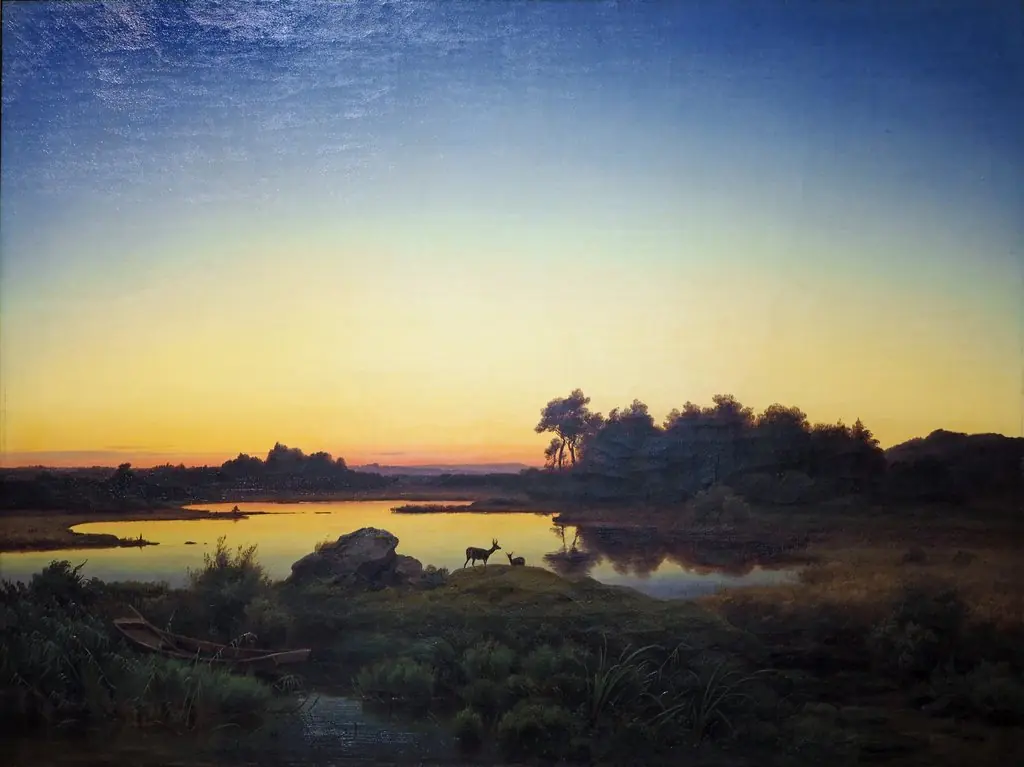 Landscape with Deer at Sunset
 Landscape at Tivoli, with a Scene from the Grape Harvest
 Gegend in der Rheinpfalz
 The Temple of Concordia by Girgenti
 Landscape
 A Square in Ariccia, Italy. After Sunset