Artwork
The Lydian Plain near Sardis, Asia Minor (Turkey)
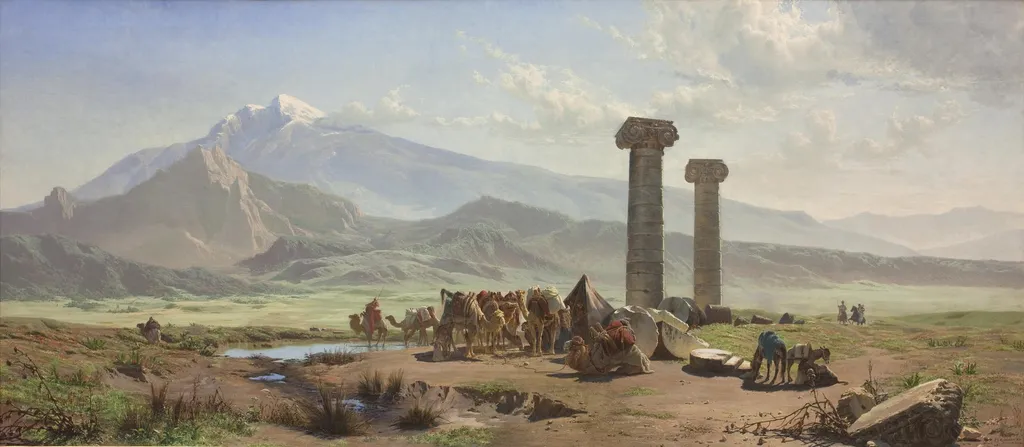
The Lydian Plain near Sardis, Asia Minor (Turkey) is an oil painting by the Impressionist artist Harald Jerichau. It is held in the collection of the Statens Museum for Kunst.
About this work
Overview
The Lydian Plain near Sardis, Asia Minor (Turkey) is an 1890 oil painting by Danish artist Harald Jerichau, part of the Jerichau family of artists, now in the Statens Museum for Kunst collection.
Subject & Meaning
The painting captures a serene landscape of the Lydian Plain near ancient Sardis, modern-day Turkey, featuring ruins, camels, distant figures, and a tranquil water element, evoking peace and depth.
Technique & Style
Jerichau employed impressionist techniques, using oil paint to create a sense of depth and distance through color and composition, with a blue-clouded sky and sparse, detailed foreground elements.
History & Provenance
Created in 1890, the work is part of the Statens Museum for Kunst's collection, reflecting Jerichau's contribution to Danish landscape painting within the broader impressionist movement.
Context
As a Danish artist traveling to Asia Minor, Jerichau's work reflects late 19th-century European interest in Oriental landscapes, blending impressionist style with exotic subject matter.
Legacy
While not widely renowned beyond Danish art circles, the painting exemplifies the Jerichau family's artistic legacy and the impressionist influence on Scandinavian landscape painting.
Artist & collection
Artist
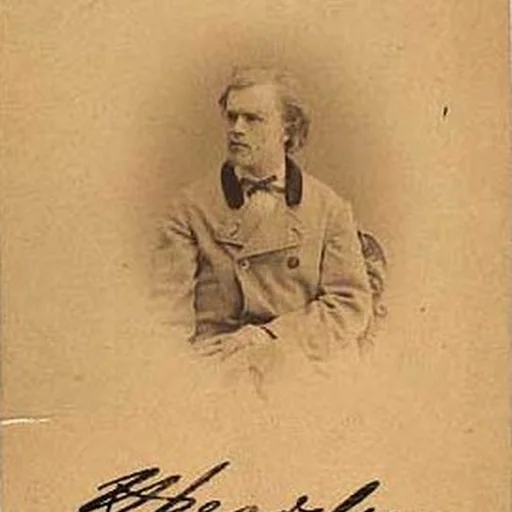
Harald Adolf Nikolaj Jerichau (18 August 1851 – 6 March 1878) was a Danish landscape painter. He was part of the Jerichau family of artists.

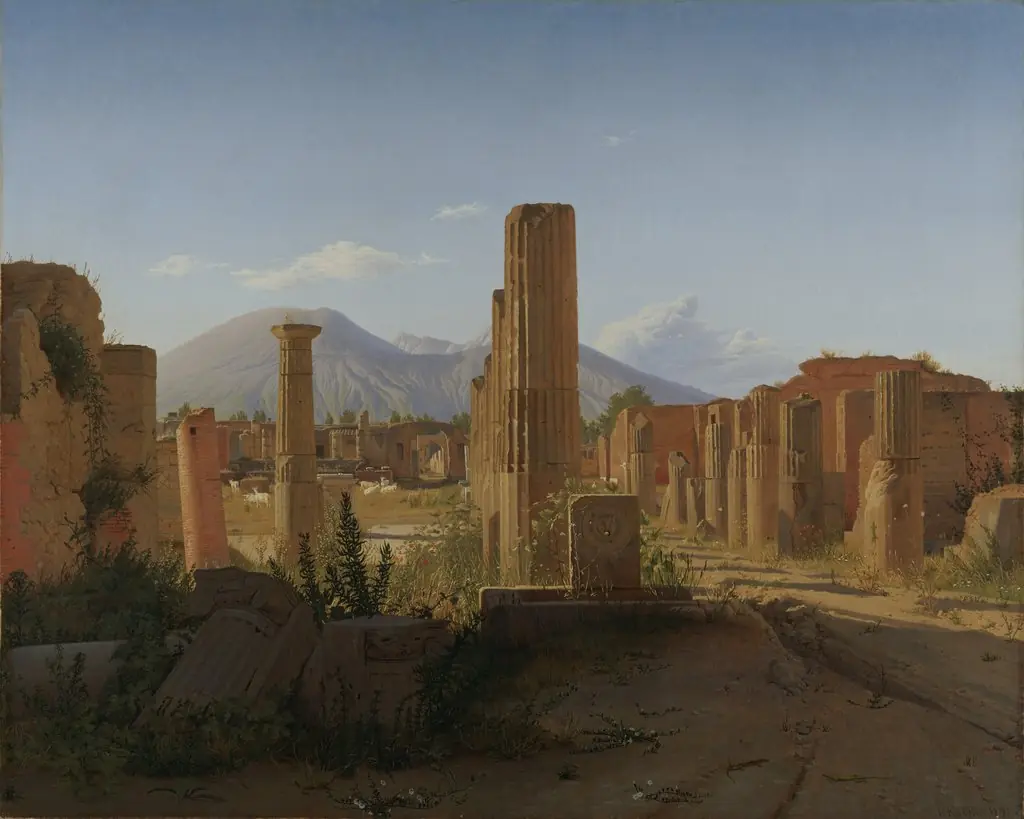 The Forum at Pompeii with Vesuvius in the Background
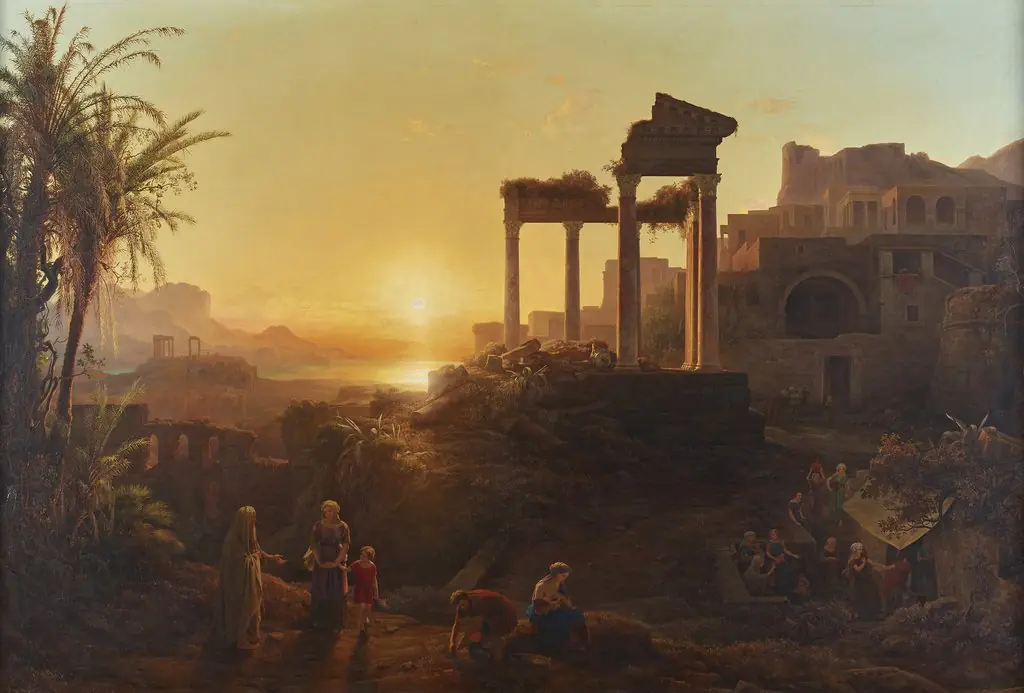 Landschaft mit Sonnenuntergang
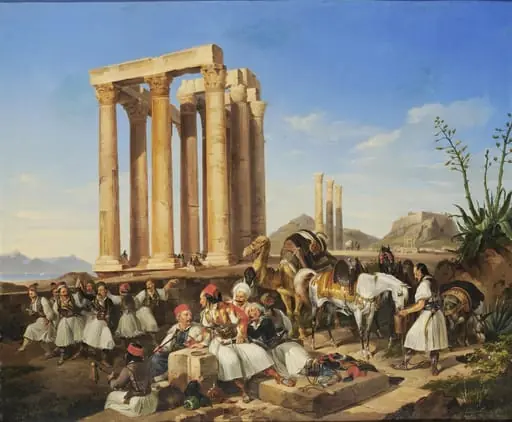 Εορτασμός της Καθαράς Δευτέρας στους στύλους του Ολυμπίου Διός στην Αθήνα
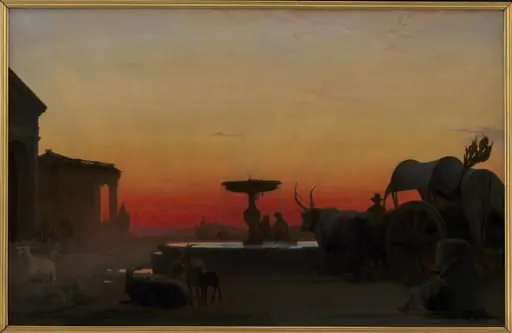 A Square in Ariccia, Italy. After Sunset
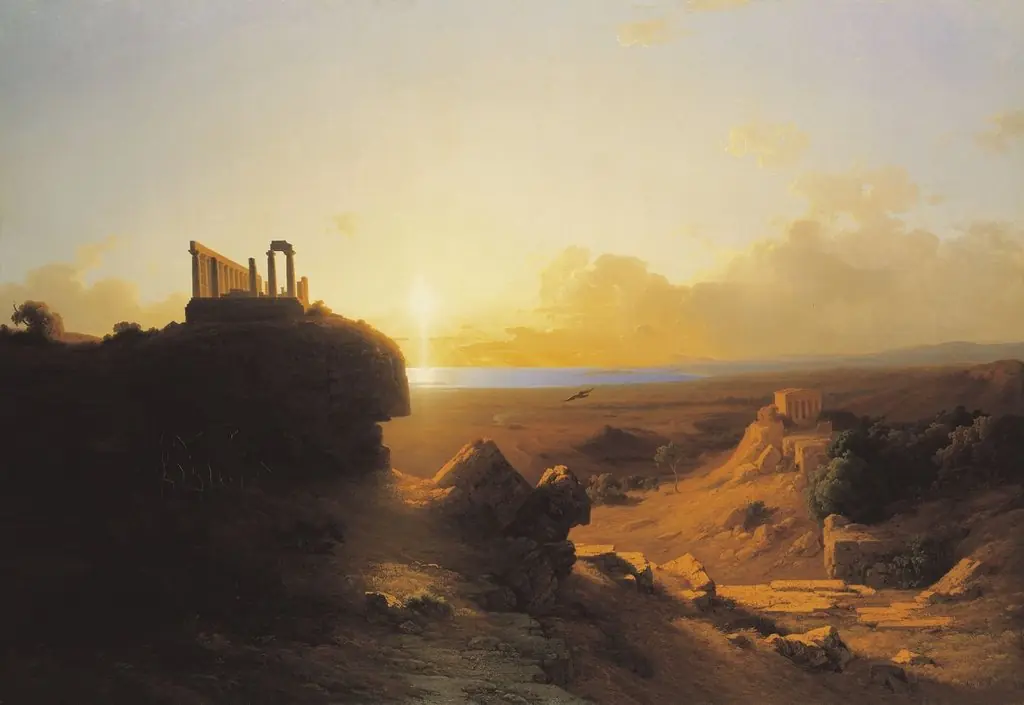 Italian Landscape
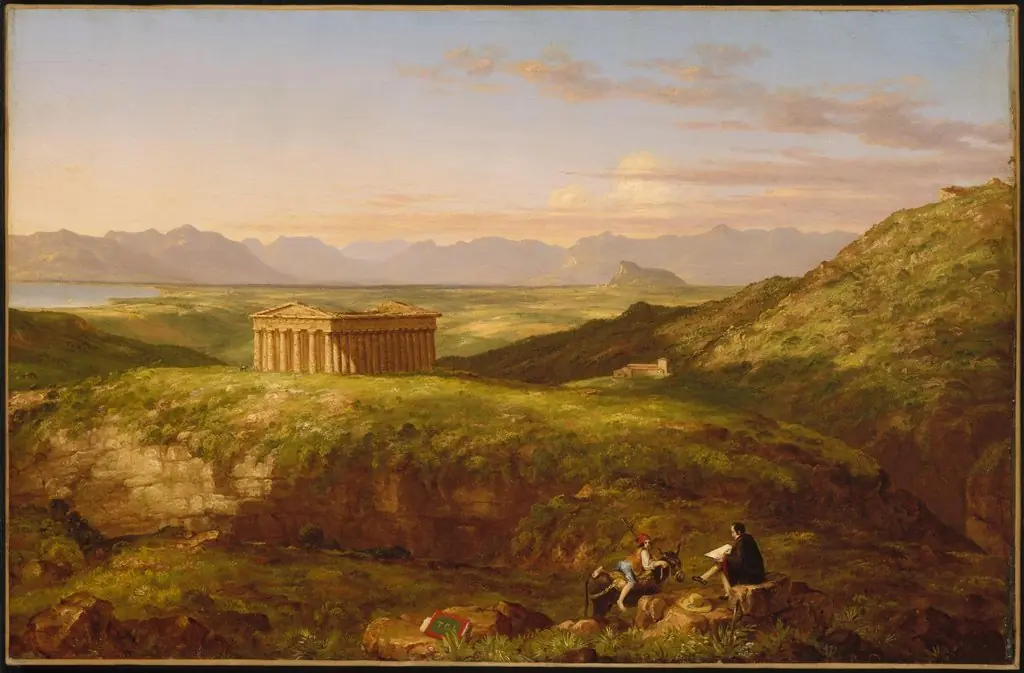 The Temple of Segesta with the Artist Sketching
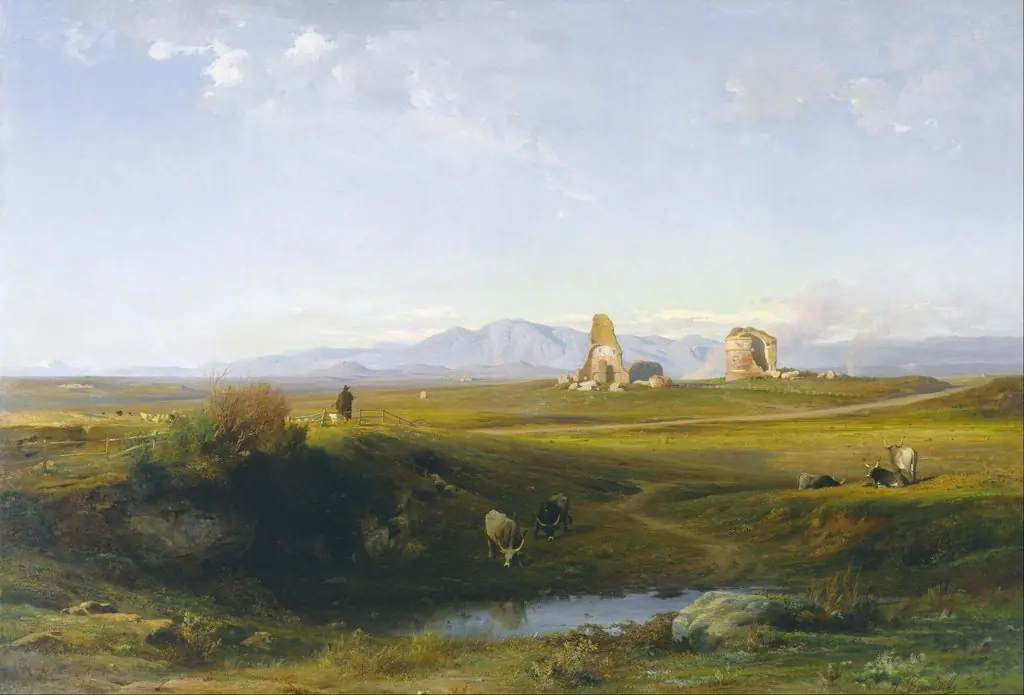 A View of the Roman Countryside
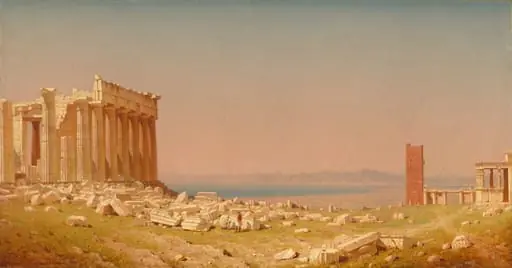 Ruins of the Parthenon
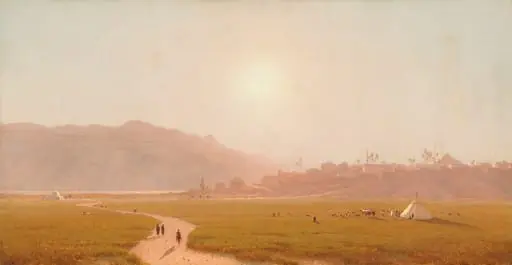 Siout, Egypt