Artwork
The Pharoah's daughter taking Moses out of the Nile
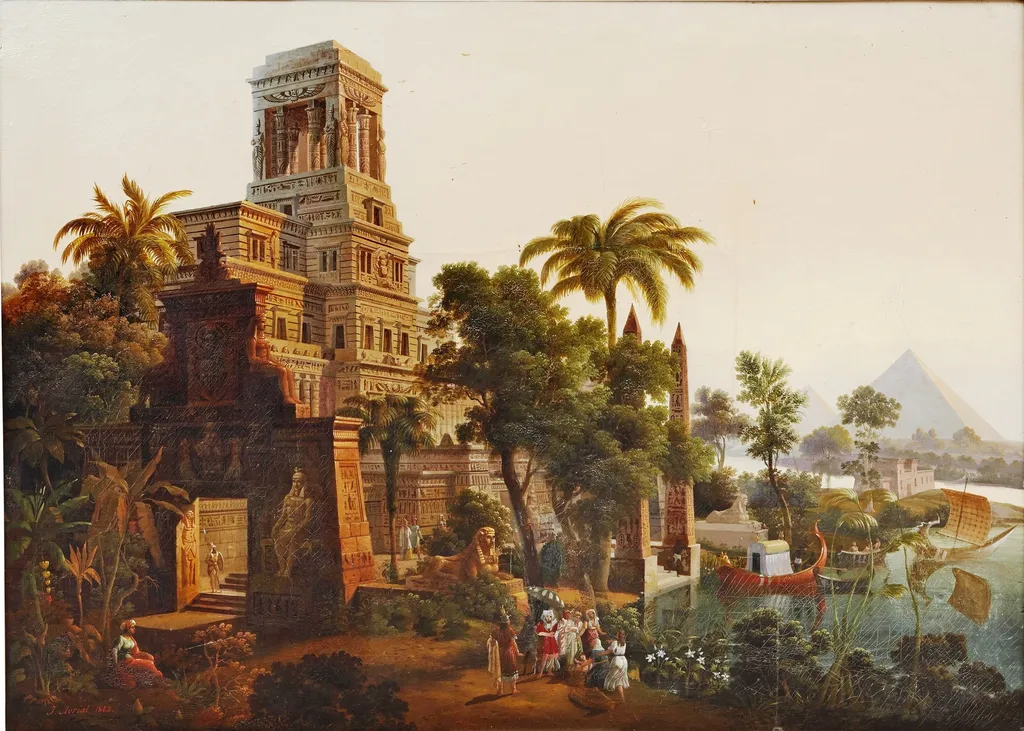
The Pharoah's daughter taking Moses out of the Nile is an oil painting by José María Avrial y Flores. It dates from 1862 and is held in the collection of the Museo del Prado.
About this work
Overview
Created in 1862, this oil on canvas by José María Avrial y Flores portrays the biblical episode in which the Egyptian princess rescues the infant Moses from the Nile. The work is part of the collection of the Museo del Prado, where it is displayed among the museum’s 19th‑century religious paintings.
Subject & Meaning
The composition centers on a young woman, likely the Pharaoh’s daughter, cradling a swaddled baby. Her calm demeanor and the infant’s serene pose convey a moment of compassionate rescue, echoing the scriptural narrative of Moses’ survival and future destiny as a leader of the Israelites.
Technique & Style
Avrial employs a warm palette of soft yellows, ochres, and whites, rendered with gentle brushwork that softens the figures and surrounding landscape. The delicate handling of light creates a hazy atmosphere, while the careful rendering of the stone architecture and foliage demonstrates the artist’s attention to detail.
Context
The painting reflects the 19th‑century European interest in biblical themes, often rendered with a romanticized sense of tranquility. Avrial’s choice of a peaceful, domestic setting aligns with contemporary trends that emphasized moral virtue and the humanizing of sacred stories.
History & Provenance
Since its completion, the canvas has remained in Spain, entering the Prado’s holdings where it contributes to the museum’s representation of religious art from the period. Its presence in the national collection underscores its relevance to Spanish artistic heritage.
Own this work as a print
Artist & collection

Artist
José María Avrial y Flores (1807–1891) was an artist, born in Madrid.

 Landscape with the Vocation of St Peter
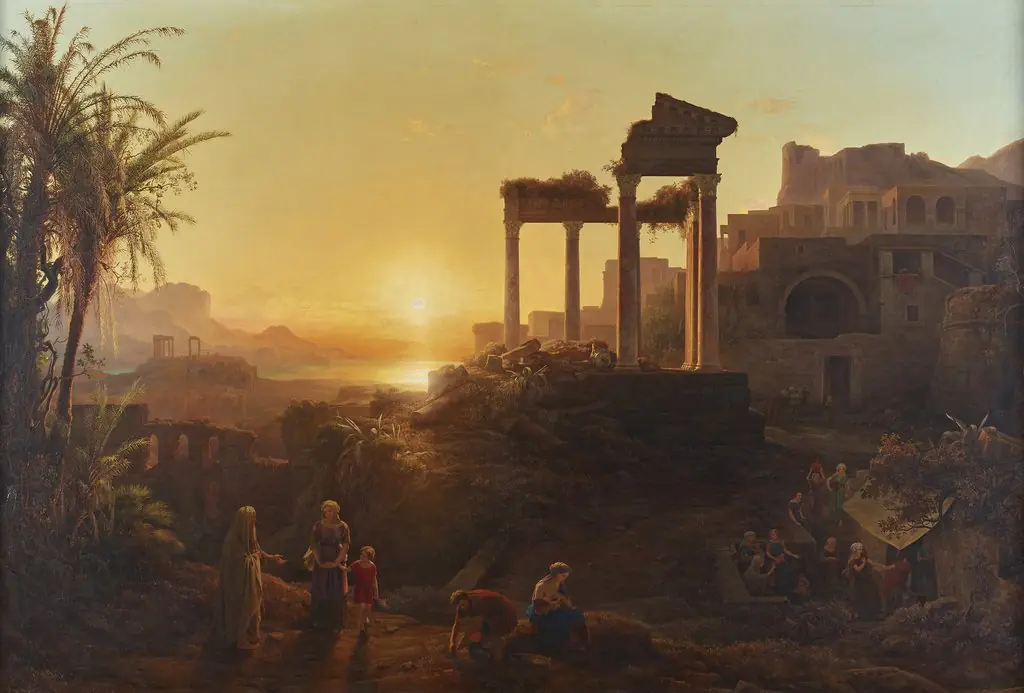 Landschaft mit Sonnenuntergang
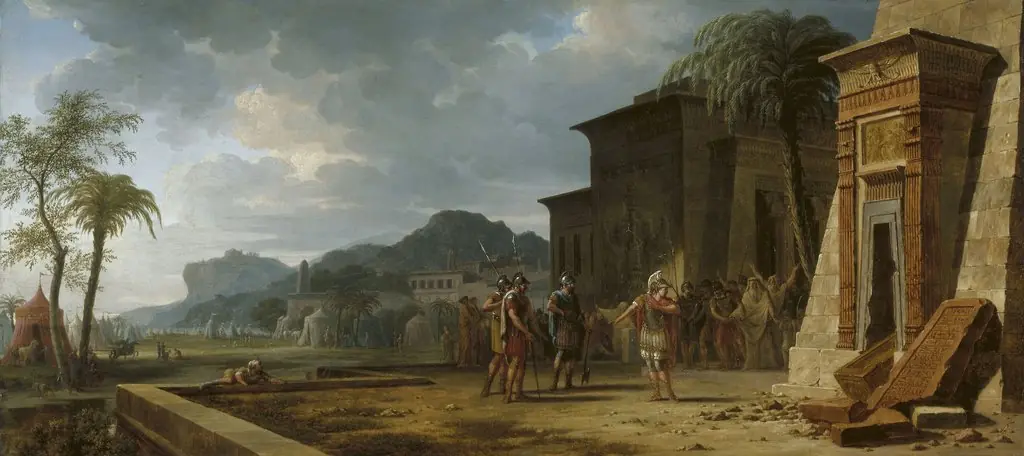 Alexander at the Tomb of Cyrus the Great
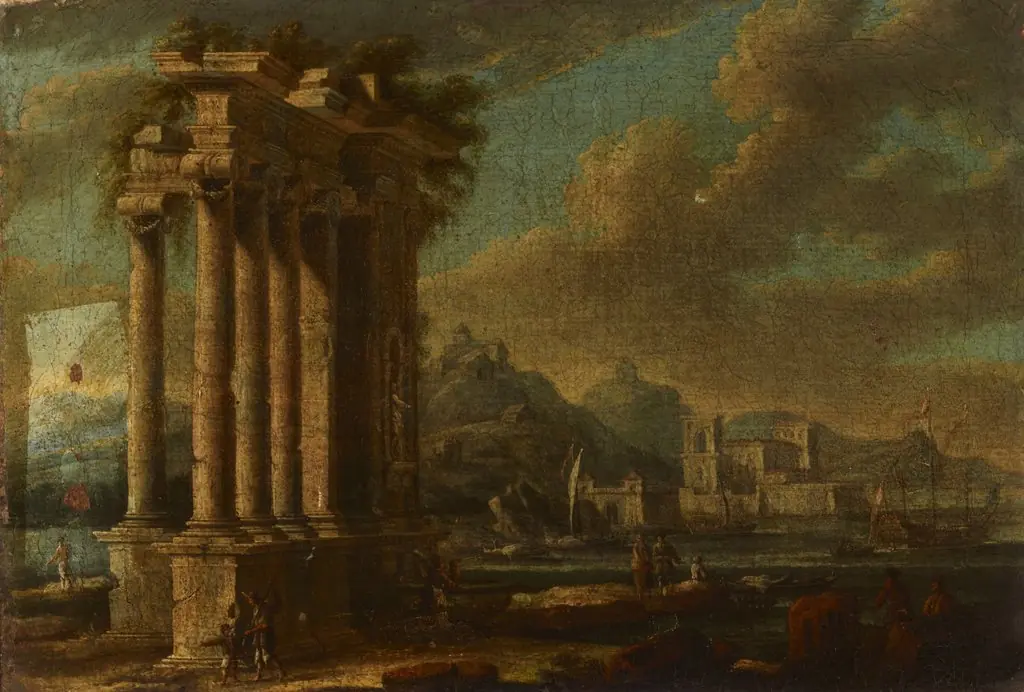 Maritime Landscape with Ruins
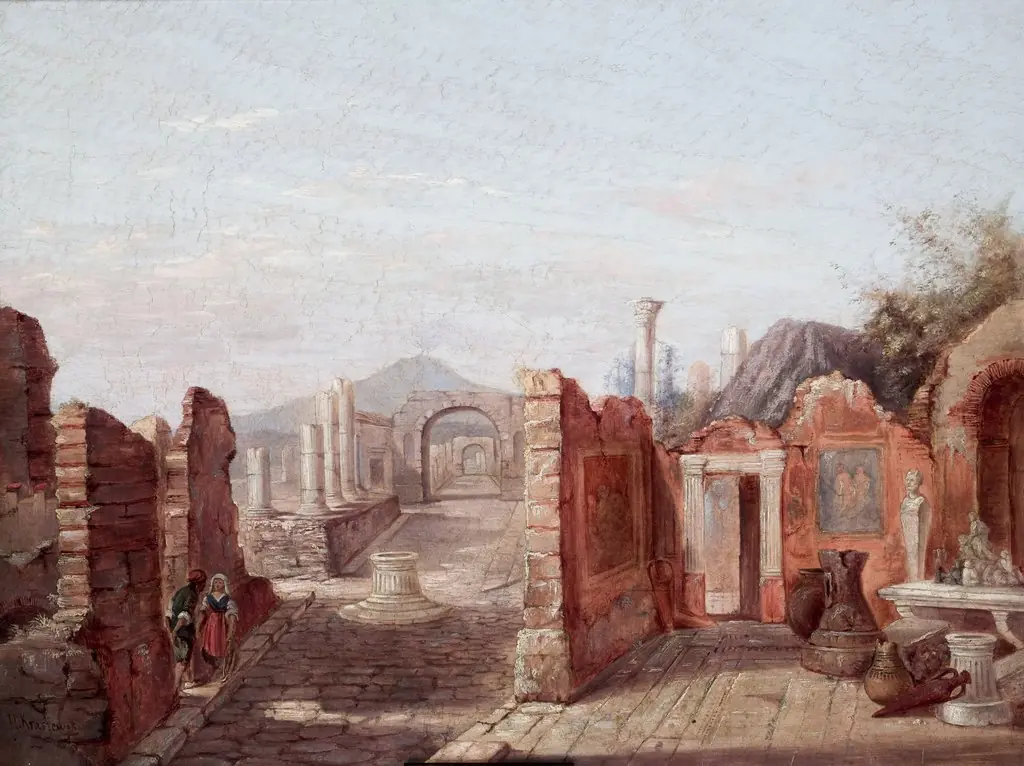 Ruins of Pompeii
 Landing Place. Philoe
 A view of an Indian city beside a river
 General View of the Ruins of the Palace of Sesostris or Osymandias
 Italian Landscape with Classical Ruins
 View of the Jesuit Church at Olinda, Brazil
 Alexander at the Tomb of Cyrus the Great
 Landscape at Tivoli, with a Scene from the Grape Harvest