Artwork
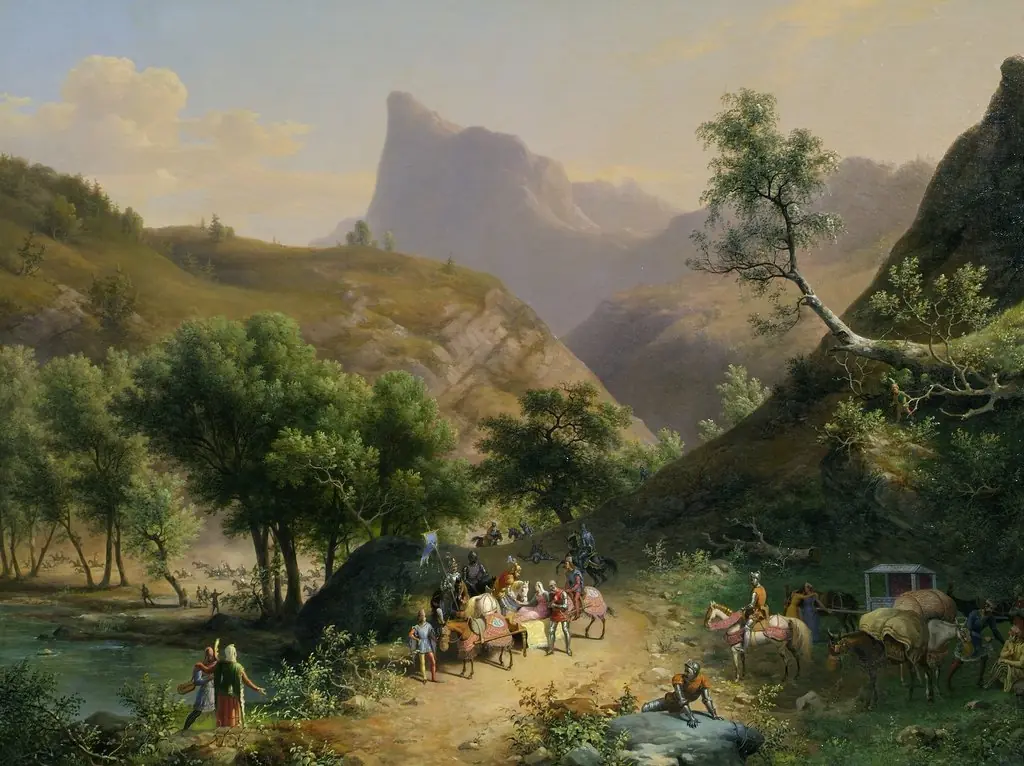
Scene from the Ten Days' Campaign against the Belgian Revolt, August 1831
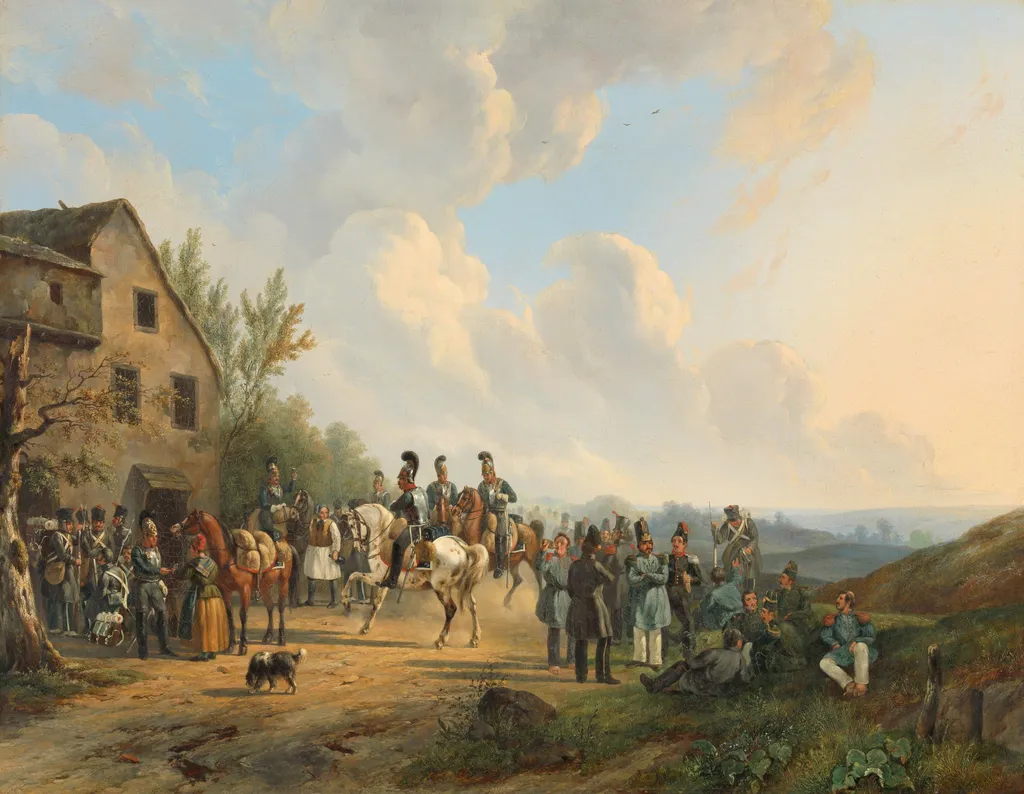
Scene from the Ten Days' Campaign against the Belgian Revolt, August 1831 is an unspecified painting by Wouterus Verschuur. It dates from 1833 and is held in the collection of the Rijksmuseum.
About this work
This painting shows a real event: the Ten Days’ Campaign in 1831, when the Netherlands tried to stop Belgium from breaking away.
You see soldiers on horseback resting outside a tavern. Some wear blue jackets—Belgian troops. Others are Dutch officers. Dusty road, tired horses, a quiet moment before fighting resumes.
This painting shows a real event: the Ten Days’ Campaign in 1831, when the Netherlands tried to stop Belgium from breaking away. The artist wasn’t famous—just someone who saw the war or heard about it. The details, like the blue jackets, make it feel true, even if we don’t know who painted it.
To see more history like this, visit the Rijksmuseum.
Overview
This painting depicts a pause in military operations during the Ten Days' Campaign of August 1831, a brief but intense conflict between the Kingdom of the Netherlands and the newly declared Belgian state. Soldiers on horseback rest near a roadside inn, their horses weary, the atmosphere subdued. The scene captures a moment of stillness amid mobilization, offering a quiet counterpoint to the larger political struggle unfolding across the region.
Subject & Meaning
The painting contrasts Dutch officers with Belgian troops, identifiable by their distinctive blue uniforms. Their coexistence in a moment of rest suggests a fragile, temporary truce rather than unity. The setting—outside a humble tavern—emphasizes the human cost of the campaign, grounding the political conflict in the physical exhaustion of those who fought. It reflects the tension between national identity and military duty during Belgium’s early struggle for independence.
Technique & Style
Rendered with restrained detail, the work favors observational accuracy over dramatic flair. Figures are arranged naturally, with horses positioned as if mid-rest and clothing rendered in muted tones that reflect the dusty terrain. The composition avoids theatricality, focusing instead on the mundane realities of campaign life. Brushwork is unadorned, suggesting the artist prioritized documentation over artistic embellishment.
History & Provenance
The painting’s origin remains undocumented; the artist is unknown, likely a contemporary observer or minor illustrator with no established reputation. It was probably created shortly after the events of August 1831, serving as a visual record rather than a commissioned work. Its survival suggests it was preserved within Dutch or Belgian military circles, later entering institutional collections such as the Rijksmuseum.
Context
The Ten Days' Campaign was the Netherlands’ final attempt to suppress Belgian secession following the 1830 revolution. Though militarily successful, the intervention failed politically due to French intervention and international pressure. This painting captures a fleeting moment within that campaign, reflecting the fragmented, localized nature of the conflict, where individual soldiers bore the weight of a nation’s unresolved borders.
Legacy
Though not widely known or exhibited in its time, the painting endures as a quiet testament to the personal dimensions of the Belgian independence movement. Its value lies not in artistic innovation but in its unembellished record of troop movements and uniforms during a pivotal moment in Low Countries history. It contributes to a broader visual archive of 19th-century military life beyond official propaganda.
Own this work as a print
Artist & collection
Artist
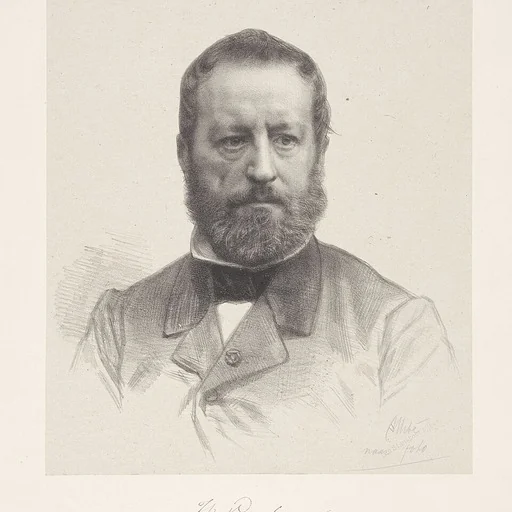
Wouterus Verschuur (11 June 1812 – 4 July 1874) was a Dutch painter of animal subjects – mainly horses – and of landscapes. He is one of the later representatives of Romanticism in Dutch art.

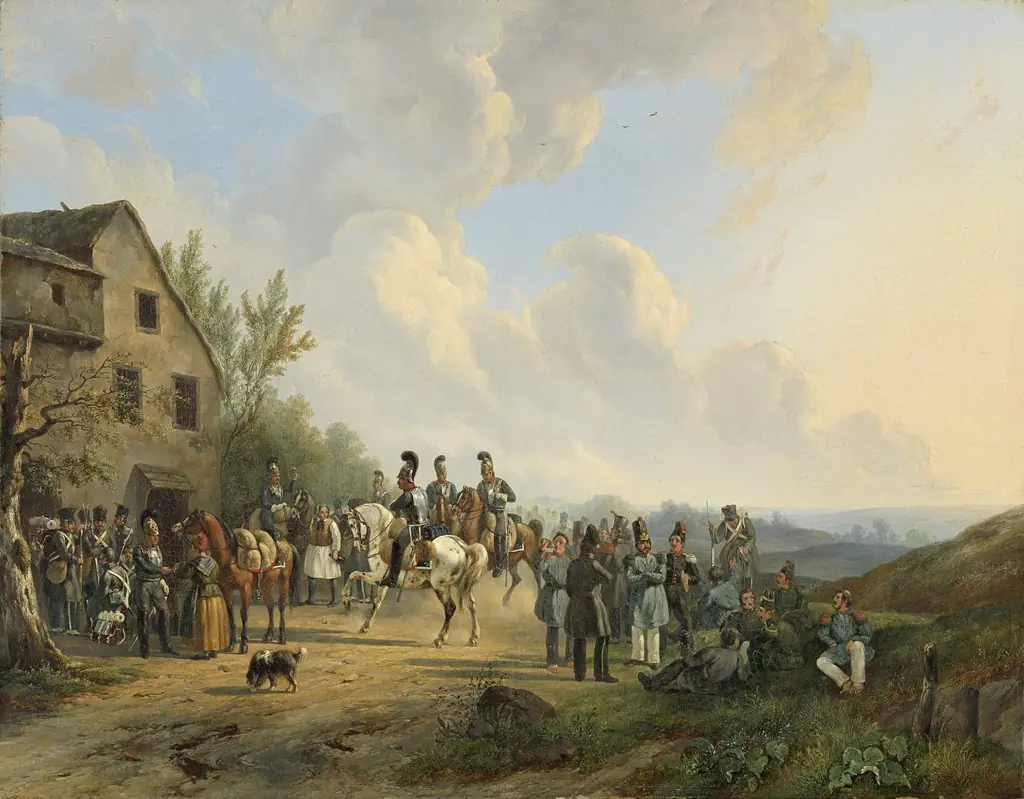
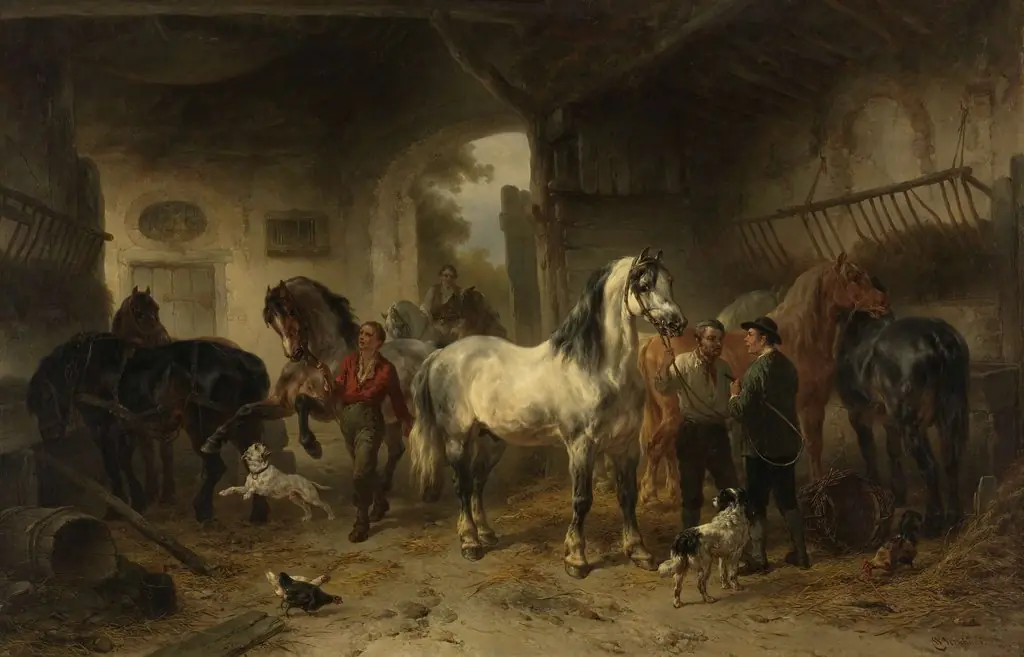
 Military Scene
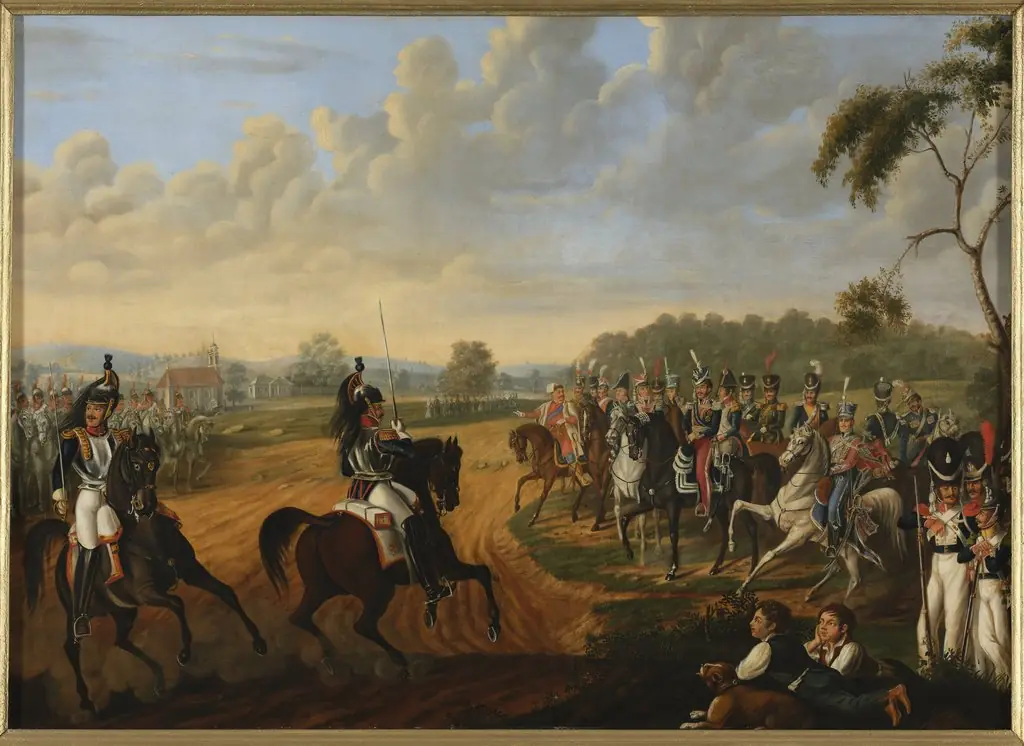 Inspection of the 14th Regiment of Cuirassiers of the Duchy of Warsaw
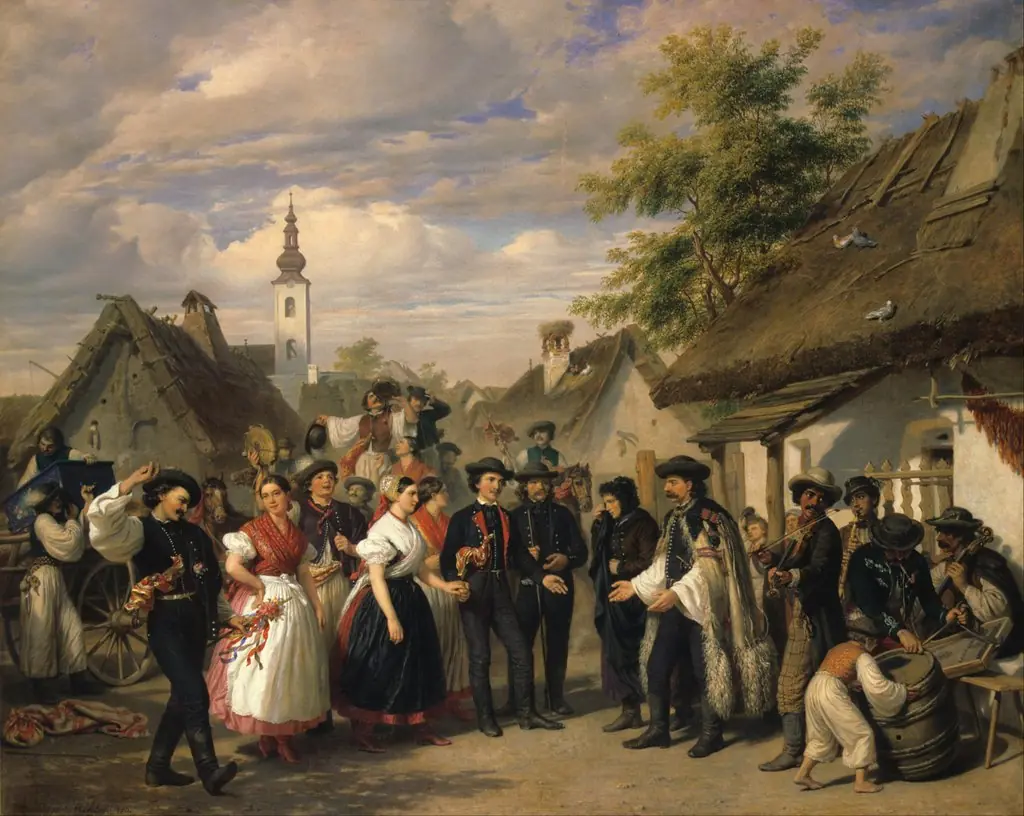 The Arrival of the Bride
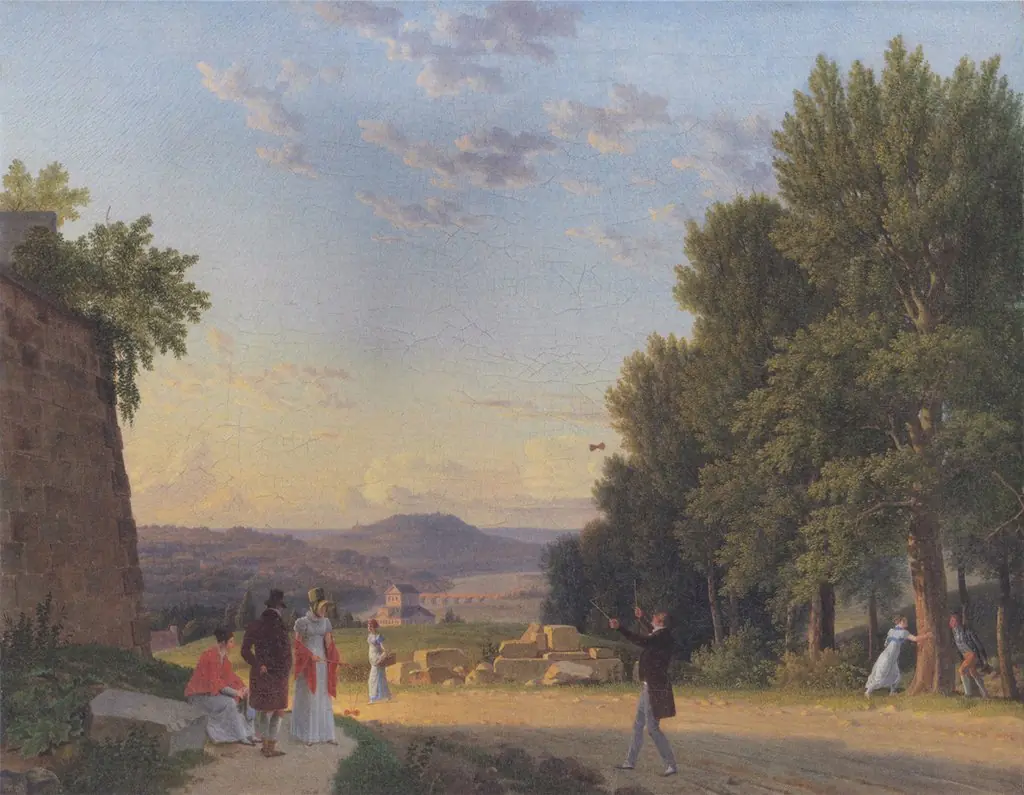 A View from the Château of Meudon
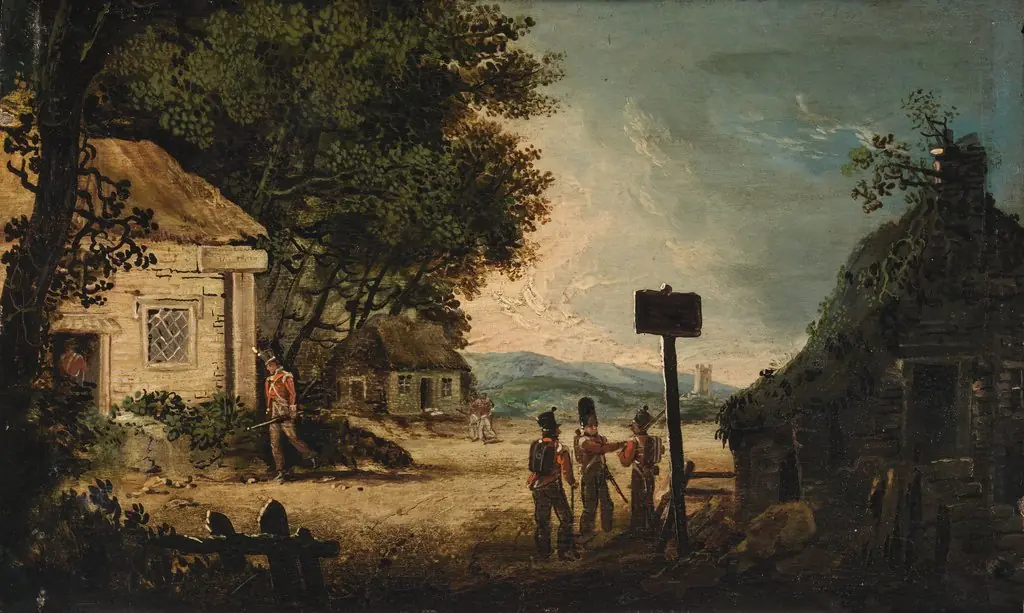 The Search for Michael Dwyer
 Three horsemen on the road
 Drawing the Eel
 Scene in Front of an Inn
 Die Schmiede an der Heeresstraße
 Entführung der Tochter des Herzogs von Genf (?) durch Thomas von Savoyen