Artwork
Selvportræt
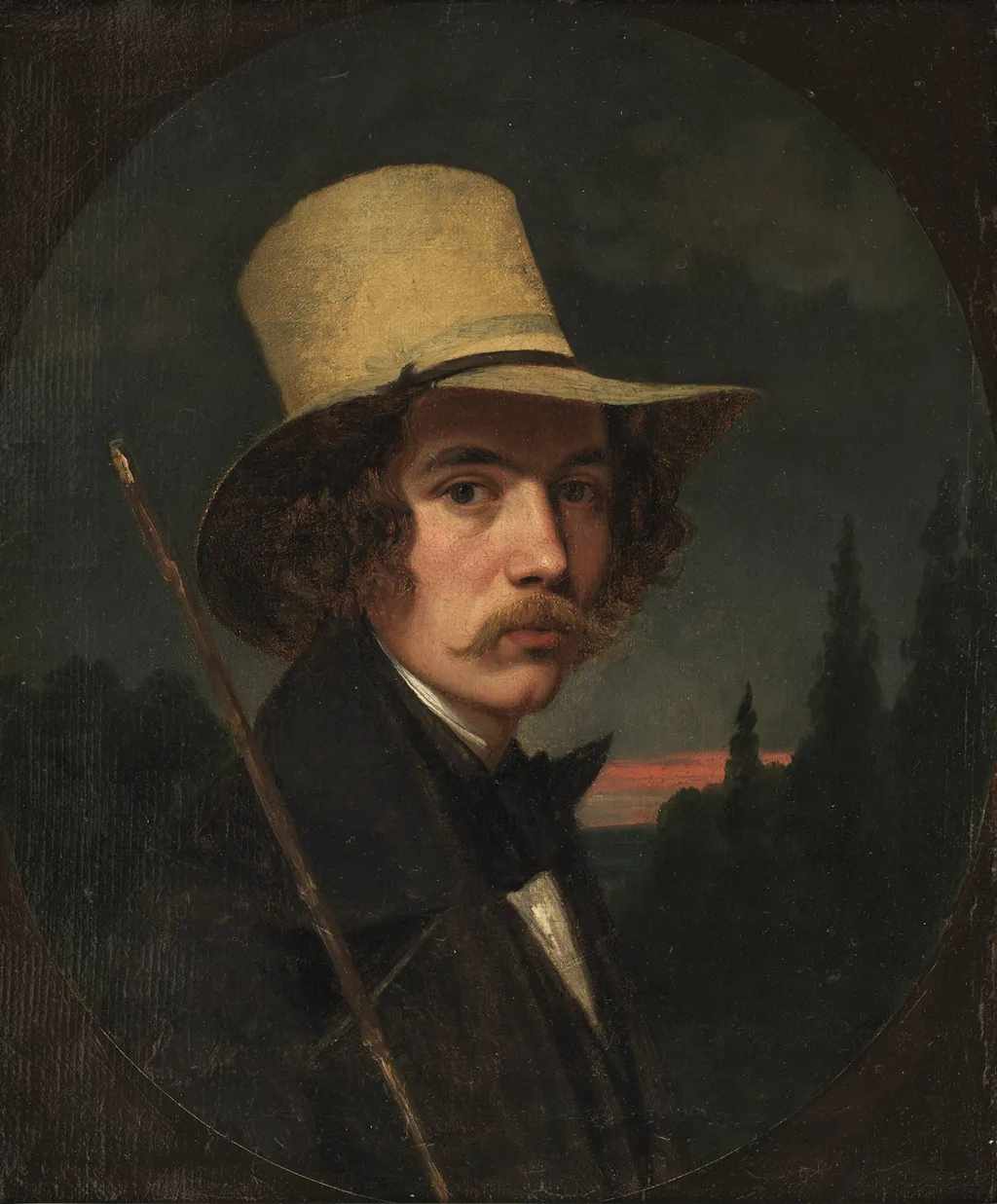
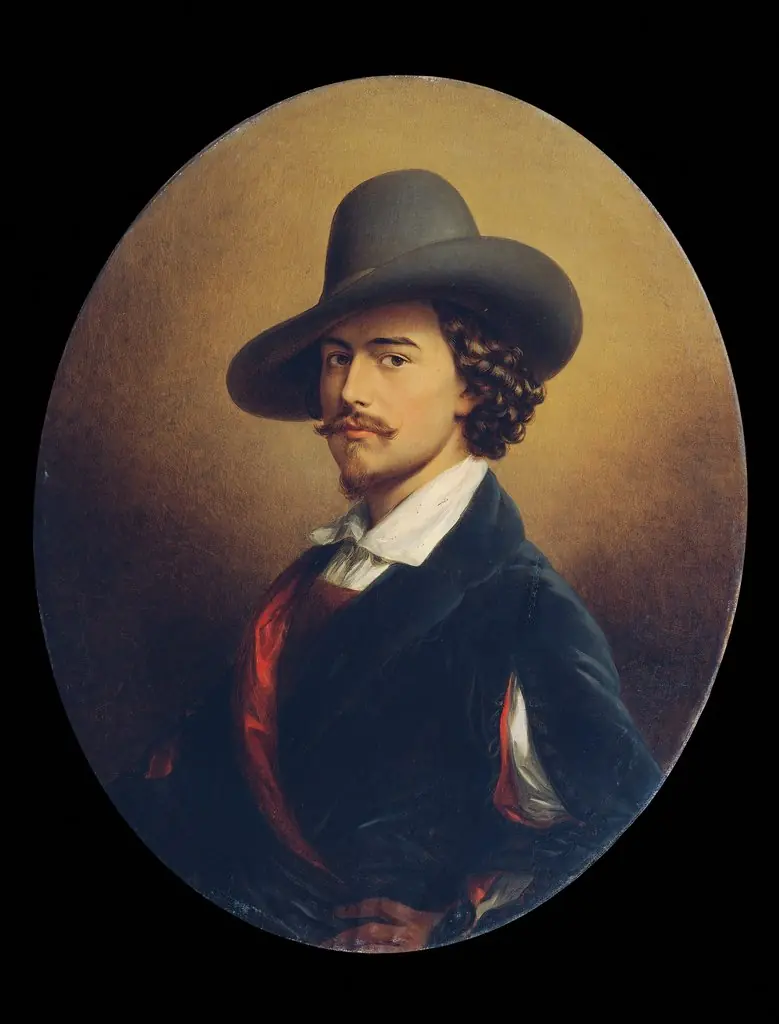
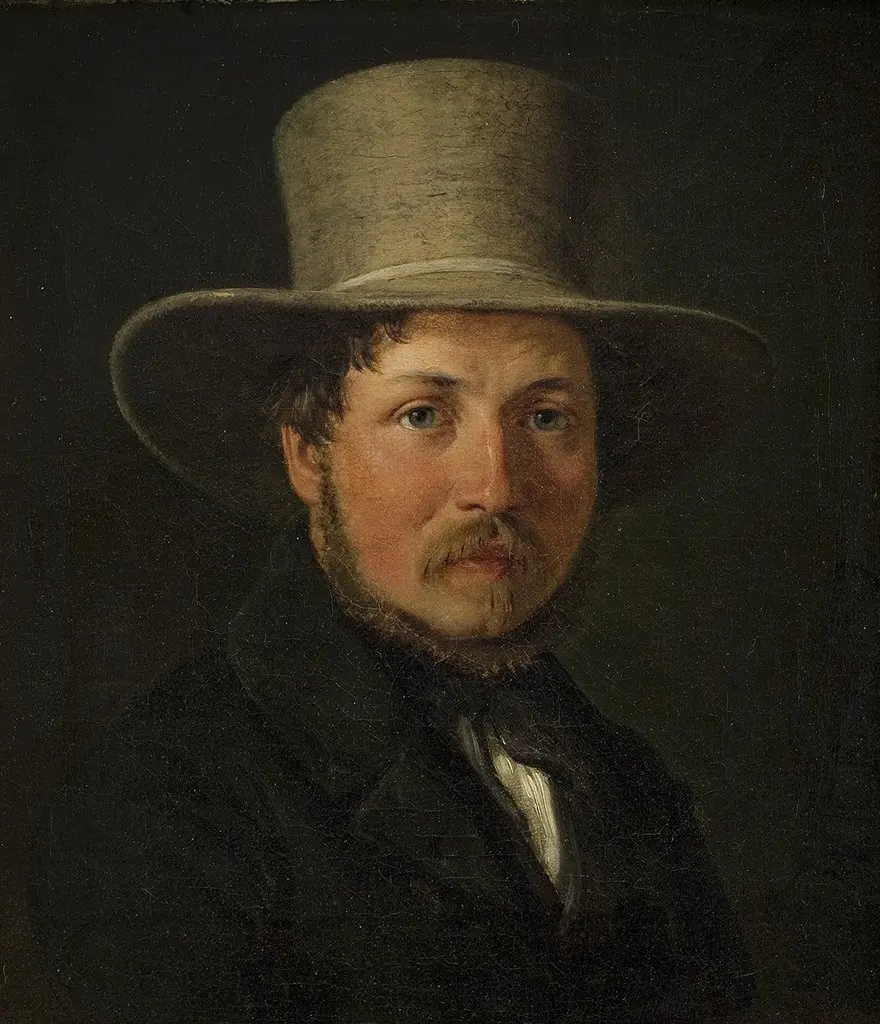
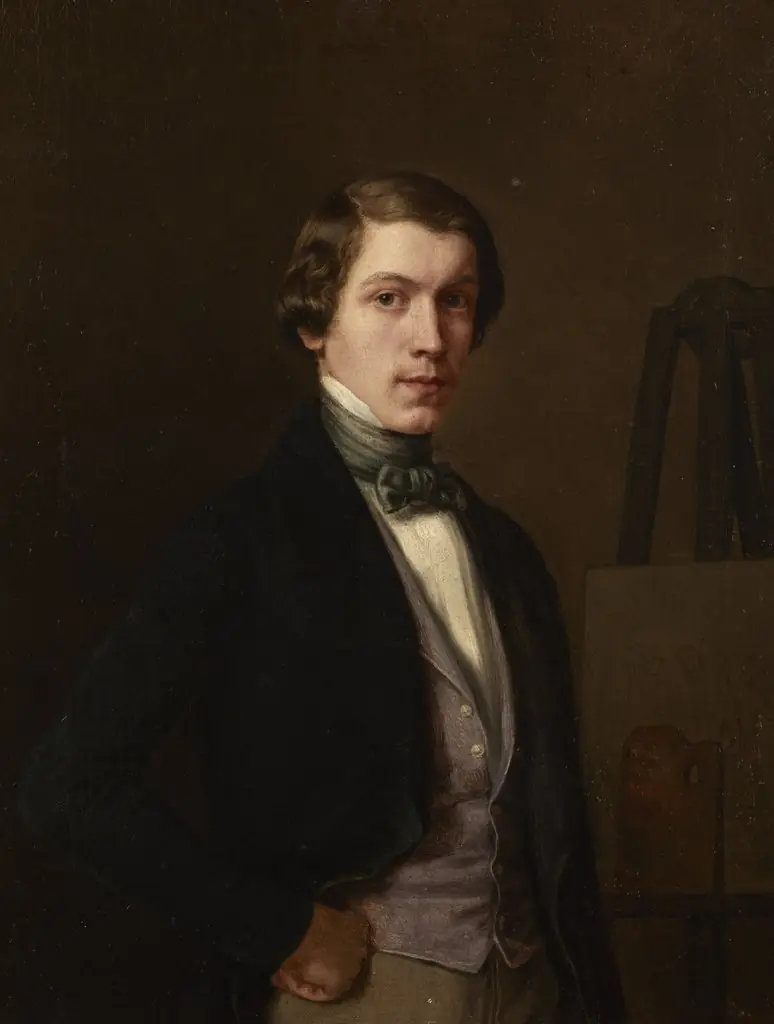
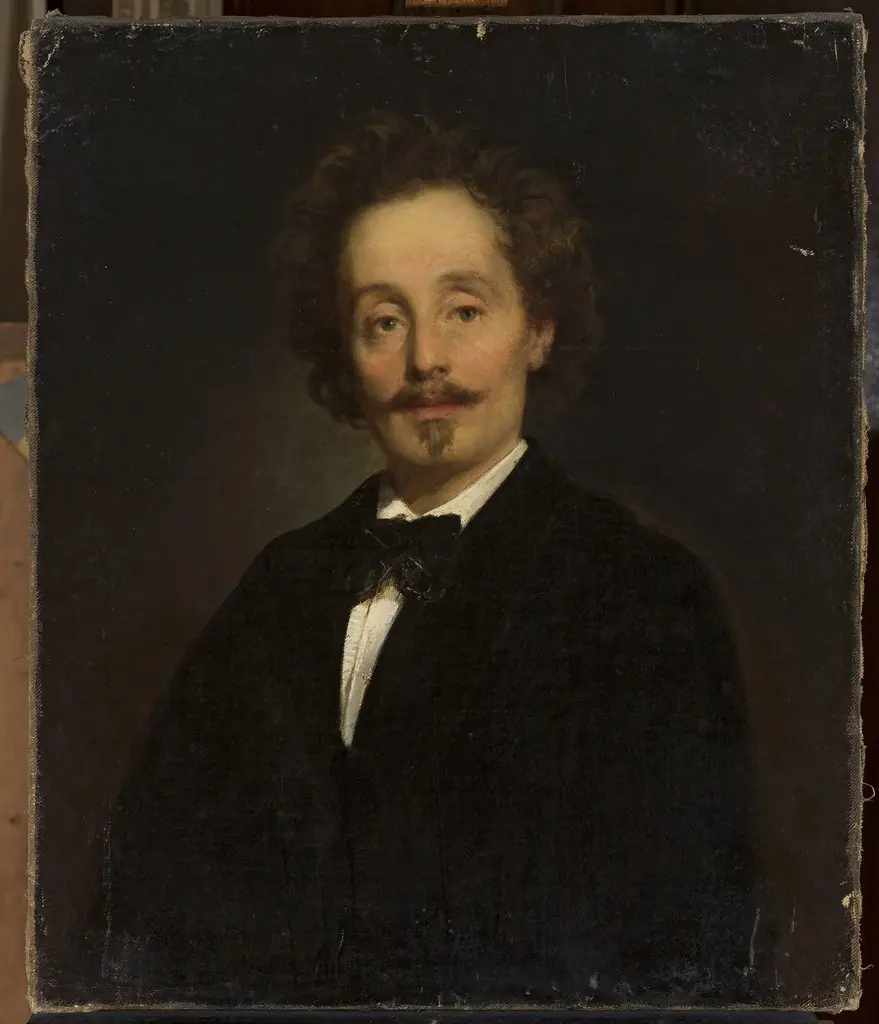
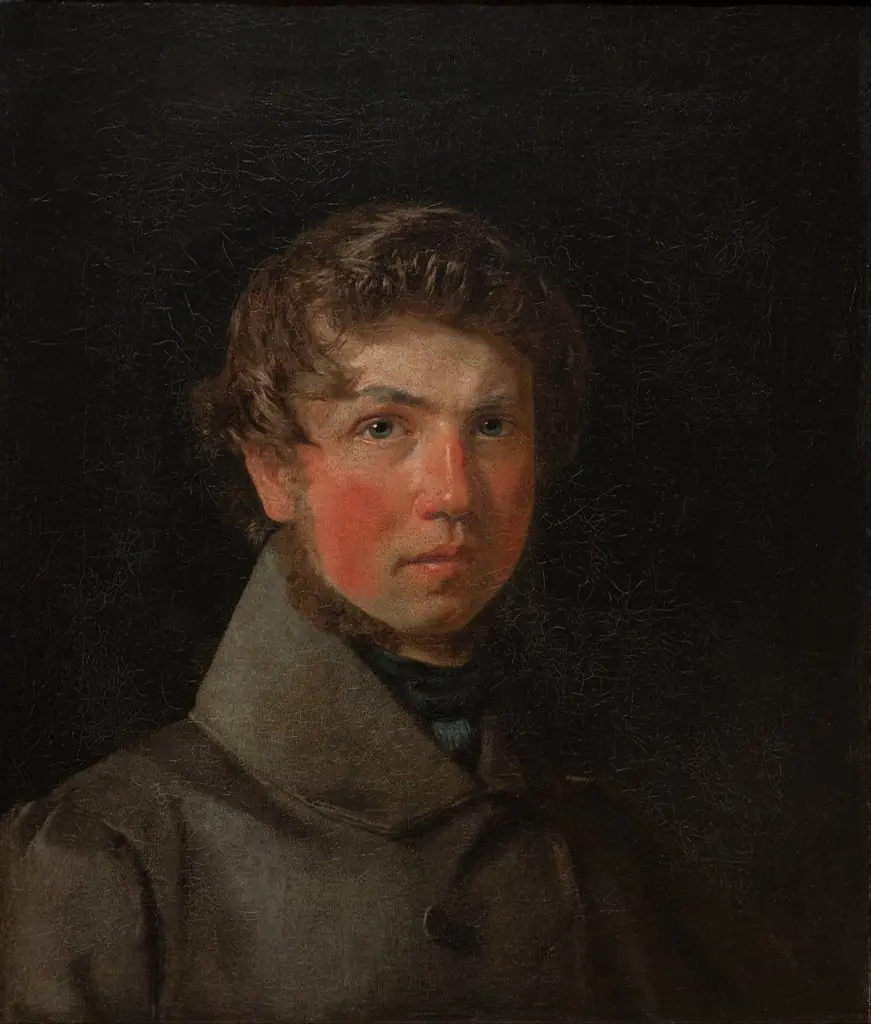
Selvportræt is a photography by Unknown. It dates from 1850 and is held in the collection of the Statens Museum for Kunst. This black-and-white photograph, dated around 1850, depicts a man in formal attire, captured in a studio setting.
About this work
Overview
This black-and-white photograph, dated around 1850, depicts a man in formal attire, captured in a studio setting.
This black-and-white photograph, dated around 1850, depicts a man in formal attire, captured in a studio setting. The image is held in the collection of the Museum of Ethnography. Its composition emphasizes the subject’s facial features through controlled lighting, while the background remains indistinct, suggesting a deliberate focus on the individual rather than the environment. The photograph’s grain and tonal range reflect early photographic processes of the mid-nineteenth century.
Subject & Meaning
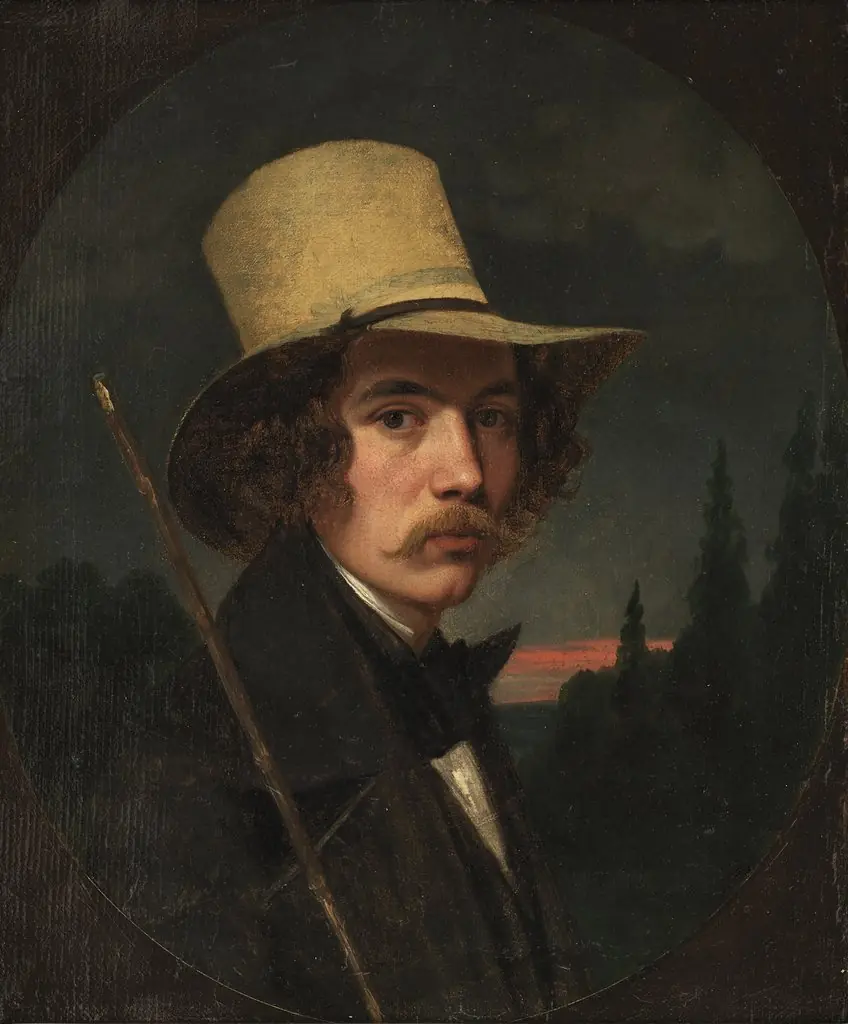
The subject is a man with a mustache and curly hair, dressed in a dark coat and wide-brimmed hat, holding a walking stick — attire typical of middle- or upper-class men in mid-1800s Europe. The pose and clothing suggest a desire to project dignity and social standing. As a self-portrait, the image may reflect personal identity or a statement of self-awareness, common among early photographers exploring the medium’s potential for self-representation.
Technique & Style
The photograph employs directional lighting to model the face sharply against a dark, undefined background, creating a strong contrast between light and shadow. This approach, reminiscent of chiaroscuro in painting, enhances the subject’s presence and three-dimensionality. The grainy texture and soft focus are characteristic of early photographic emulsions, likely a daguerreotype or calotype, which required long exposure times and careful handling.
History & Provenance
The photograph was likely produced in the early 1850s, during the formative years of photographic portraiture. It entered the Museum of Ethnography’s collection at an unknown date, possibly as part of a broader acquisition of personal or cultural documentation. Its origin as a self-portrait suggests it may have been created by the subject himself or by a local photographer commissioned for private use.
Context
In the 1850s, photography was transitioning from scientific curiosity to a tool for personal and social documentation. Self-portraits were rare but increasingly used by practitioners to demonstrate technical skill or assert identity. This image aligns with a growing trend among early photographers to use the medium for introspection, mirroring the rise of individualism in Western culture during the Industrial Revolution.
Legacy
Though not widely exhibited, the photograph contributes to the historical record of early photographic self-representation. It exemplifies how individuals engaged with new technology to construct and preserve personal identity. Its preservation in an ethnographic context underscores its value as a cultural artifact, offering insight into the private lives and visual habits of ordinary people in the mid-nineteenth century.
Artist & collection

 Domestic Scene
 Giacomo and Cardinal Marco, investing Andrea, Abbot of San Zeno, with his Benefice
 The Nymph of Fontainebleau
 Portrait of a Woman
 Madonna and Child with Saints in the Enclosed Garden
 Venus and Minerva
 Family Group of Four on Sofa
 Wall painting from Room H of the Villa of P. Fannius Synistor at Boscoreale