Artwork
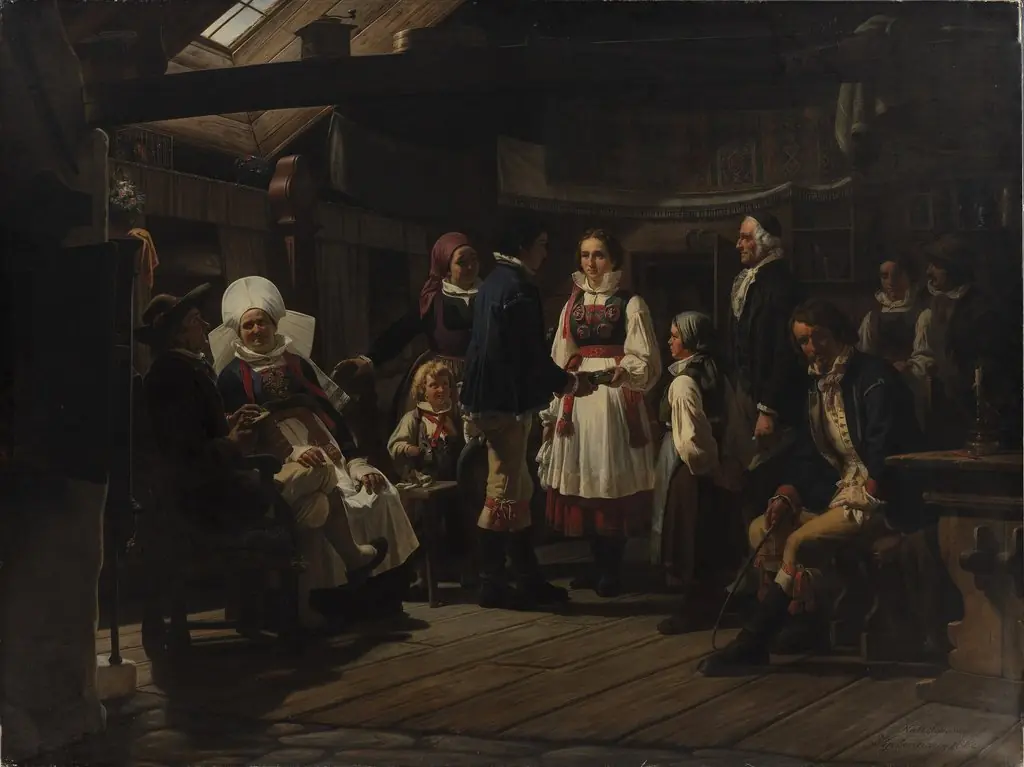
En trolovelse i Herrestad i Skåne
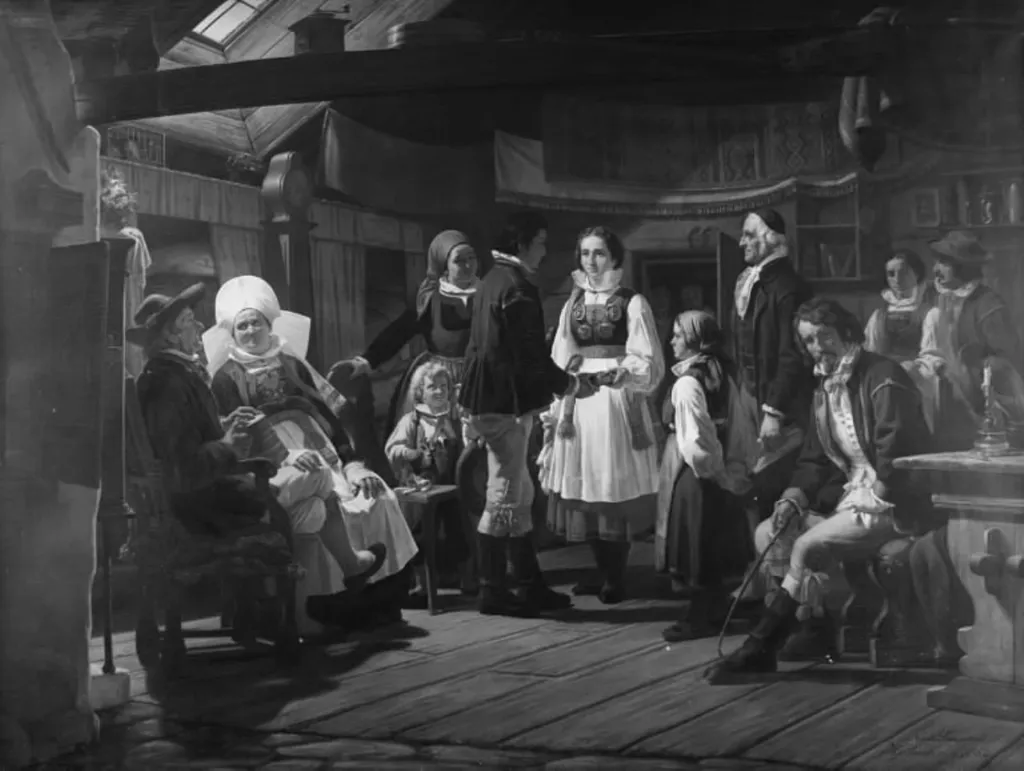
En trolovelse i Herrestad i Skåne is a photography by the Impressionist artist Unknown. It dates from 1862 and is held in the collection of the Statens Museum for Kunst.
About this work
The room looks like a simple home, with wooden floors, shelves, and a fireplace in the background.
This black-and-white photo shows a crowded room with people dressed in old-fashioned clothes. A woman in a white cap sits on a chair, holding something in her hands. Others stand or lean around her—some talking, some just watching. The room looks like a simple home, with wooden floors, shelves, and a fireplace in the background.
The photo was taken in 1862, showing real people in their daily lives. The artist aimed to capture everyday moments, not just grand scenes.
If you like this style, look up Realism.
Overview
En trolovelse i Herrestad i Skåne is a black‑and‑white photograph taken in 1862 by the photographer catalogued as 564_person. The image depicts a domestic interior in Herrestad, Skåne, populated by a group of individuals dressed in mid‑nineteenth‑century attire. The scene is preserved in the collection of the Museum of Ethnography, where it serves as a visual record of everyday life in a Swedish rural setting.
Subject & Meaning
The composition centers on a woman wearing a white cap, seated on a chair and holding an object whose purpose is not specified. Around her, men and women stand, lean, or converse, suggesting a casual gathering rather than a formal event. The photograph emphasizes ordinary social interaction, offering insight into the customs, dress, and domestic environment of the period.
Technique & Style
Captured with the photographic technology of the early 1860s, the image is rendered in monochrome, highlighting contrasts between light and shadow on wooden floors, shelves, and a fireplace. The photographer’s approach aligns with realist tendencies, focusing on an unembellished representation of a specific moment rather than staged or allegorical content.
History & Provenance
Created in 1862, the photograph entered the Museum of Ethnography’s holdings at an unspecified date, where it has been catalogued under its Swedish title. Its preservation within an ethnographic institution underscores its value as a documentary artifact of Swedish cultural history, rather than as a purely artistic work.
Artist & collection

 Domestic Scene
 Giacomo and Cardinal Marco, investing Andrea, Abbot of San Zeno, with his Benefice
 The Nymph of Fontainebleau
 Portrait of a Woman
 Madonna and Child with Saints in the Enclosed Garden
 Venus and Minerva
 Family Group of Four on Sofa
 Wall painting from Room H of the Villa of P. Fannius Synistor at Boscoreale
 Pentti Lyytinen lukee runojaan savolaisessa pirtissä
 Kæresten præsenteres
 Kæresten præsenteres
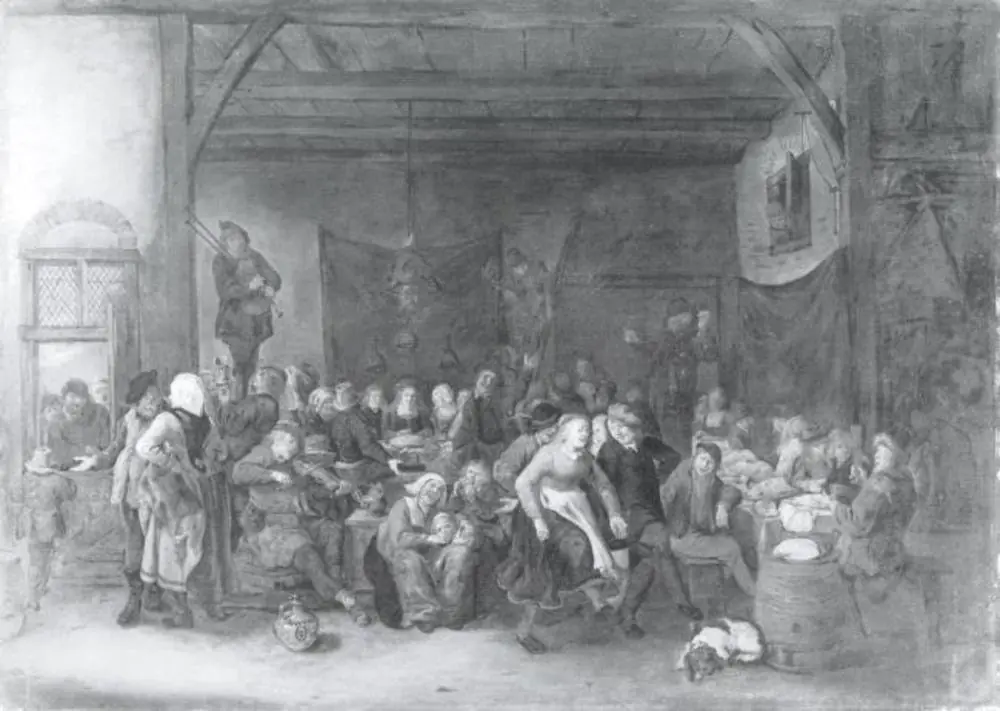 Village Wedding
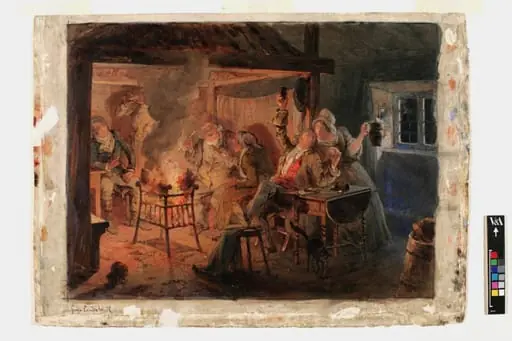 Tam O' Shanter at the Inn
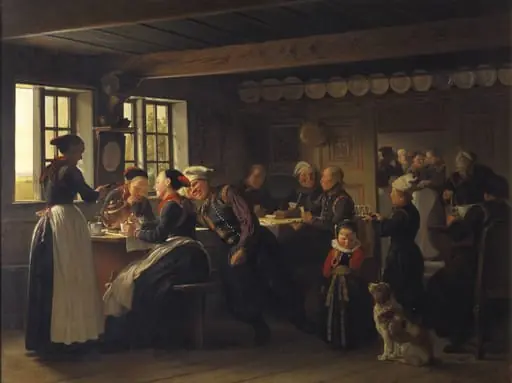 Episode af et gilde på Amager
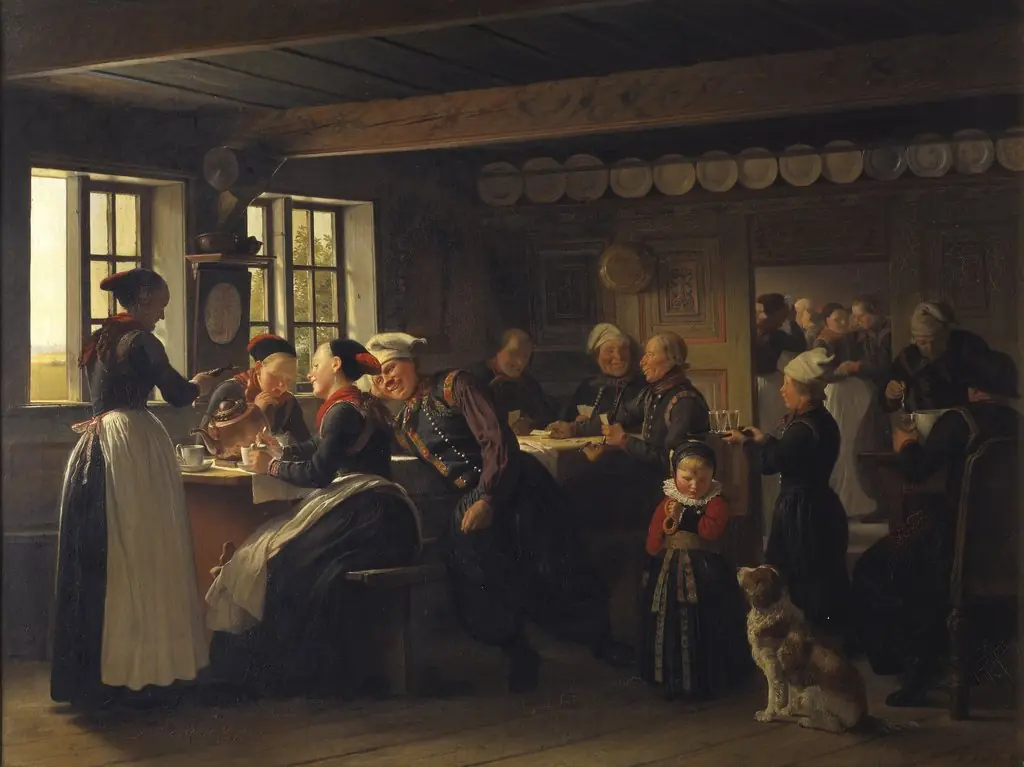 Interior with peasants from the region of Amager
 Diagnosticul
 Drinking Company outside a Tavern
 After the Unsealing of the Will
 The Foundling
 En trolovelse i Herrestad i Skåne