Artwork
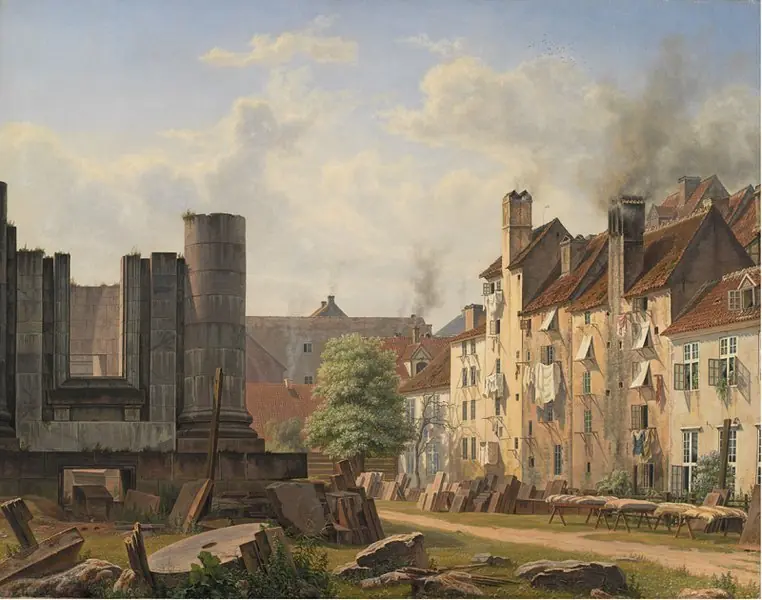
View of the Marble Square with the Ruins of the Uncompleted Frederik's Church
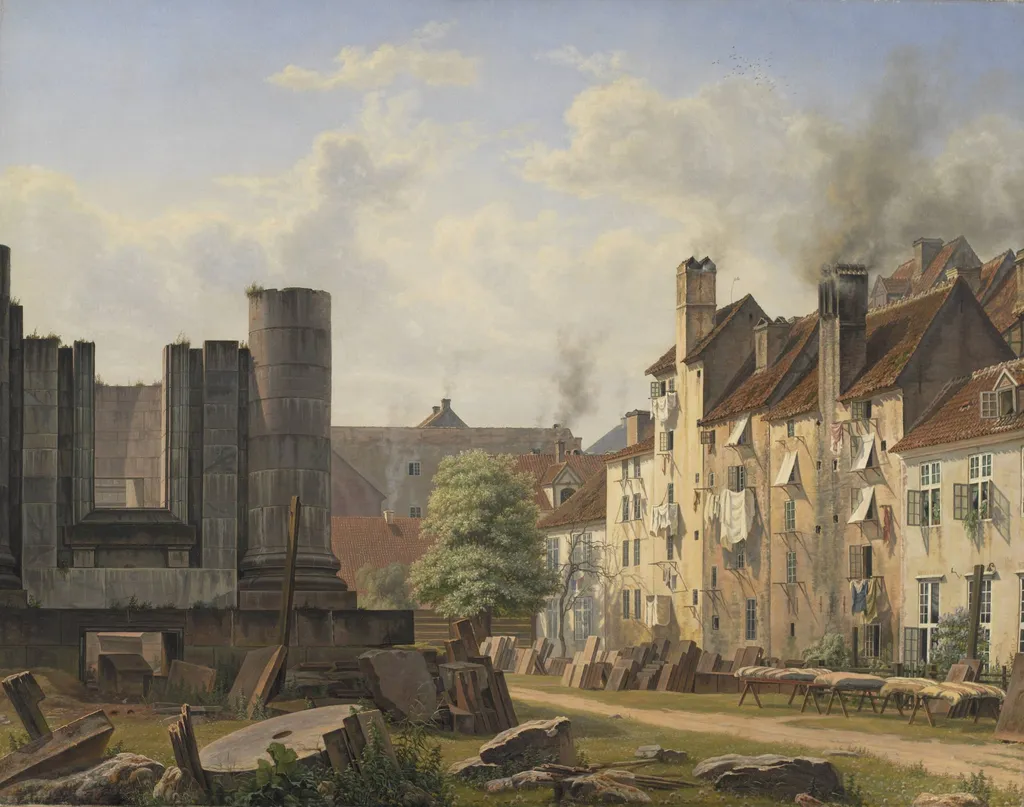
View of the Marble Square with the Ruins of the Uncompleted Frederik's Church is a photography by the Romanticist artist Unknown. It dates from 1835 and is held in the collection of the Statens Museum for Kunst. Painted in 1835, this cityscape depicts the Marble Square in Copenhagen, focusing on the abandoned construction site of Frederik's Church.
About this work
Overview
Painted in 1835, this cityscape depicts the Marble Square in Copenhagen, focusing on the abandoned construction site of Frederik's Church.
Painted in 1835, this cityscape depicts the Marble Square in Copenhagen, focusing on the abandoned construction site of Frederik's Church. The work captures a moment of urban transition, where classical ruins stand alongside emerging residential and commercial structures. Rendered in oil, the painting emphasizes architectural contrast and atmospheric light, reflecting a quiet observation of civic change rather than grand narrative.
Subject & Meaning
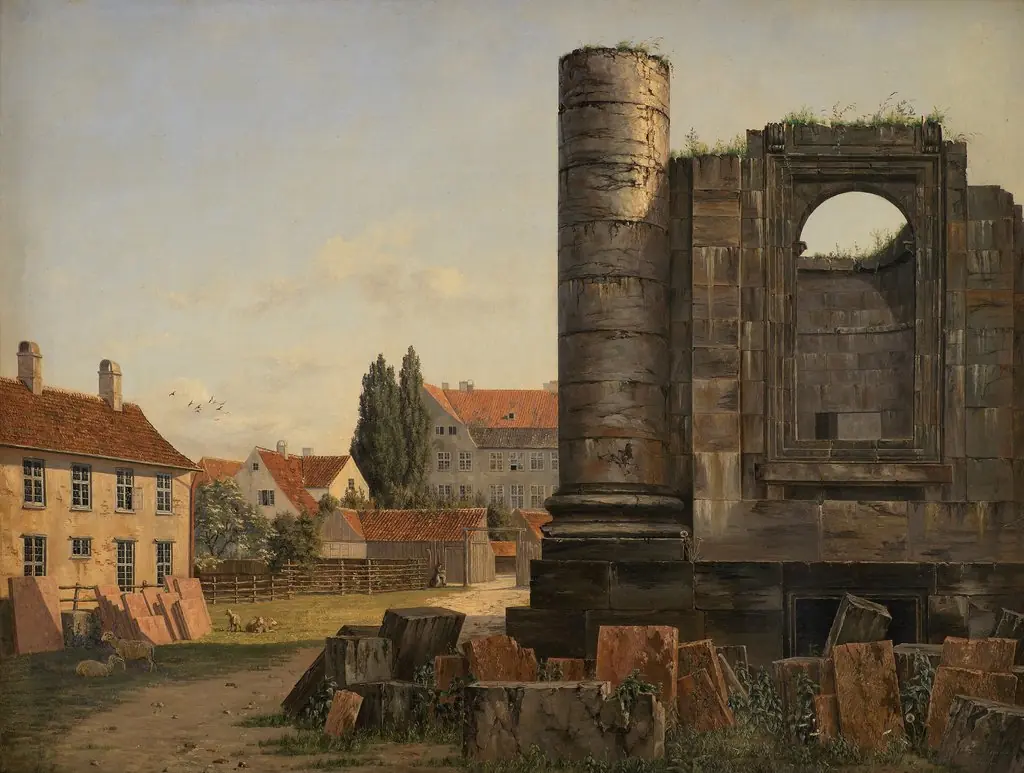
The composition juxtaposes the skeletal remains of an unfinished neoclassical church with modest, contemporary buildings. The ruin symbolizes halted ambition, while the newer structures suggest everyday resilience. Trees and scattered building materials in the square imply a pause in development, inviting reflection on time, progress, and the impermanence of public projects without overt moralizing.
Technique & Style
The artist employs fine brushwork to differentiate textures: rough-hewn stone, smooth wooden beams, and delicate foliage are rendered with precision. Atmospheric perspective guides the eye from foreground debris to a clear, cloud-dappled sky. Color is restrained yet nuanced—warm red roofs contrast with cool gray ruins—enhancing the sense of a sunlit, tranquil afternoon without dramatic flourish.
History & Provenance
The painting was created during a period when Frederik's Church remained incomplete due to funding shortages. It entered the collection of the Museum of Ethnography in the late 19th century, likely as part of a broader effort to document Copenhagen’s evolving urban fabric. Its placement in an ethnographic institution, rather than an art museum, suggests its value as a record of material culture and civic life.
Context
In the 1830s, Copenhagen was undergoing gradual modernization, yet many grand projects from the previous century lay dormant. This painting reflects a common cultural preoccupation with ruins—not as symbols of decay, but as witnesses to historical continuity. Similar depictions appeared across Northern Europe, where artists documented the tension between classical ideals and emerging urban realities.
Legacy
Though not widely exhibited, the work contributes to a modest but persistent genre of Danish topographical painting. It preserves a specific moment in the city’s architectural history, offering insight into how contemporaries perceived unfinished monuments. Its quiet realism distinguishes it from more theatrical Romantic landscapes, anchoring it in documentary observation rather than emotional idealization.
Artist & collection

 Domestic Scene
 Giacomo and Cardinal Marco, investing Andrea, Abbot of San Zeno, with his Benefice
 The Nymph of Fontainebleau
 Portrait of a Woman
 Madonna and Child with Saints in the Enclosed Garden
 Venus and Minerva
 Family Group of Four on Sofa
 Wall painting from Room H of the Villa of P. Fannius Synistor at Boscoreale
 Parti af Marmorpladsen med ruinerne af den ufuldførte Frederikskirke
 View of Pirna with the Fortress of Sonnenstein
 View of Pirna, from Sonnestein Castle
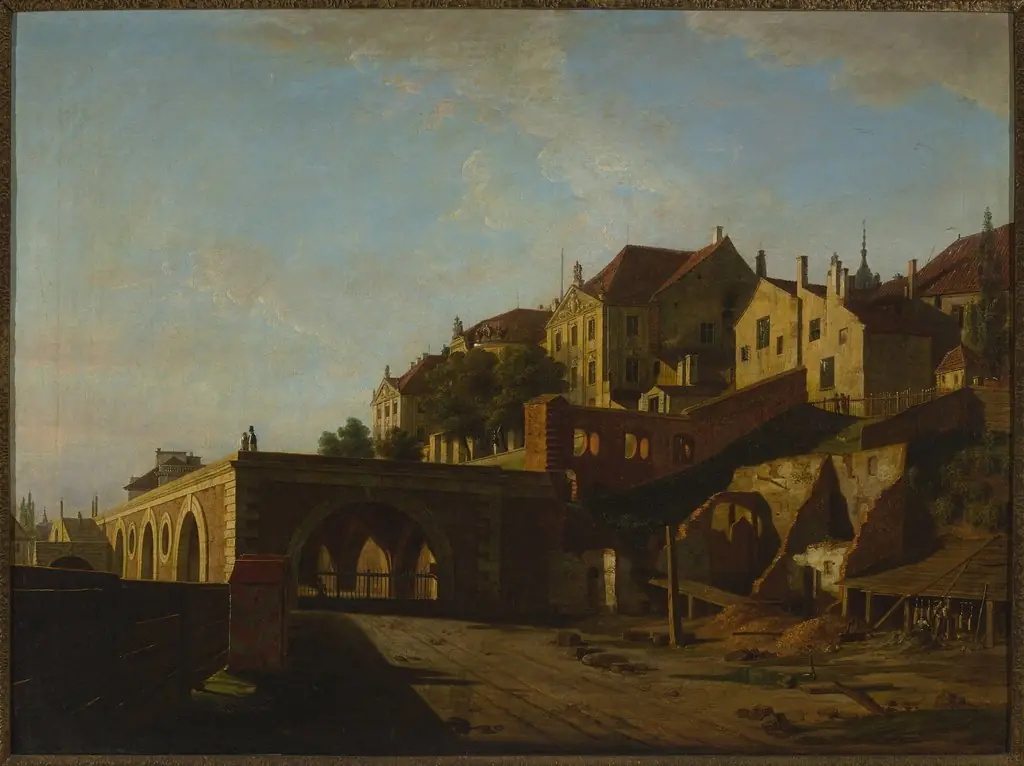 View of the castle from the north
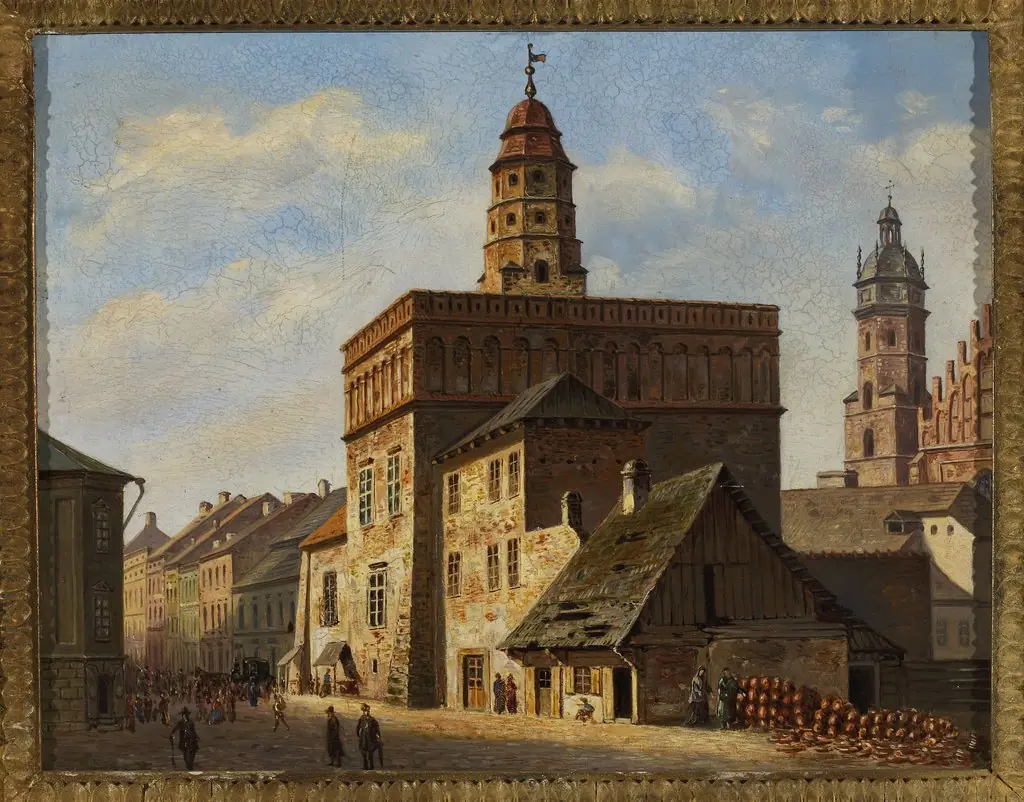 Old town hall at the Wolnica square in Kazimierz, Kraków
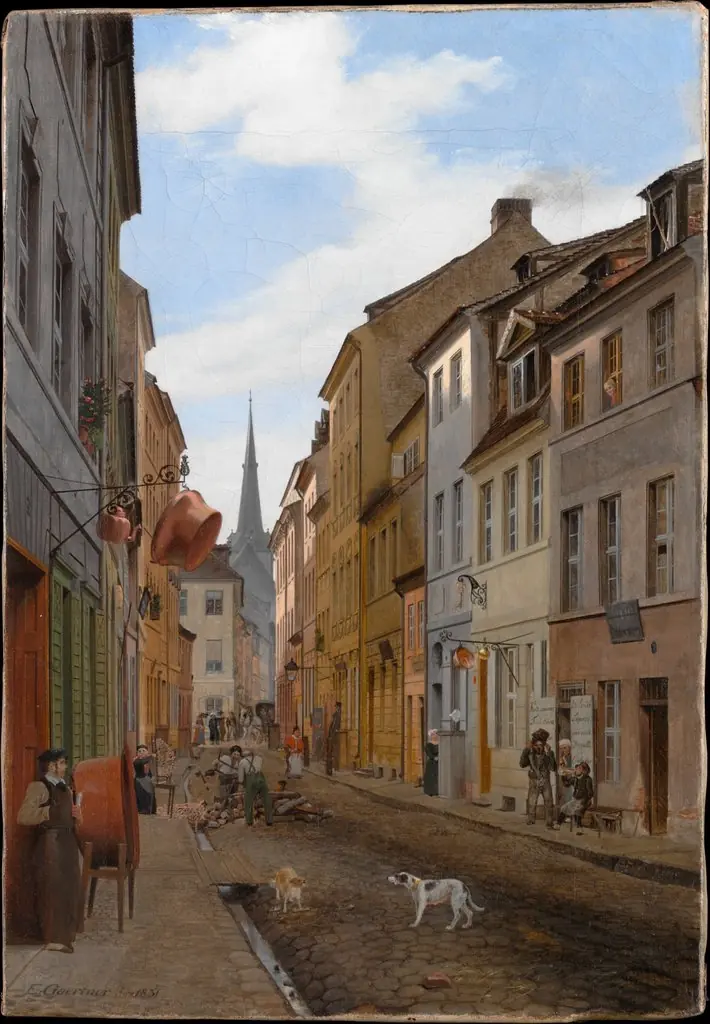 Parochialstrasse in Berlin
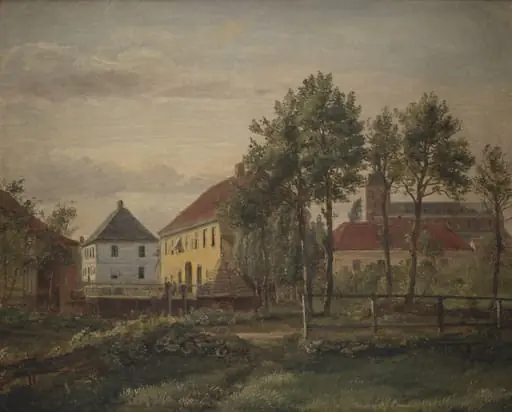 A Mill in Odense
 Die Breite Gasse in Pirna
 View of the castle in Radziejowice
 View of Pirna in Saxony
 Udsigt mod Roskilde fra et husmandssted
 View of the Marble Square with the Ruins of the Uncompleted Frederik's Church