Artwork
Dancing Party
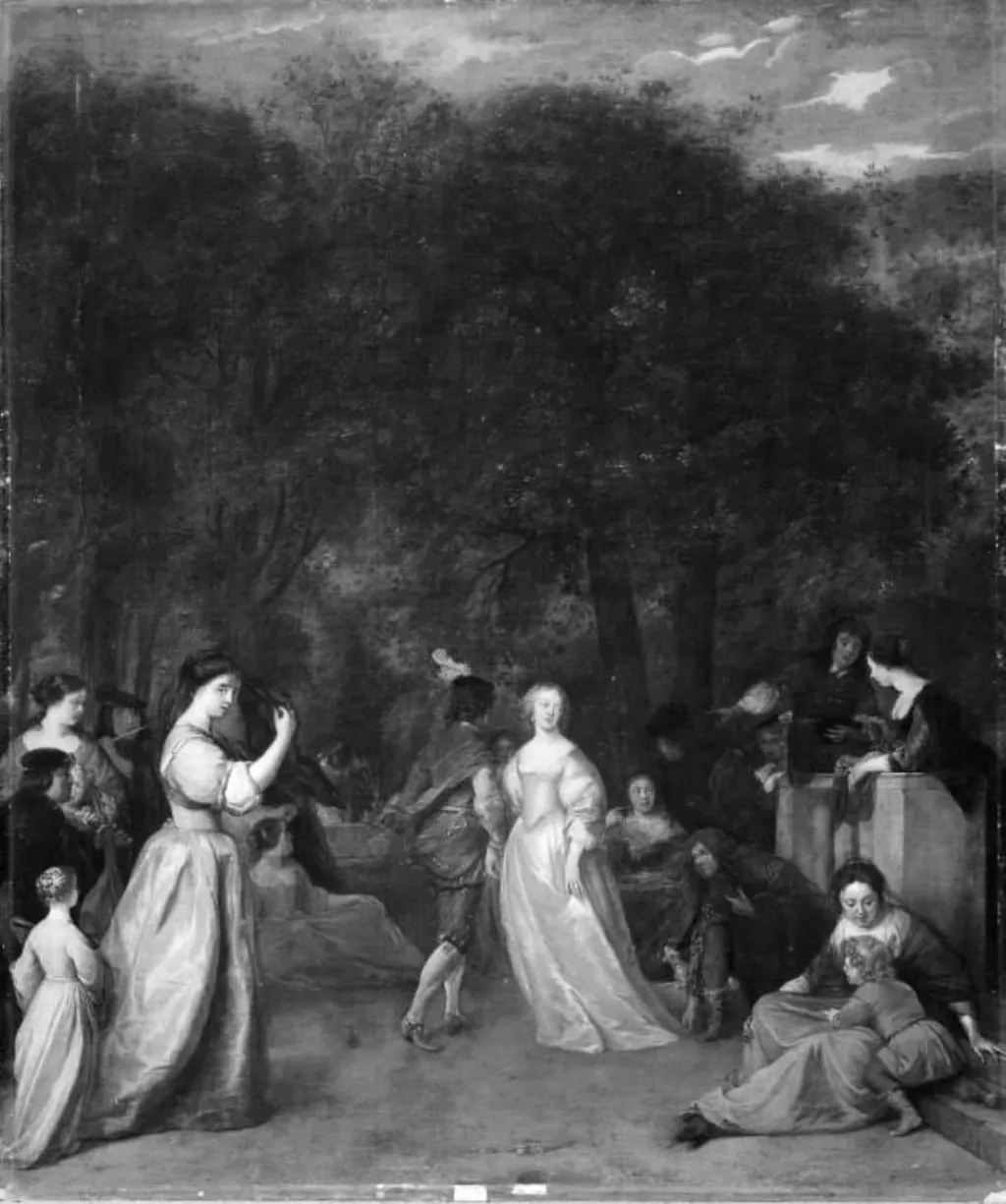
Dancing Party is a photography by Unknown. It dates from 1643 and is held in the collection of the Statens Museum for Kunst.
About this work
Overview
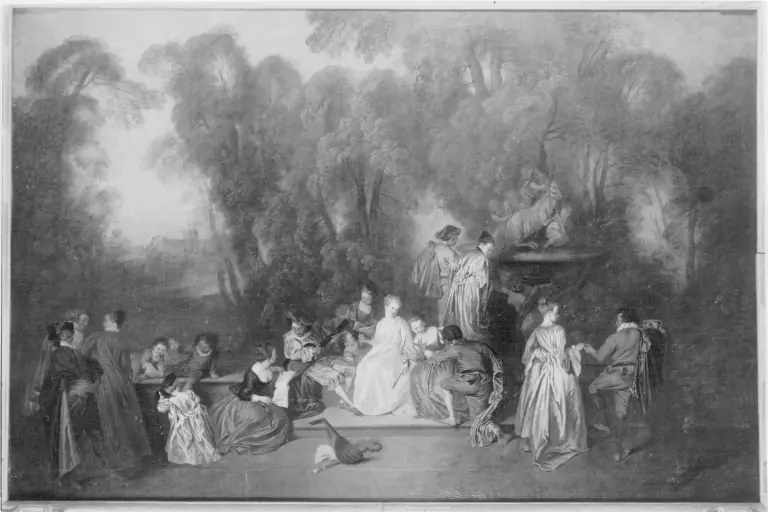
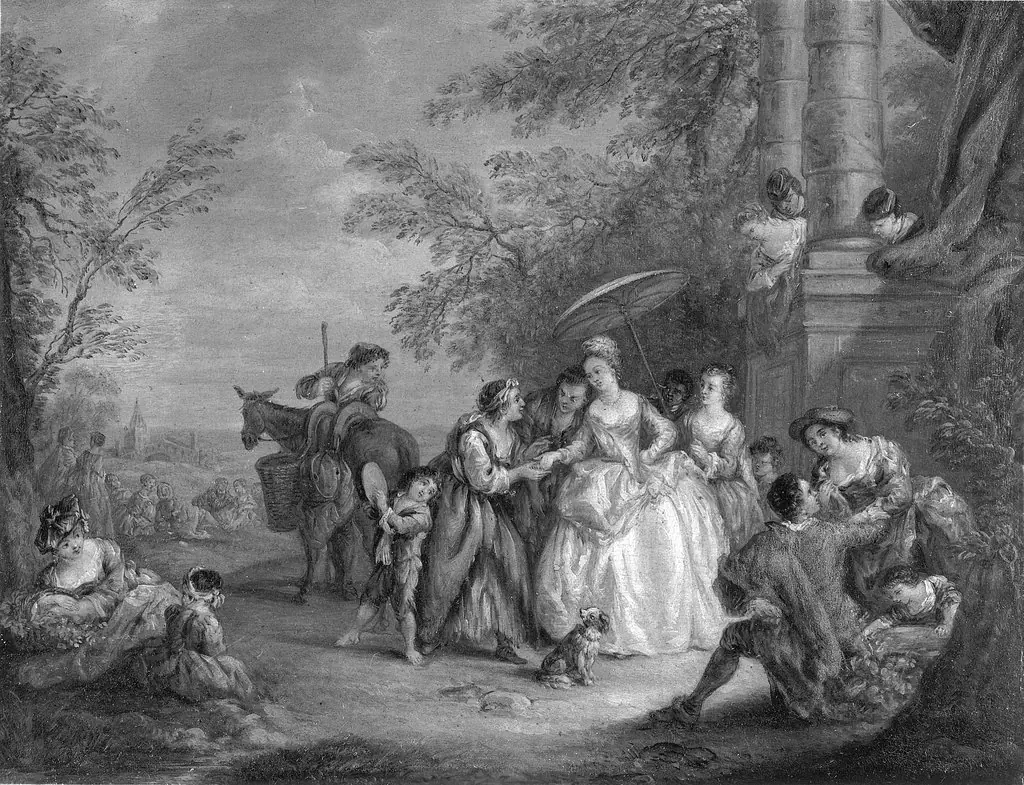
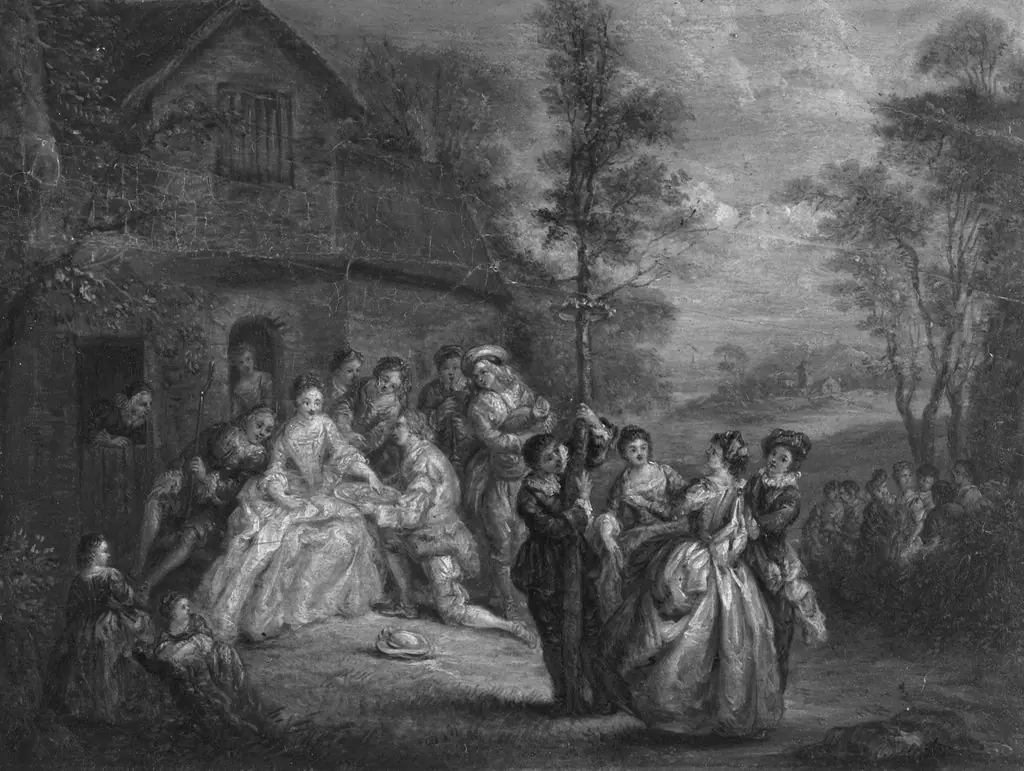
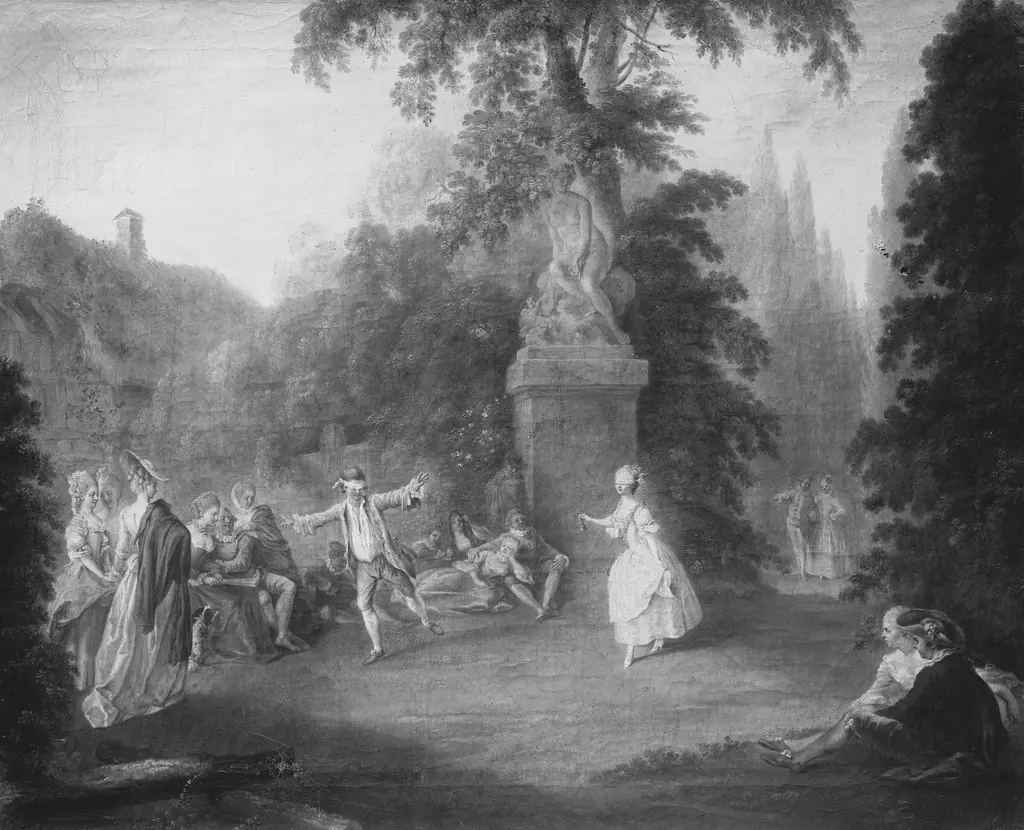
Dancing Party is a black-and-white photograph taken around 1643, capturing a social gathering in what appears to be an interior space. The image is preserved in the collection of the Museum of Ethnography. Its grainy texture and uneven lighting suggest it was made with early photographic equipment, conveying a fleeting, intimate moment rather than a staged composition.
Subject & Meaning
The focus on the couple implies a ritual or social bond, while the blurred figures around them emphasize the collective nature of the event.
The central figures are a woman in a long dress and a man, linked by clasped hands as they dance. Others in the frame are engaged in varied activities—some observe, others move or sit. The scene suggests a communal celebration, possibly a local dance tradition. The focus on the couple implies a ritual or social bond, while the blurred figures around them emphasize the collective nature of the event.
Technique & Style
The photograph uses natural, uneven lighting to isolate the dancers against a dim background. The grainy surface and soft focus on peripheral figures enhance the sense of motion and spontaneity. These qualities reflect the technical limitations of early photographic processes, yet they also contribute to the image’s atmospheric quality, prioritizing mood over sharp detail.
History & Provenance
The photograph has been held since its acquisition by the Museum of Ethnography, though its origin and the identity of the photographer remain undocumented. It was likely taken during a regional gathering, possibly in a rural or non-urban setting. Its preservation suggests early ethnographic interest in documenting everyday cultural practices.
Context
Created in the mid-17th century, this image coincides with the early development of photographic technology, though its exact method remains uncertain. It may represent a folk tradition from a region where such gatherings were common. The presence of formal dress and group participation points to a culturally significant event, possibly tied to seasonal or ceremonial customs.
Legacy
As one of the earliest known photographic records of a social dance, it offers insight into pre-industrial communal life. Though not widely exhibited, its presence in an ethnographic collection underscores its value as a visual document of ordinary human behavior. It remains a quiet testament to the persistence of ritual in daily life.
Artist & collection

 Domestic Scene
 Giacomo and Cardinal Marco, investing Andrea, Abbot of San Zeno, with his Benefice
 The Nymph of Fontainebleau
 Portrait of a Woman
 Madonna and Child with Saints in the Enclosed Garden
 Venus and Minerva
 Family Group of Four on Sofa
 Wall painting from Room H of the Villa of P. Fannius Synistor at Boscoreale