Artwork
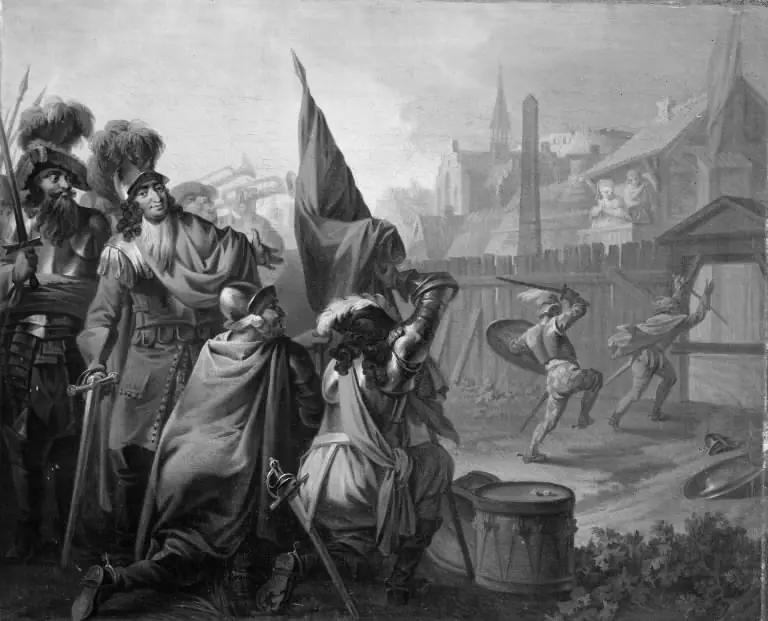
Ulysses von Ithacia, II akt, 9. scene
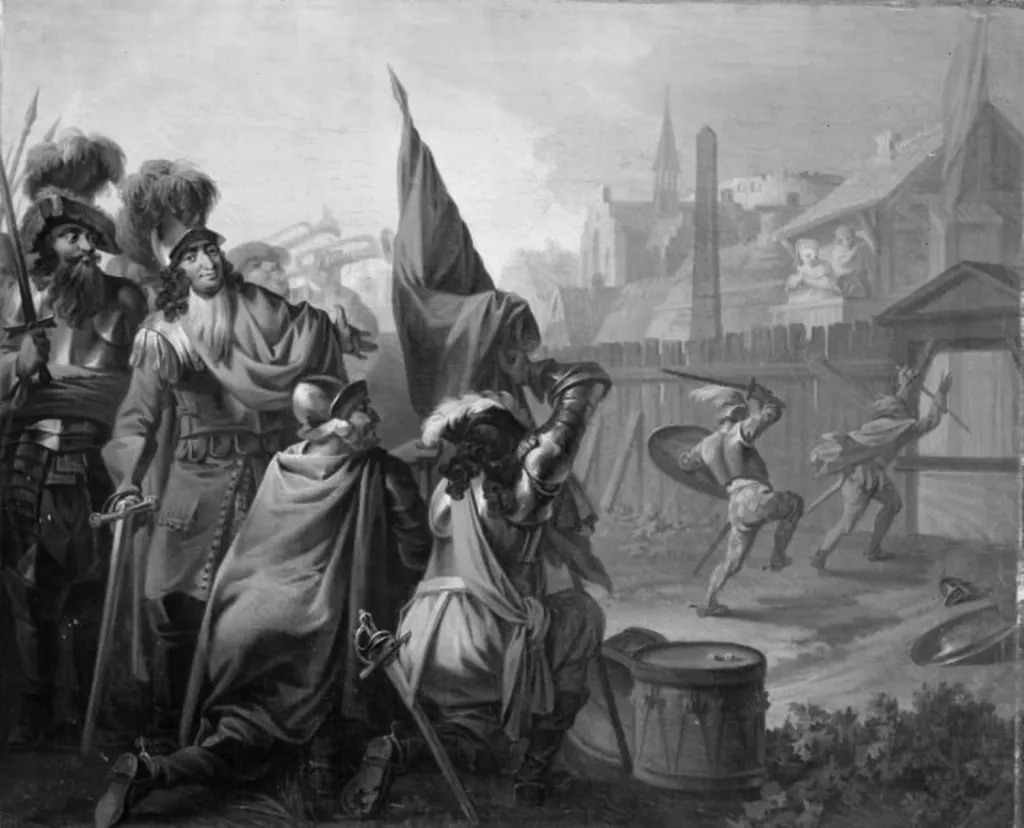
Ulysses von Ithacia, II akt, 9. scene is a photography by Unknown. It dates from 1750 and is held in the collection of the Statens Museum for Kunst. Created around 1750 by the artist identified as 693_person, this black‑and‑white print titled *Ulysses von Ithacia, II akt, 9.
About this work
Overview
Created around 1750 by the artist identified as 693_person, this black‑and‑white print titled *Ulysses von Ithacia, II akt, 9.
Created around 1750 by the artist identified as 693_person, this black‑and‑white print titled *Ulysses von Ithacia, II akt, 9. scene* is part of the collection of the Museum of Ethnography. The composition depicts a crowded, chaotic tableau that suggests a battlefield or siege, populated by figures in period costume, some armed, others wounded, set against a distant cityscape with towering structures and a bridge.
Subject & Meaning
At the centre of the scene a figure extends a hand to assist a fallen companion, an act that draws attention amid the surrounding soldiers and onlookers whose faces convey tension and resolve. The juxtaposition of aid and conflict hints at themes of loyalty, sacrifice, and the human cost of war, inviting viewers to contemplate the moral choices faced in combat.
Technique & Style
The work employs stark chiaroscuro, using deep shadows and bright highlights to model the forms and heighten the drama. The contrast between illuminated figures and the darkened background creates a three‑dimensional effect, while the linear detailing of weapons, flags, and architectural elements grounds the scene in a recognizable, though stylized, historical setting.
History & Provenance
The print entered the Museum of Ethnography’s holdings at an unspecified date, where it remains catalogued under its original title. Its attribution to 693_person, a creator whose identity is recorded only by a catalog number, reflects the challenges of tracing authorship for many eighteenth‑century graphic works.
Context
Produced in the mid‑eighteenth century, the image aligns with contemporary European interests in classical narratives and military subjects. The depiction of a heroic figure assisting a comrade mirrors Enlightenment ideals of virtue and civic duty, while the architectural backdrop suggests an imagined urban environment typical of the period’s imaginative historicism.
Artist & collection

 Domestic Scene
 Giacomo and Cardinal Marco, investing Andrea, Abbot of San Zeno, with his Benefice
 The Nymph of Fontainebleau
 Portrait of a Woman
 Madonna and Child with Saints in the Enclosed Garden
 Venus and Minerva
 Family Group of Four on Sofa
 Wall painting from Room H of the Villa of P. Fannius Synistor at Boscoreale
 El rey don Rodrigo arengando a los jefes de su ejército antes de dar la batalla del Guadalete
 The Meeting of King Ladislas IV and Rudolph of Habsburg on the Battlefield of Marchfeld
 Władysław Herman blesses Bolesław the Wry-Mouthed before a war campaign
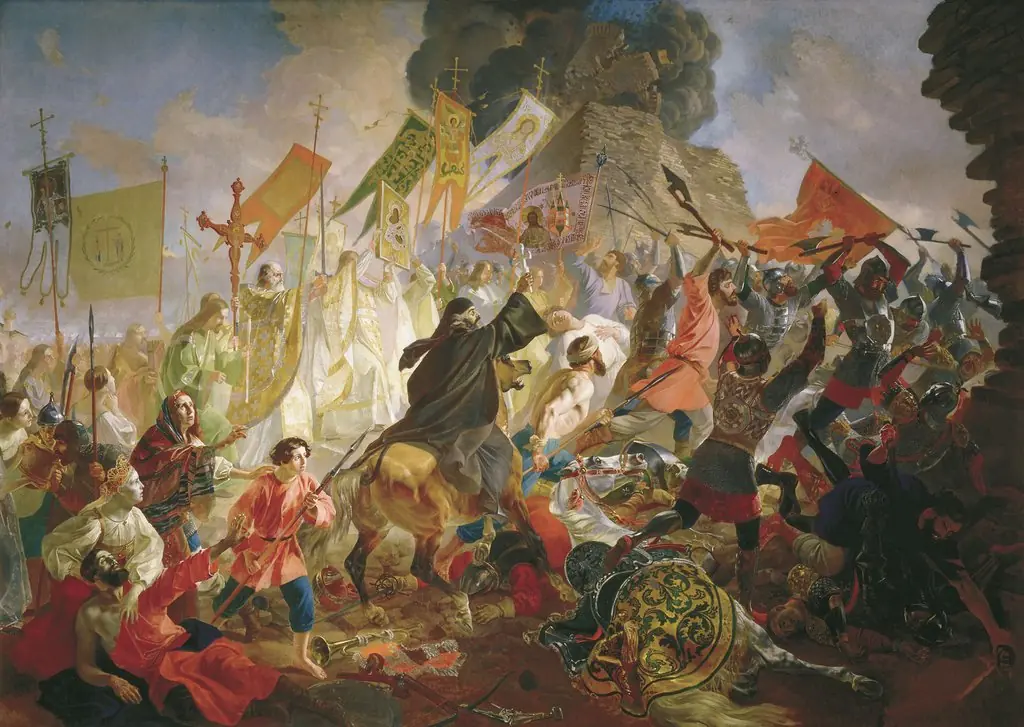 Осада Пскова польским королём Стефаном Баторием в 1581 году
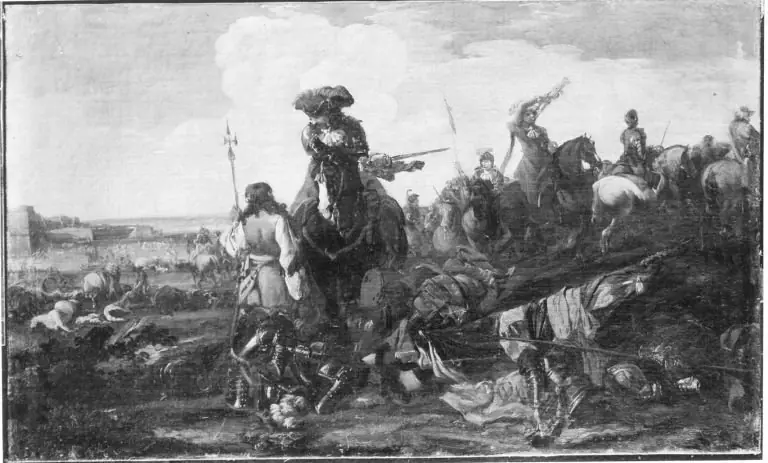 Battle scene
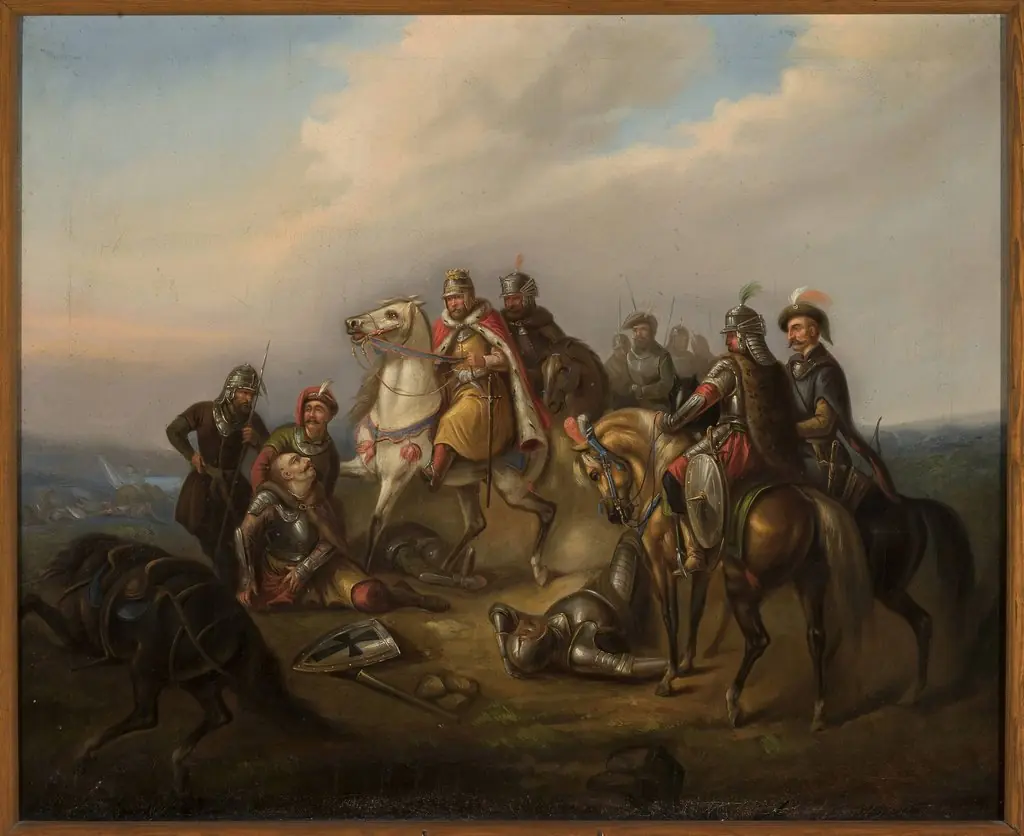 After the battle
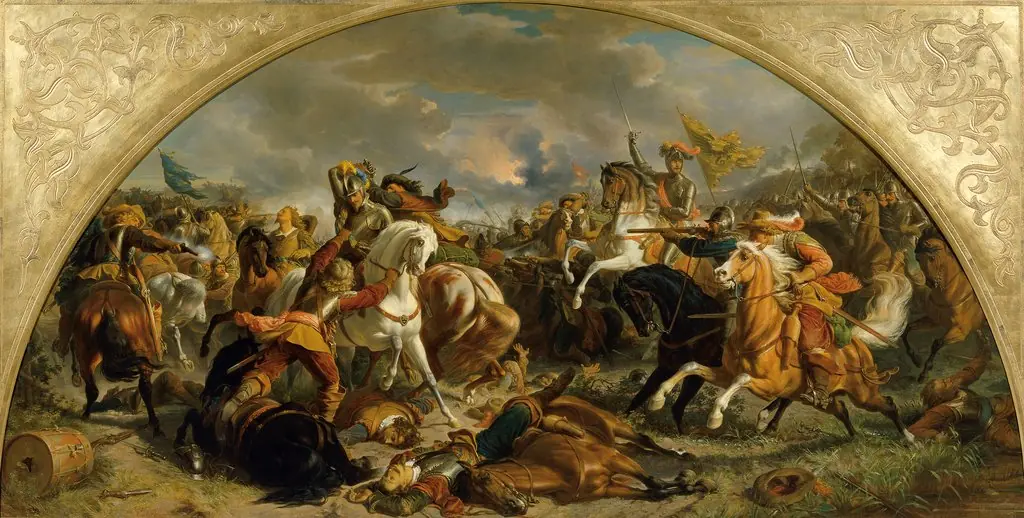 The storming of Schweidnitz in 1761
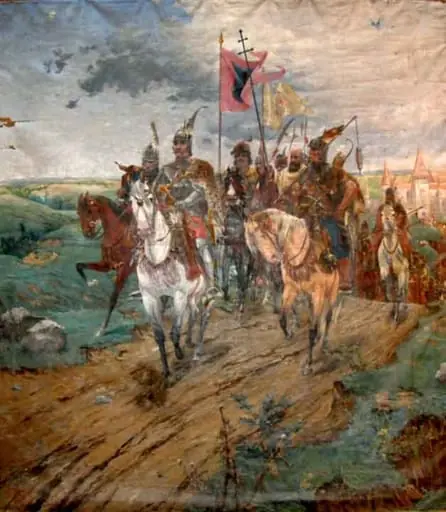 Iancu de Hunedoara
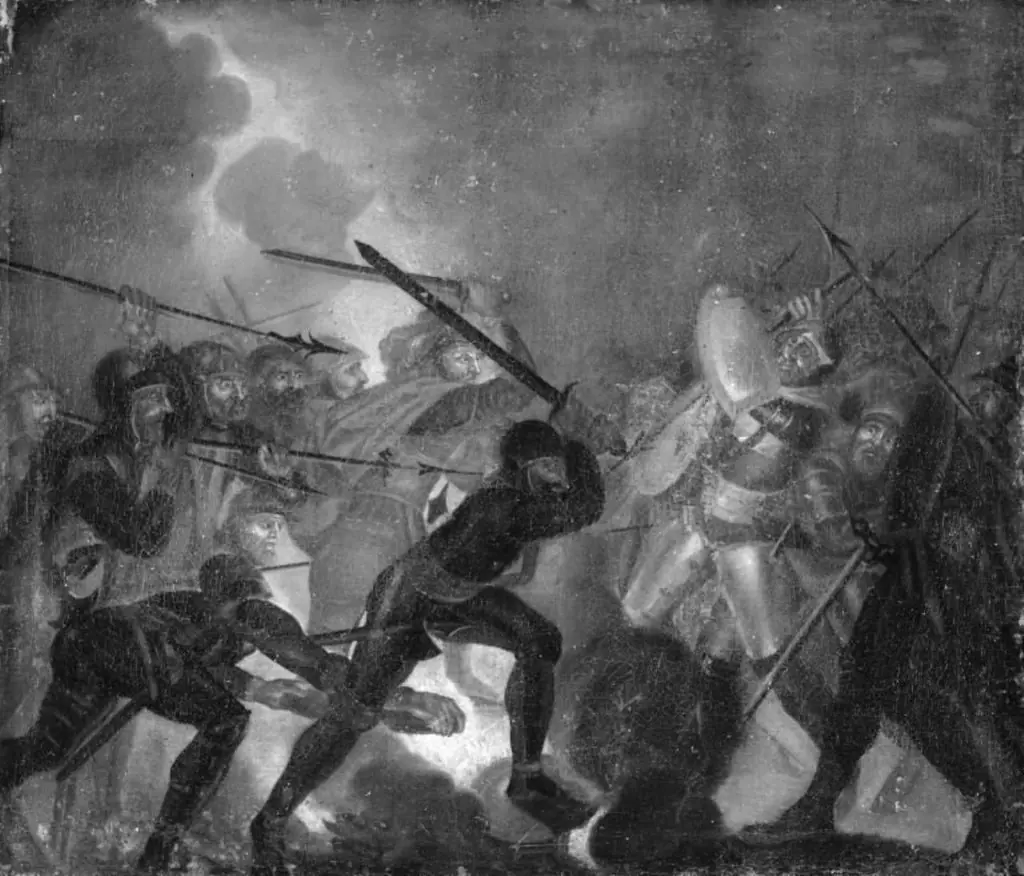 Rolf Krake og hans mænd springer over ilden
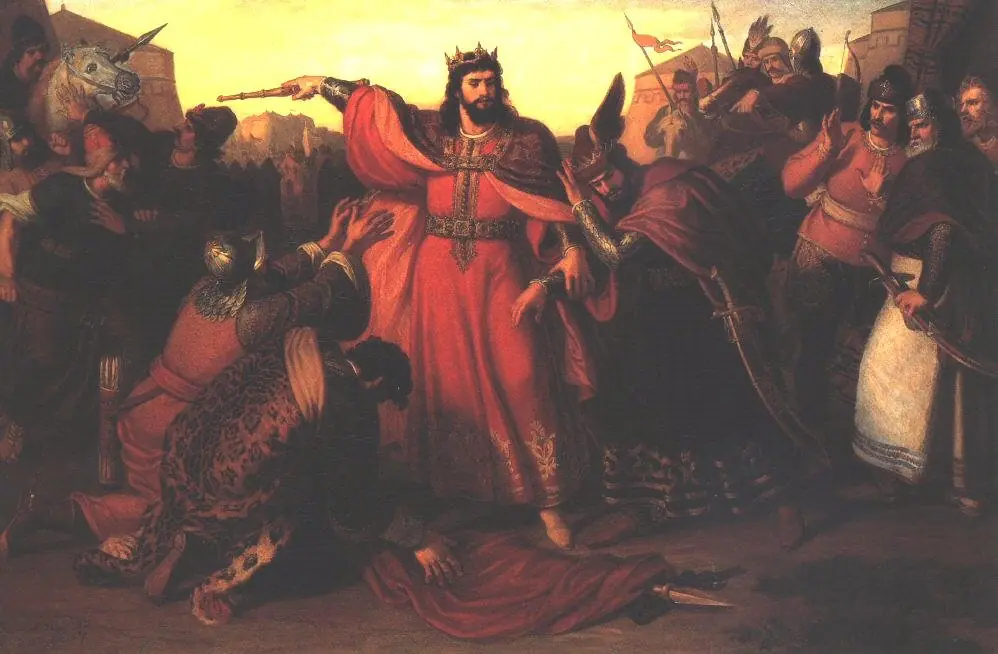 King Imre Captures his Factional Brother, Endre
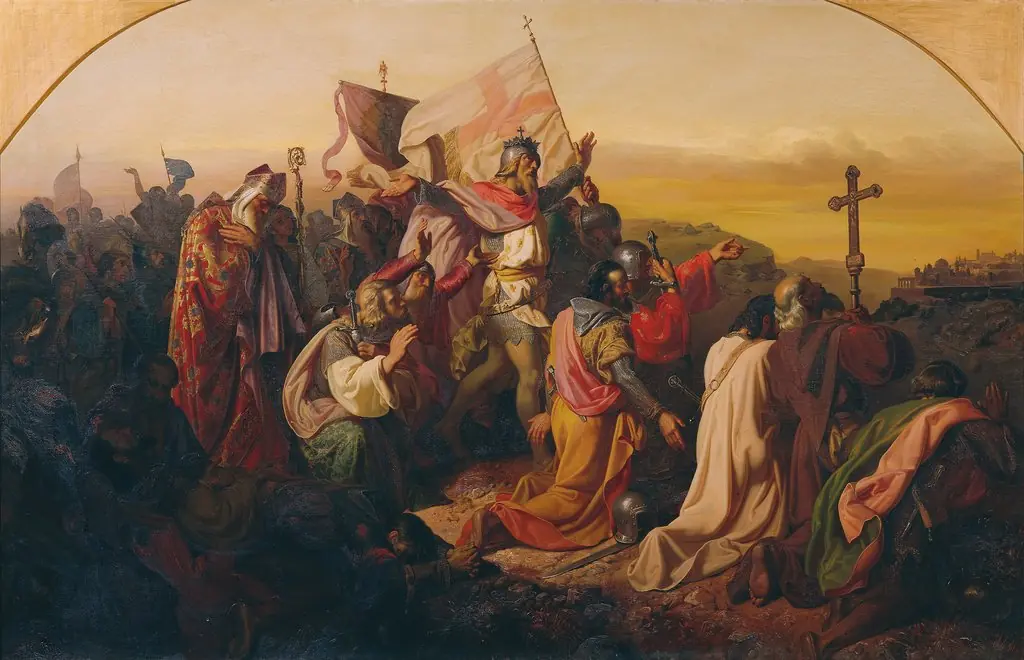 Gottfried von Bouillon und Kreuzfahrer
 Ulysses von Ithacia, II akt, 9. scene