Artwork
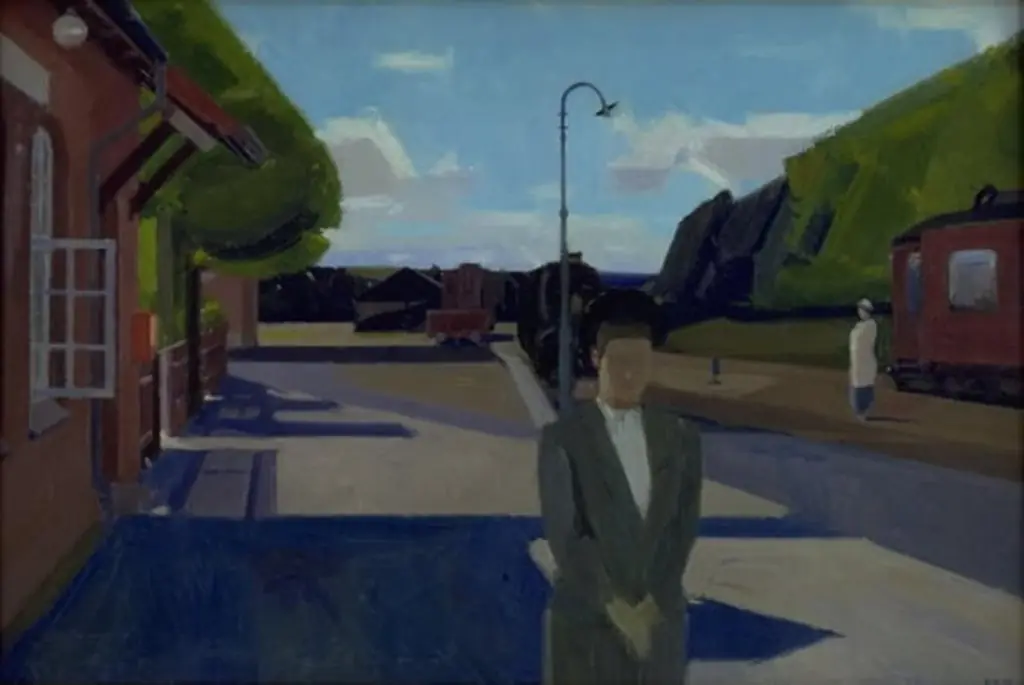
Girls Waiting for the Train
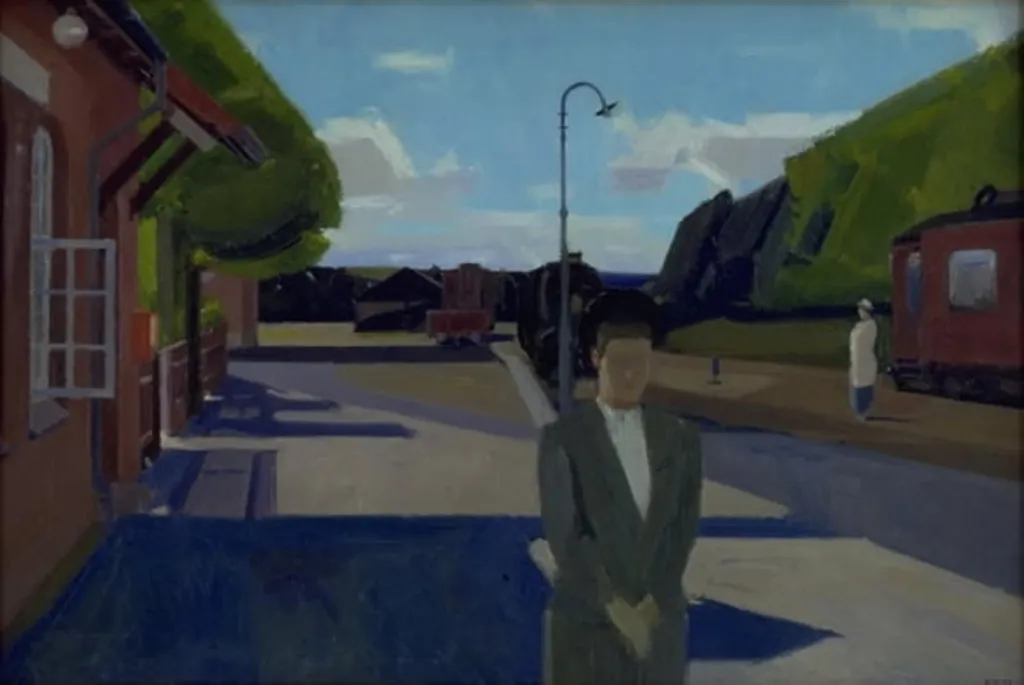
Girls Waiting for the Train is a photography by Unknown. It dates from 1939 and is held in the collection of the Statens Museum for Kunst. Created in 1939, this photograph captures a moment of quiet urban life.
About this work
Overview
Created in 1939, this photograph captures a moment of quiet urban life. The image is part of the collection at the Museum of Ethnography, where it is preserved as a record of everyday scenes from the period. Its composition and lighting suggest an intentional framing of ordinary moments, reflecting a documentary approach to photography during the late 1930s.
Subject & Meaning
Two figures occupy the frame: a man in a dark suit leaning against a lamppost, and a woman in a light dress walking away. Their contrasting postures and attire suggest differing rhythms of daily life—one paused, the other in motion. The scene lacks dramatic action, instead emphasizing stillness and transience, inviting reflection on the unnoticed rhythms of public space.
Technique & Style
The photograph employs natural light and a shallow depth of field to draw attention to the figures against a softly blurred background. Wet pavement enhances reflections, adding texture and depth. The bright sky and scattered clouds provide a serene backdrop, while the muted tones of the architecture ground the image in realism, avoiding theatricality or staged composition.
History & Provenance
The photograph was acquired by the Museum of Ethnography shortly after its creation, likely as part of a broader effort to document social life in the interwar period. Its preservation suggests recognition of its value as a cultural record rather than an artistic statement. No known exhibition history predates its inclusion in the museum’s permanent collection.
Context
Made in 1939, the image reflects a time when photography increasingly turned to everyday subjects as cultural artifacts. Urban scenes like this one were often captured to preserve the texture of ordinary life amid rising political tensions in Europe. The absence of overt signs of conflict underscores the quiet normalcy the photographer chose to document.
Legacy
The photograph remains a modest but enduring example of observational photography from the late 1930s. It contributes to scholarly understanding of how ordinary public spaces were inhabited and perceived during a period of social change. Its continued presence in the Museum of Ethnography underscores its role as a historical witness rather than a celebrated work.
Artist & collection

 Domestic Scene
 Giacomo and Cardinal Marco, investing Andrea, Abbot of San Zeno, with his Benefice
 The Nymph of Fontainebleau
 Portrait of a Woman
 Madonna and Child with Saints in the Enclosed Garden
 Venus and Minerva
 Family Group of Four on Sofa
 Wall painting from Room H of the Villa of P. Fannius Synistor at Boscoreale