Artwork
Det indre af Trinitatis Kirke
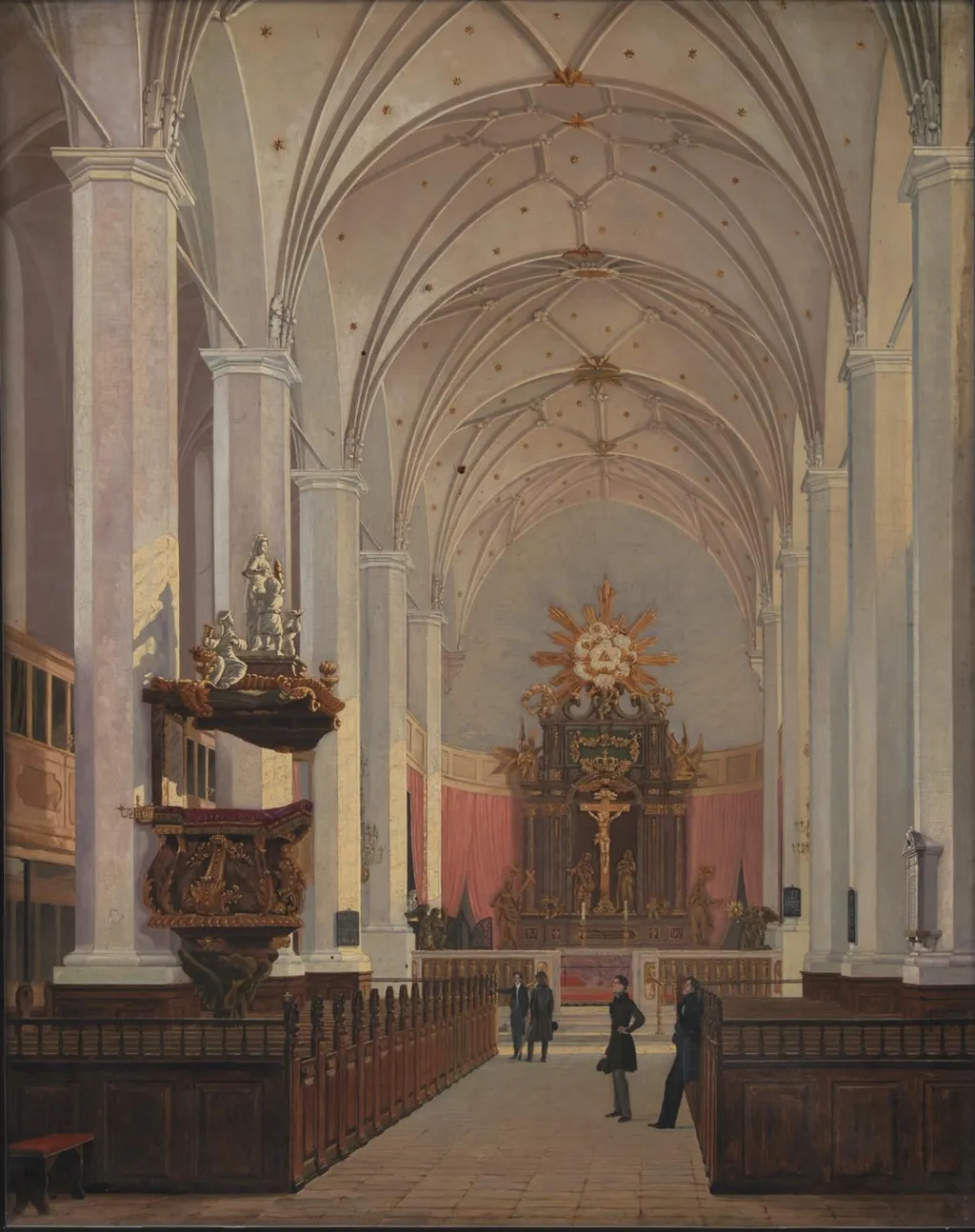
Det indre af Trinitatis Kirke is a photography by the Romanticist artist Unknown. It dates from 1838 and is held in the collection of the Statens Museum for Kunst. Painted in 1838, this interior view captures the Trinitatis Church in Copenhagen.
About this work
Overview
Painted in 1838, this interior view captures the Trinitatis Church in Copenhagen. The work is attributed to an artist associated with the Danish Romantic tradition, though the creator’s full identity remains unverified in public records. It is held in the collection of the Museum of Ethnography, where it serves as a record of ecclesiastical architecture rather than a religious artifact.
Subject & Meaning
The scene depicts a quiet, empty church interior, with a few figures standing near the nave. The emphasis lies not in narrative or worship, but in the solemnity of space and structure. The stillness suggests contemplation, aligning with Romantic ideals that valued introspection and the sublime in architectural form over human activity.
Technique & Style
Rendered with precise linear perspective and muted tonalities, the painting emphasizes verticality through tall columns and ribbed vaults. Light filters softly from unseen windows, illuminating carved altar details and wall hangings without dramatic contrast. The brushwork is restrained, favoring clarity and atmospheric harmony over expressive brushstrokes.
History & Provenance
The painting entered the Museum of Ethnography’s collection in the 19th century, likely acquired as part of a broader effort to document Nordic religious architecture. Its classification within an ethnographic institution reflects contemporary interest in cultural spaces as expressions of societal values, rather than purely aesthetic objects.
Context
Created during a period when Danish artists turned to national heritage and medieval forms, the work reflects Romanticism’s fascination with Gothic architecture as a symbol of spiritual continuity. While not overtly religious, the painting participates in a cultural movement that sought to revive and preserve historical identity through visual documentation.
Legacy
The painting remains a modest but valuable record of Trinitatis Church’s 19th-century appearance. It contributes to scholarly understanding of how Danish artists engaged with sacred spaces during a time of architectural change. Its placement in an ethnographic museum underscores its role as cultural documentation rather than fine art in the traditional sense.
Artist & collection

 Domestic Scene
 Giacomo and Cardinal Marco, investing Andrea, Abbot of San Zeno, with his Benefice
 The Nymph of Fontainebleau
 Portrait of a Woman
 Madonna and Child with Saints in the Enclosed Garden
 Venus and Minerva
 Family Group of Four on Sofa
 Wall painting from Room H of the Villa of P. Fannius Synistor at Boscoreale
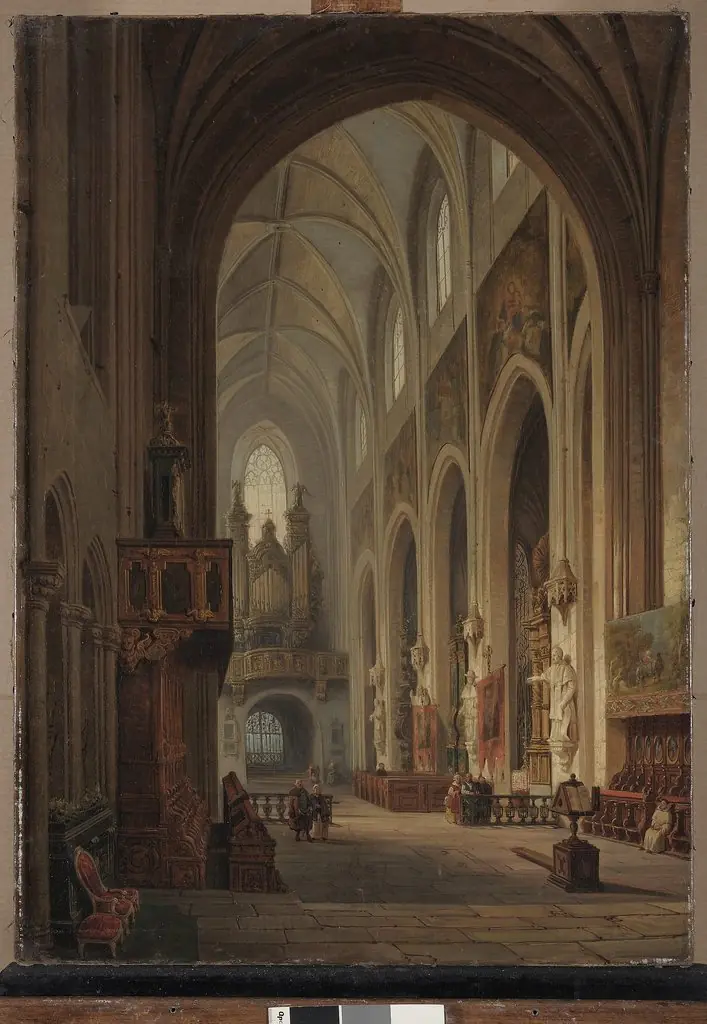 Interior of the Dominican Church in Kraków
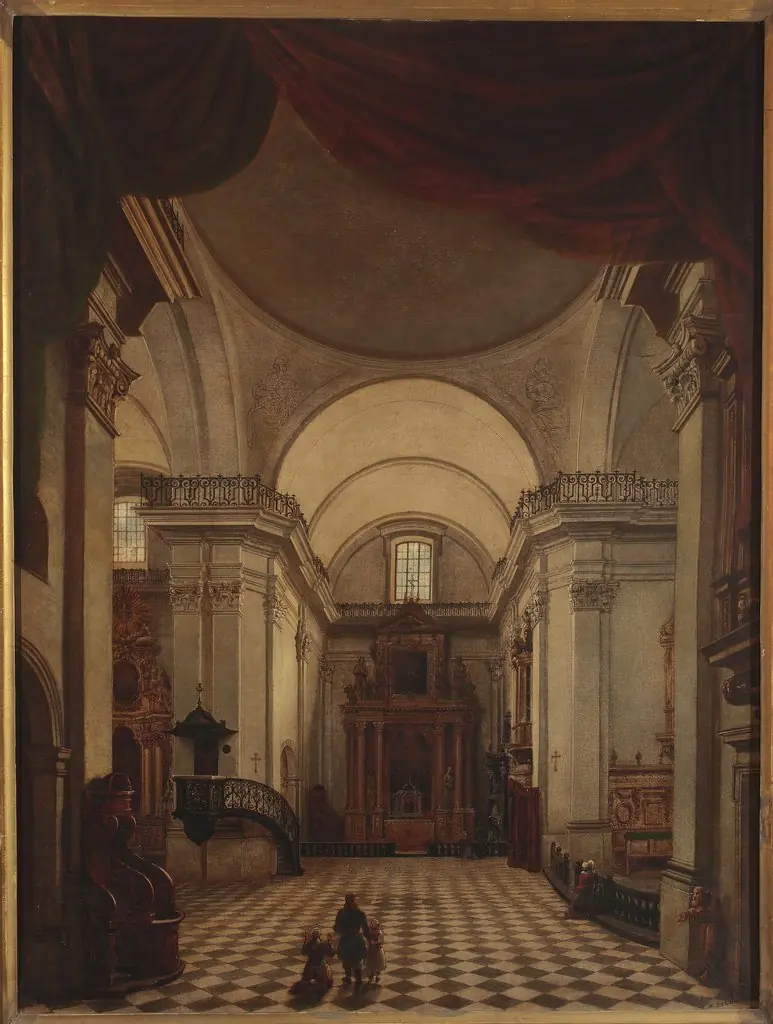 Interior of the Holy Cross Church in Warsaw
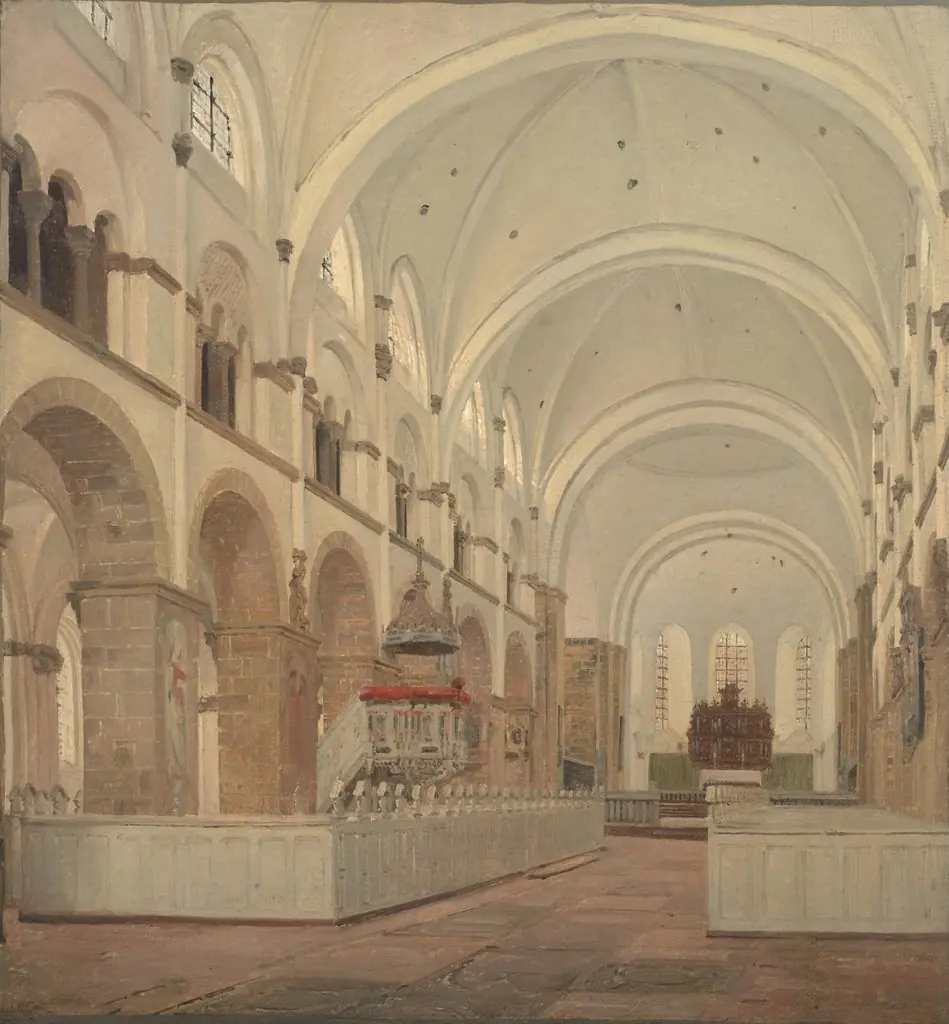 The Interior of Ribe Cathedral
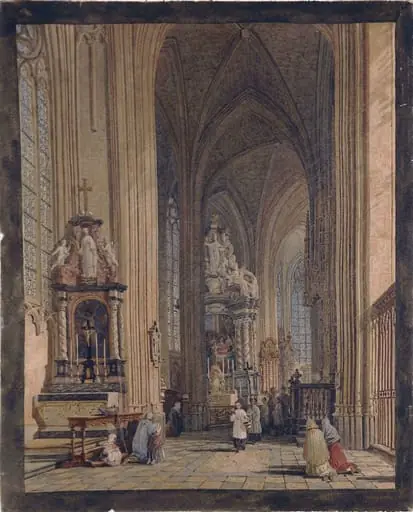 North Aisle of the Choir of the Collegiate Church of St. Peter at Louvain
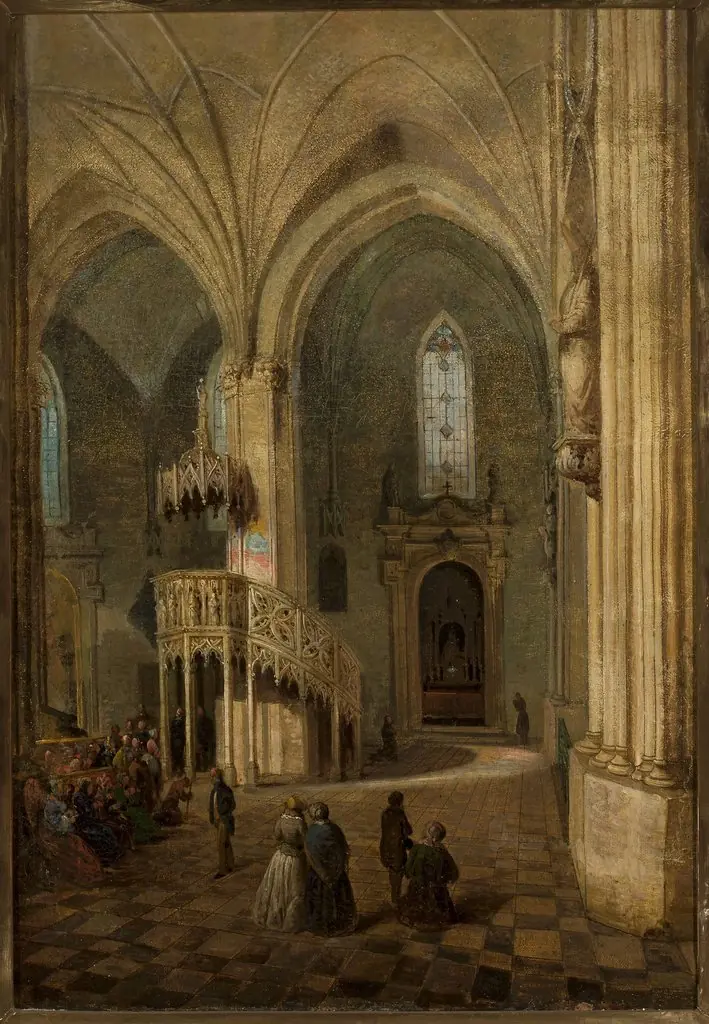 Interior of St. John’s Cathedral in Warsaw
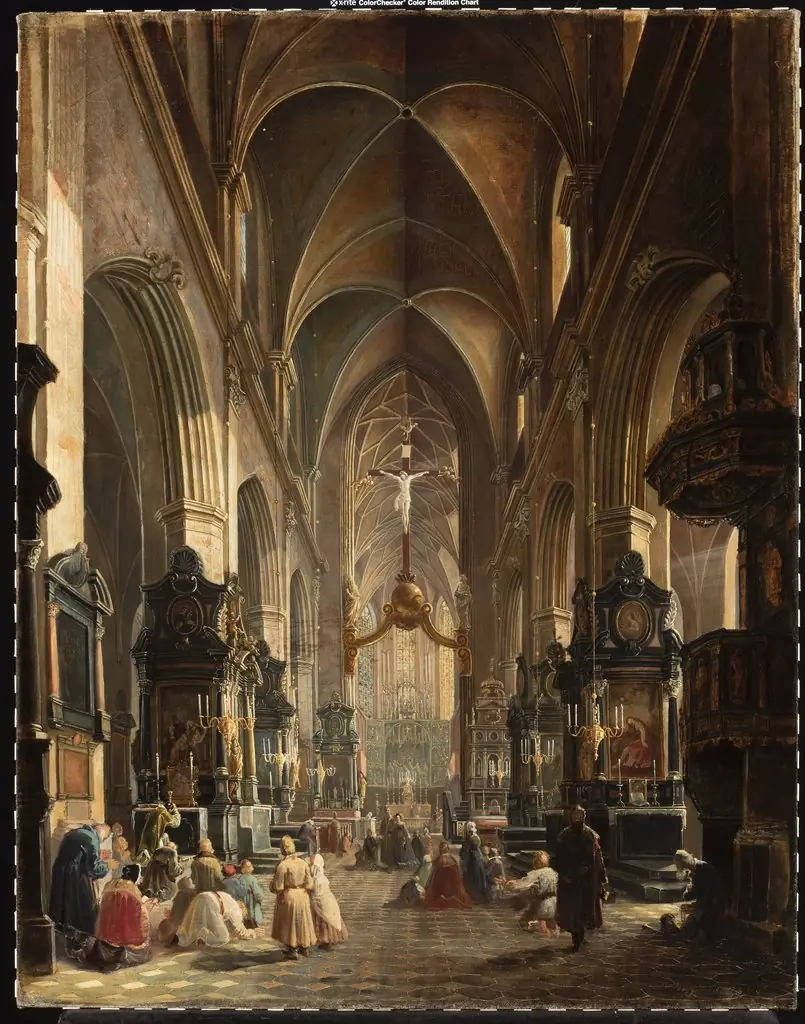 Interior of the Church of Virgin Mary in Kraków
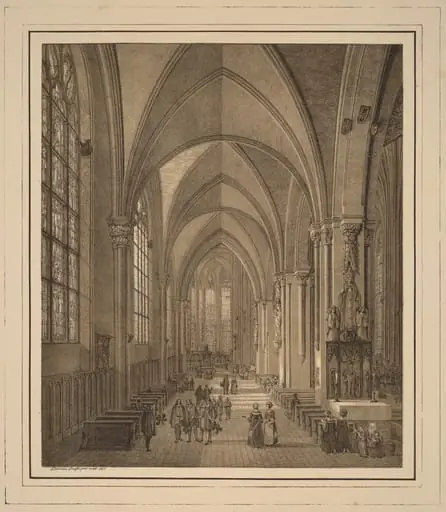 View of the Interior of the Church of St Sebald in Nuremberg
 Das Innere der Piaristenkirche in Wien
 The Slotskirken of Christiansborg, Copenhagen
 The Interior of Ribe Cathedral