Artwork
View of the Interior of the Church of St Sebald in Nuremberg
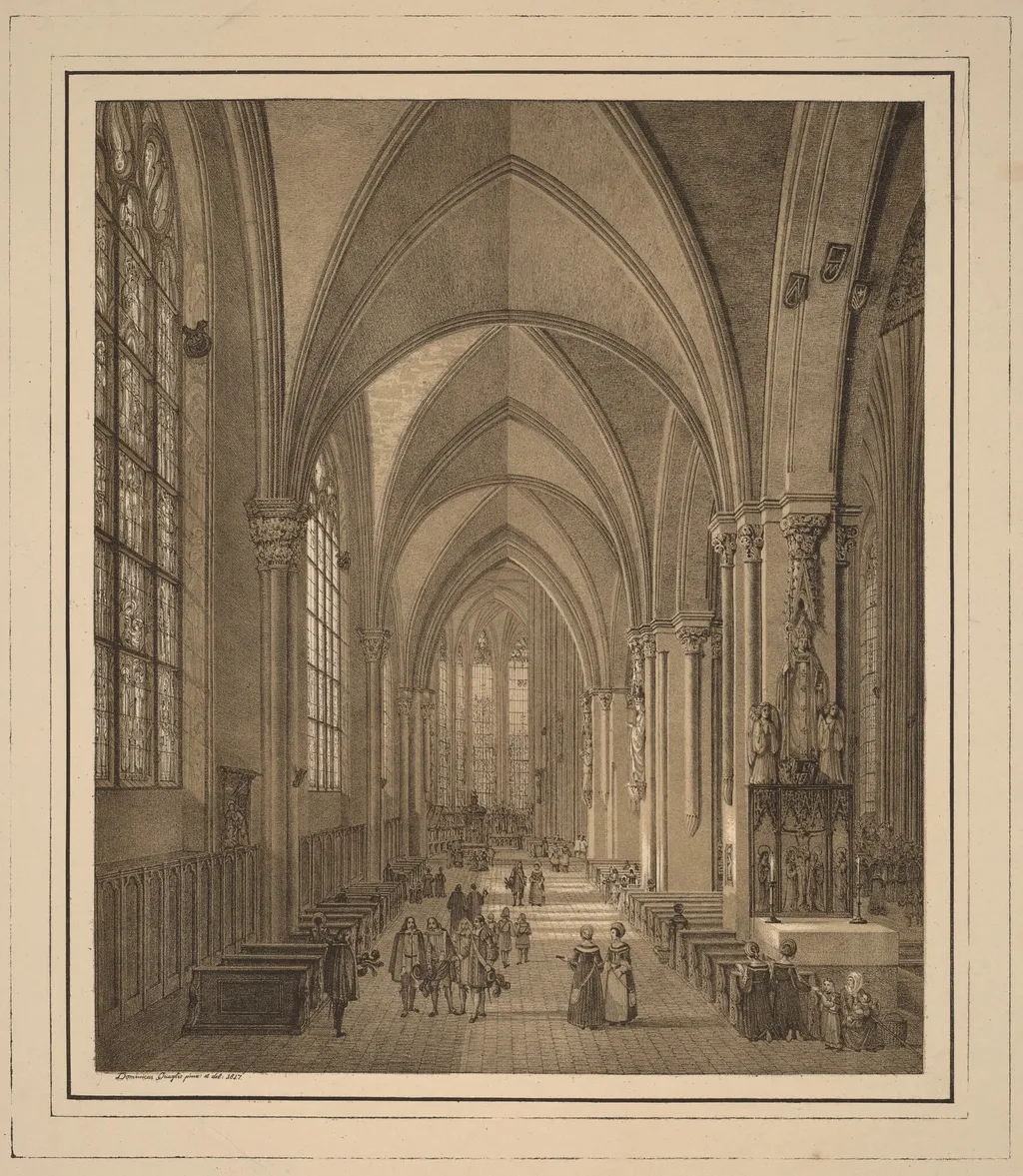
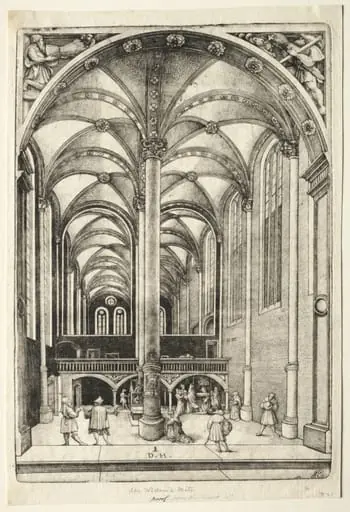
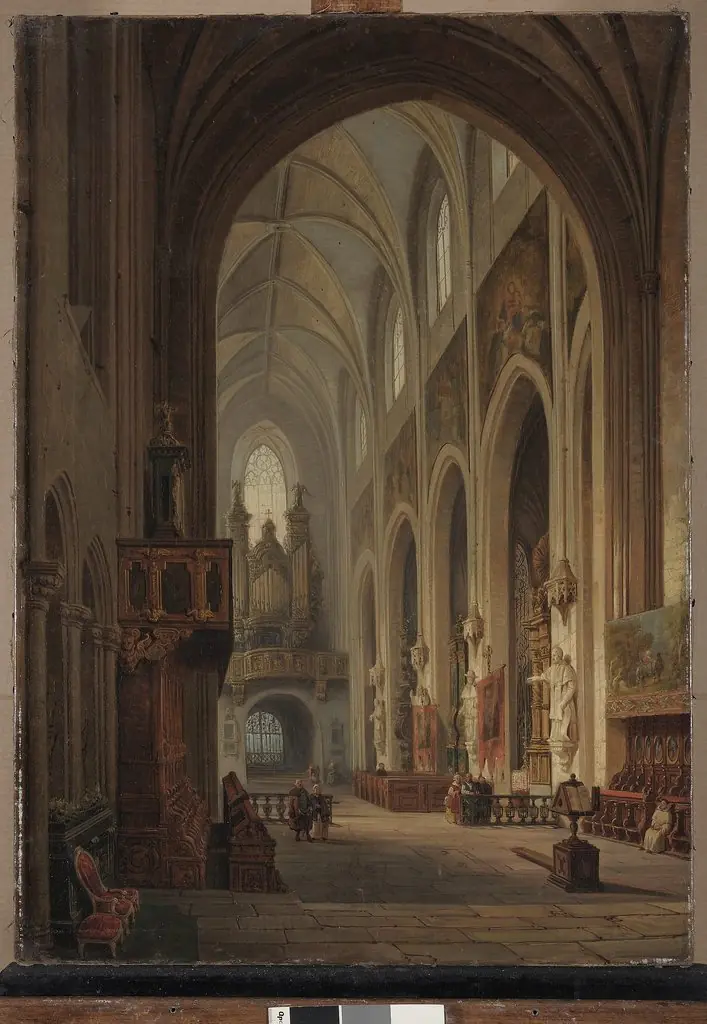
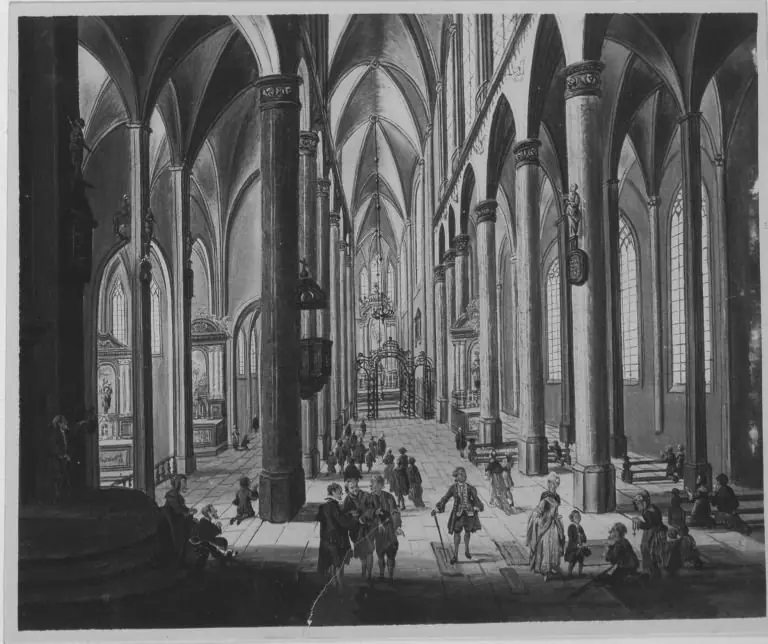
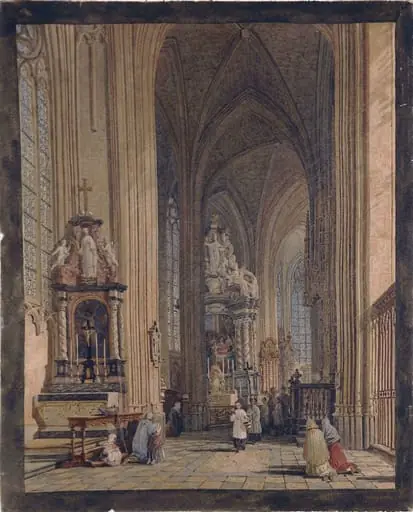
View of the Interior of the Church of St Sebald in Nuremberg is an ink print by the Romanticist artist Domenico Quaglio. It dates from 1817 and is held in the collection of the National Gallery of Art.
About this work
This print shows the inside of St. Sebald church in Nuremberg. Tall, dark columns rise to a painted ceiling. Light hits the stone floor in sharp patches.
Domenico Quaglio made this in 1817 using a new printing trick called lithography. The image has no people, just empty space and shadows.
Look up lithography to see how this early 1800s trick worked.
Overview
Domenico Quaglio’s 1817 lithograph presents an interior view of the Church of St. Sebald in Nuremberg. Executed on wove cream paper in two tones, the print captures the architectural space without any figures, emphasizing the structural elements and the play of light on stone.
Subject & Meaning
The composition focuses on the nave’s soaring columns and the richly painted ceiling, highlighting the verticality and solemnity of the Gothic‑Renaissance interior. By omitting human presence, the image draws attention to the building’s form and the subtle contrast of illuminated patches on the floor.
Technique & Style
Quaglio employed the relatively new lithographic process, which allowed for fine tonal variation and crisp line work. The two‑tone palette—dark ink against a light cream ground—enhances the chiaroscuro effect, rendering the stone surfaces and shadows with a clear, documentary quality.
History & Provenance
Created in 1817, the print reflects early 19th‑century interest in architectural documentation. It was produced shortly after lithography’s introduction to German printmaking, marking Quaglio’s engagement with contemporary technical innovations.
Context
St. Sebald’s church, a prominent Nuremberg landmark, was a frequent subject for artists documenting the city’s heritage. Quaglio’s work aligns with a broader European trend of recording historic interiors, contributing to the visual record of architectural heritage during a period of growing historic preservation.
Artist & collection