Artwork
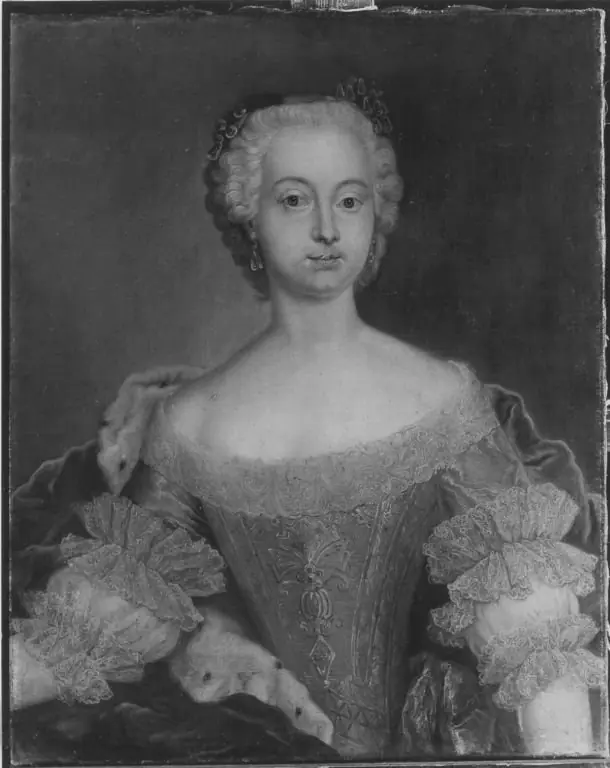
Portræt af fru Adelgunde Elisabeth Amalia von Scholten
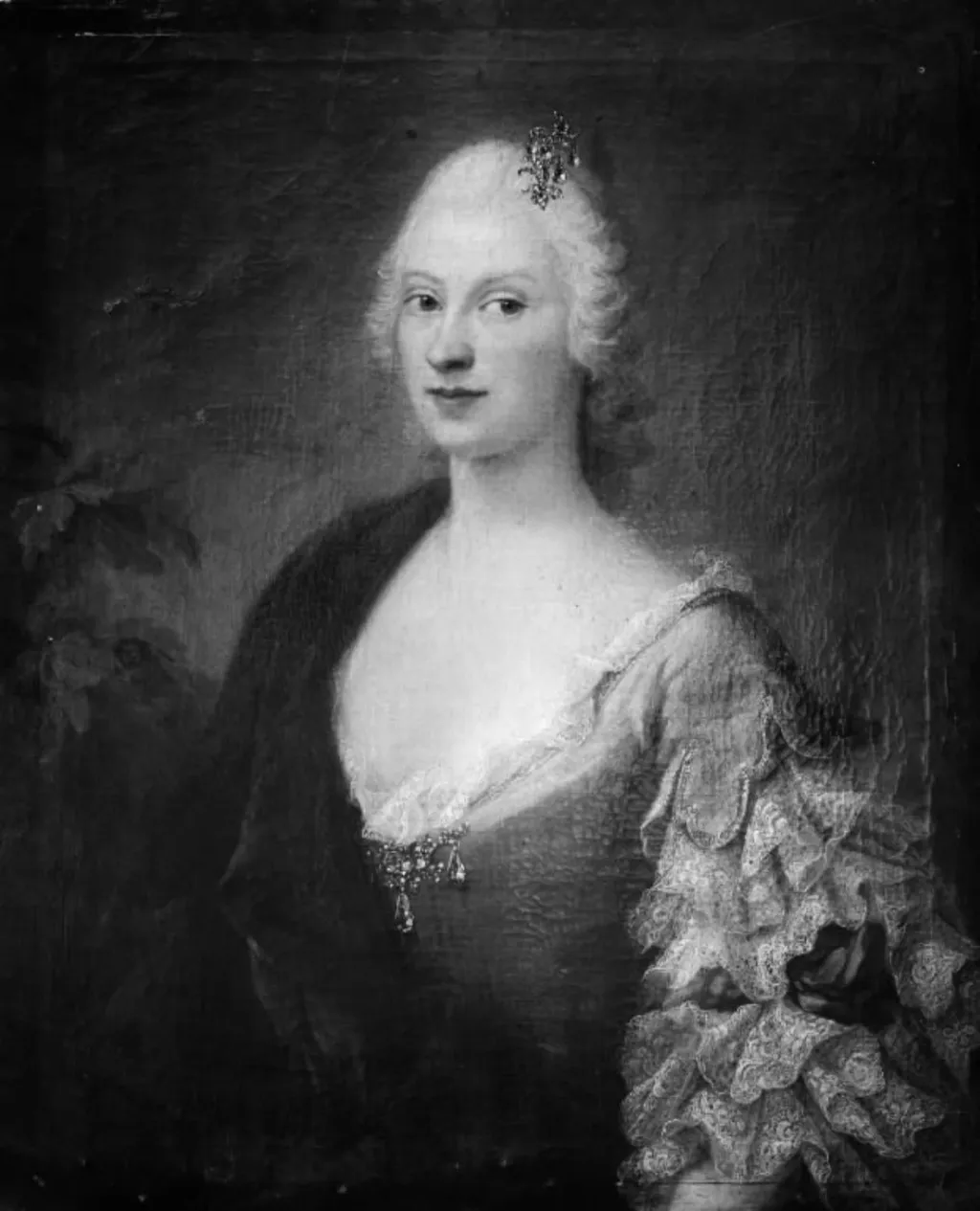
Portræt af fru Adelgunde Elisabeth Amalia von Scholten is a photography by Unknown. It dates from 1759 and is held in the collection of the Statens Museum for Kunst. The work is a mid‑18th‑century portrait of Adelgunde Elisabeth Amalia von Scholten, attributed to the artist catalogued as 774_person.
About this work
Overview
The work is a mid‑18th‑century portrait of Adelgunde Elisabeth Amalia von Scholten, attributed to the artist catalogued as 774_person. Executed around 1759, the image is part of the collection of the Museum of Ethnography. Rendered in monochrome, it presents the sitter in a formal pose, emphasizing her status through attire and compositional choices.
Subject & Meaning
Adelgunde von Scholten is depicted wearing an elaborate gown with ruffled cuffs, a high neckline, and a decorative headpiece resembling a crown. Her hair is neatly pulled back, and her expression is composed and serene, suggesting the conventions of aristocratic portraiture that aimed to convey dignity, refinement, and social rank.
Technique & Style
The photograph employs soft, directional lighting that isolates the figure from a dark background, creating a subtle chiaroscuro effect. This handling of light accentuates the contours of the face and the texture of the fabric, while the monochrome medium highlights tonal contrasts rather than color detail.
History & Provenance
Created circa 1759, the portrait entered the Museum of Ethnography’s holdings at an unspecified date, becoming part of its documented collection of European portraiture. The attribution to 774_person reflects the museum’s cataloguing system, which assigns numeric identifiers to artists whose full identities remain uncertain.
Context
Portraits of this period often served as visual records of familial lineage and elite status within the Danish‑German aristocracy. The formal attire and ornamental headpiece align with contemporary fashion trends of the late Baroque to early Rococo transition, situating the work within broader European visual culture of the mid‑1700s.
Artist & collection

 Domestic Scene
 Giacomo and Cardinal Marco, investing Andrea, Abbot of San Zeno, with his Benefice
 The Nymph of Fontainebleau
 Portrait of a Woman
 Madonna and Child with Saints in the Enclosed Garden
 Venus and Minerva
 Family Group of Four on Sofa
 Wall painting from Room H of the Villa of P. Fannius Synistor at Boscoreale
 Dame i ungarsk dragt
 Bildnis der Maria Franziska Dorothea von Pfalz-Sulzbach, Herzogin von Zweibrücken-Birkenfeld (1724-1794)
 Elisabeth Christine von Braunschweig-Wolfenbüttel
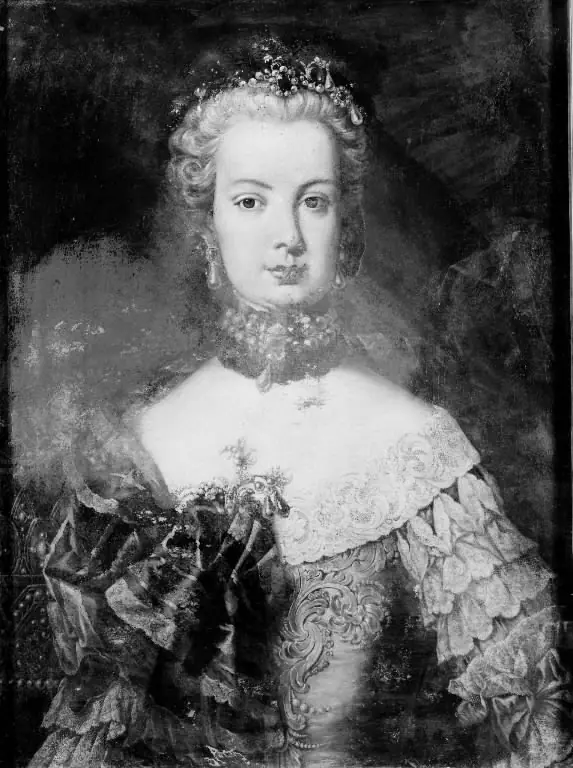 Elisabeth Christine von Braunschweig-Wolfenbüttel
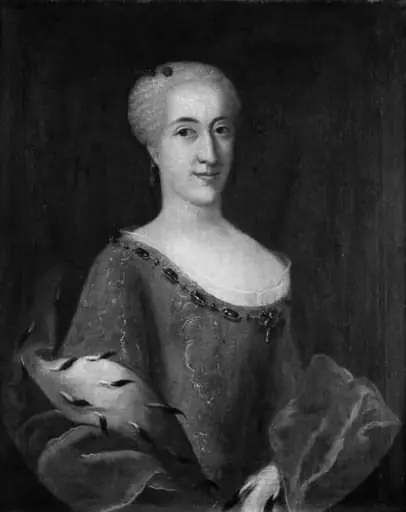 Portrait of a Lady
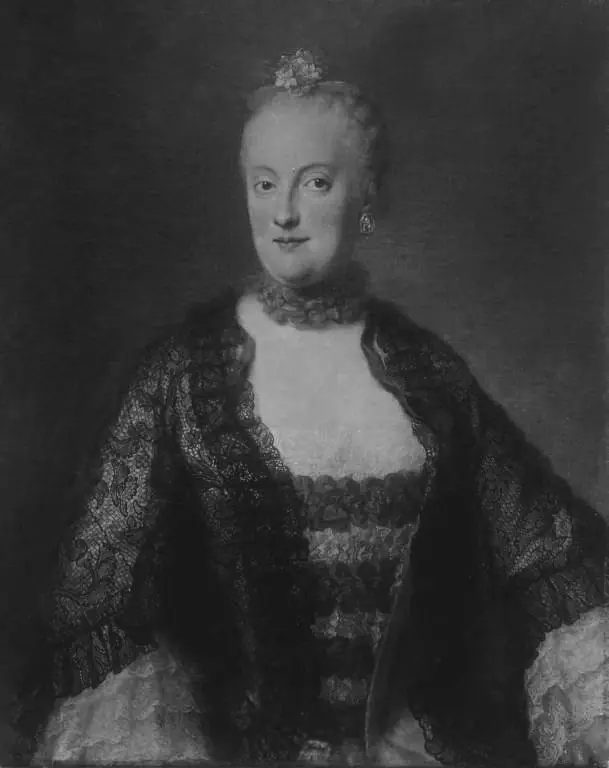 Maria Anna, Gemahlin des Kurfürsten Max III. Joseph von Bayern
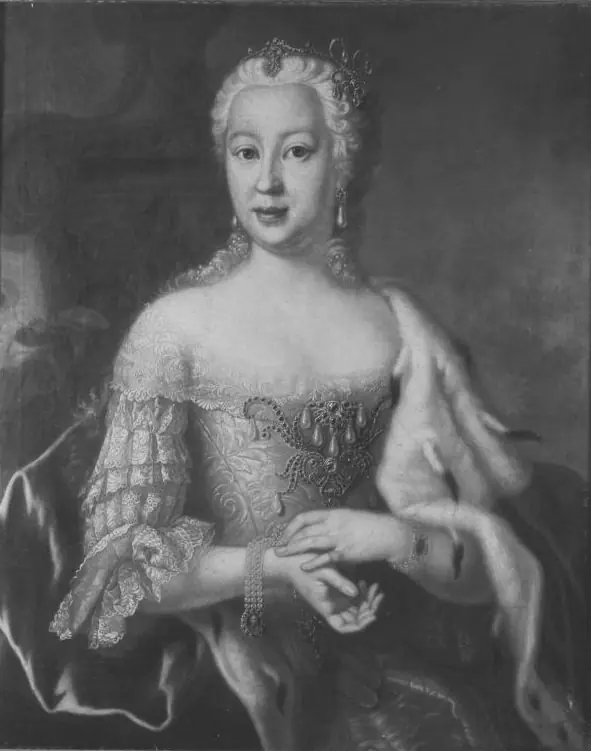 Maria Anna of Sulzbach (1722-1790)
 Bildnis einer Fürstin
 Portræt af brygger M. Christensens hustru
 Dronning Sophie Magdalene