Artwork
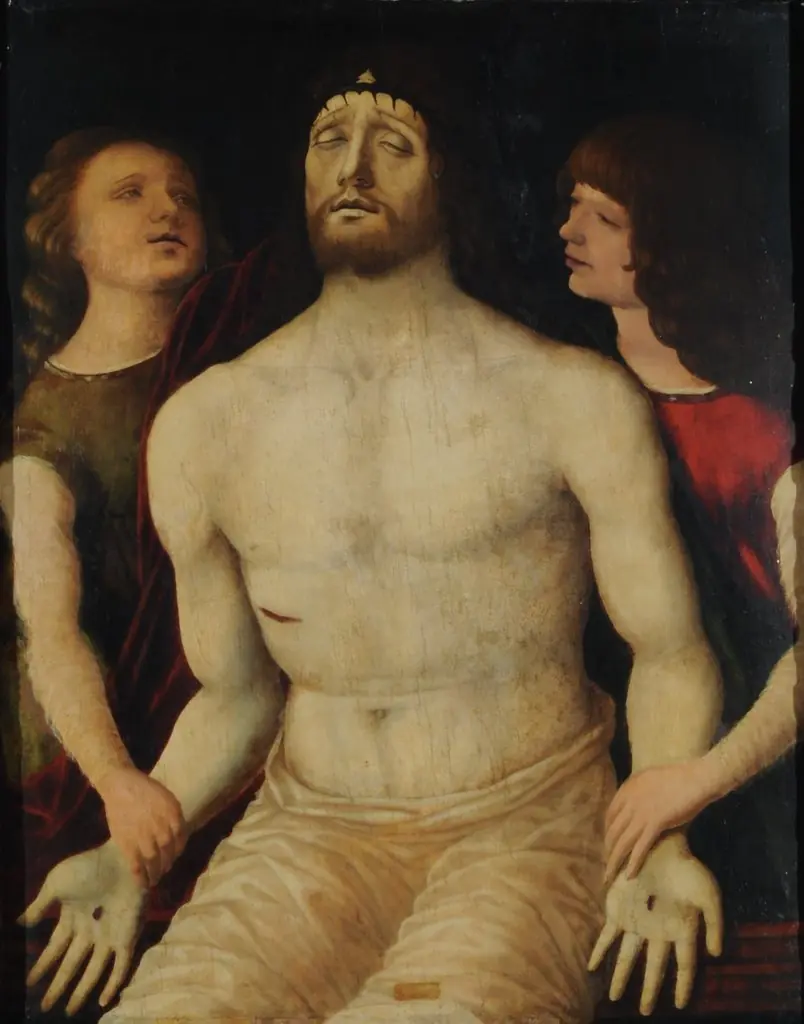
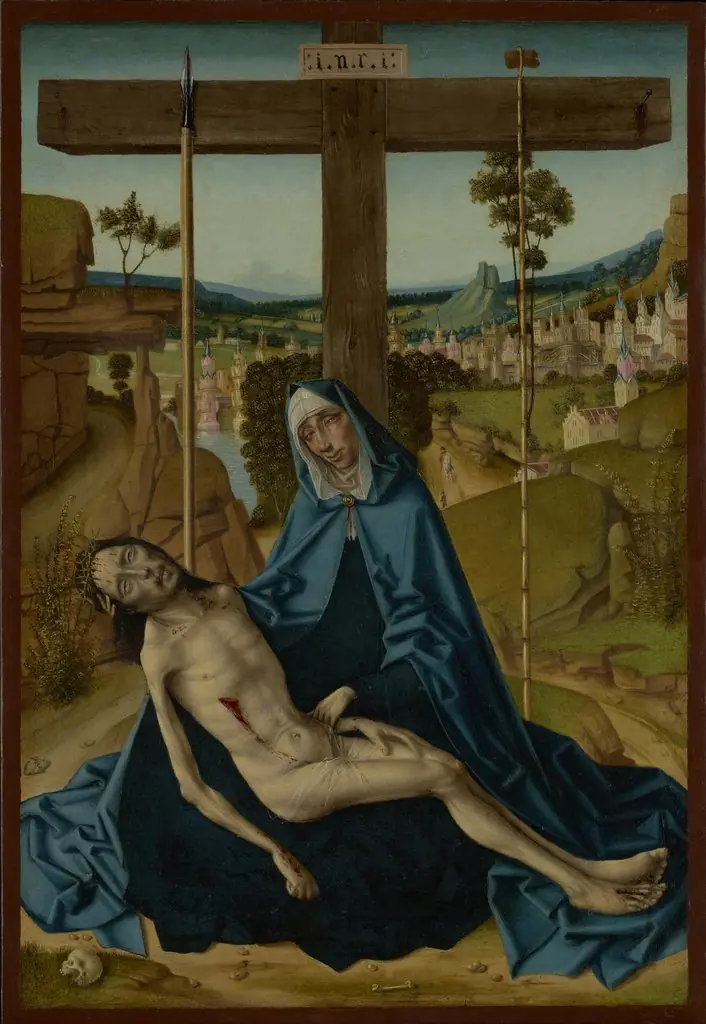
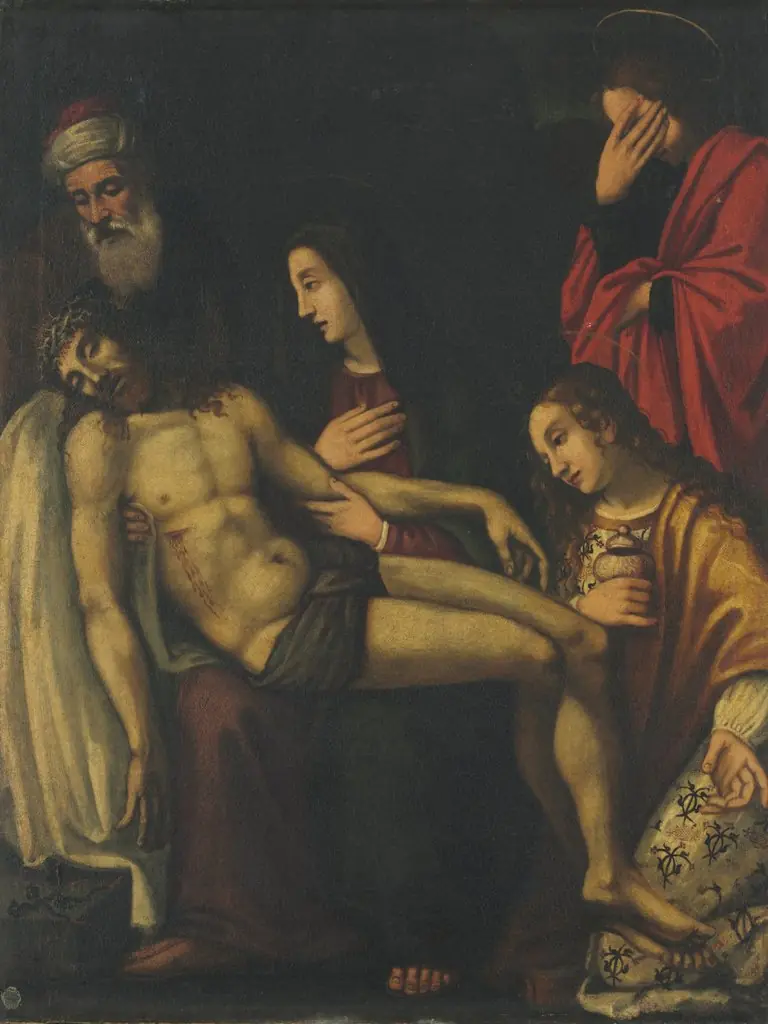
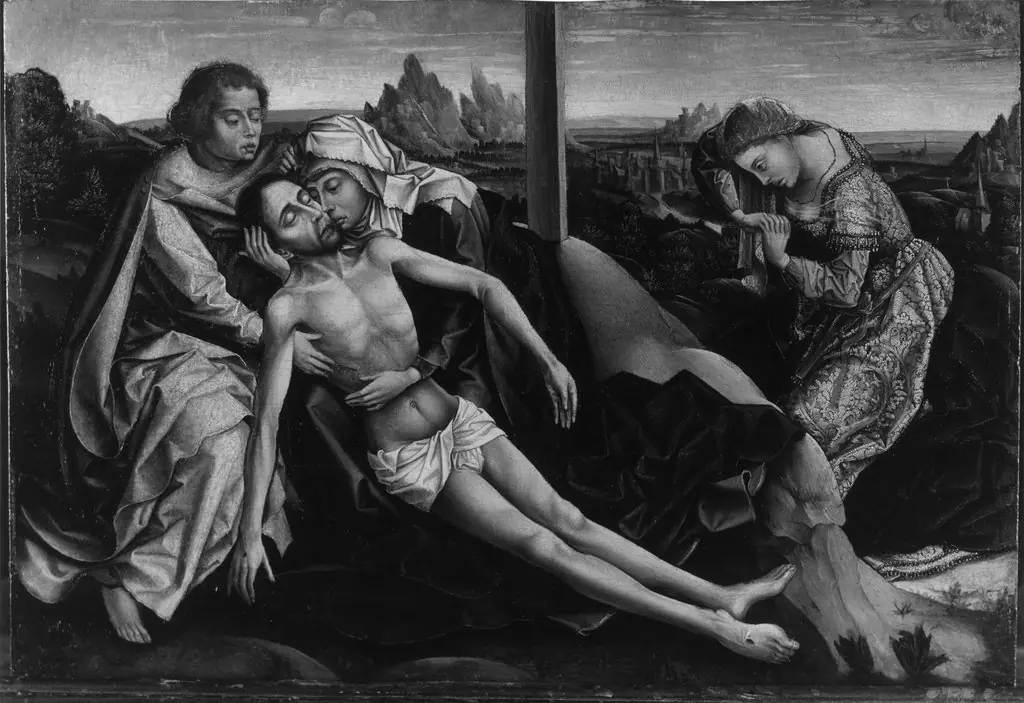
Pietà with Virgin and St. John
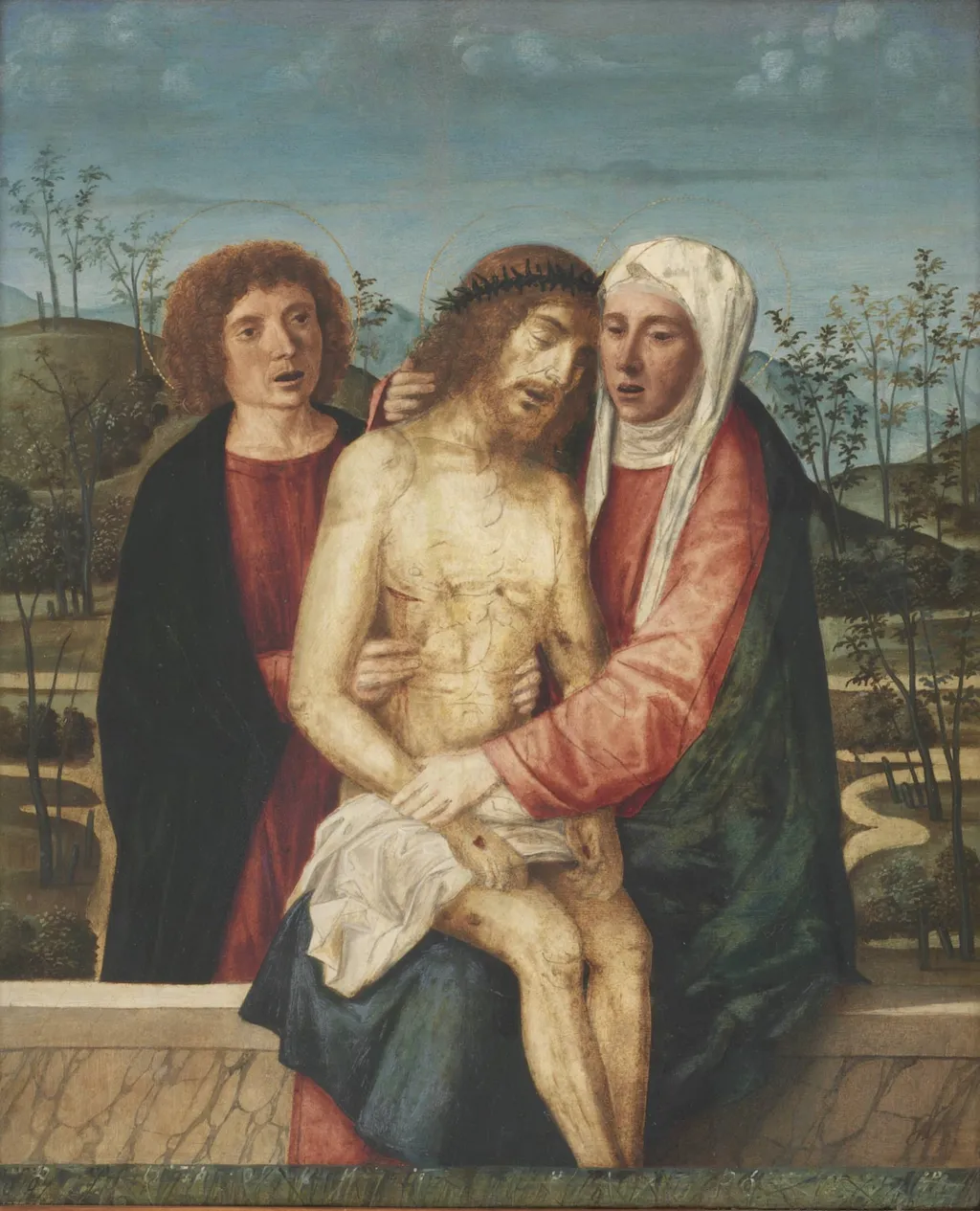
Pietà with Virgin and St. John is a photography by Unknown. It dates from 1450 and is held in the collection of the Statens Museum for Kunst. Created around 1450, the Pietà with Virgin and St.
About this work
Overview
Created around 1450, the Pietà with Virgin and St. John is an oil painting attributed to the anonymous artist catalogued as 883_person. The work is part of the collection of the Museum of Ethnography, where it is displayed as an example of late medieval devotional imagery.
Subject & Meaning
The composition centers on the lifeless figure of Christ, flanked by the grieving Virgin Mary and Saint John the Evangelist. Mary is shown in a red garment beneath a green mantle, while John is dressed in a black cloak over a red robe. Their solemn gestures convey a meditation on loss and redemption.
Technique & Style
Executed in the stylistic language of mid‑15th‑century Northern Europe, the painting employs a restrained palette and careful modeling to render flesh and fabric. The figures are set against a tranquil landscape of rolling hills and sparse trees, a backdrop that heightens the emotional intensity through contrast with the calm scenery.
History & Provenance
The work entered the Museum of Ethnography’s holdings in the early 20th century, though its earlier ownership remains undocumented. Its attribution to the anonymous 883_person reflects scholarly consensus based on stylistic parallels with contemporaneous Pietà representations.
Context
The image belongs to a broader tradition of lamentation scenes that proliferated in the late Gothic period, where artists explored the human response to Christ’s crucifixion. Its compositional choices echo those of known masters who treated the same theme, situating the piece within a network of devotional visual culture.
Artist & collection

 Domestic Scene
 Giacomo and Cardinal Marco, investing Andrea, Abbot of San Zeno, with his Benefice
 The Nymph of Fontainebleau
 Portrait of a Woman
 Madonna and Child with Saints in the Enclosed Garden
 Venus and Minerva
 Family Group of Four on Sofa
 Wall painting from Room H of the Villa of P. Fannius Synistor at Boscoreale