Artwork
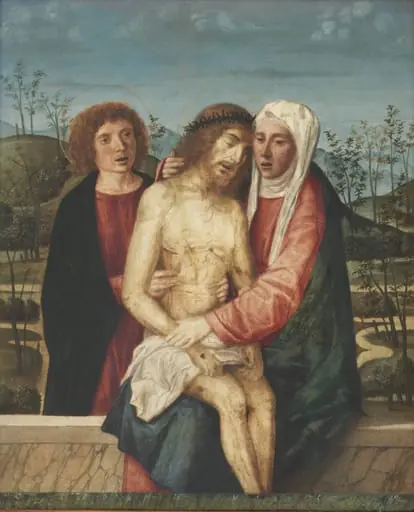
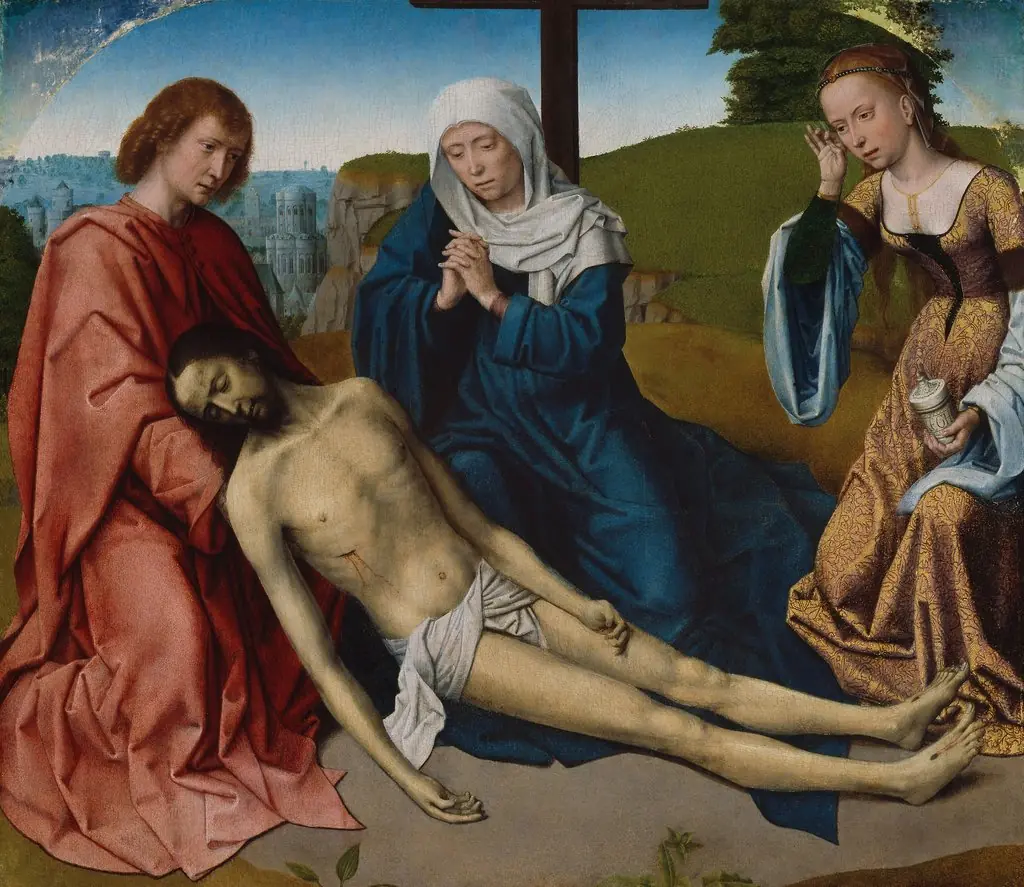
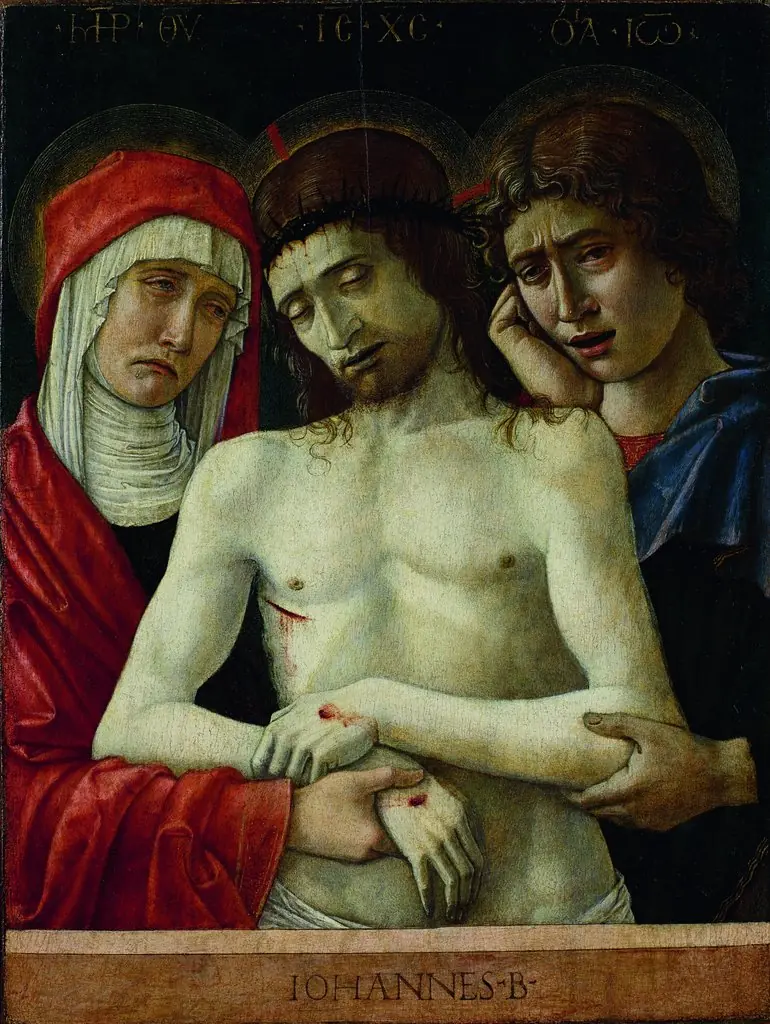
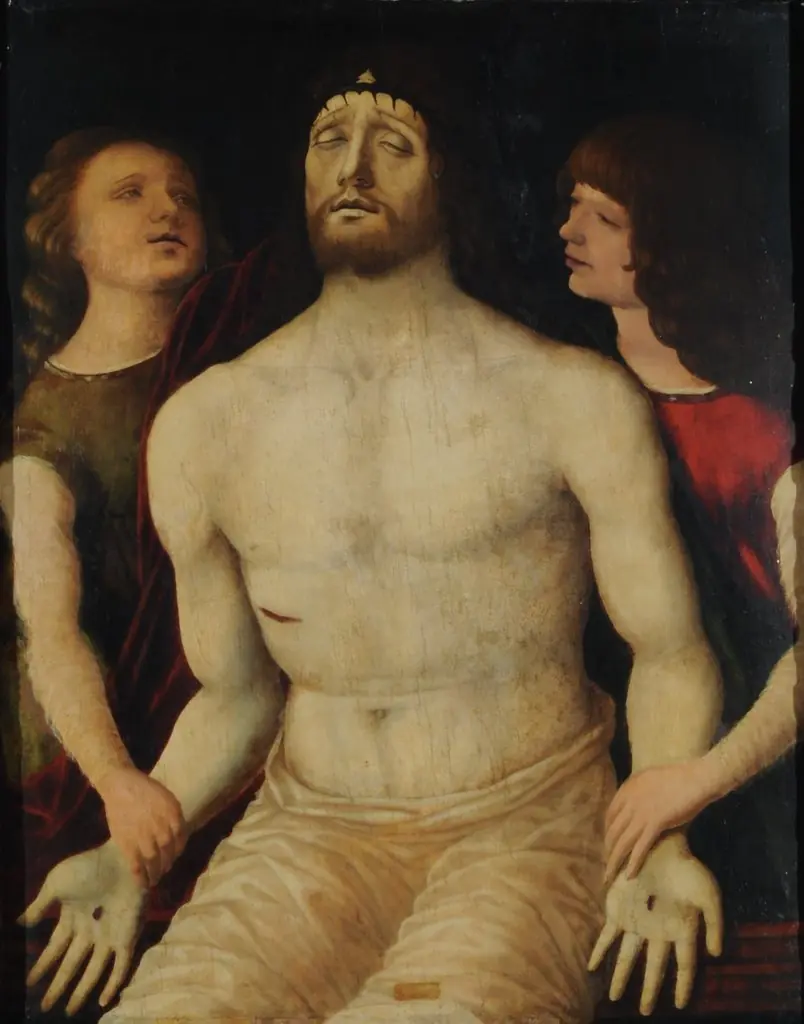
Man of Sorrows flanked by the Virgin and St John
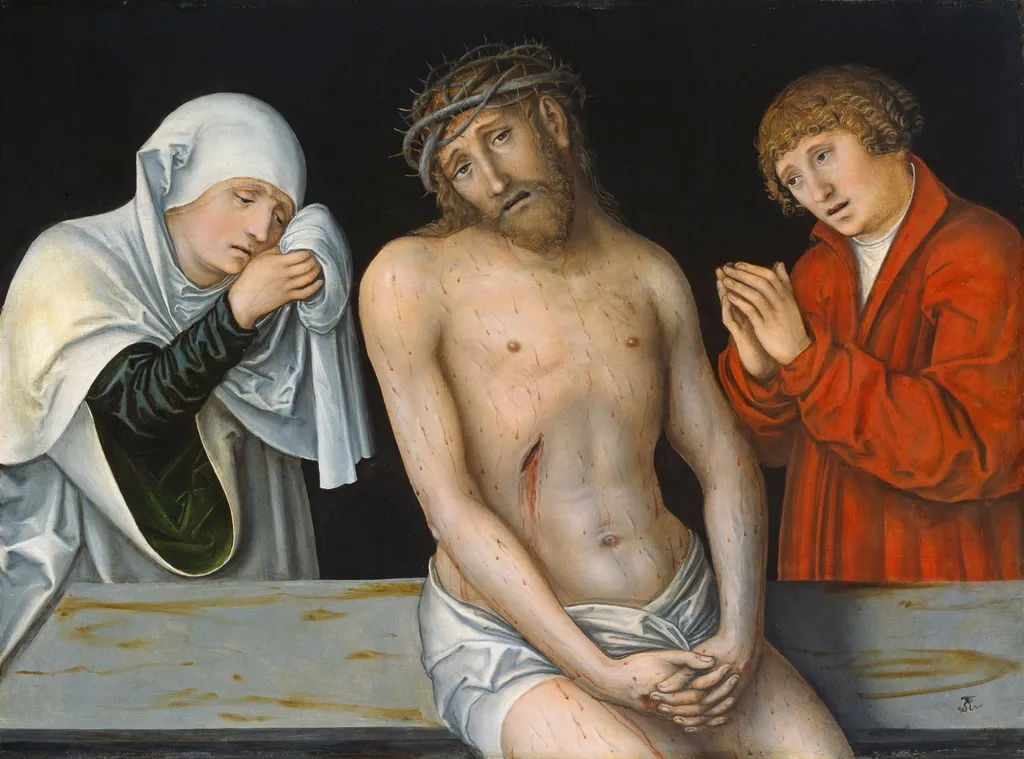
Man of Sorrows flanked by the Virgin and St John is an oil painting by the Early Baroque Italian artist Lucas Cranach the Elder. It dates from 1540 and is held in the collection of the Hamburger Kunsthalle.
About this work
Overview
The painting resides in the collection of the Hamburger Kunsthalle, where it continues to serve as a devotional image rooted in Lutheran piety.
Painted in 1540 by Lucas Cranach the Elder, this oil-on-panel work presents Christ as the Man of Sorrows, flanked by the Virgin Mary and Saint John the Evangelist. The composition is austere, set against a deep, unbroken background that isolates the figures in solemn contemplation. The painting resides in the collection of the Hamburger Kunsthalle, where it continues to serve as a devotional image rooted in Lutheran piety.
Subject & Meaning
The central figure is Christ, bare-chested and crowned with thorns, his body marked by wounds and his head bowed in suffering. To his left, the Virgin Mary covers her face with a cloth, expressing grief; to his right, Saint John gazes upon him in silent mourning. The scene reflects the Lutheran emphasis on Christ’s sacrifice as a personal act of redemption, inviting viewers to meditate on his physical and spiritual anguish.
Technique & Style
Cranach employs thin, precise layers of oil paint to render textures with quiet clarity—the sheen of sweat on Christ’s skin, the folds of Mary’s veil, the roughness of the wooden table. The palette is restrained, dominated by muted reds, grays, and earth tones, enhancing the somber mood. Forms are simplified, with minimal modeling, reflecting Cranach’s move toward a more linear, emotionally direct style in his later years.
History & Provenance
Commissioned during the height of the Reformation, the painting likely served a private devotional purpose, possibly for a Lutheran patron. It entered the Hamburger Kunsthalle’s collection in the 19th century, having passed through several German ecclesiastical and noble holdings. Its survival through periods of iconoclasm underscores its status as a carefully preserved object of personal faith rather than public worship.
Context
Created in Wittenberg, where Cranach worked closely with Martin Luther, the painting aligns with Protestant theological priorities: Christ’s suffering is central, the Virgin and John are witnesses, not intercessors. The absence of halos, angels, or celestial elements reflects the Reformation’s rejection of ornate Catholic imagery. This work exemplifies how religious art adapted to new doctrinal frameworks while retaining emotional intensity.
Legacy
The painting stands as a representative example of Cranach’s late religious output, influencing later Protestant iconography through its clarity and restraint. Unlike earlier Gothic or Catholic depictions, it avoids theatricality, focusing instead on intimate sorrow. Its enduring presence in a major public collection attests to its role in bridging devotional tradition and Reformation aesthetics.
Own this work as a print
Artist & collection
Artist
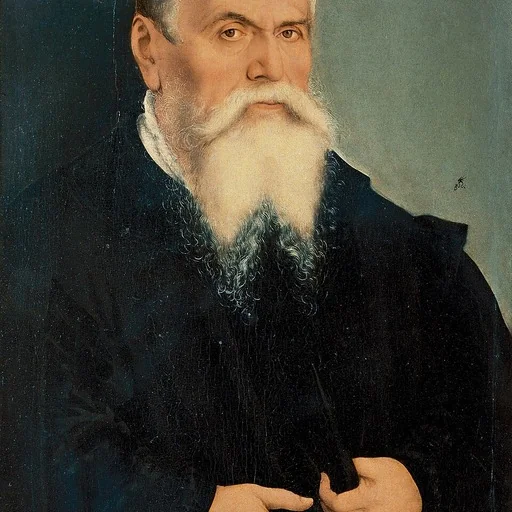
Lucas Cranach the Elder was a German Renaissance painter and printmaker in woodcut and engraving.