Artwork
Fire in a Dutch city
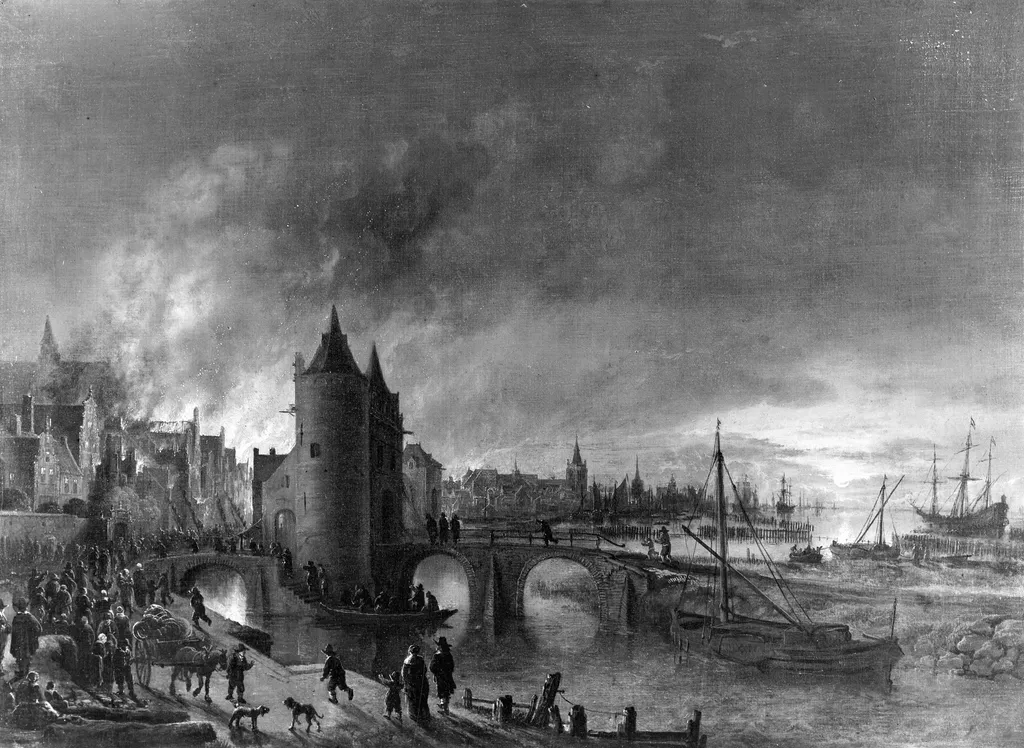
Fire in a Dutch city is a paint painting by the Dutch Golden Age artist Aert van der Neer. It dates from 1653 and is held in the collection of the Gemäldegalerie Berlin.
About this work
Overview
Though less celebrated than peers like Cuyp or Hobbema during his lifetime, his attention to atmospheric effects distinguished his small-scale compositions.
Painted in 1653 by Aert van der Neer, this oil on panel work captures a nighttime urban conflagration in the Netherlands. Van der Neer, known for nocturnal and winter scenes, focused on intimate, river-adjacent views. Though less celebrated than peers like Cuyp or Hobbema during his lifetime, his attention to atmospheric effects distinguished his small-scale compositions. The painting resides today in the Gemäldegalerie, Berlin.
Subject & Meaning
The scene depicts a sudden fire consuming buildings along a waterway, with figures fleeing, assisting, or watching in silence. The chaos is rendered without melodrama—human figures are small against the scale of destruction, suggesting vulnerability to disaster. The absence of identifiable landmarks implies a generalized urban peril, evoking the fragility of communal life rather than documenting a specific event.
Technique & Style
Van der Neer employs chiaroscuro to heighten tension: the fire’s orange glow casts sharp contrasts against deep shadows, illuminating smoke, water, and figures with eerie precision. Brushwork is controlled yet suggestive—buildings dissolve into smoky silhouettes, while reflections on the canal mirror the flames with subtle tremors. The palette is muted except for the fire’s warmth, reinforcing the painting’s somber tone.
History & Provenance
Created during the Dutch Golden Age, the painting entered the Gemäldegalerie Berlin’s collection in the 19th century. Its attribution to van der Neer has remained consistent, though it was not widely exhibited or reproduced in his lifetime. The work’s survival reflects its quiet resonance with later collectors drawn to its emotional restraint and technical subtlety.
Context
In 17th-century Dutch cities, fire was a persistent threat due to wooden construction and dense urban layouts. While van der Neer did not illustrate specific historical fires, his depiction aligns with contemporary anxieties about urban vulnerability. His focus on night scenes, uncommon among landscape painters, offered a contemplative lens on everyday dangers.
Legacy
Van der Neer’s approach influenced later artists interested in nocturnal atmosphere and quiet drama. Though his name faded after his death, modern scholarship has recognized his role in refining the emotional potential of landscape painting. 'Fire in a Dutch City' endures as a restrained meditation on disaster, valued for its compositional discipline and psychological depth.
Own this work as a print
Artist & collection
Artist
Aert van der Neer, or Aernout or Artus (c. 1603 – 9 November 1677), was a landscape painter of the Dutch Golden Age, who specialized in small night scenes lit only by moonlight and fires, and snowy winter landscapes,…

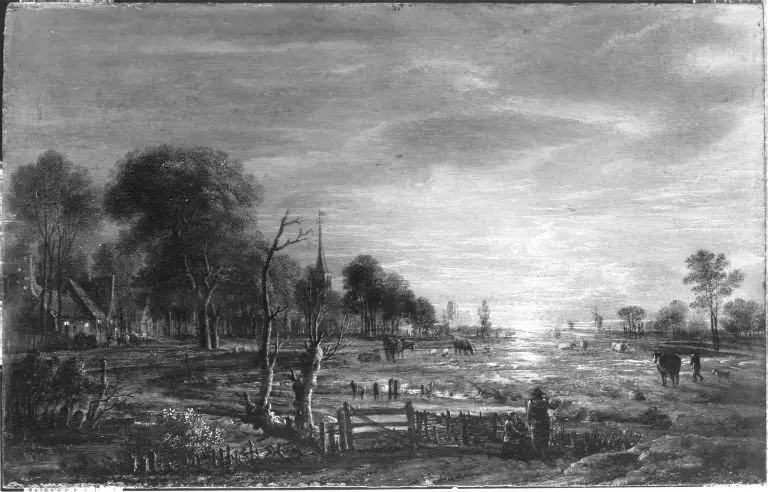
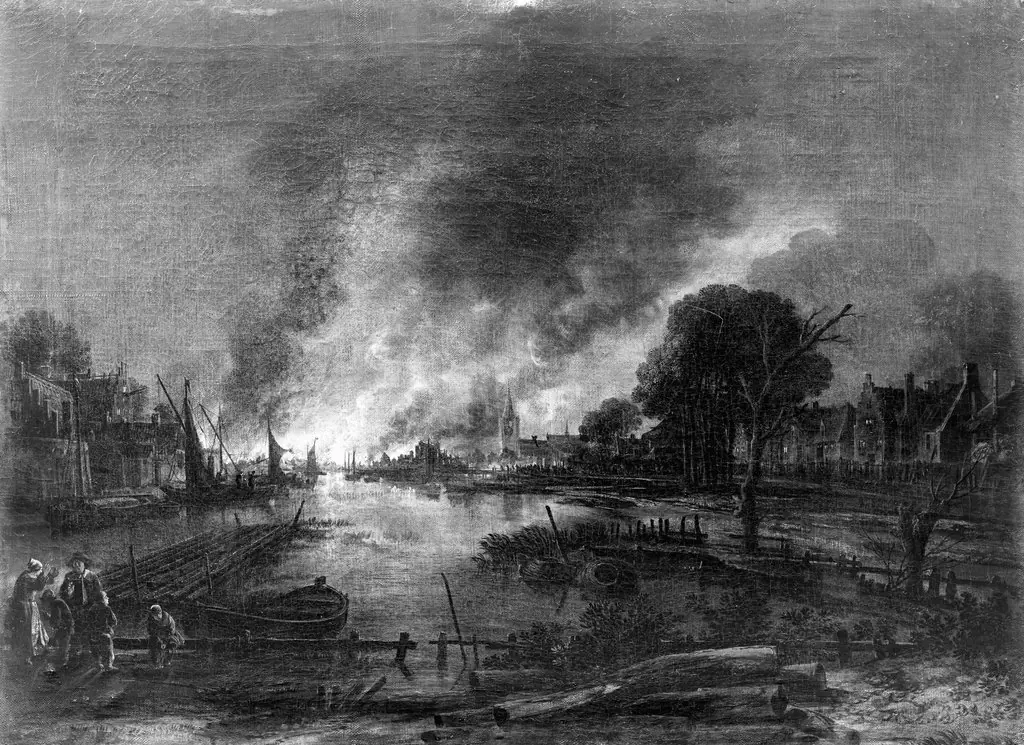 Conflagration in a Dutch city
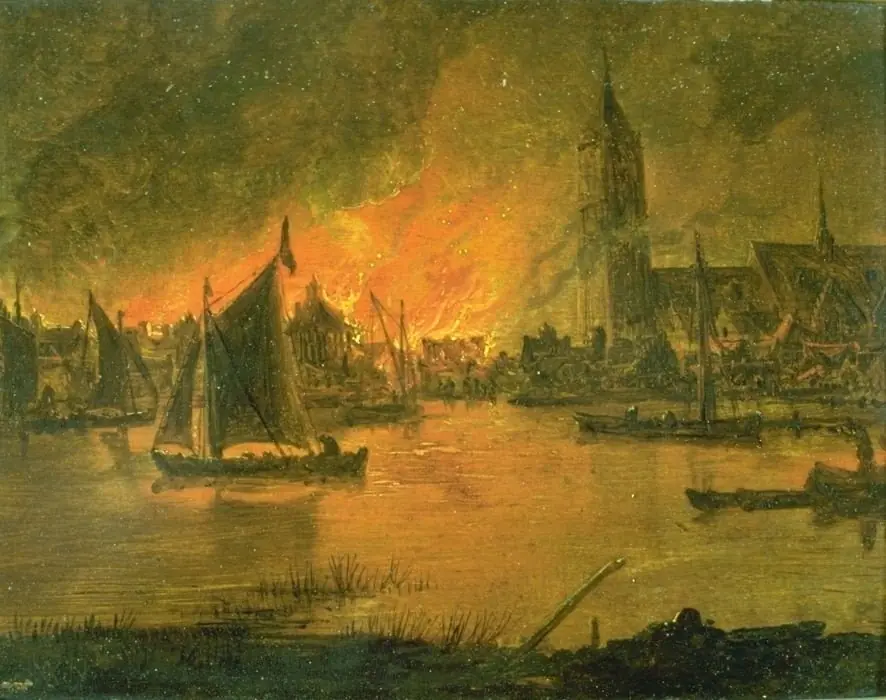 Fire in the Old City Hall of Amsterdam
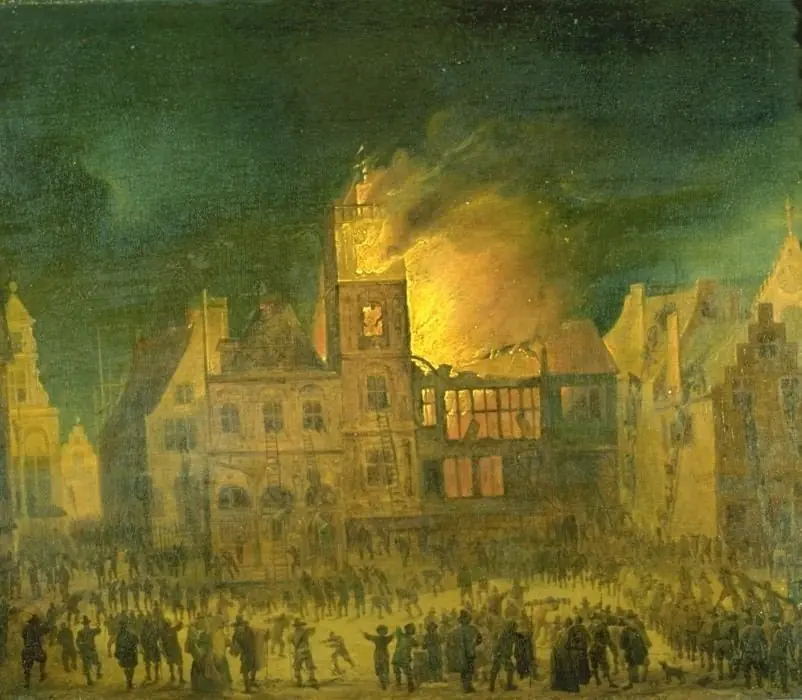 Fire in the Old City Hall of Amsterdam
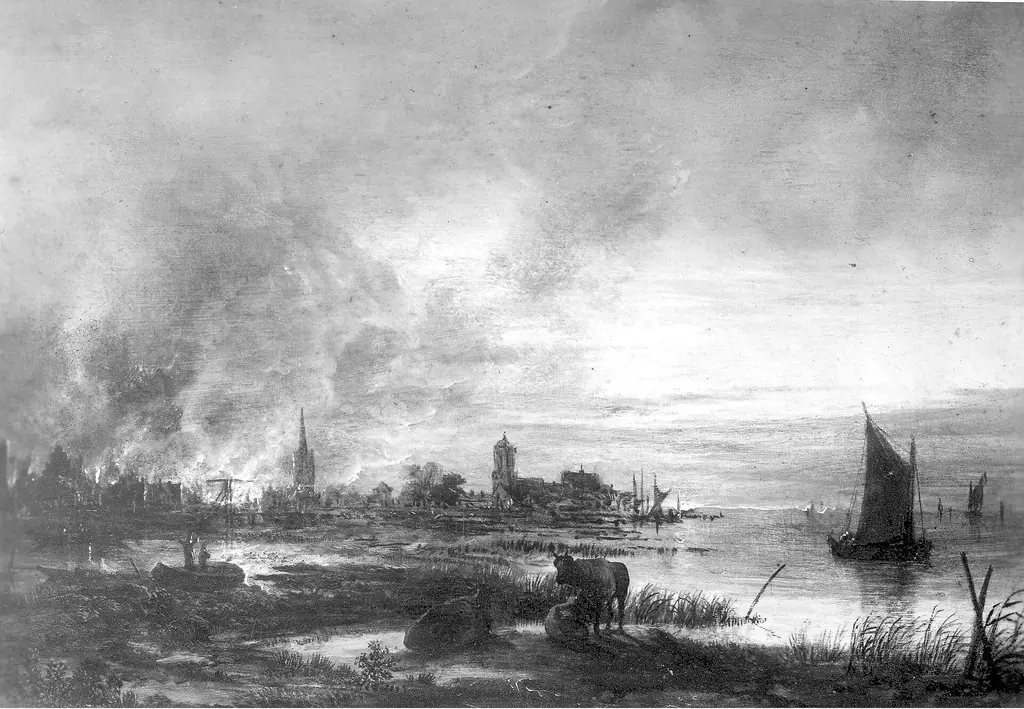 Fire in a town
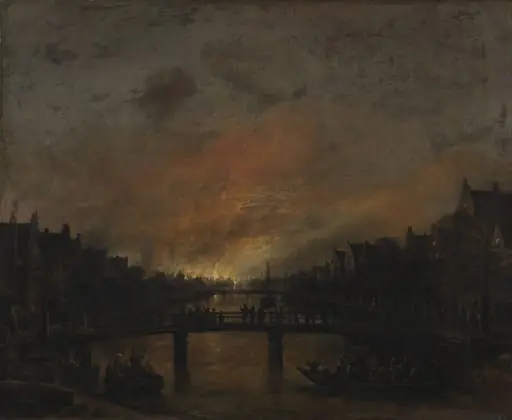 Fire at Amsterdam by Night
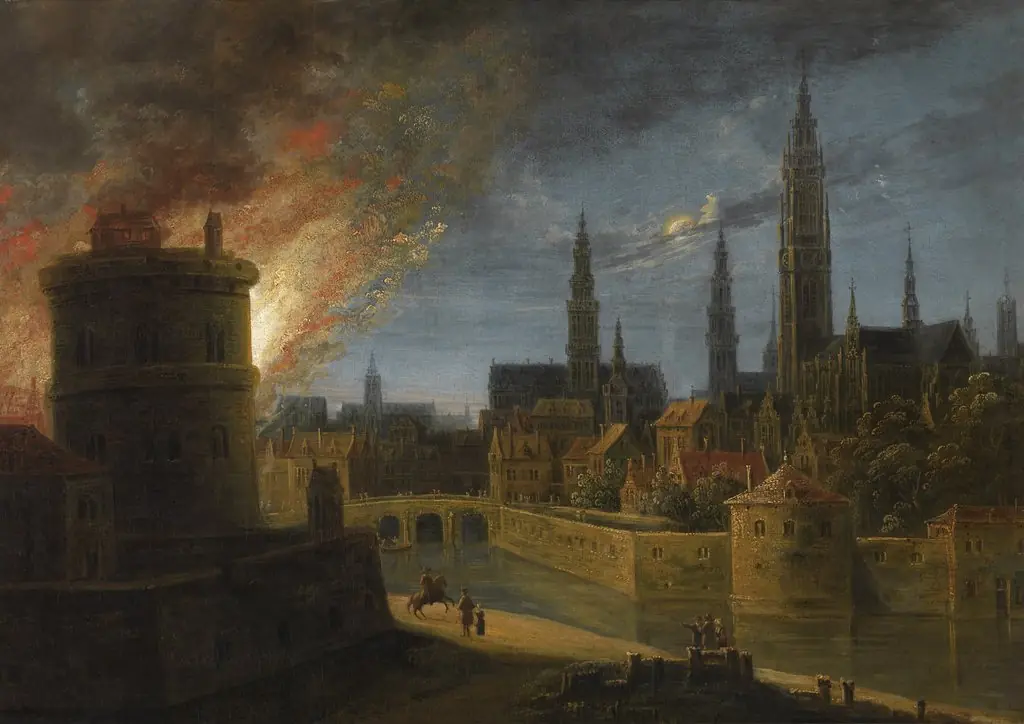 Fire in Antwerp
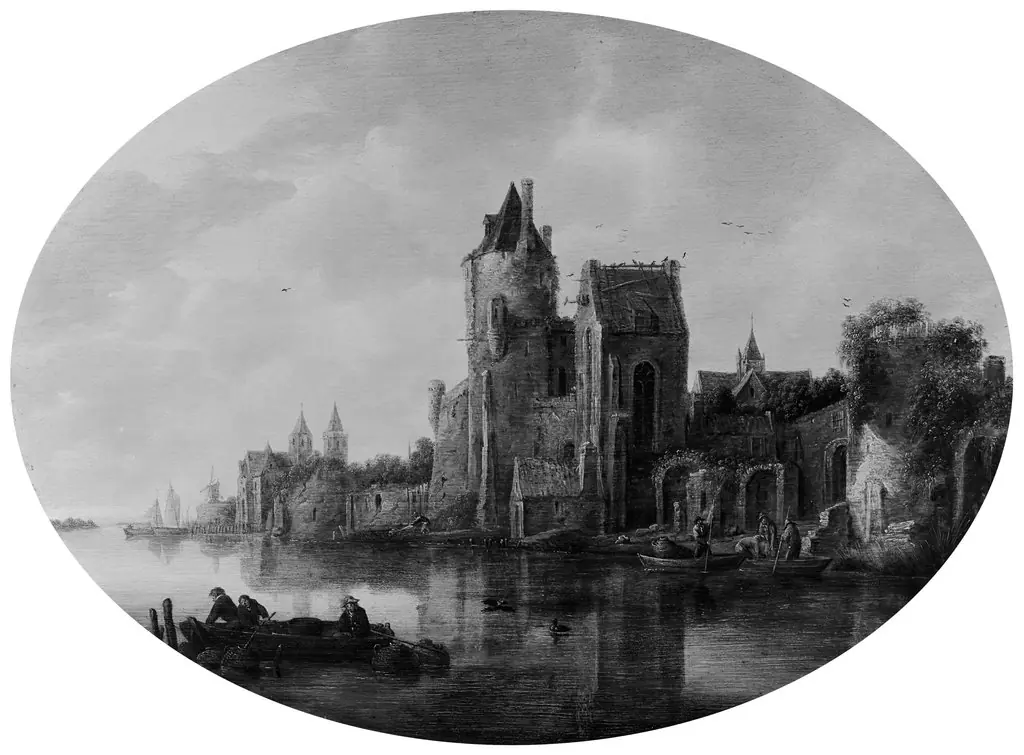 Dutch city by the water
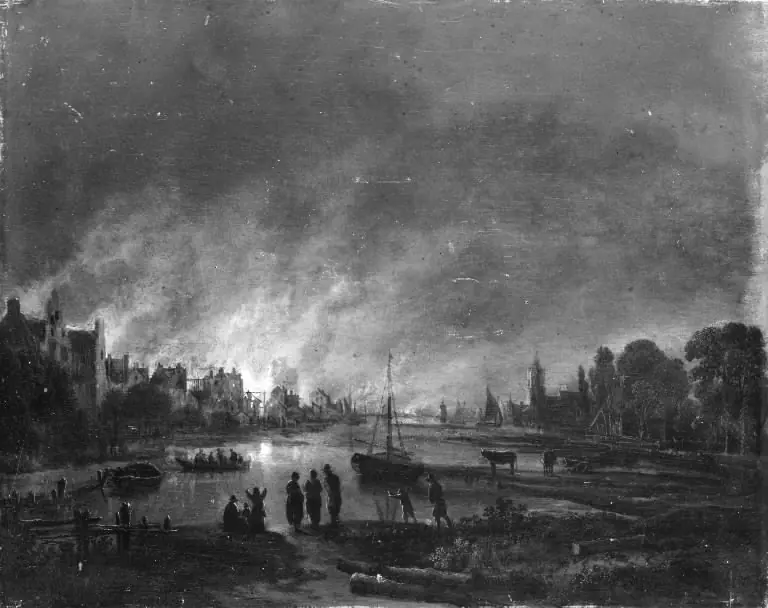 Fire at a Village by Night
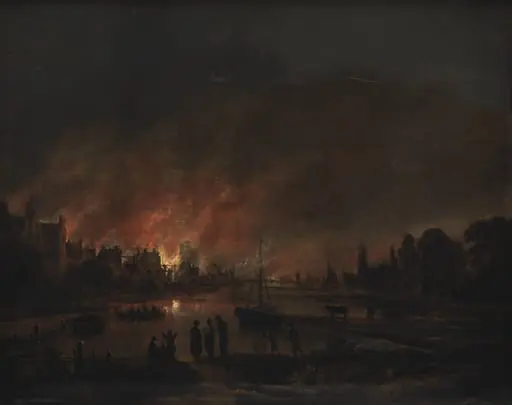 Fire at a Village by Night
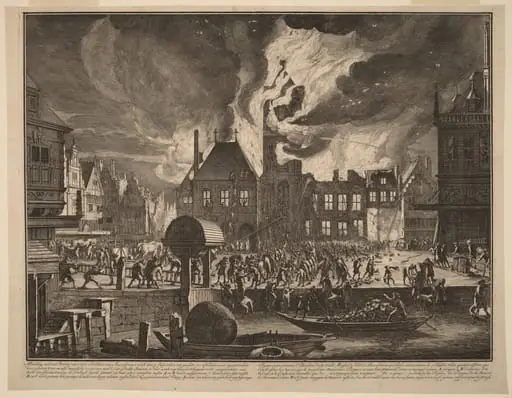 Burning of the Old Amsterdam Town Hall
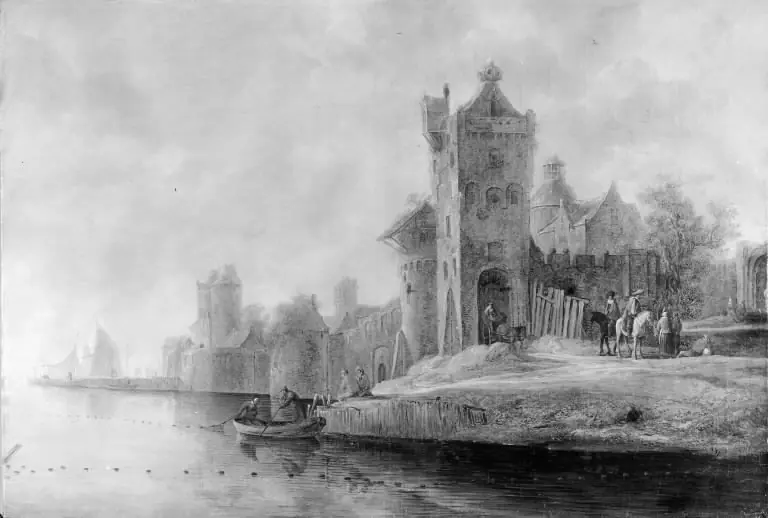 A Fortified Dutch Town
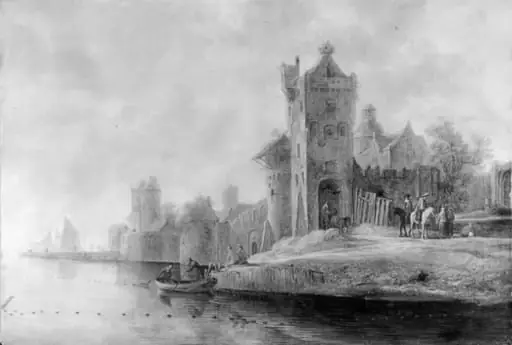 A Fortified Dutch Town