Artwork
Conversation in a Park
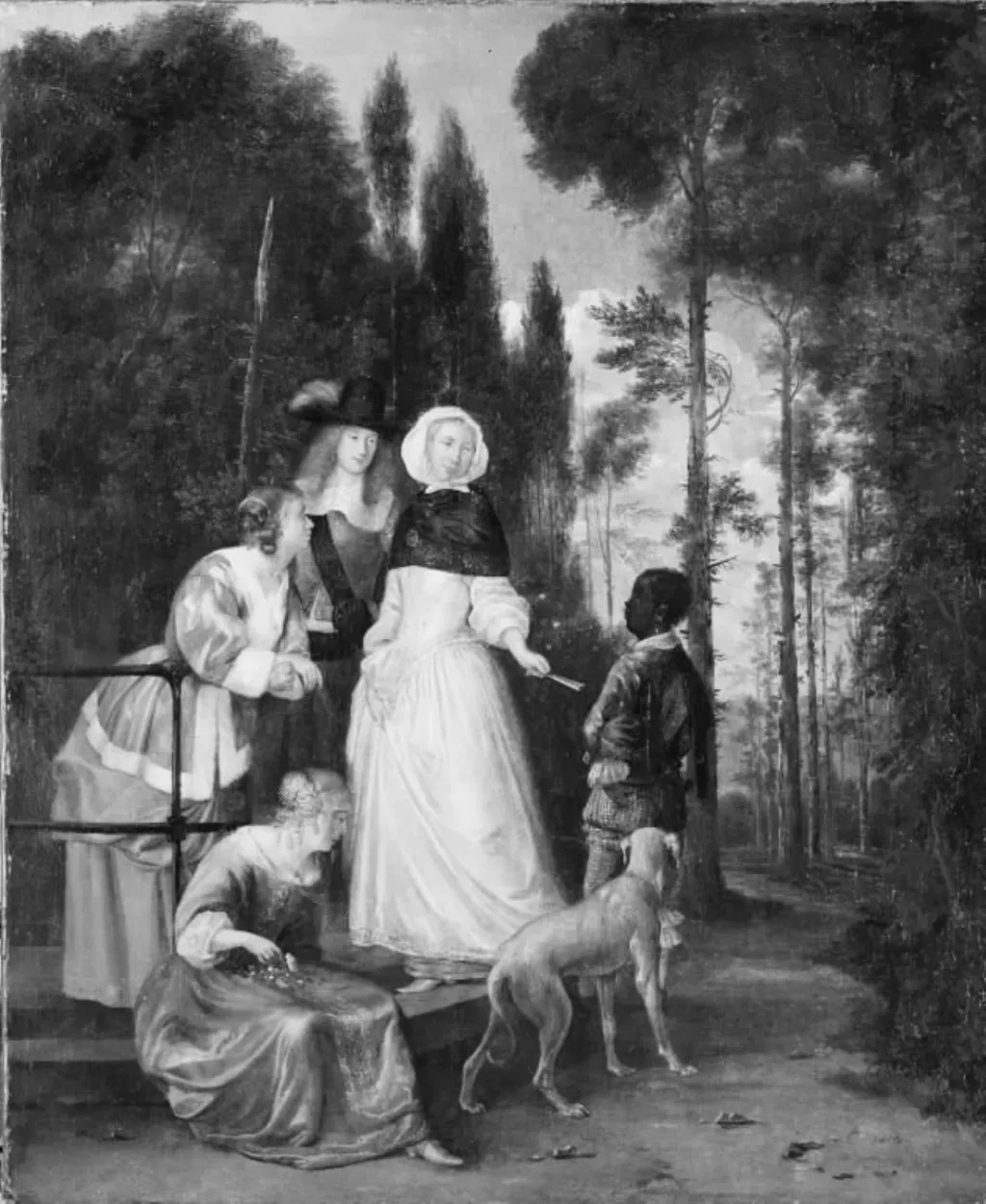
Conversation in a Park is a photography by Unknown. It dates from 1750 and is held in the collection of the Statens Museum for Kunst.
About this work
Overview
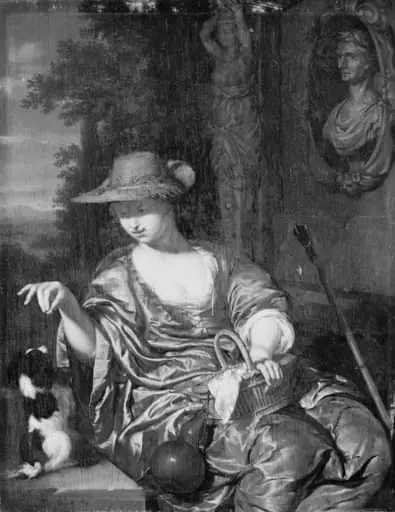
Conversation in a Park, attributed to the anonymous creator known as 965_person, dates from around 1750 and is part of the Museum of Ethnography’s collection. The monochrome image captures a small group assembled in a wooded setting, with trees and a low fence framing the composition. The arrangement suggests a deliberately staged tableau rather than a candid snapshot.
Subject & Meaning
The picture presents five figures: a woman in an elongated dress engaged in dialogue with a gentleman holding a walking stick; a second woman kneels nearby; a third man, dressed in a coat and hat, stands beside a dog. The grouping evokes a leisurely social encounter, hinting at the customs of genteel recreation in an outdoor park environment.
Technique & Style
The composition’s balanced placement of figures and background reflects a formal, posed aesthetic typical of early photographic or illustrative practices.
Executed in black and white, the work relies on contrasts of light and shade to model the figures and surrounding foliage. Soft illumination filters through the canopy, casting gentle shadows on faces and ground, while the darker outlines of the trees enhance depth. The composition’s balanced placement of figures and background reflects a formal, posed aesthetic typical of early photographic or illustrative practices.
History & Provenance
Created circa 1750, the image entered the Museum of Ethnography’s holdings through an acquisition whose details remain undocumented. Its attribution to the pseudonymous 965_person indicates the work’s origin in a period when anonymous or collective authorship was common for visual records of everyday life.
Context
The scene aligns with eighteenth‑century European traditions of depicting aristocratic leisure in landscaped parks. Such representations often served to document fashion, social interaction, and the cultivated natural settings favored by the upper classes, offering contemporary viewers a glimpse into the period’s recreational norms.
Artist & collection

 Domestic Scene
 Giacomo and Cardinal Marco, investing Andrea, Abbot of San Zeno, with his Benefice
 The Nymph of Fontainebleau
 Portrait of a Woman
 Madonna and Child with Saints in the Enclosed Garden
 Venus and Minerva
 Family Group of Four on Sofa
 Wall painting from Room H of the Villa of P. Fannius Synistor at Boscoreale
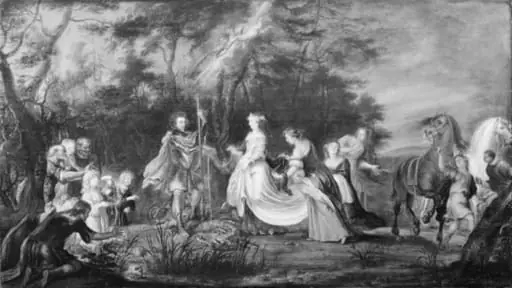 St George Liberating the Princess from the Dragon. Allegory
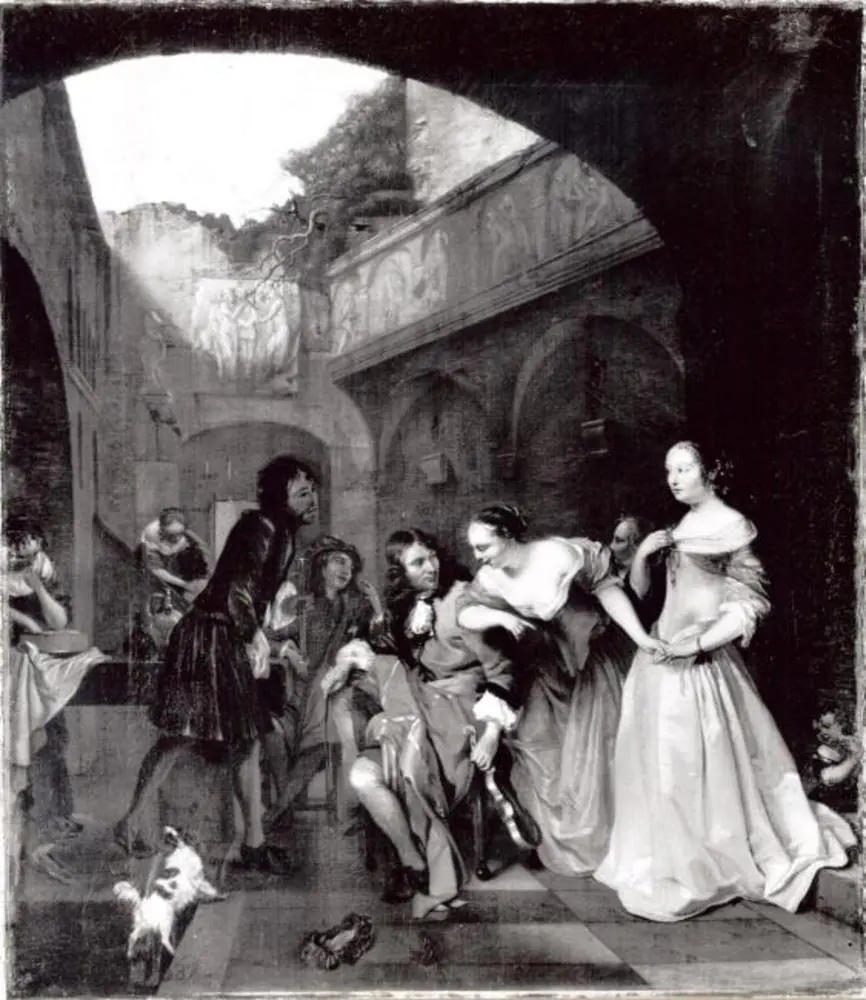 The prodigal son
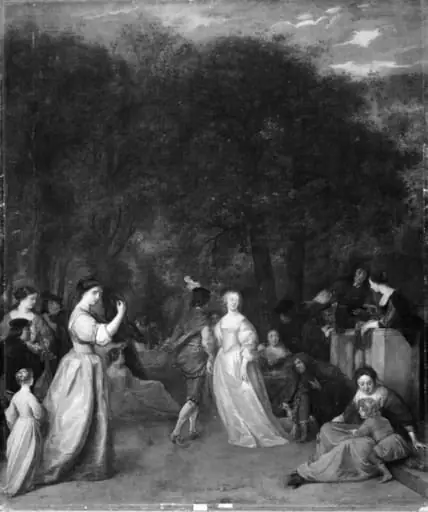 Dancing Party
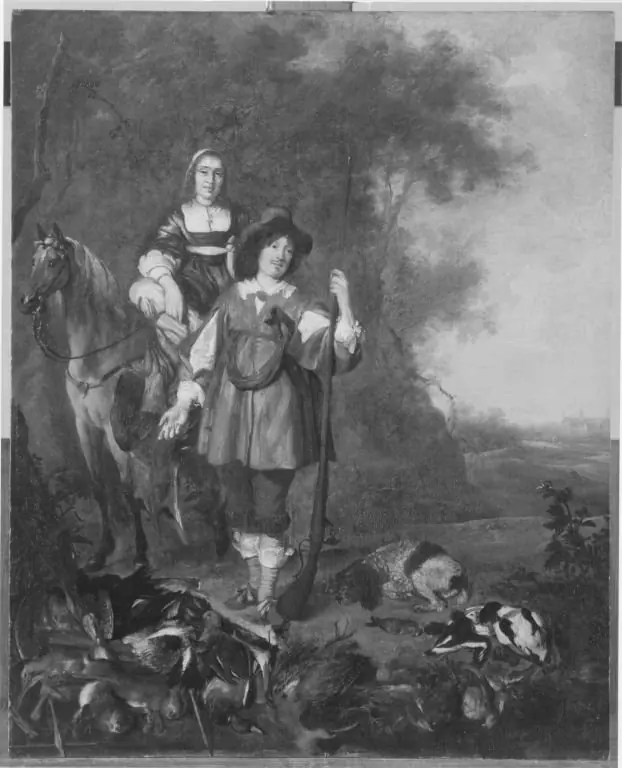 Double portrait of a man and of a woman on horseback
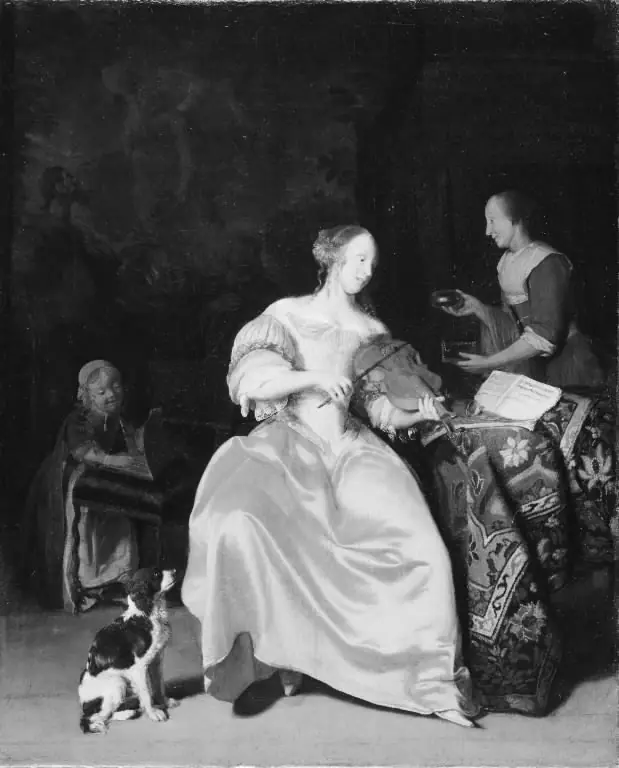 Young Woman playing the Violin
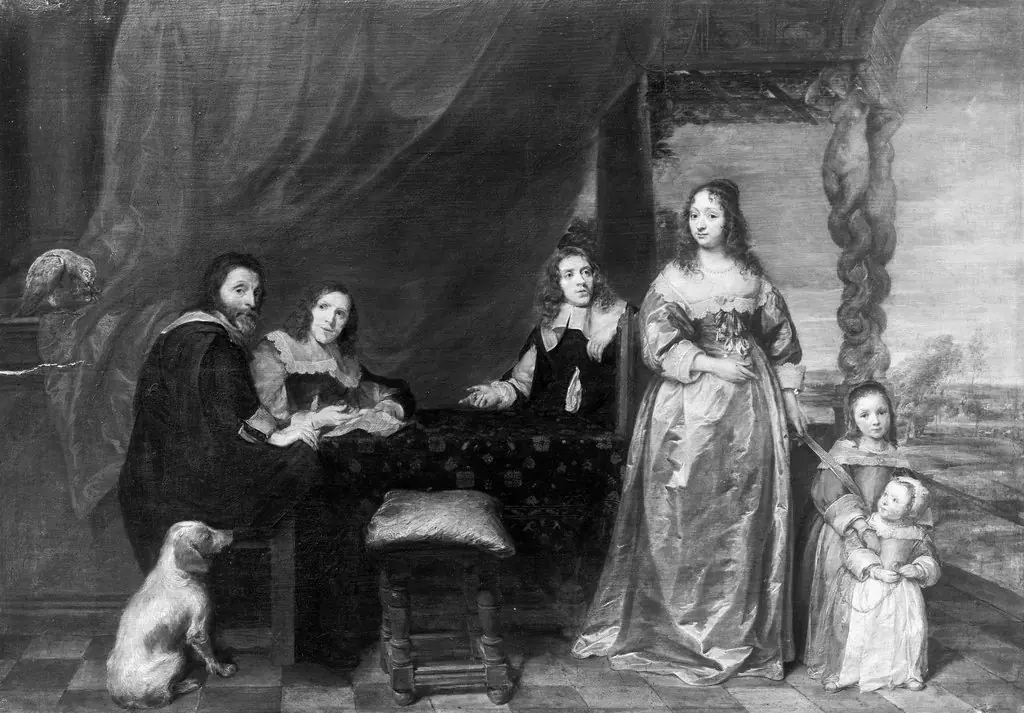 Portrait of a family on the terrace
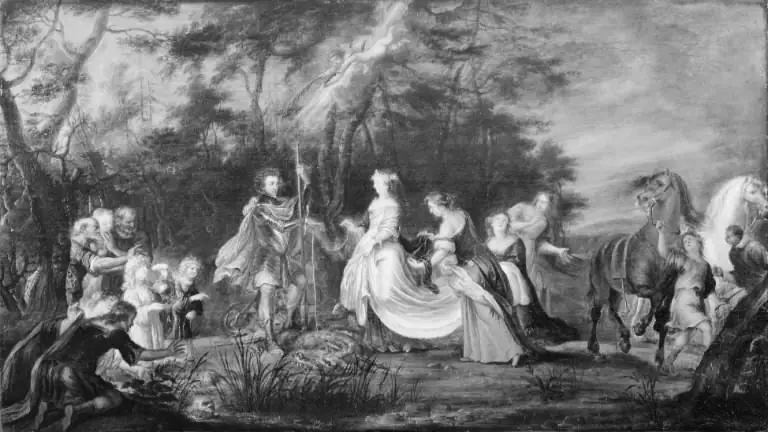 Skt. Jørgen befrier prinsessen fra dragen. Allegori
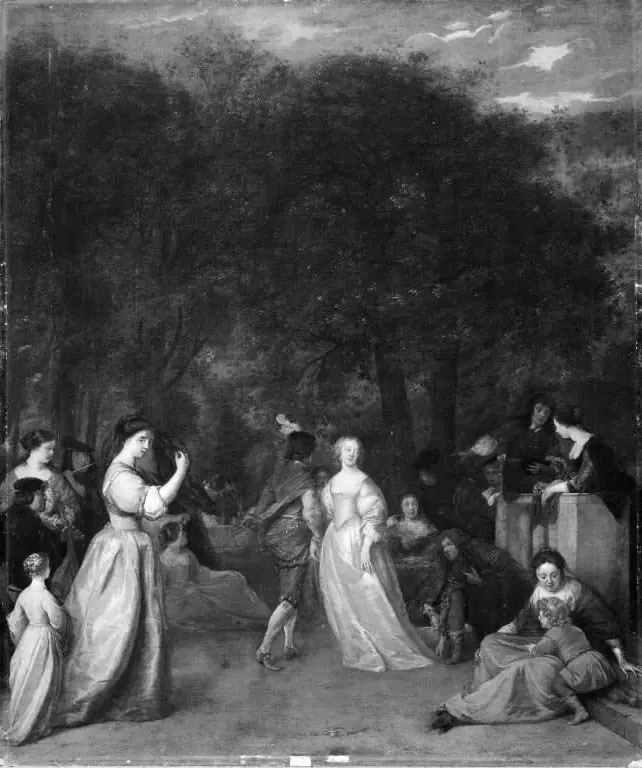 Dancing Party
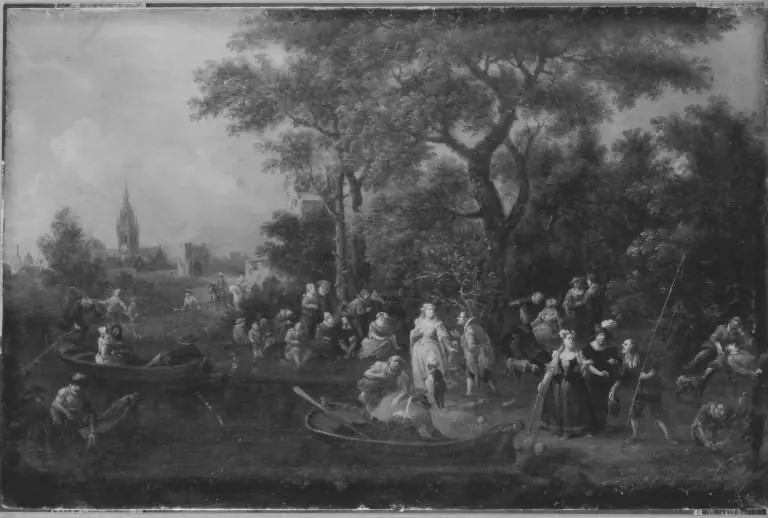 Landpartie
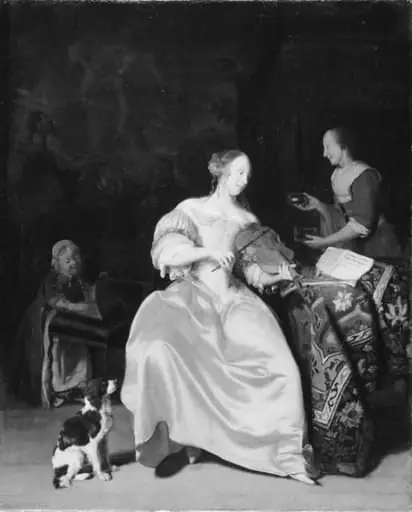 Young Woman playing the Violin
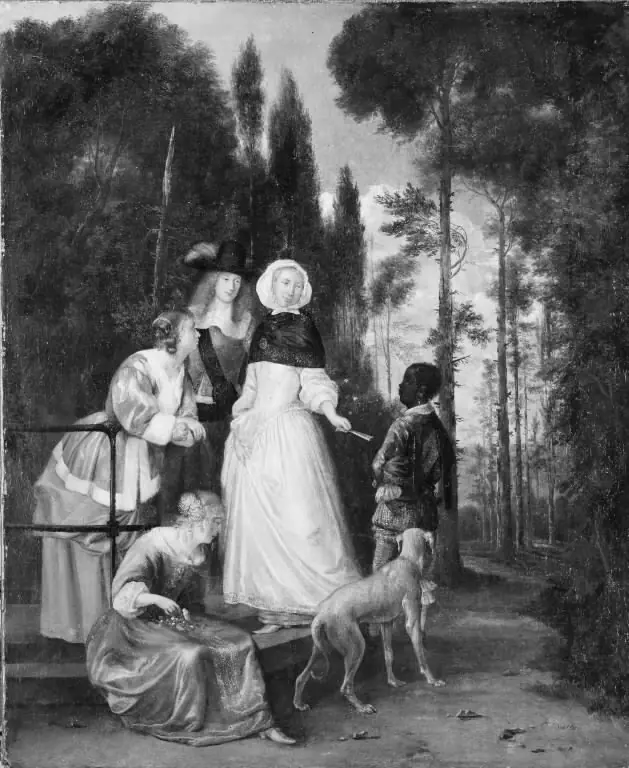 Conversation in a Park
 A Shepherdess with a Dog