Artwork
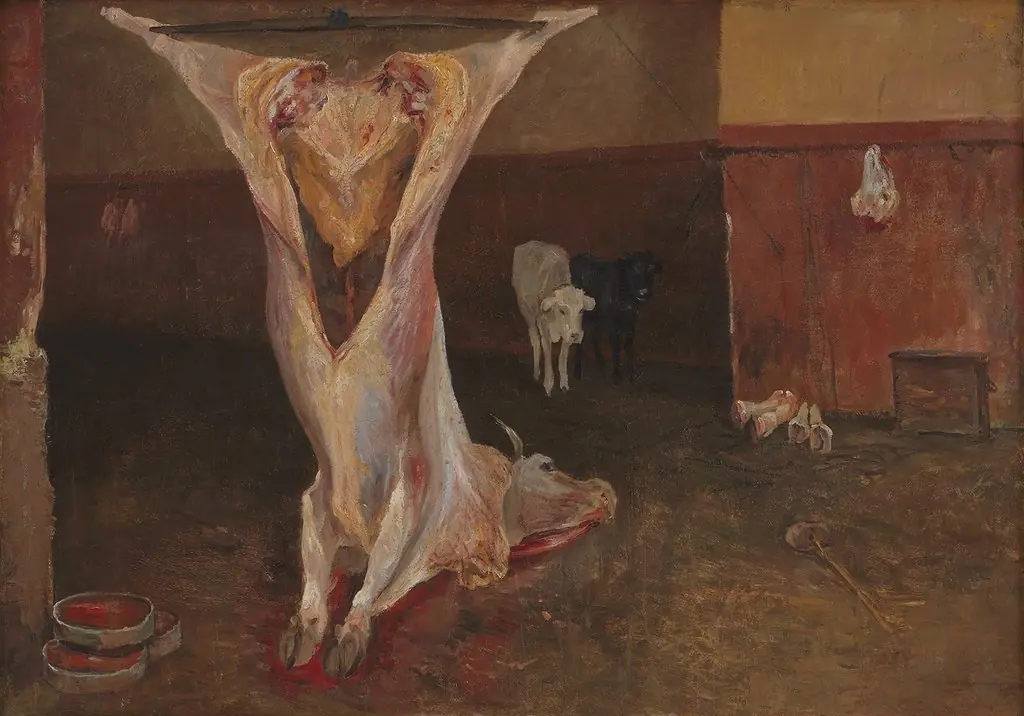
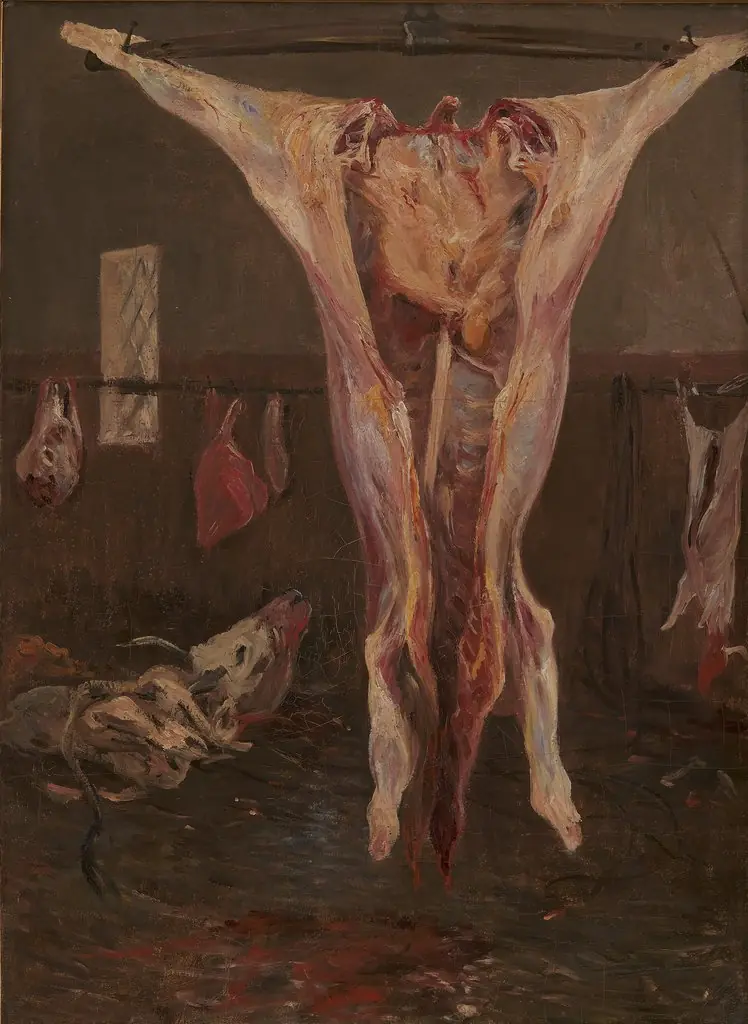
Carcase of an Ox. Rome
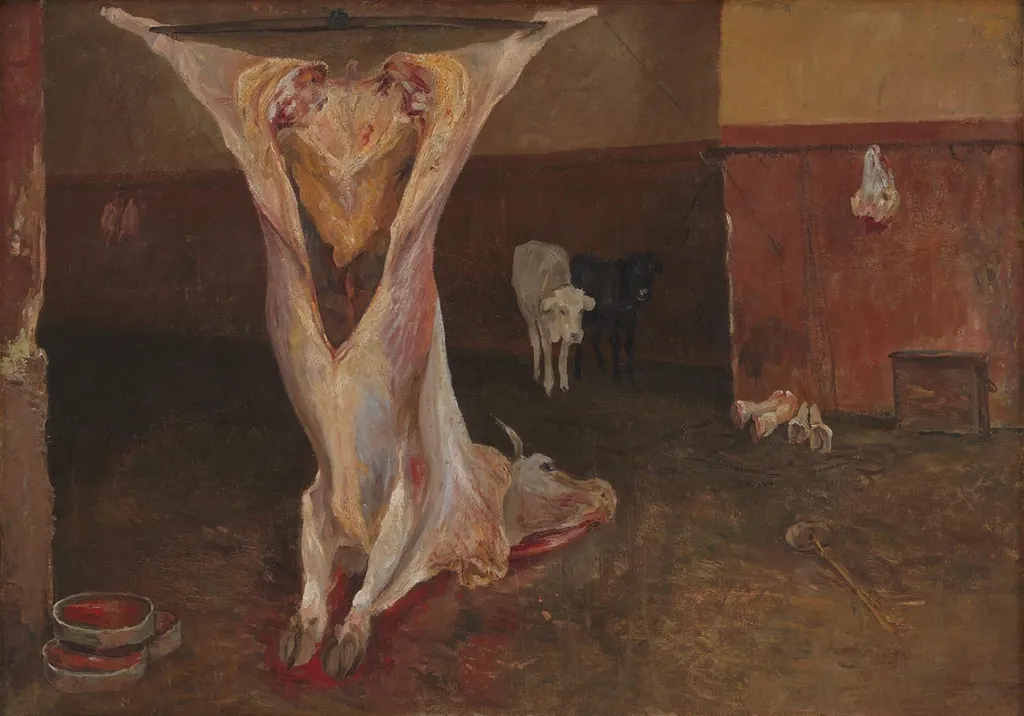
Carcase of an Ox. Rome is a photography by Unknown. It dates from 1850 and is held in the collection of the Statens Museum for Kunst. Created around 1850, this photograph depicts a slaughtered ox suspended in a butcher’s space in Rome.
About this work
Overview
The image is held by the Museum of Ethnography and captures a moment of industrial butchery with minimal staging.
Created around 1850, this photograph depicts a slaughtered ox suspended in a butcher’s space in Rome. The image is held by the Museum of Ethnography and captures a moment of industrial butchery with minimal staging. The composition avoids idealization, focusing instead on the physical reality of meat processing. The presence of a live cow in the background adds an unsettling contrast to the carcass before it.
Subject & Meaning
The work presents the ox as both commodity and creature, juxtaposing the lifeless carcass with the still-living animal in the rear. This pairing suggests a quiet meditation on mortality and labor, without overt moralizing. The absence of human figures emphasizes the mechanical nature of the process, while the proximity of living and dead cattle underscores the cyclical relationship between animal life and human sustenance.
Technique & Style
The photograph employs low, ambient light to cast deep shadows and highlight the pale, mottled surfaces of the meat. The reddish walls and dim atmosphere create a somber, almost theatrical tone, reminiscent of chiaroscuro painting. The camera captures texture—dripping liquid, coarse bone, and worn tools—with unembellished clarity, reinforcing the image’s documentary character and rejecting romanticized aesthetics.
History & Provenance
The photograph was likely taken in mid-19th century Rome, during a period when photographic documentation of daily life was emerging. It entered the collection of the Museum of Ethnography in the decades following its creation, valued for its unvarnished record of urban butchery practices. Its origin as a private or commercial image remains undocumented, but its preservation suggests early recognition of its anthropological significance.
Context
In mid-1800s Rome, meat production was a visible, localized process, often conducted in small, family-run shops. This image reflects a time before industrial slaughterhouses, when butchery occurred in public view. The photograph aligns with broader European efforts to record working-class life, offering a rare visual record of food preparation outside elite or religious settings.
Legacy
The image endures as a quiet example of early photographic realism, valued for its unflinching gaze at labor and mortality. It contributes to studies of food systems, urban life, and the transition from artisanal to industrial practices. Though not widely exhibited, it remains a reference point for scholars examining how photography captured the mundane realities of 19th-century existence.
Artist & collection

 Domestic Scene
 Giacomo and Cardinal Marco, investing Andrea, Abbot of San Zeno, with his Benefice
 The Nymph of Fontainebleau
 Portrait of a Woman
 Madonna and Child with Saints in the Enclosed Garden
 Venus and Minerva
 Family Group of Four on Sofa
 Wall painting from Room H of the Villa of P. Fannius Synistor at Boscoreale