Artwork
A Slaughtered Ox, Rome
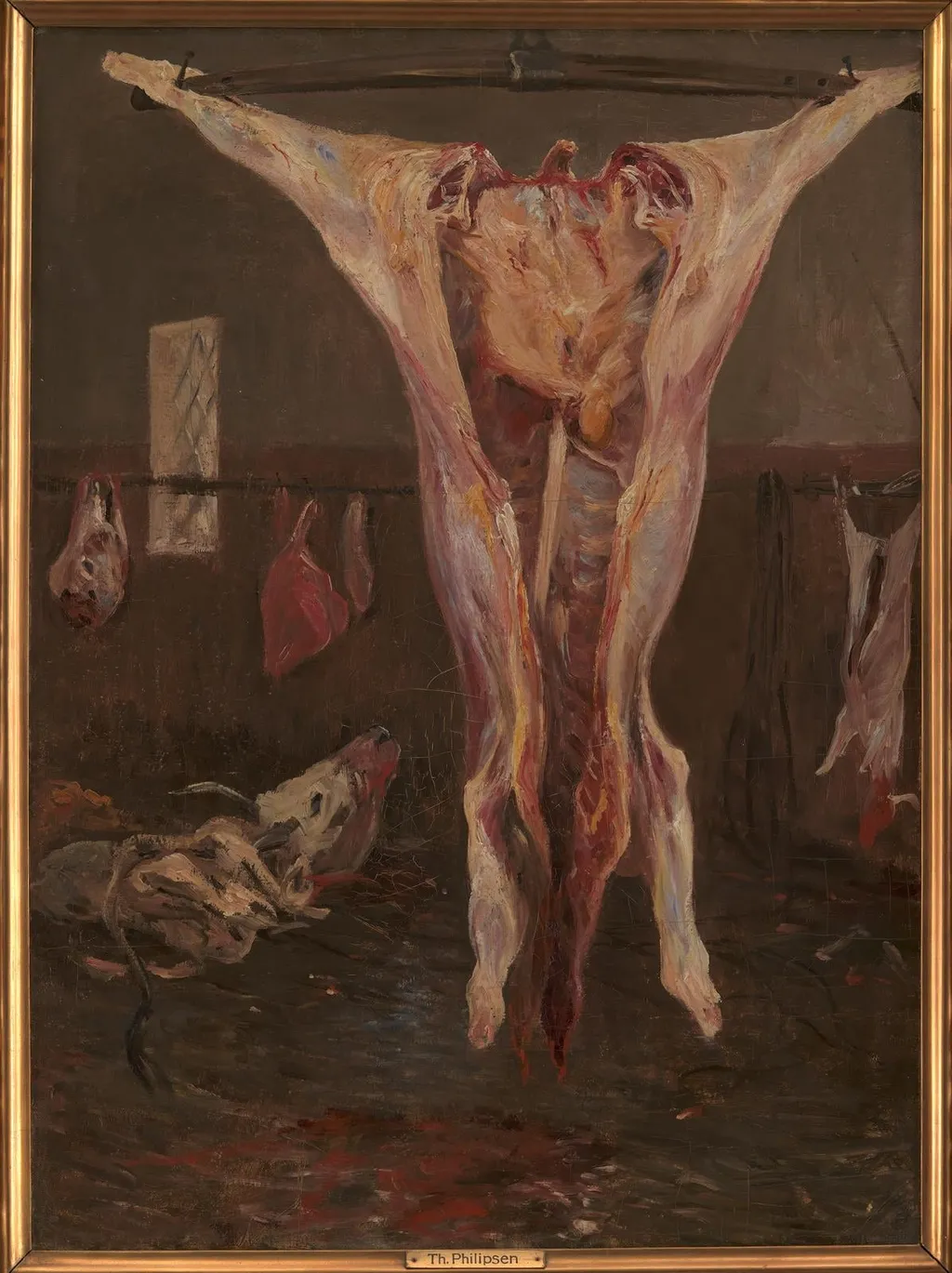
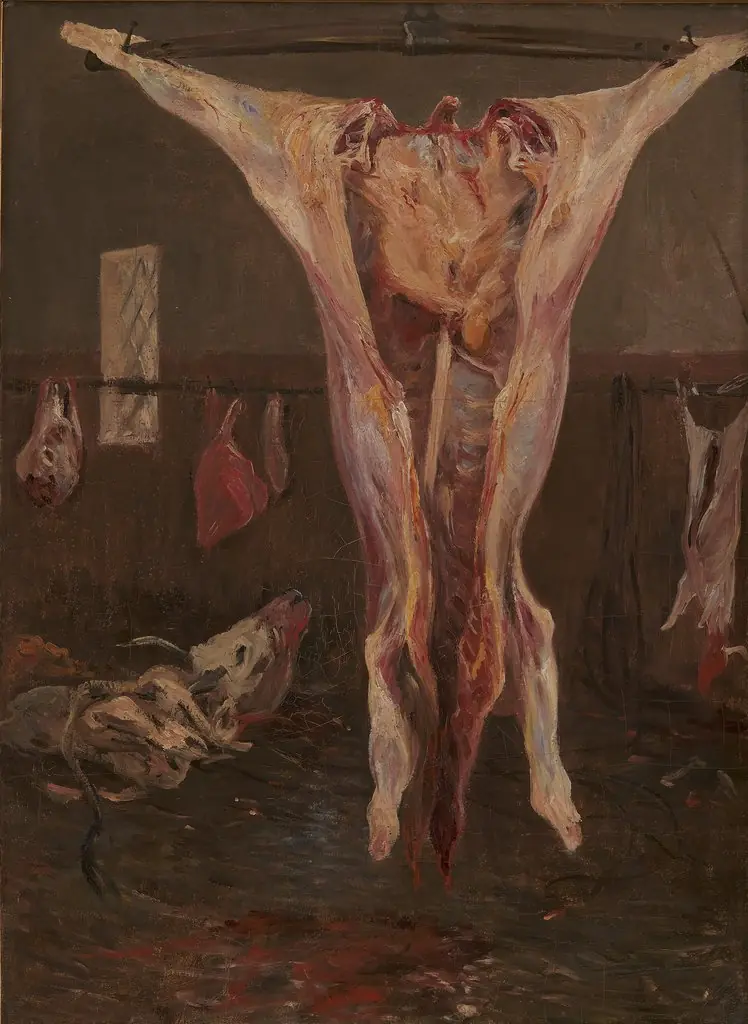
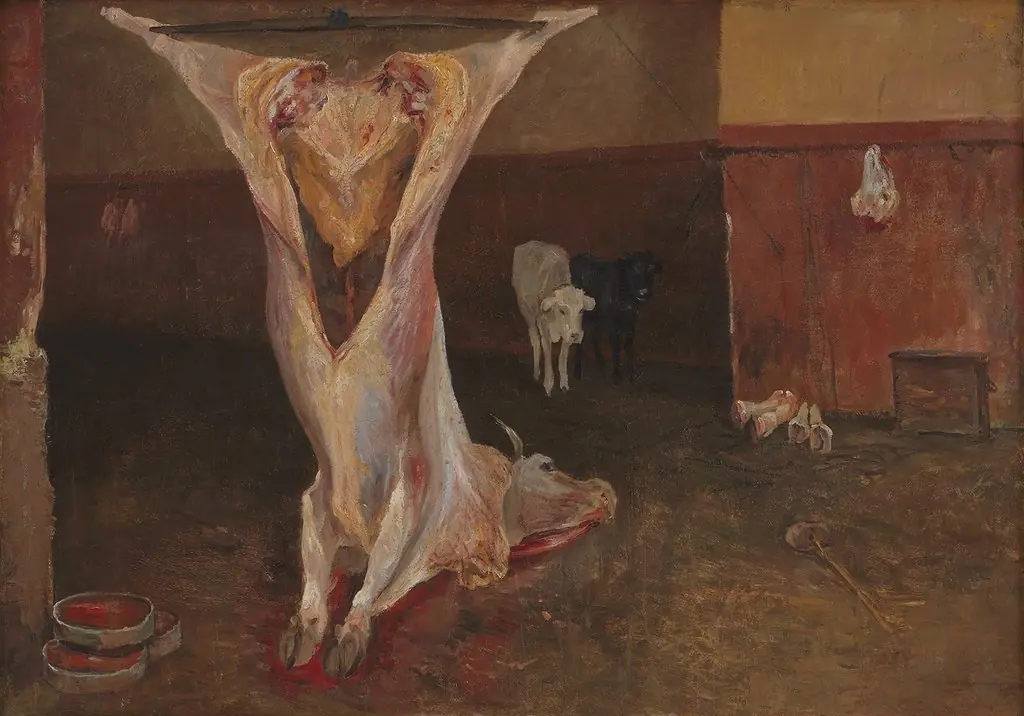
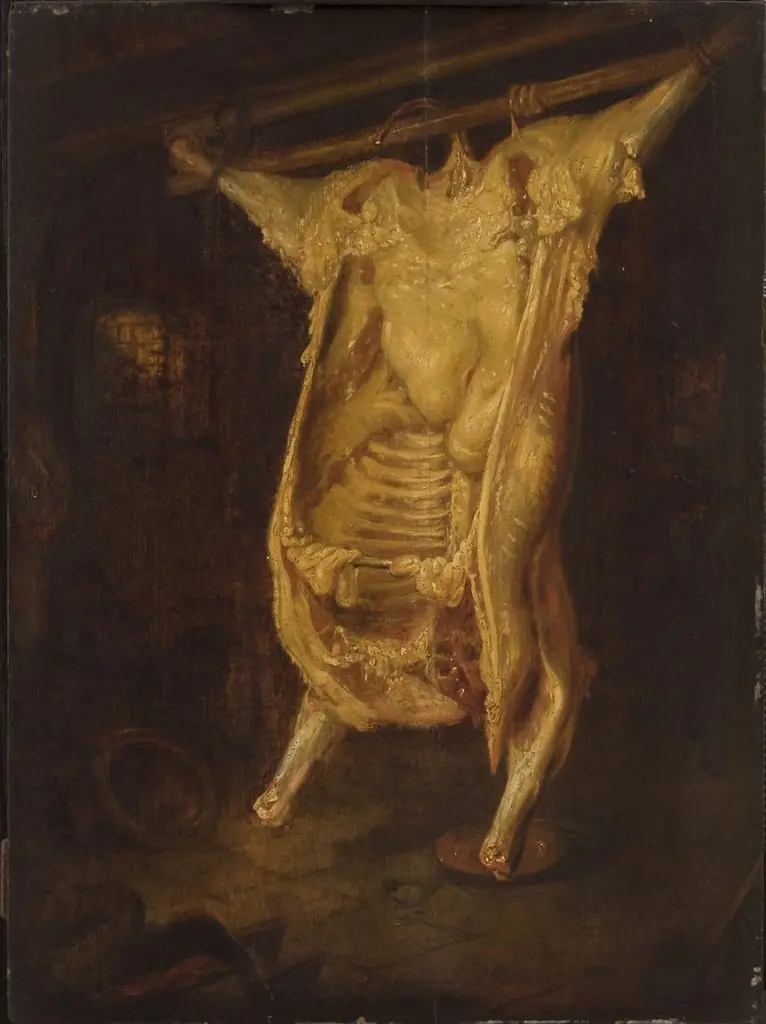
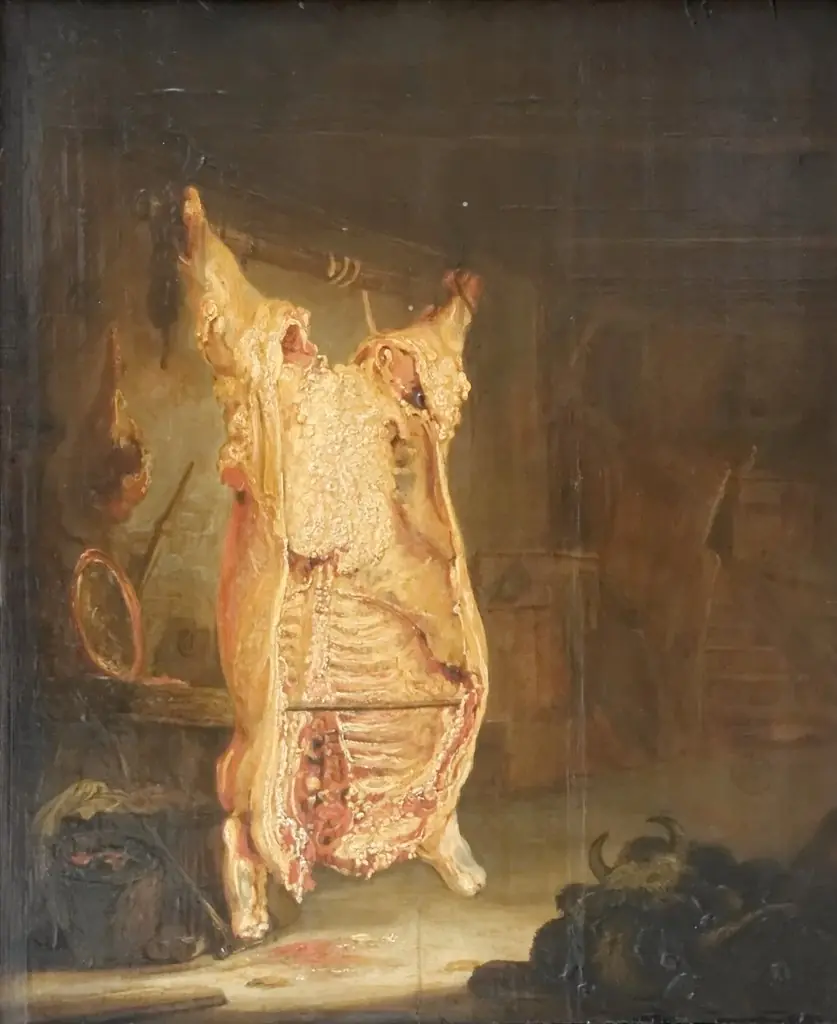
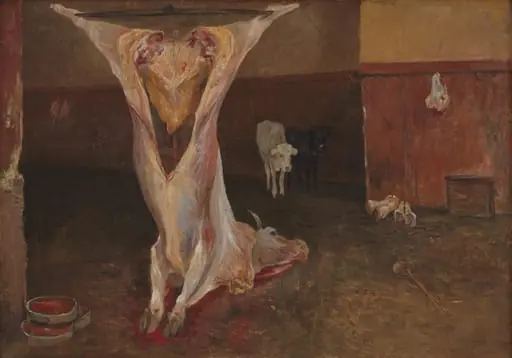
A Slaughtered Ox, Rome is a photography by Unknown. It dates from 1850 and is held in the collection of the Statens Museum for Kunst. Painted around 1850, this work depicts a slaughtered ox suspended by its hind legs in a dim, unadorned space.
About this work
Overview
Painted around 1850, this work depicts a slaughtered ox suspended by its hind legs in a dim, unadorned space. Rendered in oil, the image emphasizes the physicality of the carcass with minimal context. The painting is held in the collection of the Museum of Ethnography, where it is studied for its unflinching portrayal of animal processing in 19th-century rural life.
Subject & Meaning
The ox, lifeless and exposed, represents the aftermath of butchery — a moment of transition between animal and meat. No human figures are present, yet the scene implies labor and consumption. The rawness of the form suggests a focus on material reality rather than symbolism, reflecting a direct engagement with the routines of food production in its time.
Technique & Style
Thick, uneven brushstrokes apply pigment with physical force, creating a tactile surface that mimics the texture of flesh and hide. Reds and browns dominate, layered to suggest blood, muscle, and fat. The dark, indistinct background isolates the carcass, heightening its presence. The handling of light emphasizes anatomical detail, lending the scene a somber, sculptural gravity.
History & Provenance
The painting was likely made during the artist’s time in Rome, where exposure to classical forms and everyday rural life may have influenced its subject. It entered the Museum of Ethnography’s collection in the late 19th century, possibly as part of a broader effort to document material culture and labor practices across Europe.
Context
In mid-19th-century Europe, depictions of slaughterhouses and butchery were uncommon in fine art, especially without moral or religious framing. This work stands apart for its neutrality — it neither glorifies nor condemns, but records. Its realism aligns with emerging interest in everyday life, though it avoids the sentimentality common in genre painting of the era.
Legacy
Though not widely exhibited, the painting has influenced later artists interested in the physicality of the body and the aesthetics of labor. Its unembellished approach to death and flesh prefigures 20th-century realist and expressionist tendencies. It remains a quiet, persistent example of art that confronts the mundane without embellishment.
Artist & collection

 Domestic Scene
 Giacomo and Cardinal Marco, investing Andrea, Abbot of San Zeno, with his Benefice
 The Nymph of Fontainebleau
 Portrait of a Woman
 Madonna and Child with Saints in the Enclosed Garden
 Venus and Minerva
 Family Group of Four on Sofa
 Wall painting from Room H of the Villa of P. Fannius Synistor at Boscoreale