Artwork
A Slaughtered Ox, Rome
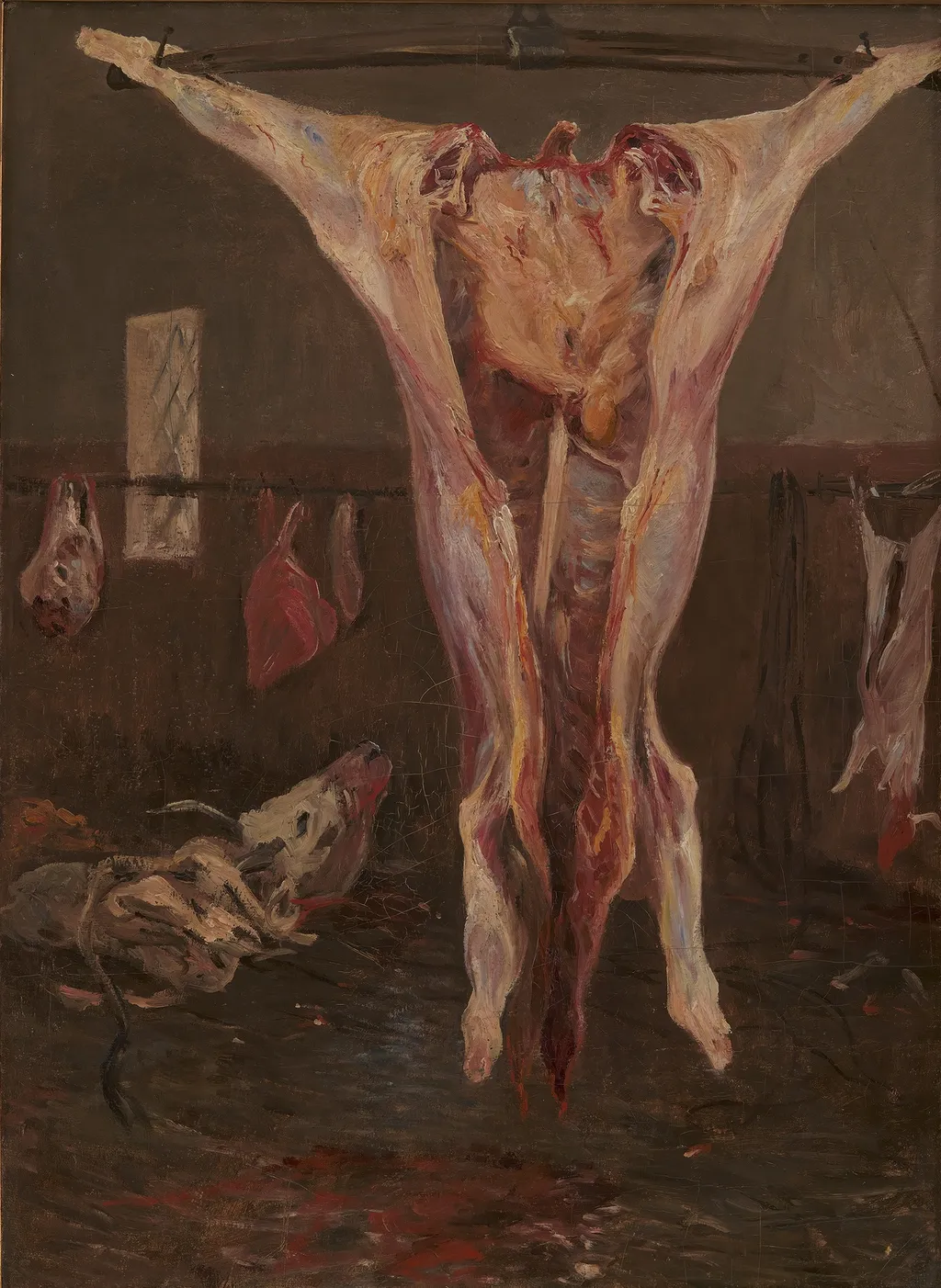
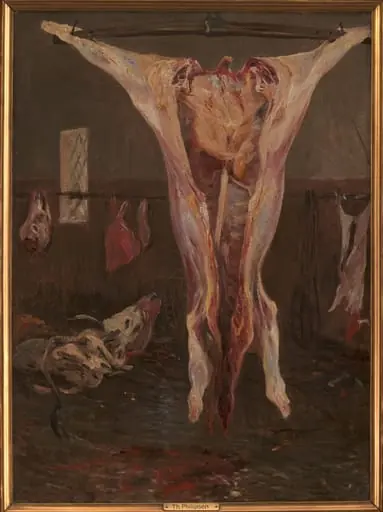
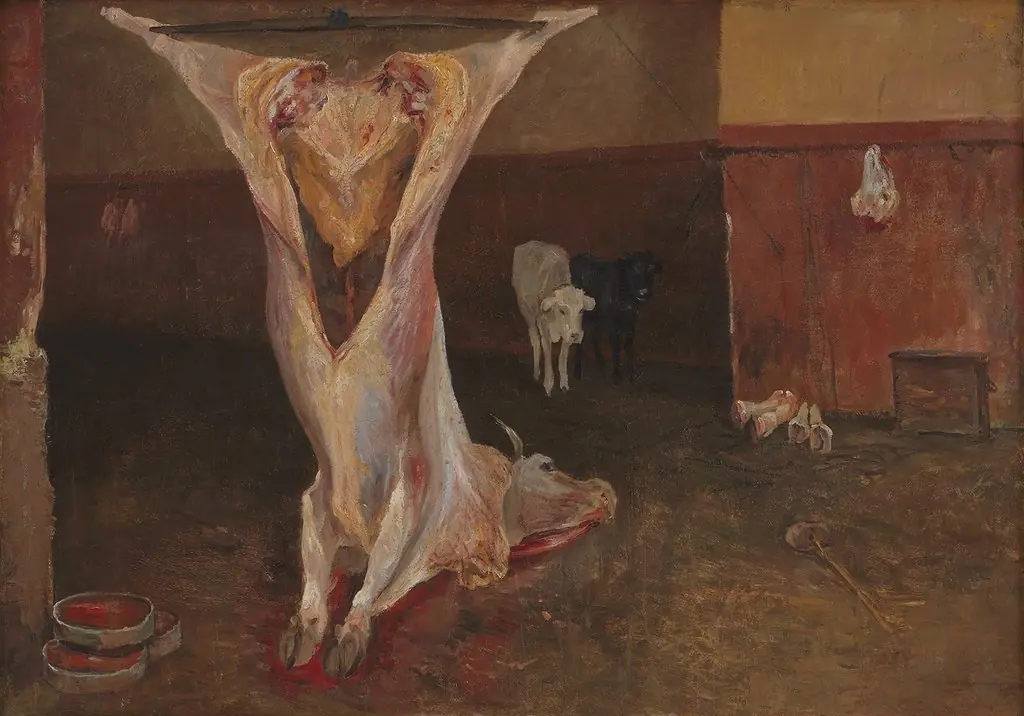
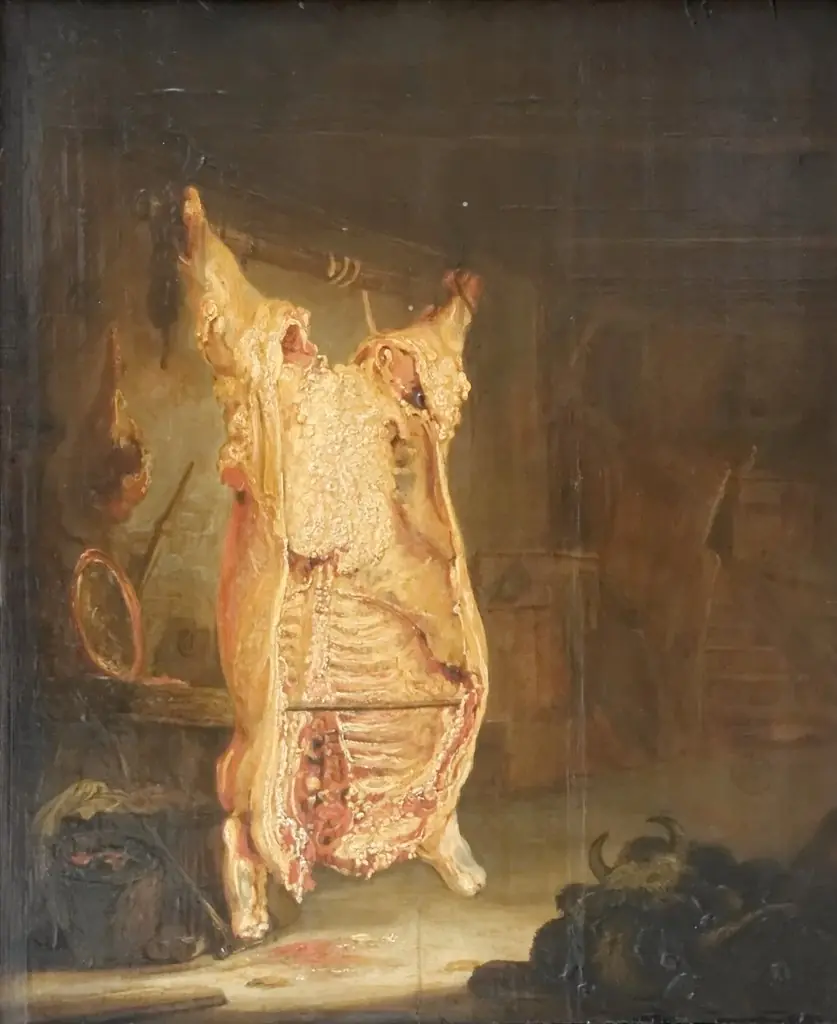
A Slaughtered Ox, Rome is an oil painting by the Impressionist artist Theodor Philipsen. It dates from 1892 and is held in the collection of the Statens Museum for Kunst.
About this work
Overview
Created in 1892, *A Slaughtered Ox, Rome* is an oil painting by Danish artist Theodor Philipsen. The work belongs to the collection of Denmark’s National Gallery, Statens Museum for Kunst. Philipsen, whose career encompassed landscape and animal studies, approached this subject within the broader currents of late‑19th‑century Impressionism.
Subject & Meaning
The canvas presents a single ox suspended from a hook, its hide stripped and interior organs exposed. Rendered in warm, earthy hues, the animal’s musculature and skeletal structure dominate the composition, inviting contemplation of mortality and the material realities of meat production. The stark focus on the carcass foregrounds a direct, unidealized view of animal life and death.
Technique & Style
Philipsen employs a realistic approach, emphasizing texture through careful brushwork that captures the sheen of flesh and the roughness of bone. Subtle chiaroscuro models the form, creating volume against a loosely rendered background of muted tones. While the overall handling reflects Impressionist concerns for light and color, the meticulous detail aligns the piece with naturalist traditions.
History & Provenance
After its completion, the painting entered the holdings of Statens Museum for Kunst, where it remains on view. Philipsen’s oeuvre also includes small three‑dimensional studies in wax and clay, indicating a broader interest in rendering animal forms across media, though *A Slaughtered Ox* stands as his most prominent painted treatment of the theme.
Context
The work emerges from a period when European artists increasingly turned to everyday subjects, integrating scientific observation with artistic practice.
The work emerges from a period when European artists increasingly turned to everyday subjects, integrating scientific observation with artistic practice. Philipsen’s Jewish heritage and Danish background placed him at a cultural crossroads, while his participation in the Impressionist movement connected him to contemporary debates about representation, light, and the role of the artist in depicting contemporary life.
Artist & collection
Artist
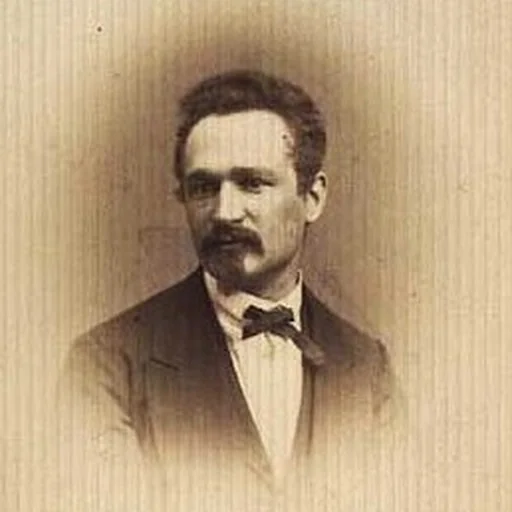
Theodor Esbern Philipsen (10 June 1840 – 3 March 1920) was a Danish painter of Jewish ancestry, known for landscapes and animal portraits. He also did small figures in wax and clay.