Artwork
Kotiinpaluu
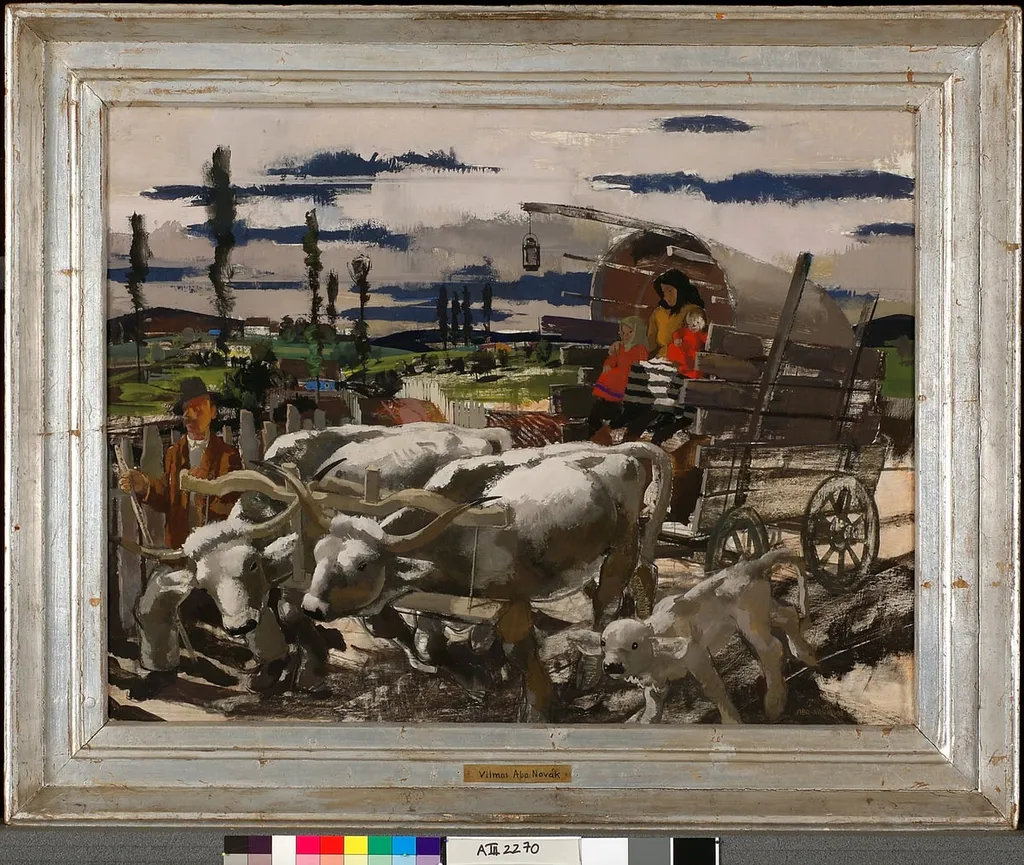
Kotiinpaluu is an unspecified painting by Vilmos Aba-Novák. It is held in the collection of the Finnish National Gallery.
About this work
Overview
Kotiinpaluu is a genre painting by Hungarian artist Vilmos Aba-Novák, depicting a rural return home in winter. Executed in the early 20th century, it reflects his focus on everyday life in the Hungarian countryside. The work combines observational detail with expressive brushwork, aligning with broader trends in Hungarian modernism that sought to ground national identity in local scenes.
Subject & Meaning
The quiet, unidealized moment suggests endurance and routine, emphasizing the rhythms of agricultural life rather than dramatic narrative.
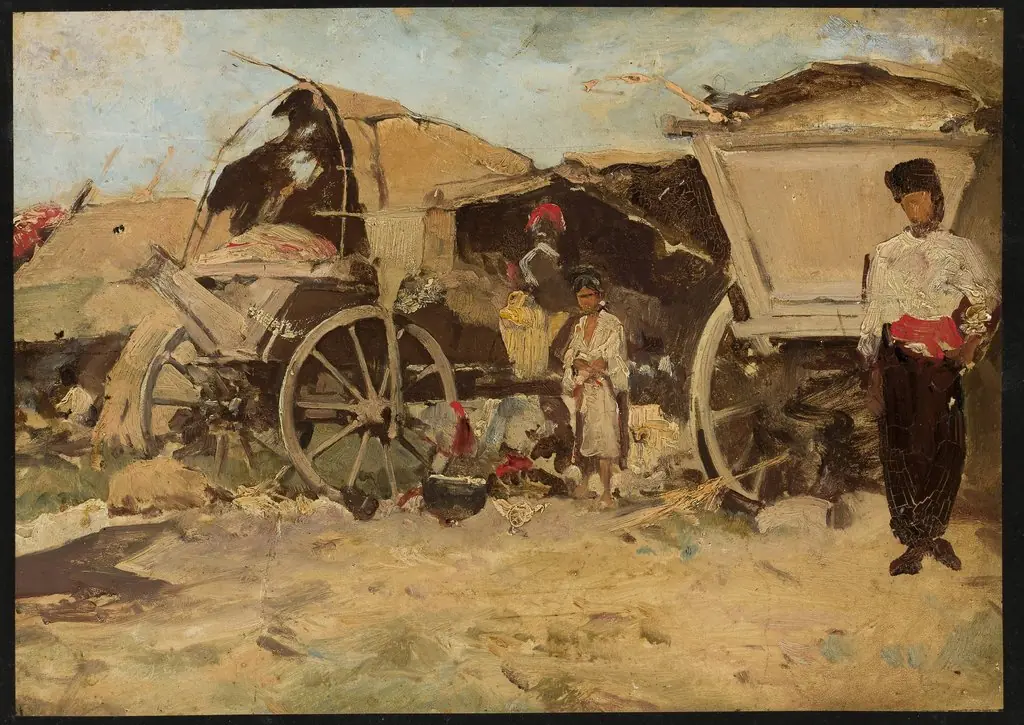
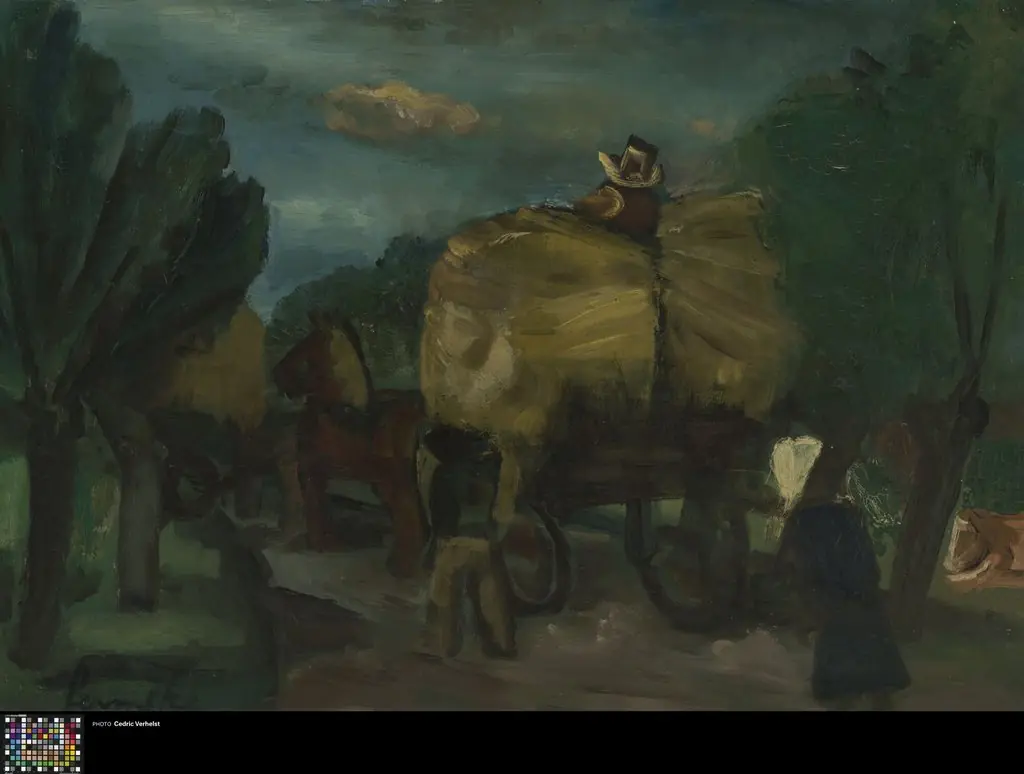
The scene portrays a family returning from the fields, accompanied by a flock of sheep under a winter sky. The man holds an object, possibly tools or food, while the woman and child rest in a wooden cart. The quiet, unidealized moment suggests endurance and routine, emphasizing the rhythms of agricultural life rather than dramatic narrative. The village beyond the fence implies community and shelter, reinforcing themes of homecoming and resilience.
Technique & Style
Aba-Novák employed thick impasto to render the sheep, cart, and snow, creating a tactile, almost sculptural surface. The heavy application of paint gives weight and texture to the forms, contrasting with the flatter, more subdued background. This technique enhances the physicality of the scene, grounding the figures in a tangible, weathered world. His brushwork is deliberate and energetic, avoiding delicate detail in favor of emotional resonance.
History & Provenance
Created during Aba-Novák’s active period in the 1920s–30s, Kotiinpaluu emerged alongside his larger mural commissions in Szeged and Budapest. Though less documented than his public works, this painting represents his commitment to secular, rural themes. Its provenance traces to private Hungarian collections before entering institutional hands, reflecting its status as a significant but modestly exhibited work within his oeuvre.
Context
Aba-Novák worked within a Hungarian artistic movement that sought to redefine national identity through depictions of peasant life, distinct from Western European modernism. Kotiinpaluu aligns with this trend, echoing the work of contemporaries who elevated rural subjects as culturally authentic. The painting’s somber palette and textured surface reflect both regional conditions and a broader interwar interest in materiality and emotional realism.
Legacy
Though not as widely recognized internationally, Kotiinpaluu remains a representative example of Aba-Novák’s contribution to Hungarian modern art. It illustrates his ability to merge folk subject matter with expressive technique, influencing later generations focused on regional identity. The painting endures as a quiet testament to the dignity of rural labor and the visual language developed to honor it.
Artist & collection
Artist
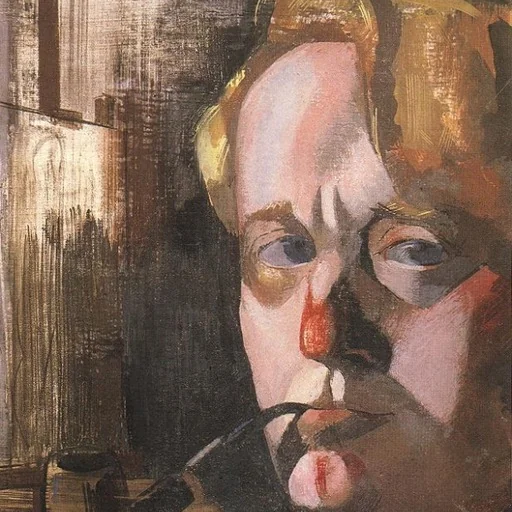
Vilmos Aba-Novák (Hungarian: Aba-Novák Vilmos, until 1912: Hungarian: Novák Vilmos; March 15, 1894 – September 29, 1941) was a Hungarian painter and graphic artist.