Artwork
The Fair in Csíkszereda
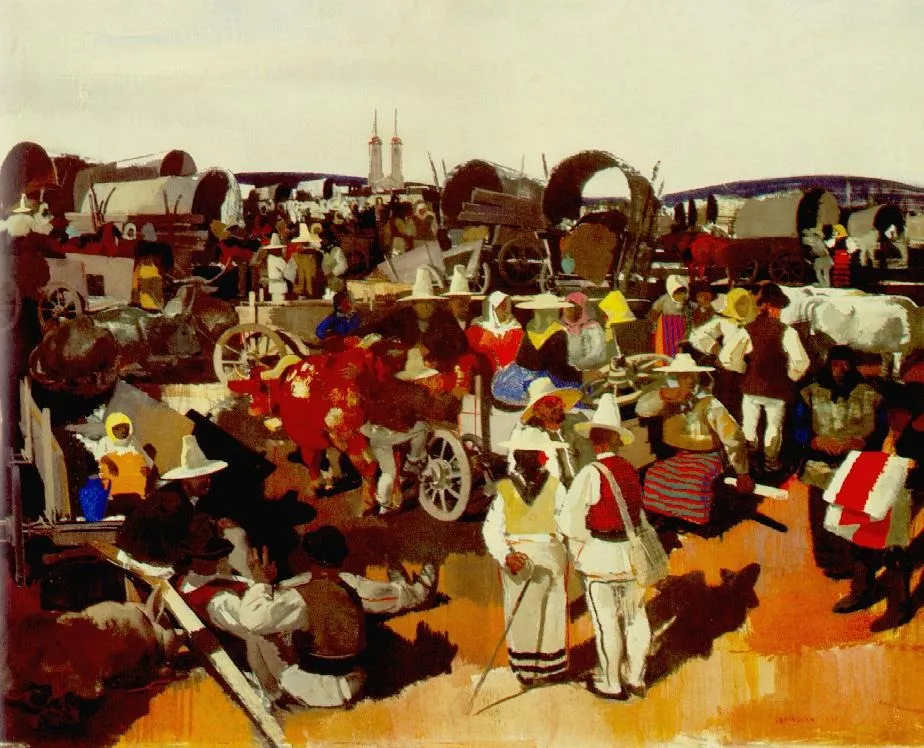
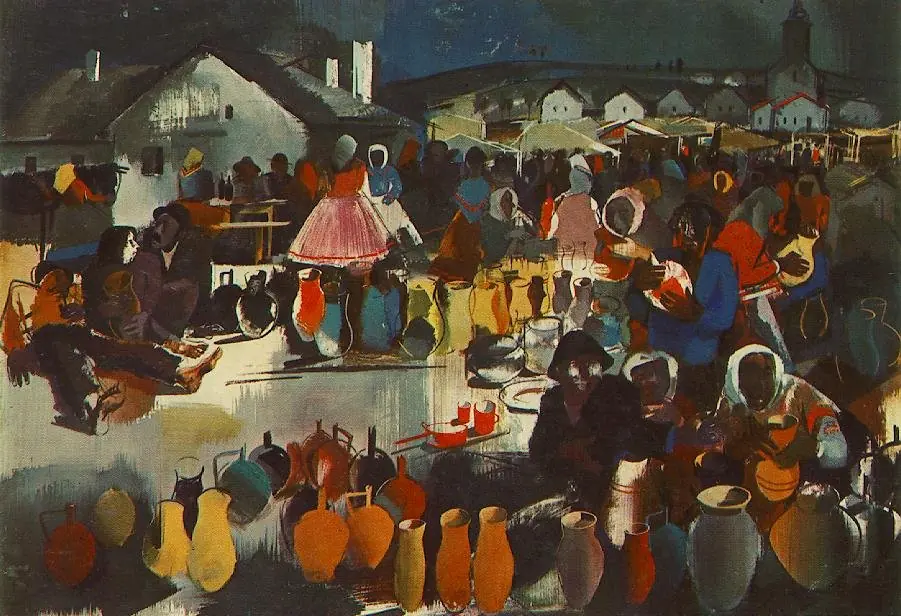
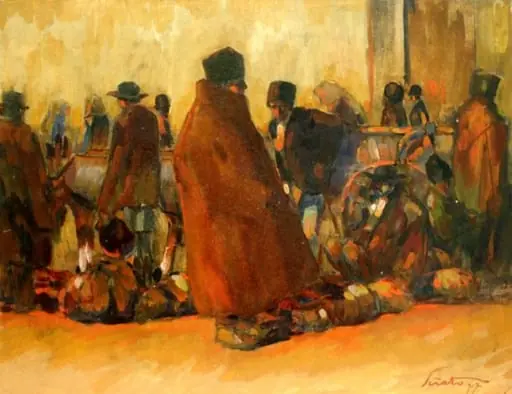
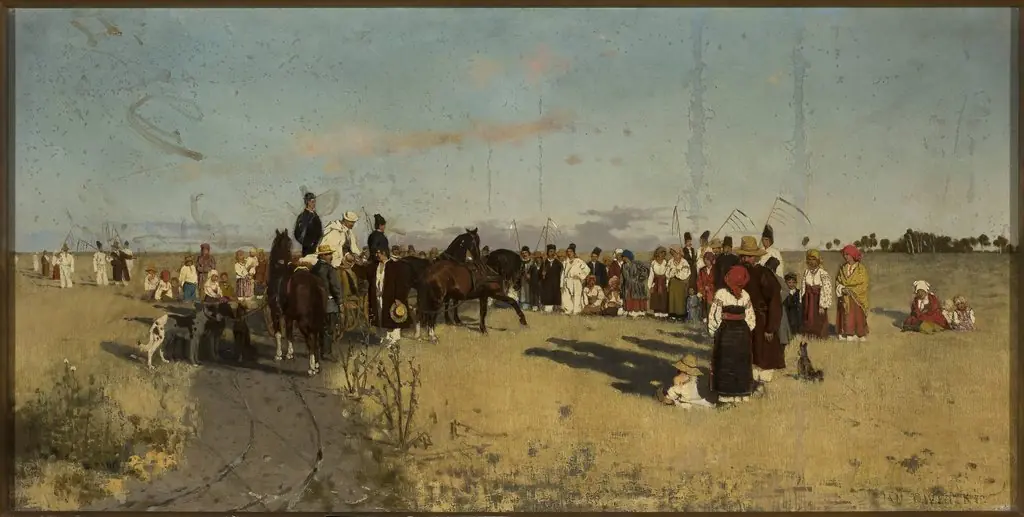
The Fair in Csíkszereda is a tempera painting by the Post-Impressionist artist Vilmos Aba-Novák. It dates from 1935 and is held in the collection of the Hungarian National Gallery.
About this work
Overview
Aba-Novák’s approach fused modernist structure with traditional subject matter, distinguishing him from purely academic contemporaries.
Vilmos Aba-Novák painted *The Fair in Csíkszereda* in 1935 using tempera on a support typical of his period. The work captures a regional market in Transylvania, reflecting his interest in Hungarian folk life. It resides in the Hungarian National Gallery, part of a broader body of work that includes public frescoes and graphic prints. Aba-Novák’s approach fused modernist structure with traditional subject matter, distinguishing him from purely academic contemporaries.
Subject & Meaning
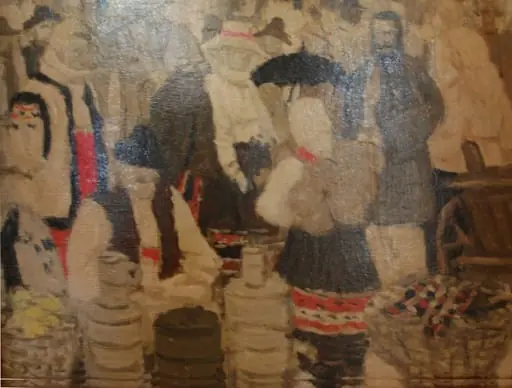
The scene depicts a bustling rural fair in Csíkszereda, now Miercurea Ciuc in Romania, where villagers gather for trade and social exchange. Figures in regional dress engage in commerce, rest, and conversation, emphasizing communal rhythms over individual narrative. The absence of overt drama or idealization suggests a documentary impulse, valuing everyday life as culturally significant. The setting anchors the painting in a specific Hungarian-speaking region with distinct ethnic traditions.
Technique & Style
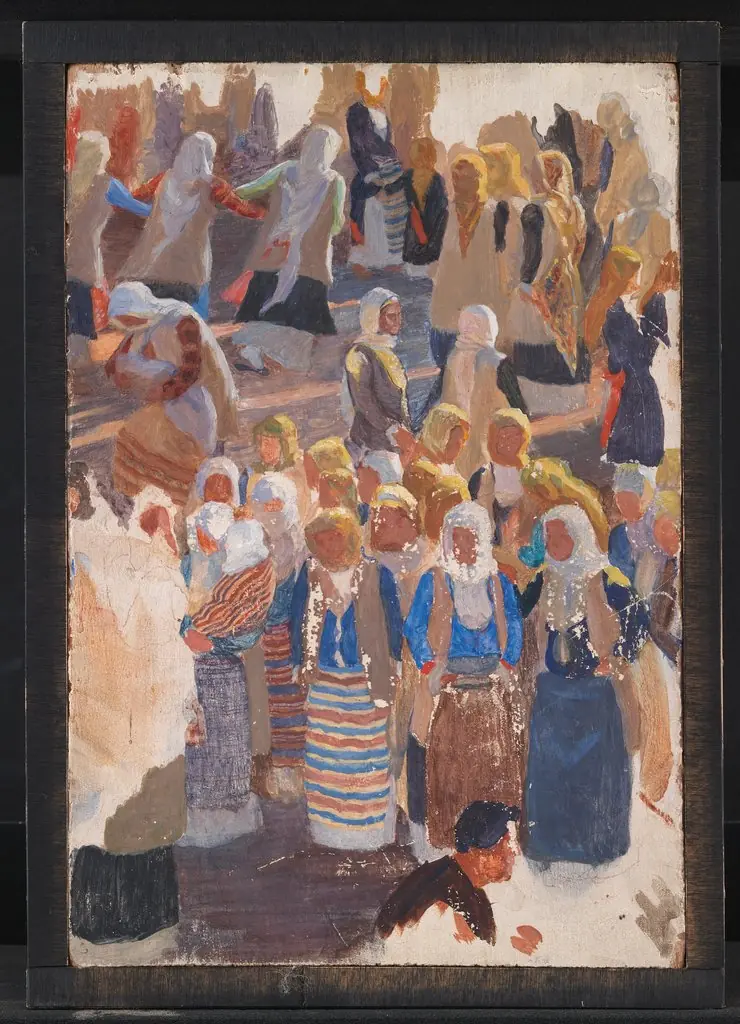
Aba-Novák employed tempera, a medium known for its matte finish and layered opacity, to build form through subtle tonal shifts rather than bold brushwork. The composition arranges figures in rhythmic groupings, with flattened perspective and simplified anatomy echoing post-impressionist precedents. Earthy browns and beiges dominate, reinforcing the grounded, tactile quality of the scene. Texture emerges from deliberate, controlled application, not impasto or glaze.
History & Provenance
Completed in 1935, the painting entered the Hungarian National Gallery’s collection shortly after its creation. It was produced during a period when Aba-Novák received state commissions for religious and civic murals, yet this work remained a private exploration of folk culture. Its preservation reflects institutional recognition of regional identity within national art narratives, even as borders shifted after World War I.
Context
In the interwar period, Hungarian artists increasingly turned to folk themes as part of a cultural reassessment following territorial losses after Trianon. Aba-Novák’s focus on Transylvanian markets aligned with broader efforts to affirm Hungarian identity in contested regions. Unlike romanticized depictions, his approach avoided nostalgia, instead presenting daily life with quiet realism and structural clarity.
Legacy
Though less known internationally than his frescoes, *The Fair in Csíkszereda* remains a key example of Aba-Novák’s ability to merge modernist form with ethnographic observation. It influenced later Hungarian painters seeking to represent rural life without sentimentality. The painting continues to be referenced in studies of interwar Hungarian art and regional identity, valued for its restrained authenticity.
Artist & collection
Artist
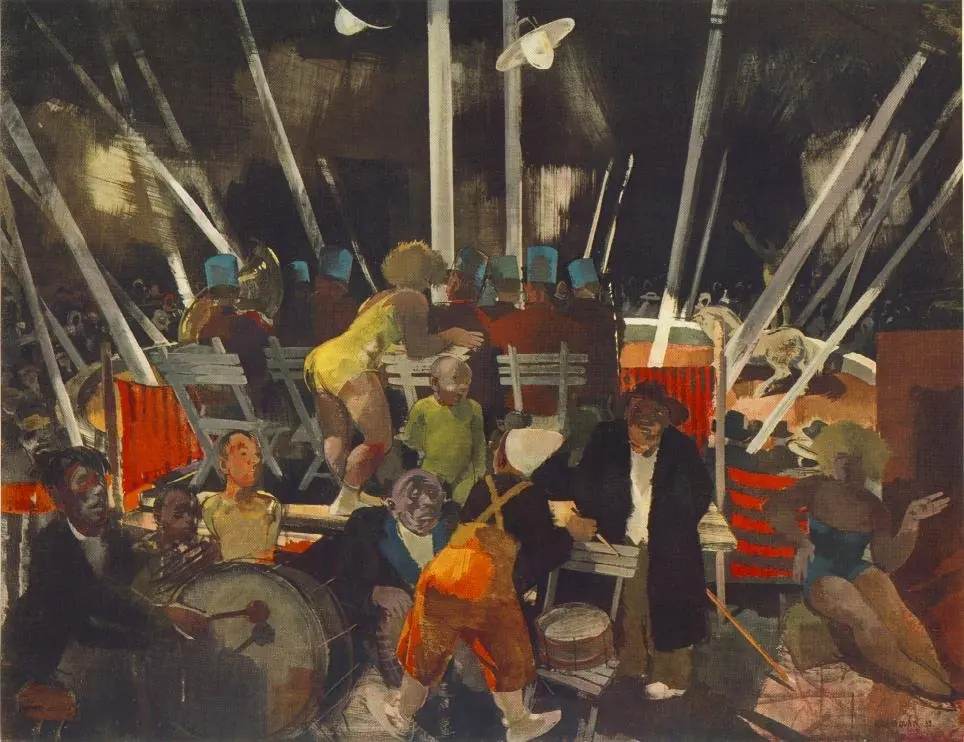
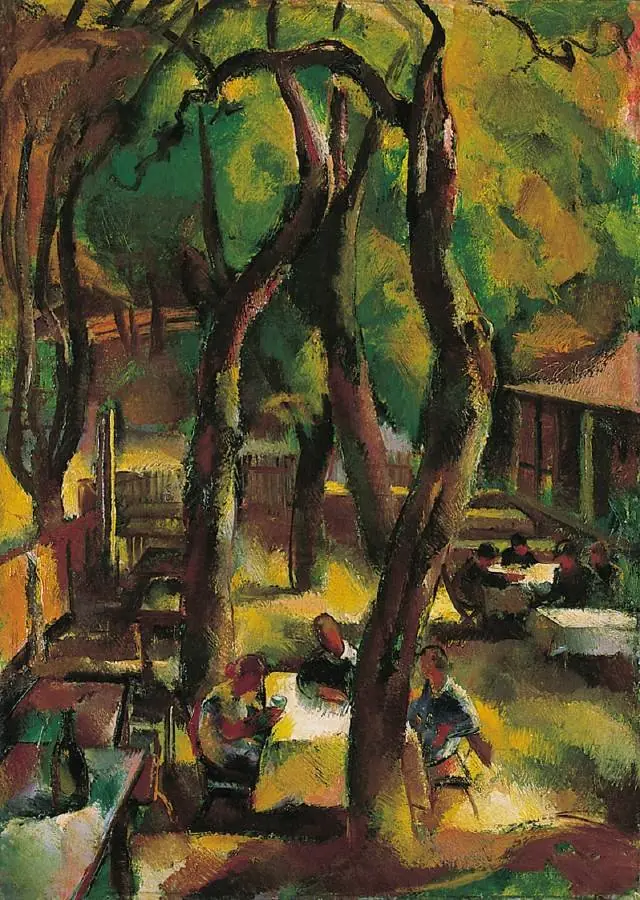
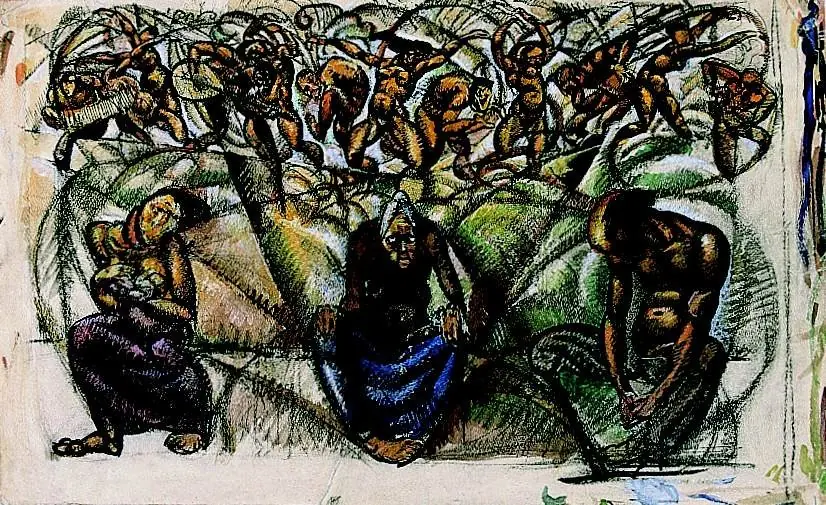
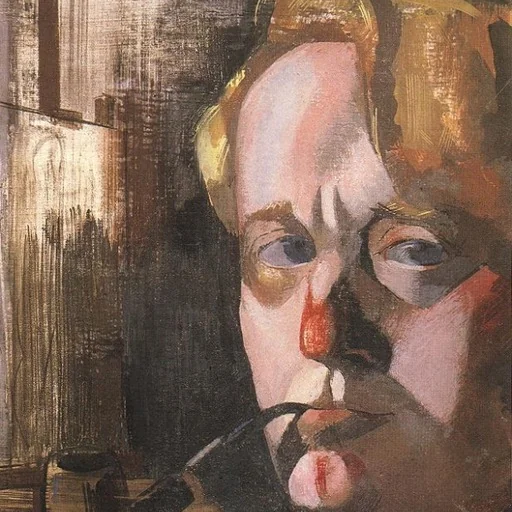
Vilmos Aba-Novák (Hungarian: Aba-Novák Vilmos, until 1912: Hungarian: Novák Vilmos; March 15, 1894 – September 29, 1941) was a Hungarian painter and graphic artist.