Artwork
Peamore, Devon
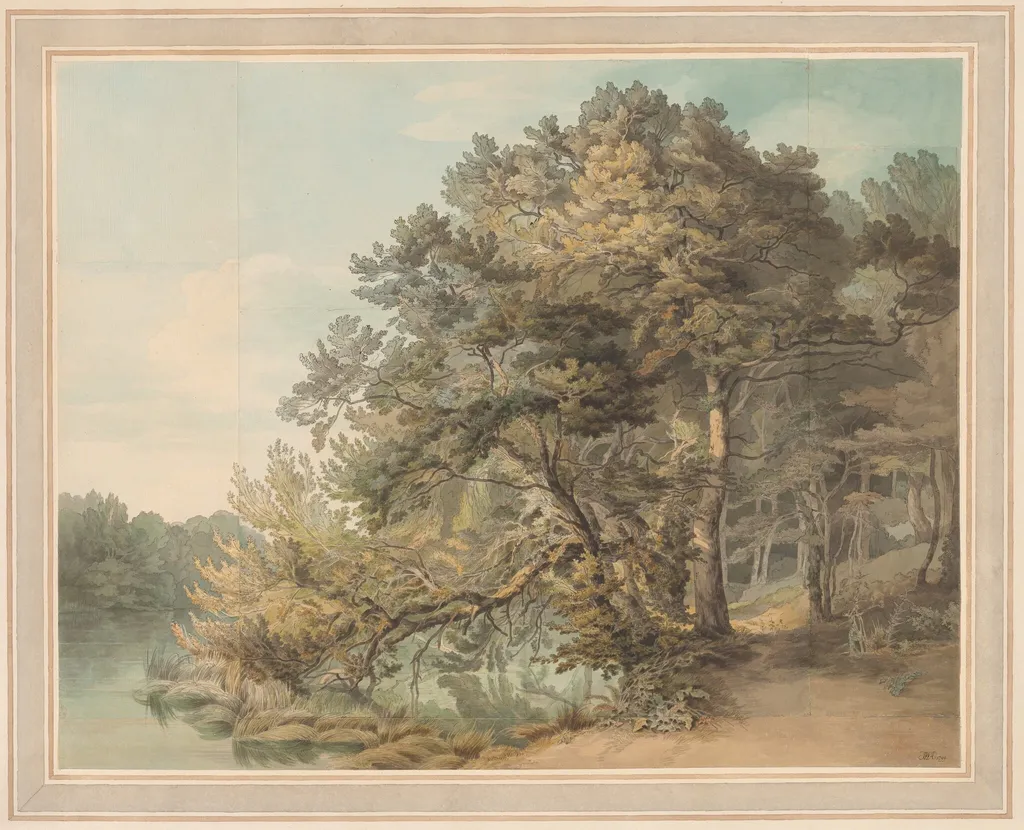
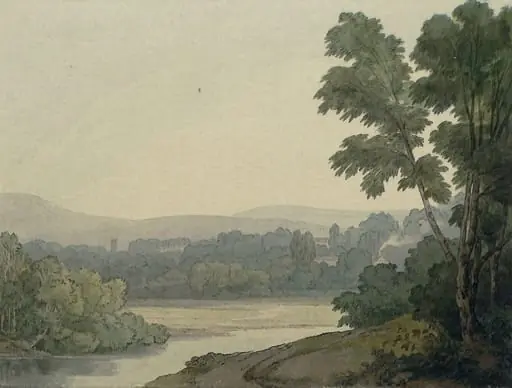
Peamore, Devon is an ink drawing by the Romanticist artist John White Abbott. It dates from 1799 and is held in the collection of the National Gallery of Art.
About this work
Overview
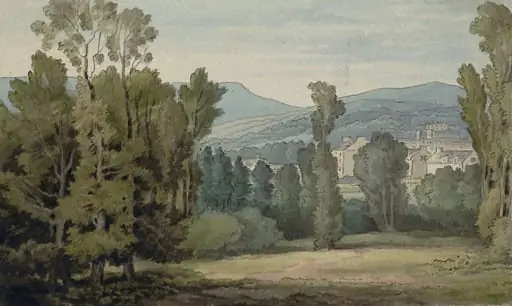
Created in 1799, *Peamure, Devon* is a landscape drawing by John White Abbott, an Exeter‑based surgeon and apothecary. Executed on a continuous sheet formed by eight joined pieces of laid paper, the work combines watercolor wash, pen and black ink applied over a graphite underdrawing. It records a view of the Devon countryside with a measured, observational approach.
Technique & Style
Abbott employed a layered method: a graphite sketch establishes the composition, followed by transparent watercolor washes that build atmospheric depth, and finally pen and ink outlines that sharpen architectural and natural details. The handling of the wash reflects the influence of his mentor, Francis Towne, whose emphasis on precise tonal modulation and clear delineation is evident throughout the piece.
Subject & Meaning
The drawing depicts the estate of Peamore in Devon, presenting its rolling fields, trees, and built structures in a balanced, panoramic arrangement. By rendering both the natural terrain and human habitation, Abbott underscores the harmonious relationship between land and architecture typical of late‑eighteenth‑century English topographical art.
History & Provenance
Produced during Abbott’s early artistic period, the work remains mounted on the artist’s original support, preserving its intended format. While Abbott is primarily known for his medical career, his drawings were circulated among local patrons and later entered museum collections, where they serve as documentation of Devon’s landscape at the turn of the nineteenth century.
Own this work as a print
Artist & collection
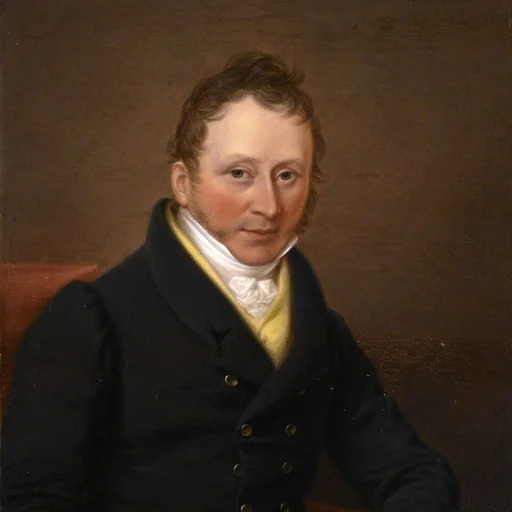
Artist
John White Abbott (13 May 1763 – 1851) was an English surgeon and apothecary in Exeter, remembered as a keen amateur painter in both watercolour and oils. His watercolours are close in style to those of his teacher, Francis Towne.

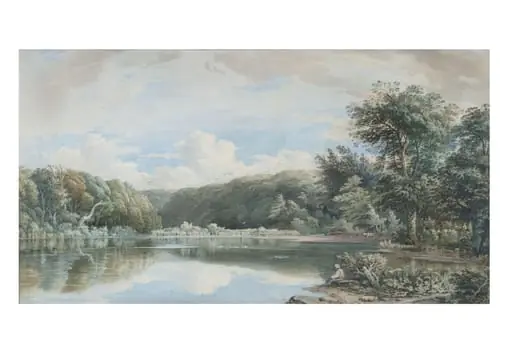 Pool and woods at Wotton, near Dorking
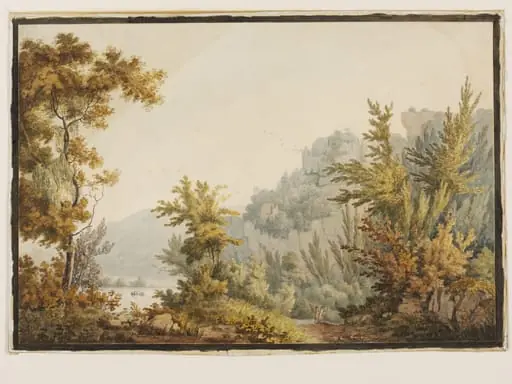 Landscape with Lake and Cliffs
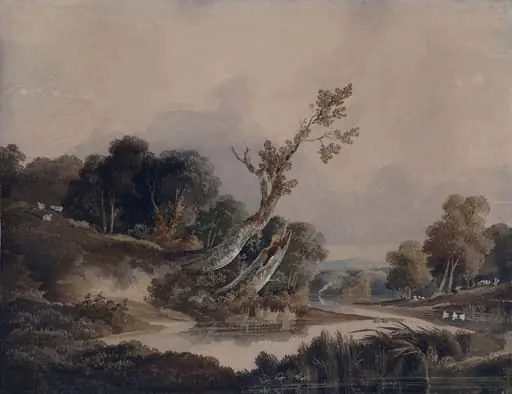 Landscape with trees and a stream
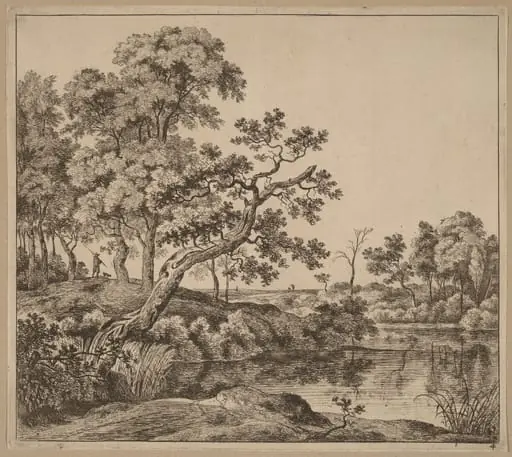 Landscape with a Bending Tree
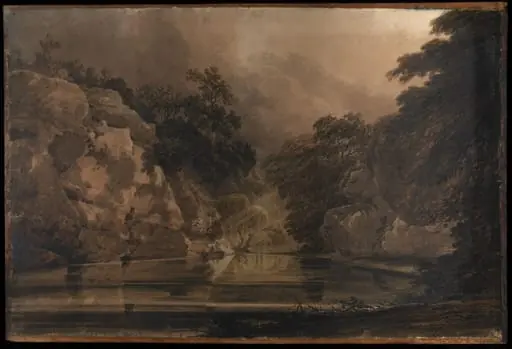 Plumpton Rocks
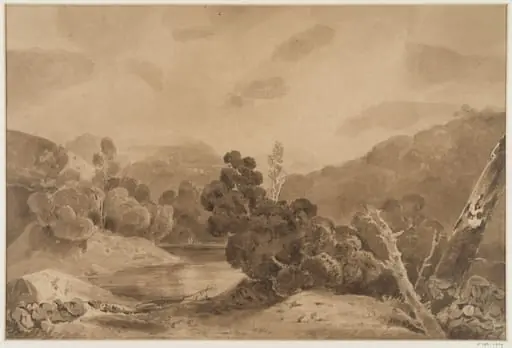 River scene with a temple or palace in the clouds
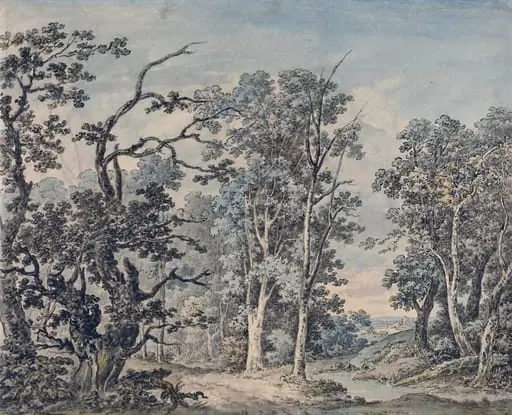 Forest scenery
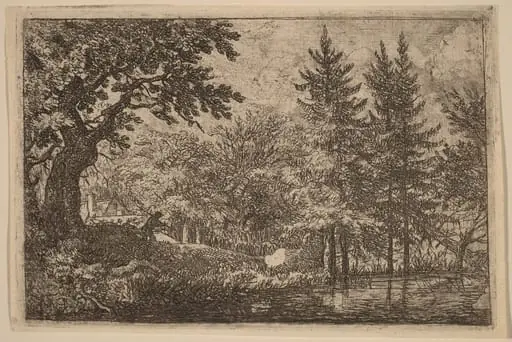 Fir Trees at the Water
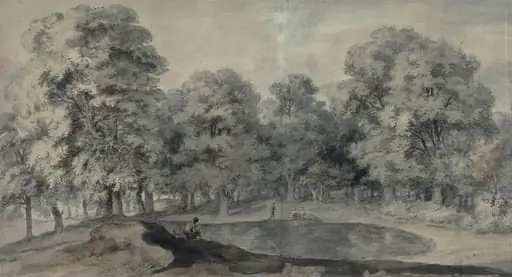 Leg of Mutton Pond, Hampstead Heath
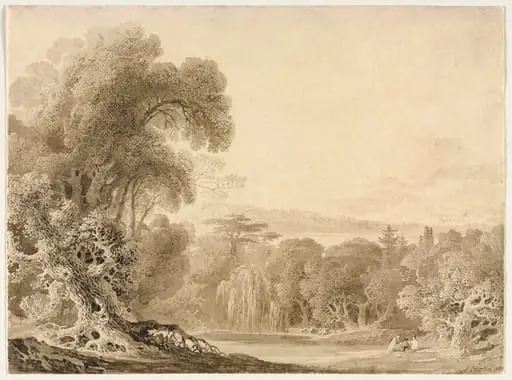 Figures Seated by a Lake in a Wooded Landscape
 Landscape with Four Trees
 View of Ullswater