Artwork
Fall at Cladich
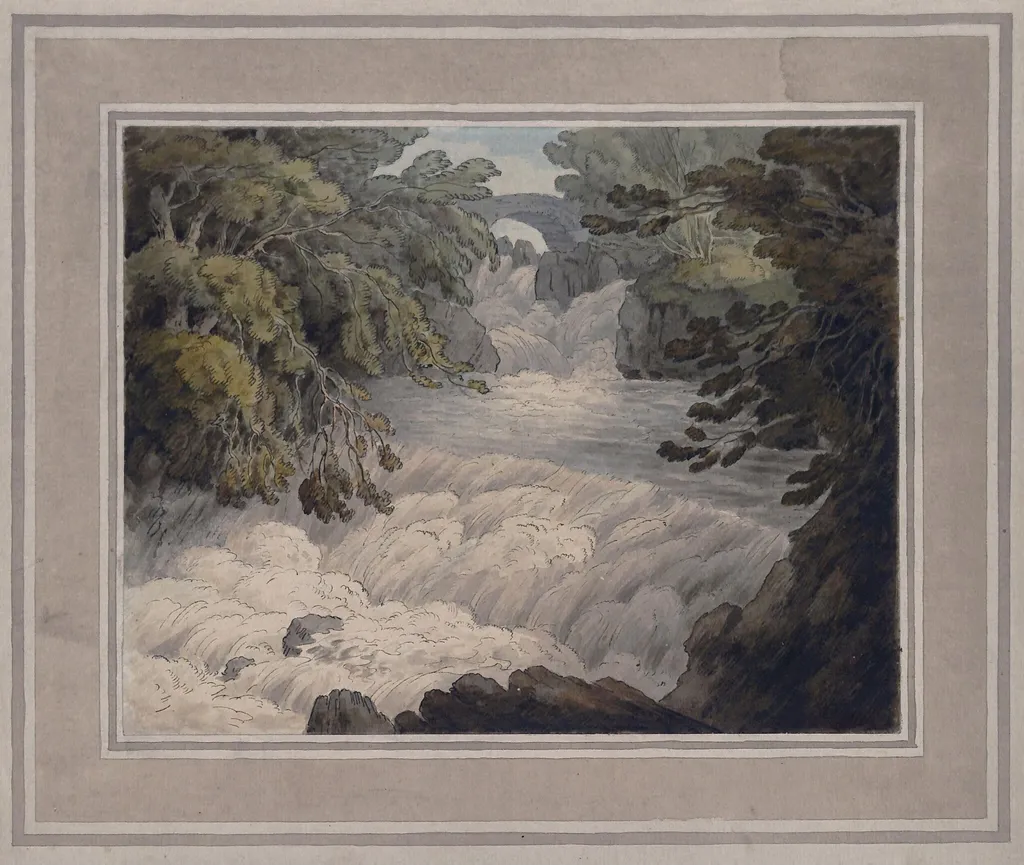
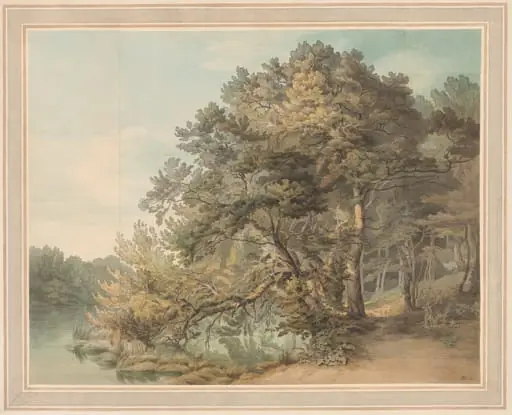
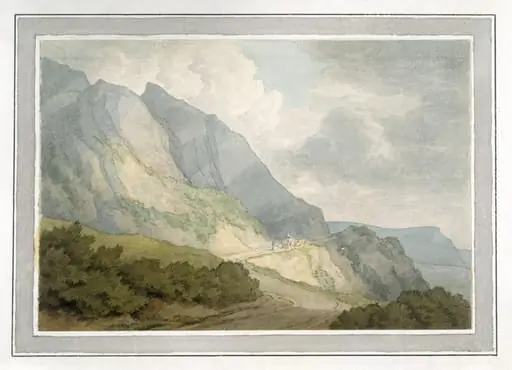
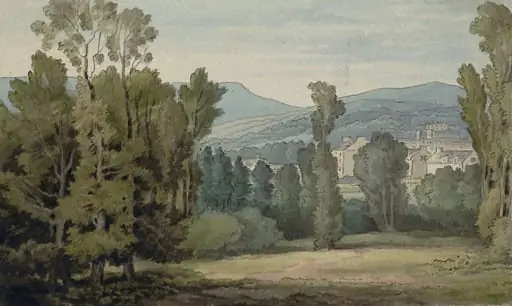
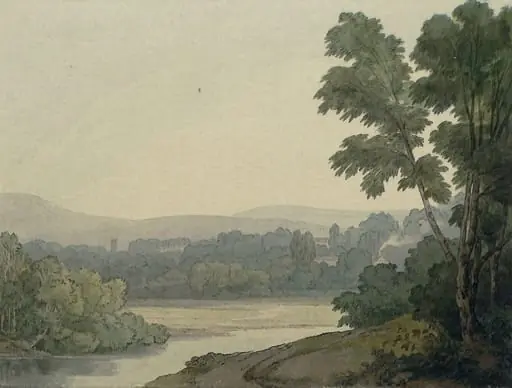
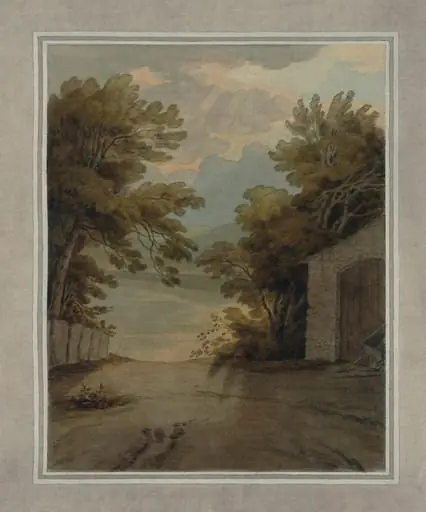
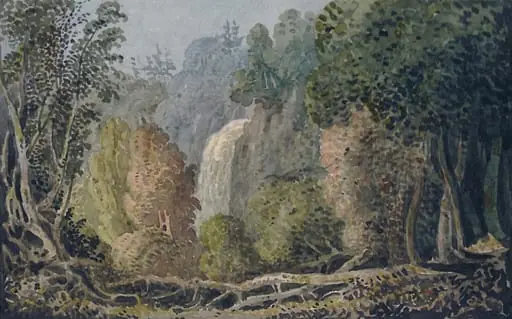
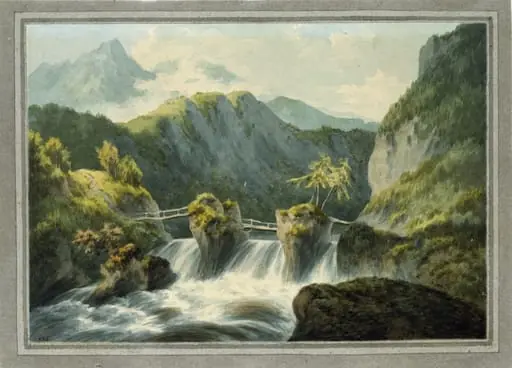
Fall at Cladich is a watercolor work on paper by the British Romanticist artist John White Abbott. It dates from 1794 and is held in the collection of the Victoria and Albert Museum.
About this work
Overview
Created around 1794, *Fall at Cladich* is a watercolour by John White Abbott, an English amateur artist and medical practitioner from Exeter.
Created around 1794, *Fall at Cladich* is a watercolour by John White Abbott, an English amateur artist and medical practitioner from Exeter. Though trained as a surgeon, Abbott devoted considerable attention to landscape painting, producing works that capture the untamed beauty of the British countryside. This piece is part of the Victoria and Albert Museum’s collection, representing a quiet but significant contribution to late 18th-century British watercolour practice.
Subject & Meaning
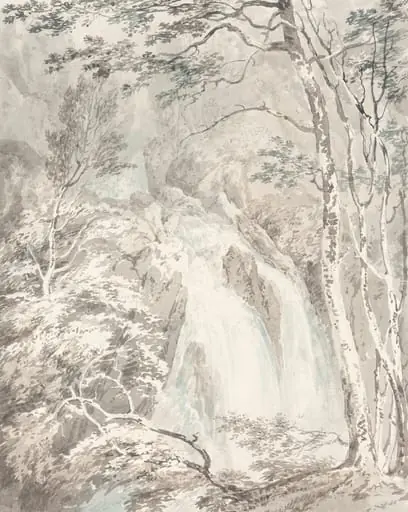
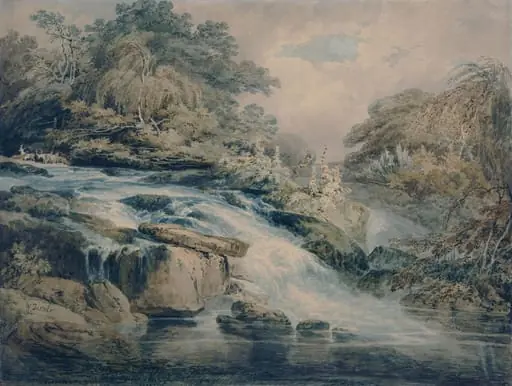
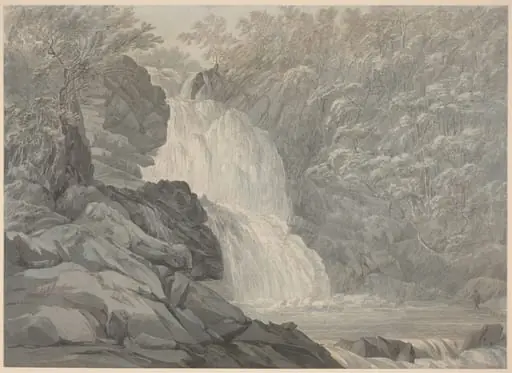
The painting depicts a secluded waterfall in the Scottish Highlands, where water plunges violently over dark, moss-covered cliffs. Dense, damp vegetation clings to the rock faces, and mist rises from the churning pool below. The scene conveys a sense of nature’s raw power and isolation, reflecting Romantic ideals that valued wild, uncontrolled landscapes as sites of emotional and spiritual resonance rather than mere topographical records.
Technique & Style
Abbott employed delicate washes of grayish-blue and muted brown to suggest moisture and movement, allowing the paper’s white surface to imply light and spray. The water’s texture is rendered with loose, fluid strokes, while the fog blurs boundaries between air, water, and rock. His method, learned from Francis Towne, emphasizes atmospheric effect over precise detail, prioritizing mood and the transient qualities of light and weather.
History & Provenance
The painting was produced during Abbott’s active period as a watercolourist, between the 1780s and early 1800s. It entered the Victoria and Albert Museum’s collection through its long-standing commitment to British watercolours, particularly those from the Romantic era. Its provenance reflects the growing institutional interest in amateur artists whose work contributed to the development of watercolour as a serious medium in Britain.
Context
In the late 18th century, British artists increasingly turned to remote natural sites as subjects, influenced by Romantic philosophy and the rise of travel literature. Abbott’s depiction of Cladich aligns with this trend, echoing the aesthetic of sublime nature promoted by contemporaries like Turner and Girtin. His work, though less publicized, participated in a broader cultural shift toward valuing wild landscapes as emotionally charged environments.
Legacy
Though Abbott was not a professional artist, his watercolours helped shape the conventions of British landscape painting in the Romantic period. *Fall at Cladich* exemplifies how amateur practitioners contributed to the medium’s evolution, emphasizing atmosphere and emotional tone over technical polish. The painting remains a quiet testament to the growing appreciation for nature’s untamed forms in British art.
Own this work as a print
Artist & collection
Artist
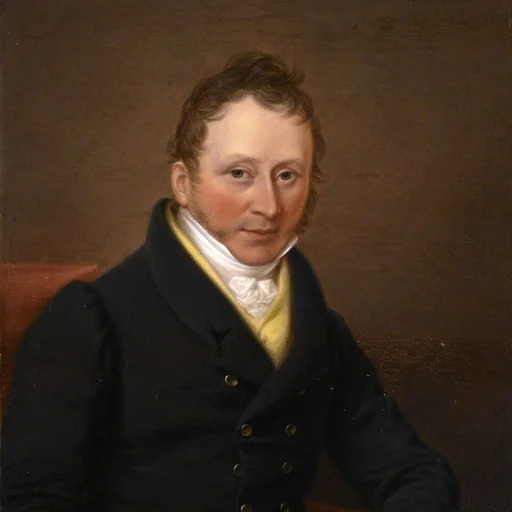
John White Abbott (13 May 1763 – 1851) was an English surgeon and apothecary in Exeter, remembered as a keen amateur painter in both watercolour and oils. His watercolours are close in style to those of his teacher, Francis Towne.