Artwork
Between Lyme and Charmouth
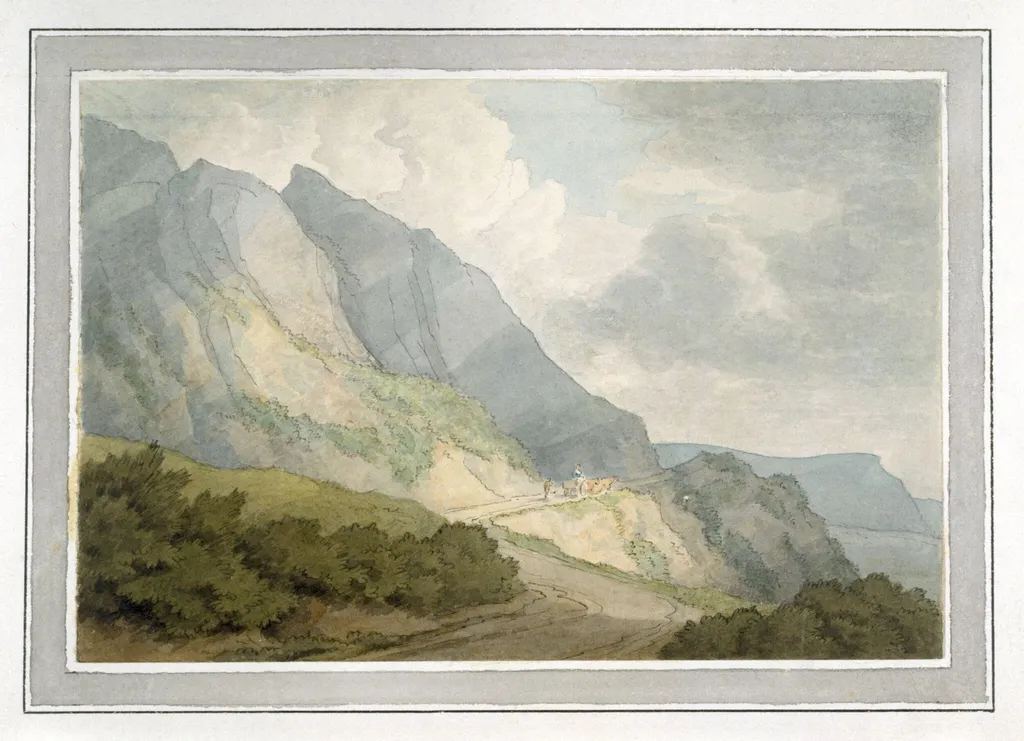
Between Lyme and Charmouth is a watercolor work on paper by the British Romanticist artist John White Abbott. It dates from 1825 and is held in the collection of the Victoria and Albert Museum.
About this work
Overview
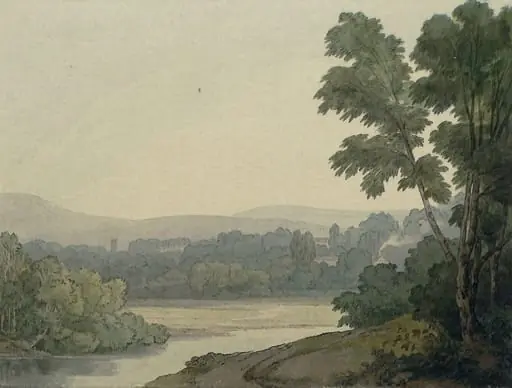
Between Lyme and Charmouth is a 1825 watercolour by John White Abbott, capturing a Dorset coastal scene with a winding road through mountainous terrain, distant buildings, and rocky slopes with lower greenery.
Subject & Meaning
The subject is a specific Dorset landscape between Lyme and Charmouth, portrayed with emphasis on natural beauty and atmospheric depth, aligning with Romantic-era sensibilities that valued emotional resonance with nature.
Technique & Style
Abbott employed soft, muted colours and gentle brushstrokes to achieve a dreamy quality. The work showcases his skill in rendering light and shadow, creating a sense of depth in the mountainous and road landscape.
History & Provenance
The watercolour bears the title, date (1825), the artist's initials, and a dedication, all inscribed by Abbott. Further provenance details are not provided in the available information.
Context
Created during the Romanticism movement, the piece reflects the era's artistic priorities: emphasizing emotion, the beauty of nature, and the sublime in landscape.
Legacy
While specific lasting impacts or notable exhibitions of 'Between Lyme and Charmouth' are not detailed, it contributes to the broader legacy of Romantic-era watercolour landscape painting in Britain.
Artist & collection
Artist
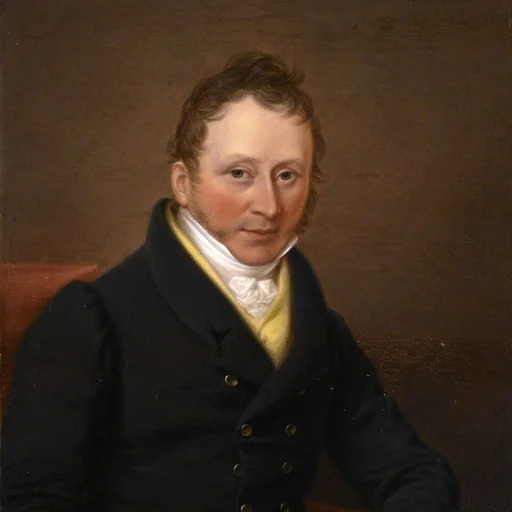
John White Abbott (13 May 1763 – 1851) was an English surgeon and apothecary in Exeter, remembered as a keen amateur painter in both watercolour and oils. His watercolours are close in style to those of his teacher, Francis Towne.

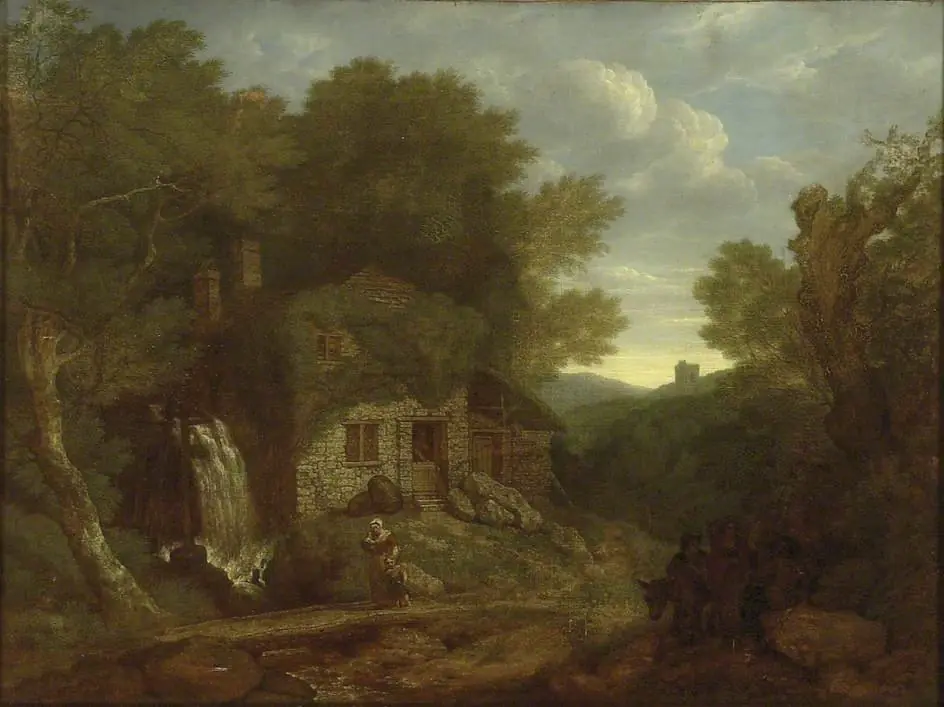
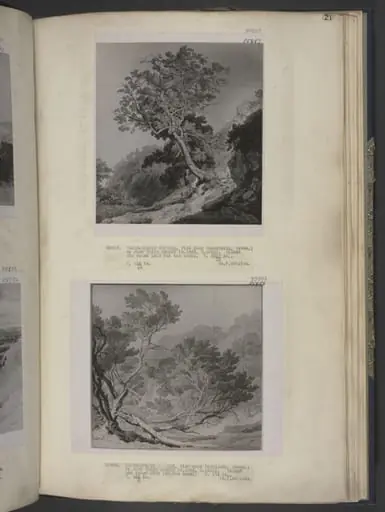
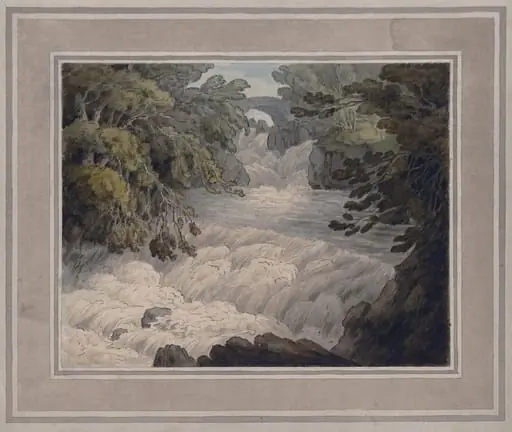
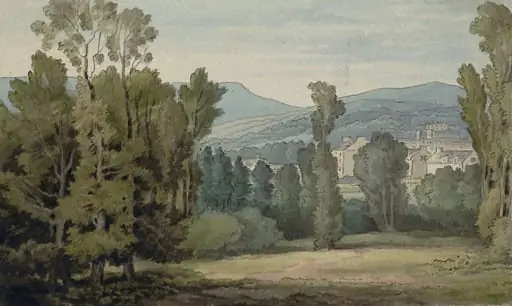
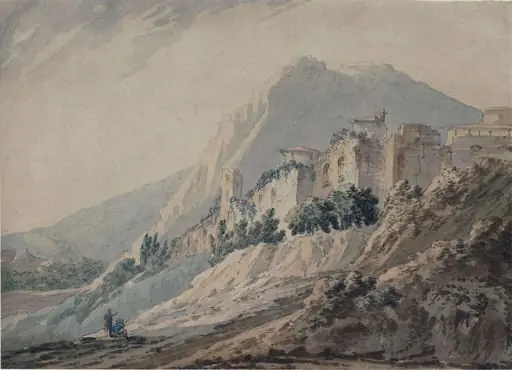 Mountainous landscape with ruined building
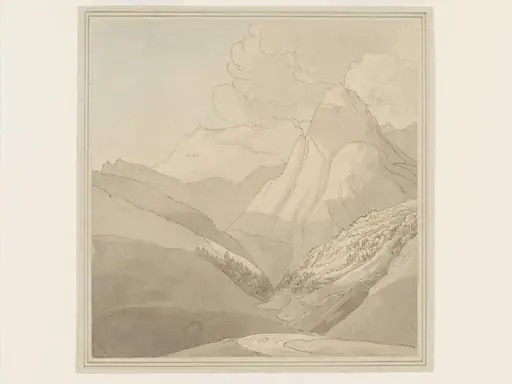 The Alps near the source of the Rhine
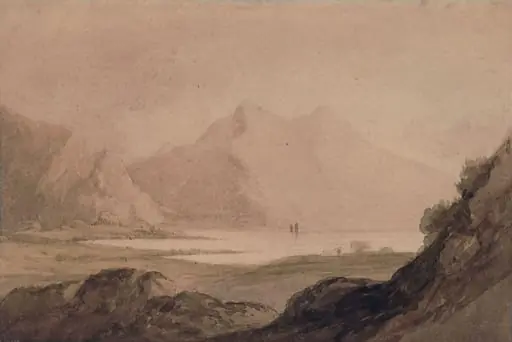 Snowdon with Llanberis Lake
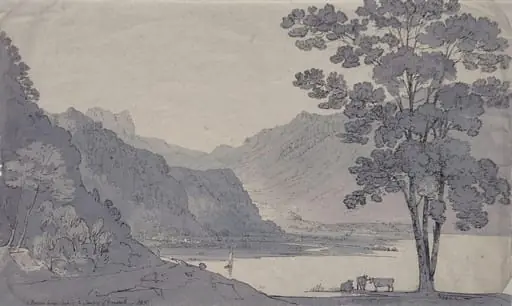 View looking down to Lodore and Borrowdale
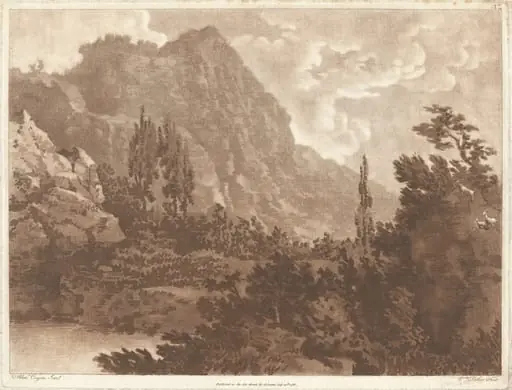 A second drawing done from the same blot
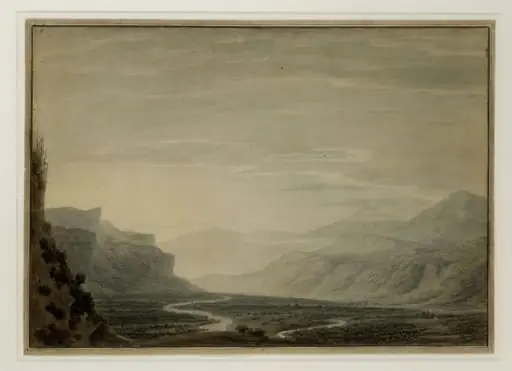 Valley with winding streams, a range of mountains in the background, and a village on the left
 At Azizieh, Lydia
 Snowdon and the Vale of Llanberis
 Landscape with hermit
 Untitled