Artwork
Two Female Heads
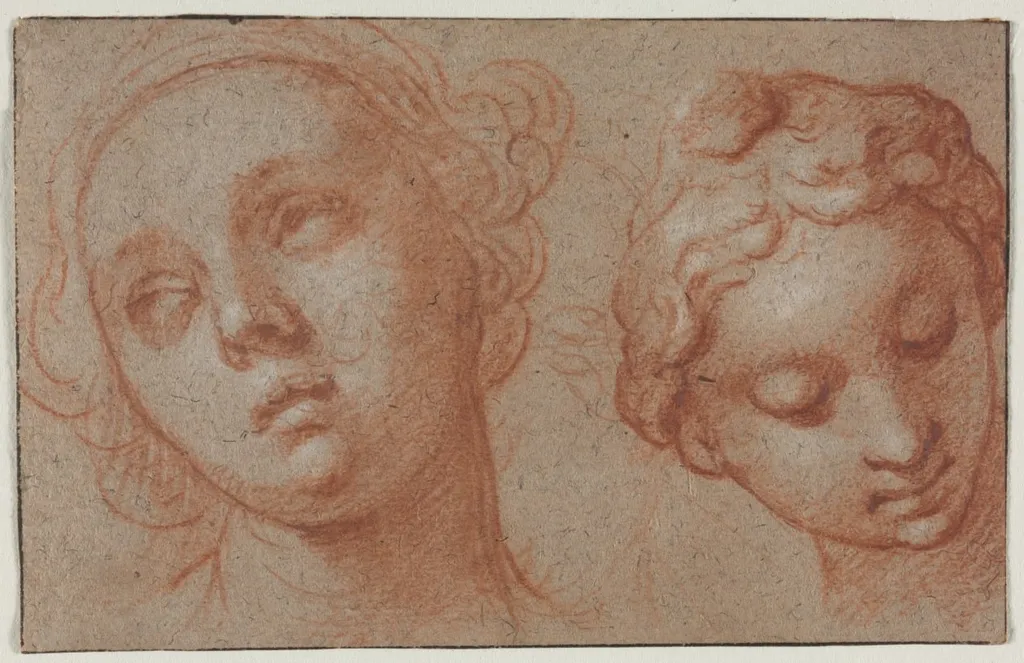
Two Female Heads is a drawing by the Baroque artist Abraham Bloemaert. It dates from 1625 and is held in the collection of the Cleveland Museum of Art. This modestly sized drawing presents a pair of profile studies of a single female sitter, positioned side by side.
About this work
Overview
This modestly sized drawing presents a pair of profile studies of a single female sitter, positioned side by side. One profile faces left, the other right, allowing a comparative view of the same face from opposite angles within a single sheet.
Subject & Meaning
The work functions as a visual exercise in capturing a likeness from multiple perspectives. By rendering the same model under identical lighting conditions, the artist explores how subtle shifts in angle affect the perception of facial structure and expression.
Technique & Style
Executed with delicate, flowing lines, the drawing avoids rigid contouring, giving the visage a sense of immediacy. The treatment of light and shadow hints at chiaroscuro principles, using tonal variation to model the forms without heavy cross‑hatching.
History & Provenance
Created as a study, the piece reflects a common 17th‑century practice of preparing multiple viewpoints for larger compositions or portrait commissions. Its provenance traces back to the artist’s workshop, where such preparatory sketches were kept for reference.
Context
During the period, artists frequently produced paired profile sketches to train their ability to render anatomy from memory and to assist in constructing three‑dimensional representations on a two‑dimensional plane.
Artist & collection

Artist
Abraham Bloemaert (25 December 1566 – 27 January 1651) was a Dutch painter and printmaker who used etching and engraving.

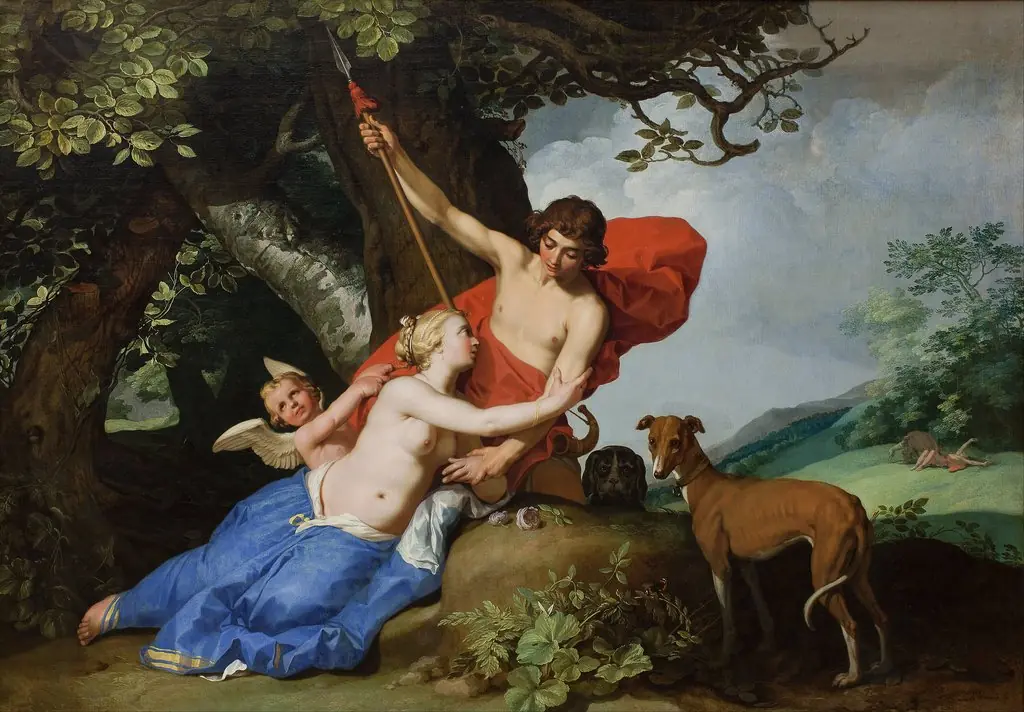
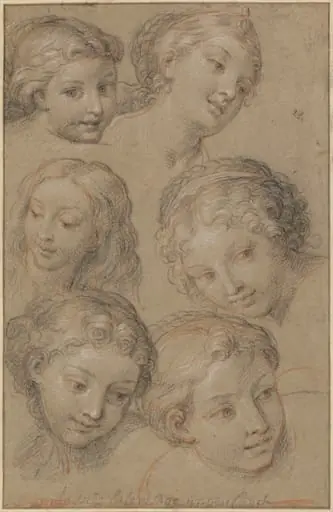 Studies of Women's Heads
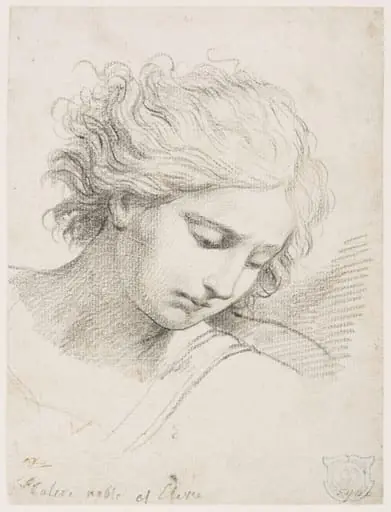 Study of the head of St. Michael
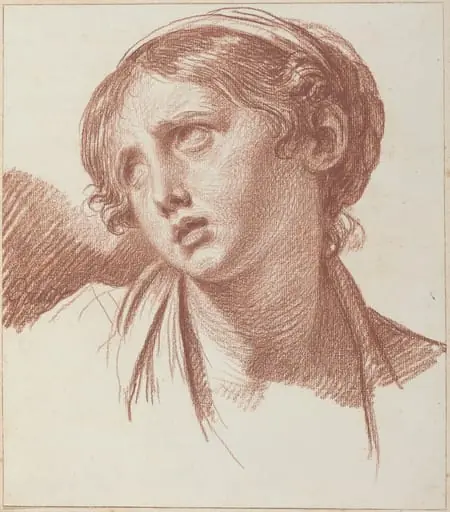 A Young Girl Looking Upward
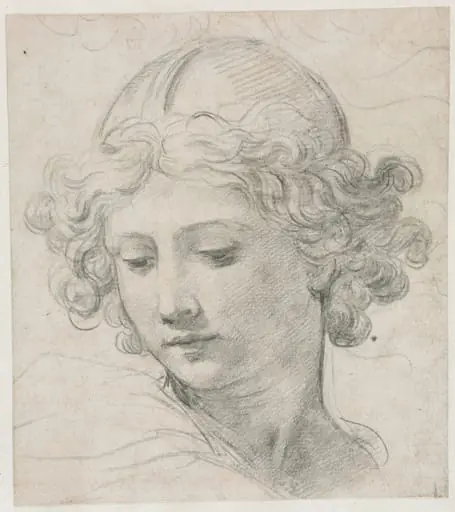 Study for the Head of St. Michael
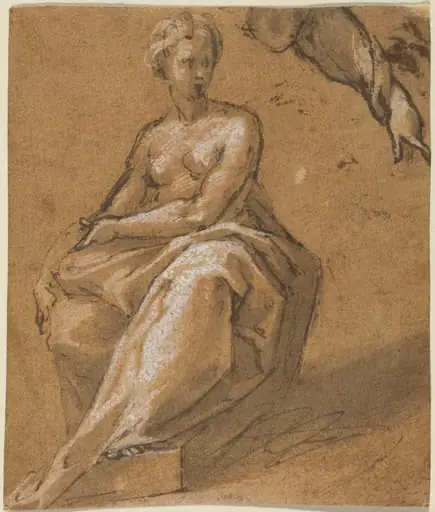 Seated Nude with Drapery
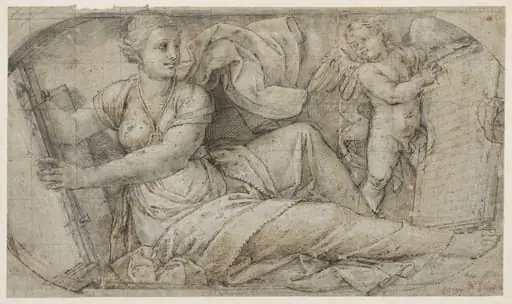 Reclining sibyl holding a book, with a winged putto supporting an inscribed tablet
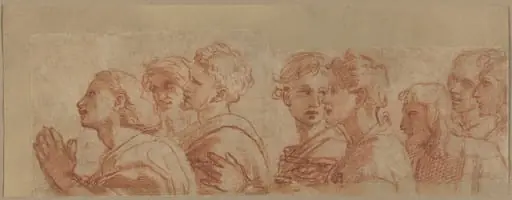 Eight Apostles
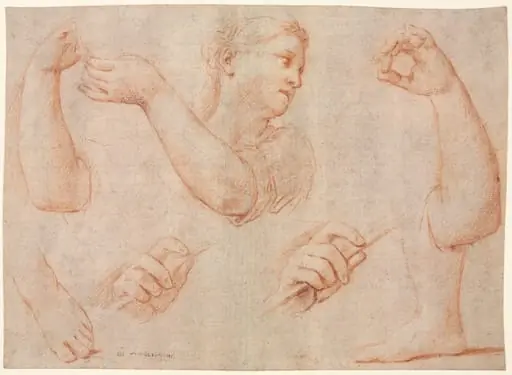 Study of a Young Woman Playing a Tambourine, and Studies of an Arm, Hands, and Feet (Studies for "Miriam Leading the Chorus of Women Who Give Thanks for the Routing of Pharoah"
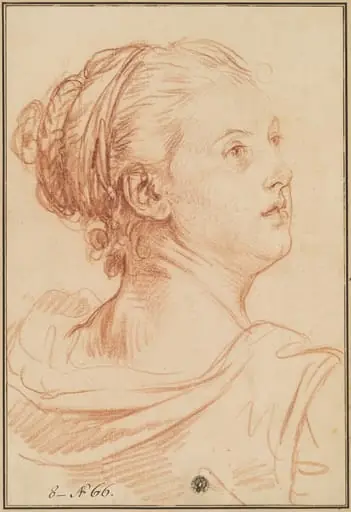 Head of a Woman Looking Back Over Her Shoulder
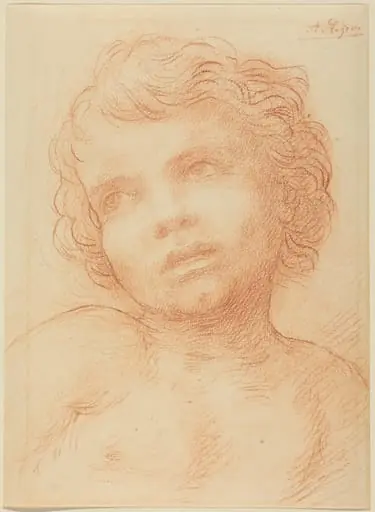 Head of a Child