Artwork
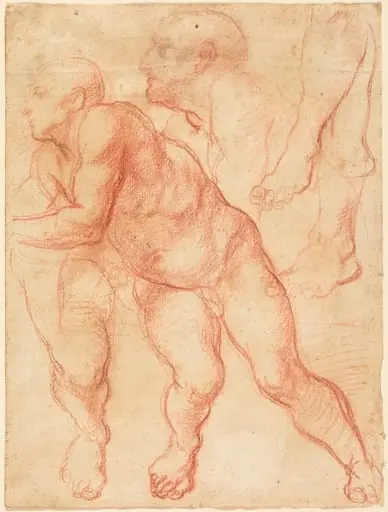
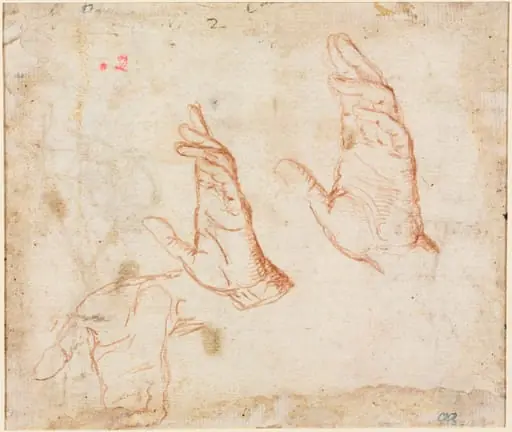
Study of a Young Woman Playing a Tambourine, and Studies of an Arm, Hands, and Feet (Studies for "Miriam Leading the Chorus of Women Who Give Thanks for the Routing of Pharoah"
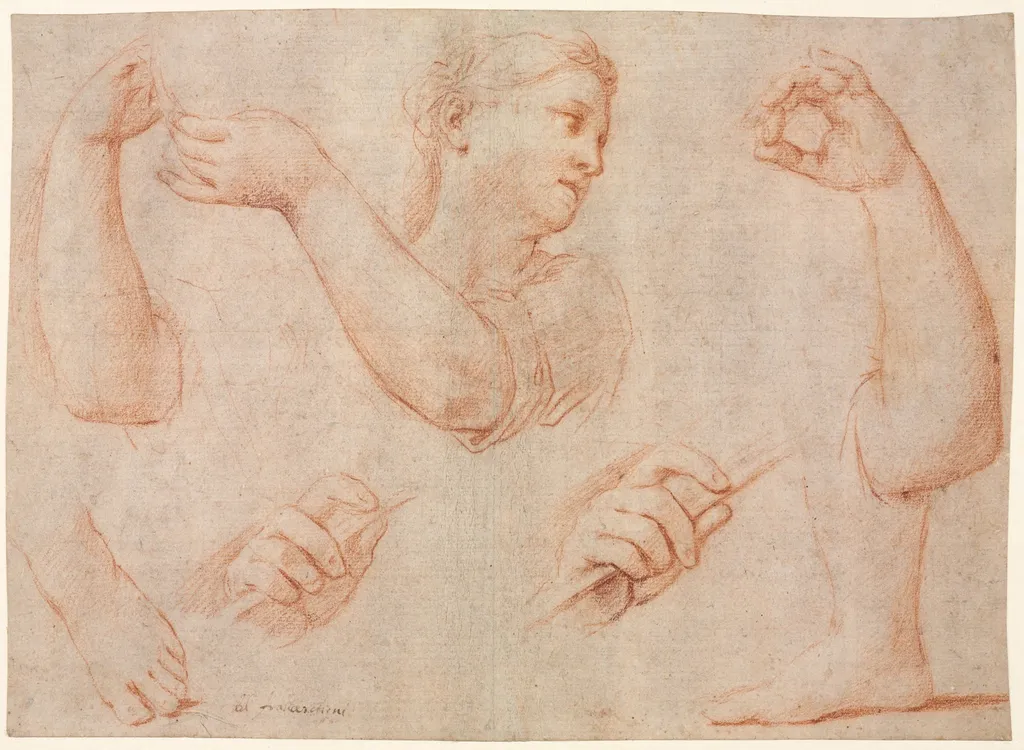
Study of a Young Woman Playing a Tambourine, and Studies of an Arm, Hands, and Feet (Studies for "Miriam Leading the Chorus of Women Who Give Thanks for the Routing of Pharoah" is a drawing by the Baroque artist Marcantonio Franceschini. It dates from 1711 and is held in the collection of the Cleveland Museum of Art.
About this work
Overview
The sheet serves as a working document, revealing the artist’s methodical approach to capturing movement and gesture before executing the full-scale work.
This red chalk drawing comprises multiple preparatory studies for a larger fresco by Marcantonio Franceschini. Created between 1711 and 1712, the sketches focus on anatomical details—hands, feet, arms, and a head with raised arms—to refine the figures in the final composition. The sheet serves as a working document, revealing the artist’s methodical approach to capturing movement and gesture before executing the full-scale work.
Subject & Meaning
The studies relate to the biblical scene of Miriam leading Israelite women in celebration after the crossing of the Red Sea. The central figure, Miriam, is depicted playing a tambourine, while adjacent sketches of hands and an arm correspond to a secondary figure holding a triangle. These elements collectively reinforce the theme of communal thanksgiving, emphasizing rhythmic motion and musical accompaniment as acts of devotion.
Technique & Style
Franceschini employed red chalk with precision, using varied line weight and subtle hatching to define form and volume. The studies of limbs and extremities are rendered with careful attention to anatomical accuracy and dynamic posture. The looseness of some contours contrasts with the refined detail of the hands and feet, suggesting a progression from initial observation to resolved design.
History & Provenance
The finished fresco, based on these studies, was commissioned for the Palazzo della Cancelleria in Rome, where it remains installed. The drawing itself entered the collection of the Cleveland Museum of Art, preserving a tangible link to the preparatory phase of a significant Baroque decorative project. Its survival offers insight into the workflow of artists working on large-scale ecclesiastical commissions in early 18th-century Italy.
Context
During this period, artists preparing frescoes for papal buildings often produced extensive studies to ensure compositional clarity and anatomical correctness. Franceschini’s approach reflects the Bolognese tradition of rigorous draftsmanship, rooted in classical ideals and Renaissance practice. The emphasis on individual body parts underscores the importance of naturalism in religious narrative painting at the time.
Legacy
The drawing stands as a testament to the labor behind monumental Baroque decoration. It illustrates how artists translated abstract narratives into physically convincing figures through incremental study. Today, it remains a valuable resource for understanding the transition from sketch to finished work in a period when artistic process was often concealed from public view.
Artist & collection
Artist
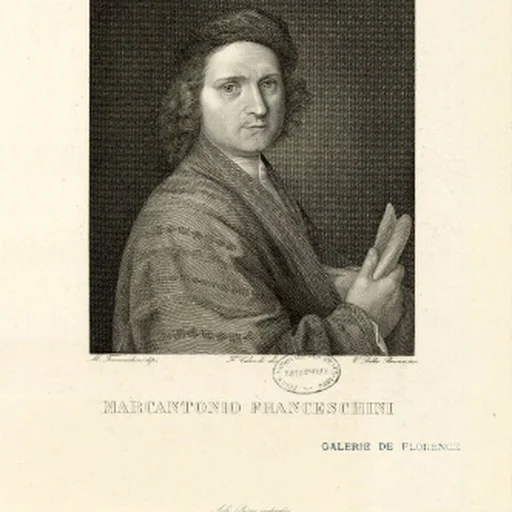
Marcantonio Franceschini (Italian pronunciation: ; 1648 – 24 December 1729) was an Italian painter of the Baroque period, active mostly in his native Bologna. He was the father and teacher of Giacomo Franceschini.

![Studies for an Annunciation [recto], by Jacopo Palma il Giovane](https://artifactworldgallery.com/img/jacopo-palma-il-giovane--studies-for-an-annunciation-recto--a15d0411b7678b1e-w320.webp)