Artwork
Studies of Women's Heads
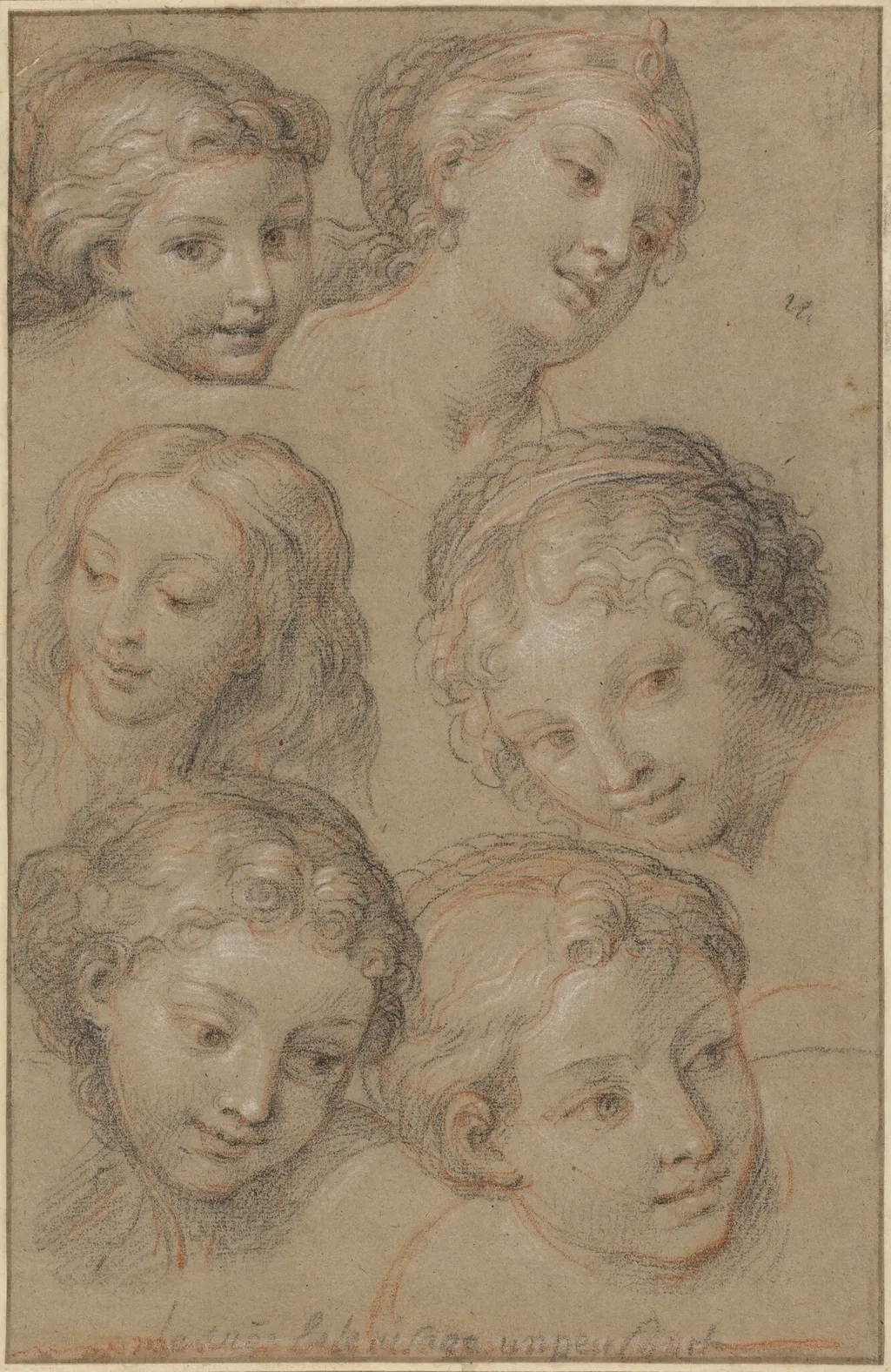
Studies of Women's Heads is a chalk drawing by the Baroque artist Michel Corneille. It dates from 1690 and is held in the collection of the National Gallery of Art.
About this work
Overview
The use of black, red, and white chalk allows for subtle tonal variation, while a later brown ink border frames the composition.
This drawing, attributed to Michel Corneille and dated to the late 1680s or early 1690s, consists of multiple studies of female heads rendered in chalk on light brown laid paper. The use of black, red, and white chalk allows for subtle tonal variation, while a later brown ink border frames the composition. It resides in the collection of the National Gallery of Art in Washington, D.C., as part of its holdings of European drawings from the Baroque era.
Subject & Meaning
The work presents a series of closely observed female profiles and frontal views, likely intended as preparatory studies for larger compositions. Rather than depicting specific individuals, the figures embody generalized types, reflecting the artist’s interest in capturing varied expressions and anatomical nuances. These studies served as references for figure work in religious or mythological paintings, common in Corneille’s practice.
Technique & Style
Corneille employed black chalk for definition, red chalk for warmth in skin tones, and white chalk to heighten highlights against the brown paper. The strokes are deliberate yet fluid, emphasizing volume and texture without excessive detail. The restrained palette and focused handling align with French academic traditions of the period, prioritizing clarity and structural accuracy over ornamentation.
History & Provenance
The drawing entered the National Gallery of Art’s collection through the Chester Dale bequest in 1963. Its earlier ownership history is undocumented, but its condition suggests it was preserved as a working sketch rather than a finished piece. The addition of a framing line in brown ink likely occurred in the 18th or early 19th century, reflecting later appreciation for its aesthetic qualities.
Context
Created during the height of the French Baroque, this drawing reflects the period’s emphasis on disciplined observation and idealized form. Artists like Corneille, trained in the Académie Royale, relied on such studies to refine their figure work for altarpieces and court commissions. The focus on the human head—especially female—echoed contemporary interest in emotional expression and classical beauty.
Legacy
Though Michel Corneille is less widely known than his contemporaries, this drawing exemplifies the quiet rigor of French academic draftsmanship. Its preservation underscores the value placed on preparatory studies in 17th-century studios. Today, it contributes to scholarly understanding of how artists translated observation into finished works within the institutional framework of the French Baroque.
Artist & collection

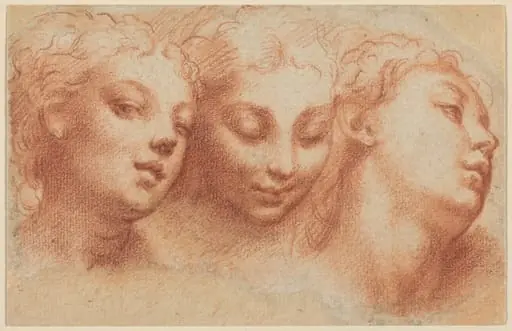 Three Feminine Heads
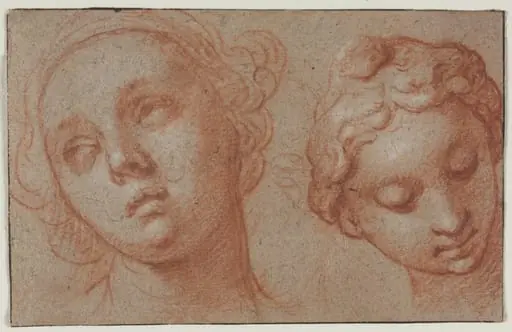 Two Female Heads
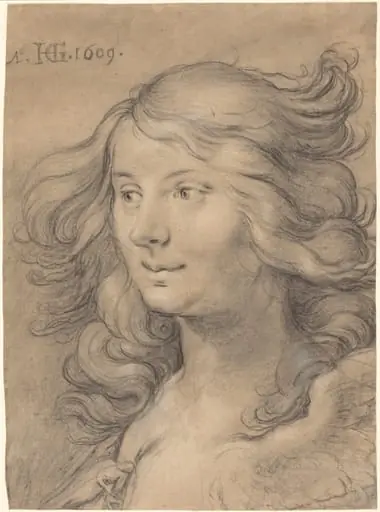 Head of a Siren
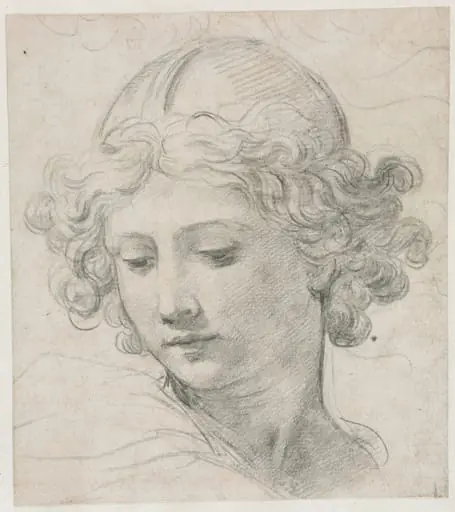 Study for the Head of St. Michael
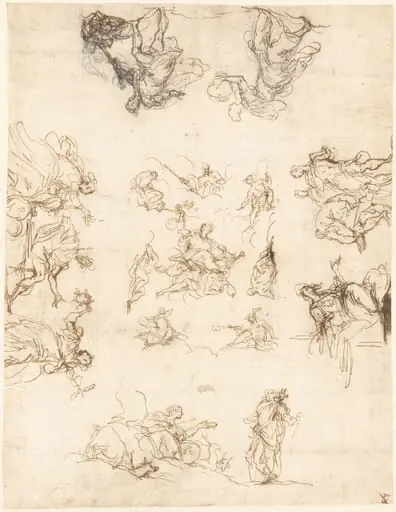 A Compartmented Ceiling with Allegories and Myths
![Studies for an Annunciation [recto], by Jacopo Palma il Giovane](https://artifactworldgallery.com/img/jacopo-palma-il-giovane--studies-for-an-annunciation-recto--a15d0411b7678b1e-w320.webp) Studies for an Annunciation [recto]
Studies for an Annunciation [recto]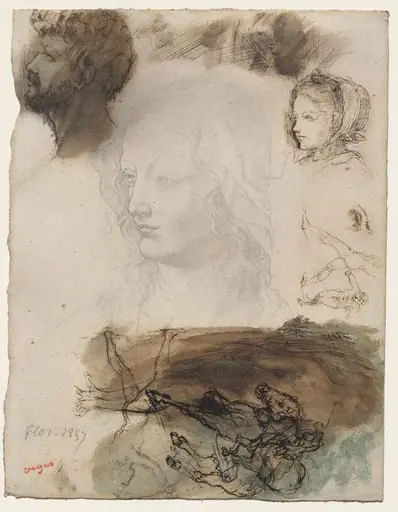 Sheet of Studies and Sketches
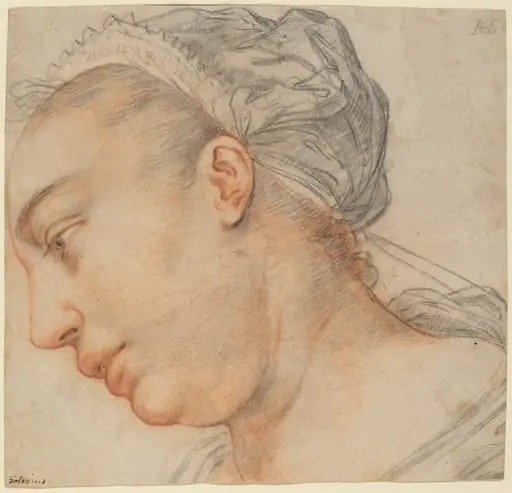 Head of a Young Woman
![Figures Studies [recto], by Girolamo Mazzola Bedoli](https://artifactworldgallery.com/img/girolamo-mazzola-bedoli--figures-studies-recto--1ed79b3eaa10b09e-w320.webp) Figures Studies [recto]
Figures Studies [recto]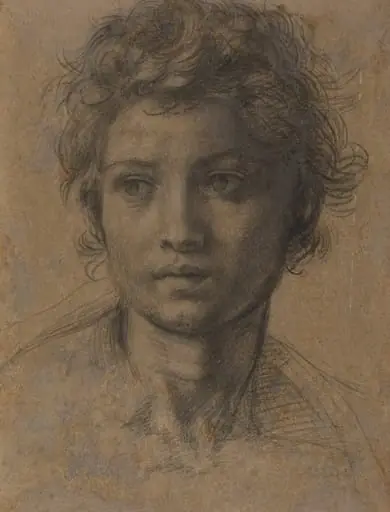 Head of Saint John the Baptist
![Three Studies of a Woman's Head and a Study of Hands [recto], by Jean Antoine Watteau](https://artifactworldgallery.com/img/jean-antoine-watteau--three-studies-of-a-woman-s-head-and-a-study-of-hands-recto--e8d8dc404a1e0512-w320.webp) Three Studies of a Woman's Head and a Study of Hands [recto]
Three Studies of a Woman's Head and a Study of Hands [recto] Elegant Young Woman with a Pearl Necklace